<?xml version="1.0" encoding="ISO-8859-1"?><article xmlns:mml="http://www.w3.org/1998/Math/MathML" xmlns:xlink="http://www.w3.org/1999/xlink" xmlns:xsi="http://www.w3.org/2001/XMLSchema-instance">
<front>
<journal-meta>
<journal-id>0004-0622</journal-id>
<journal-title><![CDATA[Archivos Latinoamericanos de Nutrición]]></journal-title>
<abbrev-journal-title><![CDATA[ALAN]]></abbrev-journal-title>
<issn>0004-0622</issn>
<publisher>
<publisher-name><![CDATA[Sociedad Latinoamericana de Nutrición]]></publisher-name>
</publisher>
</journal-meta>
<article-meta>
<article-id>S0004-06222000000300002</article-id>
<title-group>
<article-title xml:lang="es"><![CDATA[Revisión: Efectos cardiovasculares del ajo (Allium sativum)]]></article-title>
</title-group>
<contrib-group>
<contrib contrib-type="author">
<name>
<surname><![CDATA[García Gómez]]></surname>
<given-names><![CDATA[L. Jacinto]]></given-names>
</name>
<xref ref-type="aff" rid="A01"/>
</contrib>
<contrib contrib-type="author">
<name>
<surname><![CDATA[Sánchez-Muniz]]></surname>
<given-names><![CDATA[Francisco J.]]></given-names>
</name>
<xref ref-type="aff" rid="A01"/>
</contrib>
</contrib-group>
<aff id="A01">
<institution><![CDATA[,Universidad Complutense de Madrid Facultad de Farmacia Departamento de Nutricion y Bromatologia]]></institution>
<addr-line><![CDATA[Madrid ]]></addr-line>
<country>España</country>
</aff>
<pub-date pub-type="pub">
<day>00</day>
<month>09</month>
<year>2000</year>
</pub-date>
<pub-date pub-type="epub">
<day>00</day>
<month>09</month>
<year>2000</year>
</pub-date>
<volume>50</volume>
<numero>3</numero>
<fpage>219</fpage>
<lpage>229</lpage>
<copyright-statement/>
<copyright-year/>
<self-uri xlink:href="http://ve.scielo.org/scielo.php?script=sci_arttext&amp;pid=S0004-06222000000300002&amp;lng=en&amp;nrm=iso"></self-uri><self-uri xlink:href="http://ve.scielo.org/scielo.php?script=sci_abstract&amp;pid=S0004-06222000000300002&amp;lng=en&amp;nrm=iso"></self-uri><self-uri xlink:href="http://ve.scielo.org/scielo.php?script=sci_pdf&amp;pid=S0004-06222000000300002&amp;lng=en&amp;nrm=iso"></self-uri><abstract abstract-type="short" xml:lang="es"><p><![CDATA[El ajo ha sido utilizado médicamente desde muy antiguo e, incluso, todavía hoy forma parte de la medicina popular en muchas culturas. En los últimos tiempos se ha incrementado el número de estudios sobre la efectividad del ajo en la normalización de los factores de riesgo cardiovascular y sobre el papel del mismo en el tratamiento de dichas enfermedades. Trabajos recientes señalan la existencia en el ajo de gran cantidad de sustancias, muchas de ellas azufradas, con importantes aplicaciones en el campo de la salud. El objetivo de este trabajo es revisar los resultados de numerosos estudios referentes al ajo en relación con las enfermedades cardiovasculares. De alguno de ellos puede resumirse que el ajo puede promover la normalización de los lípidos plasmáticos, frenar la peroxidación lipídica, estimular la actividad fibrinolítica, inhibir la agregación plaquetaria, atenuar los cambios morfoestructurales de la pared vascular relacionado con el envejecimiento o la lesión aterosclerótica de la misma, y reducir la tensión arterial. Sin embargo otros estudios recientes no apoyan dichos resultados. Estos efectos positivos han despertado numerosas expectativas en cuanto al uso del ajo en la prevención y control de las enfermedades cardiovasculares. No obstante, dada la labilidad de algunos compuestos que contiene y la falta de acuerdo en los resultados obtenidos se sugiere moderación en su consumo. La variabilidad en su composición debida al tipo de recolección y envejecimiento junto con la modificación en la composición original por el enlatado, encapsulado y tratamiento industrial hacen necesaria la aplicación de una regulación que garantice el uso en forma y dosis adecuada de este alimento funcional.]]></p></abstract>
<abstract abstract-type="short" xml:lang="en"><p><![CDATA[Review: Cardiovascular effect of garlic (Allium sativum). Garlic has been used for centuries, and even nowadays is part of popular medicine in many cultures. New data have increased the interest in garlic and its role in normalization and treatment of cardiovascular disease risk factors. Recent studies have shown the complex composition of garlic, containing many compounds, that present potential positive effect in the field of health. The aim of the present paper was to review results of some studies that have found a relationship between garlic and cardiovascular diseases. From some of them it can be summarized that garlic can normalize plasma lipid, check lipid peroxidation, stimulate fibrinolytic activity, inhibit platelet aggregation, smooth the thickening and structural changes of artery wall related to aging and atherosclerosis, and decrease blood pressure. However, some other studies do not support these benefits. The positive effects found have promoted many study projects, nevertheless, the extract lability and the lack of result consensus call for a moderate consumption of garlic and garlic extracts. The composition variation due to gathering and aging together with the changes occurring in canning and industrial treatment makes necessary the application of some norms in the production and consumption of this functional food in order to guarantee its use in adequate form and doses.]]></p></abstract>
<kwd-group>
<kwd lng="es"><![CDATA[Ajo]]></kwd>
<kwd lng="es"><![CDATA[composición]]></kwd>
<kwd lng="es"><![CDATA[colesterol]]></kwd>
<kwd lng="es"><![CDATA[triglicéridos]]></kwd>
<kwd lng="es"><![CDATA[lipoproteínas]]></kwd>
<kwd lng="es"><![CDATA[fibrinolisis]]></kwd>
<kwd lng="es"><![CDATA[agregación plaquetaria]]></kwd>
<kwd lng="es"><![CDATA[presión arterial]]></kwd>
<kwd lng="en"><![CDATA[Garlic]]></kwd>
<kwd lng="en"><![CDATA[composition]]></kwd>
<kwd lng="en"><![CDATA[cholesterol]]></kwd>
<kwd lng="en"><![CDATA[triglycerides]]></kwd>
<kwd lng="en"><![CDATA[lipoprotein]]></kwd>
<kwd lng="en"><![CDATA[fibrinolysis]]></kwd>
<kwd lng="en"><![CDATA[platelet aggregation]]></kwd>
<kwd lng="en"><![CDATA[blood pressure]]></kwd>
</kwd-group>
</article-meta>
</front><body><![CDATA[   <B><FONT SIZE=4>     <P ALIGN="CENTER">Revisi&oacute;n: Efectos cardiovasculares del ajo <I>(Allium sativum)</P> </B></FONT>    <P ALIGN="CENTER">L. Jacinto Garc&iacute;a G&oacute;mez and Francisco J. S&aacute;nchez-Muniz</P> </I>    <P ALIGN="CENTER">Direcci&oacute;n Provincial del Ministerio de Educaci&oacute;n y Cultura. Toledo (Espa&ntilde;a), Departamento de Nutrici&oacute;n y Bromatolog&iacute;a I (Nutrici&oacute;n). Facultad de Farmacia. Universidad Complutense de Madrid. Madrid-Espa&ntilde;a</P> <B>    <P ALIGN="JUSTIFY">RESUMEN</B>.</P>     <P ALIGN="JUSTIFY">El ajo ha sido utilizado m&eacute;dicamente desde muy antiguo e, incluso, todav&iacute;a hoy forma parte de la medicina popular en muchas culturas. En los &uacute;ltimos tiempos se ha incrementado el n&uacute;mero de estudios sobre la efectividad del ajo en la normalizaci&oacute;n de los factores de riesgo cardiovascular y sobre el papel del mismo en el tratamiento de dichas enfermedades. Trabajos recientes se&ntilde;alan la existencia en el ajo de gran cantidad de sustancias, muchas de ellas azufradas, con importantes aplicaciones en el campo de la salud. El objetivo de este trabajo es revisar los resultados de numerosos estudios referentes al ajo en relaci&oacute;n con las enfermedades cardiovasculares. De alguno de ellos puede resumirse que el ajo puede promover la normalizaci&oacute;n de los l&iacute;pidos plasm&aacute;ticos, frenar la peroxidaci&oacute;n lip&iacute;dica, estimular la actividad fibrinol&iacute;tica, inhibir la agregaci&oacute;n plaquetaria, atenuar los cambios morfoestructurales de la pared vascular relacionado con el envejecimiento o la lesi&oacute;n ateroscler&oacute;tica de la misma, y reducir la tensi&oacute;n arterial. Sin embargo otros estudios recientes no apoyan dichos resultados. Estos efectos positivos han despertado numerosas expectativas en cuanto al uso del ajo en la prevenci&oacute;n y control de las enfermedades cardiovasculares. No obstante, dada la labilidad de algunos compuestos que contiene y la falta de acuerdo en los resultados obtenidos se sugiere moderaci&oacute;n en su consumo. La variabilidad en su composici&oacute;n debida al tipo de recolecci&oacute;n y envejecimiento junto con la modificaci&oacute;n en la composici&oacute;n original por el enlatado, encapsulado y tratamiento industrial hacen necesaria la aplicaci&oacute;n de una regulaci&oacute;n que garantice el uso en forma y dosis adecuada de este alimento funcional. </P> <B>    <P ALIGN="JUSTIFY">Palabras clave</B>: Ajo, composici&oacute;n, colesterol, triglic&eacute;ridos, lipoprote&iacute;nas, fibrinolisis, agregaci&oacute;n plaquetaria, presi&oacute;n arterial. </P> <B>    <P ALIGN="JUSTIFY">SUMMARY. </P> </B>    <P ALIGN="JUSTIFY">Review: Cardiovascular effect of garlic <I>(Allium sativum). </I>Garlic has been used for centuries, and even nowadays is part of popular medicine in many cultures. New data have increased the interest in garlic and its role in normalization and treatment of cardiovascular disease risk factors. Recent studies have shown the complex composition of garlic, containing many compounds, that present potential positive effect in the field of health. The aim of the present paper was to review results of some studies that have found a relationship between garlic and cardiovascular diseases. From some of them it can be summarized that garlic can normalize plasma lipid, check lipid peroxidation, stimulate fibrinolytic activity, inhibit platelet aggregation, smooth the thickening and structural changes of artery wall related to aging and atherosclerosis, and decrease blood pressure. However, some other studies do not support these benefits. The positive effects found have promoted many study projects, nevertheless, the extract lability and the lack of result consensus call for a moderate consumption of garlic and garlic extracts. The composition variation due to gathering and aging together with the changes occurring in canning and industrial treatment makes necessary the application of some norms in the production and consumption of this functional food in order to guarantee its use in adequate form and doses. </P> <B>    <P ALIGN="JUSTIFY">Key words</B>: Garlic, composition, cholesterol, triglycerides, lipoprotein, fibrinolysis, platelet aggregation, blood pressure.</P>     ]]></body>
<body><![CDATA[<P ALIGN="JUSTIFY">Recibido: 13-01-2000 Aceptado: 19-07-2000 </P> <B>    <P ALIGN="JUSTIFY">INTRODUCCION</P> </B>    <P ALIGN="JUSTIFY">Como ning&uacute;n otro vegetal, a lo largo de la historia, el ajo ha gozado de una gran variedad de aplicaciones. As&iacute;, adem&aacute;s de su uso culinario, el ajo tambi&eacute;n se ha utilizado como elemento religioso, higi&eacute;nico, medicinal e incluso, ya dentro del campo de las creencias m&aacute;s misteriosas, se le ha atribuido, seg&uacute;n la leyenda, un poder de protecci&oacute;n frente a los vampiros. Se acepta que el ajo ha formado parte de la dieta de la humanidad desde el pasado m&aacute;s remoto. De hecho, se han encontrado en cuevas, en su momento habitadas por el hombre, restos de bulbos de ajo de m&aacute;s de 10.000 a&ntilde;os de antig&uuml;edad. Su utilizaci&oacute;n en medicina tradicional se remonta al menos a 4.000 a&ntilde;os (1-5). </P>     <P ALIGN="JUSTIFY">Su nombre bot&aacute;nico es <I>Allium sativum. </I>El t&eacute;rmino <I>allium </I>procede de la palabra celta <I>all, </I>que significa ardiente o caliente, mientras que <I>sativum </I>es un t&eacute;rmino latino que significa cultivado. Su origen parece estar en las estepas del Asia Central, desde donde se extendi&oacute; hacia el Este hasta alcanzar China y hacia el Oeste en direcci&oacute;n a Europa (6).</P>     <P ALIGN="JUSTIFY">En cuanto a sus efectos beneficiosos se sabe que ya en tiempos de los faraones, tal como se indica en el papiro del <I>C&oacute;digo de Ebers, </I>los antiguos egipcios utilizaban el ajo como t&oacute;nico cardiaco. En la anciana medicina ayurv&eacute;dica india, el ajo era recomendado para la hipertensi&oacute;n arterial, la debilidad mioc&aacute;rdica y otras alteraciones del sistema cardiovascular. En Europa, esta lili&aacute;cea sol&iacute;a emplearse, entre otras dolencias, para aliviar la dificultad respiratoria que acompa&ntilde;a al edema pulmonar secundario a una insuficiencia cardiaca. Algunos autores, tales como el alem&aacute;n Hieronymus Bock, en el siglo XVI, y el ingl&eacute;s Sir Thomas Sydenham, en el siglo XVII, recomendaron el ajo para tratar dicho proceso, conocido en el pasado como hidropes&iacute;a (6). </P>     <P ALIGN="JUSTIFY">La ciencia moderna ha encontrado que en el ajo existen diferentes compuestos que presentan efectos terap&eacute;uticos en el campo de las enfermedades cardiovasculares y del c&aacute;ncer. Tambi&eacute;n ha sido estudiada su actividad antimicrobiana, antinflamatoria y antiasm&aacute;tica (1,4,5). </P> <B>    <P ALIGN="JUSTIFY">Valor nutritivo y componentes bioactivos del ajo </P> </B>    <P ALIGN="JUSTIFY">A pesar del uso muy frecuente del ajo en la cocina de numerosas culturas como la mediterr&aacute;nea, su importancia nutritiva en la dieta cotidiana es pr&aacute;cticamente insignificante. Esto se debe fundamentalmente a su empleo como saborizante en peque&ntilde;as cantidades y no como alimento. La composici&oacute;n en nutrientes del ajo se presenta en la <a href="#tab1">Tabla 1</a>. Cerca del 30% de su parte comestible est&aacute; integrado por hidratos de carbono disponibles y aproximadamente un 6% por prote&iacute;nas. Su contenido en algunos minerales y vitaminas es interesante (7,8). </P> <B><a name="tab1"></a>    <P ALIGN="CENTER">TABLA 1</P>     <P ALIGN="CENTER">Componentes nutritivos del ajo (<I>Allium sativum</I>)</P></B>     ]]></body>
<body><![CDATA[<P ALIGN="CENTER">    <CENTER><TABLE BORDER="1" CELLSPACING=1 CELLPADDING=4 WIDTH=522> <TR><TD WIDTH="109" VALIGN="TOP">     <P>&nbsp;</TD> <TD WIDTH="59" VALIGN="TOP"> <B>    <P ALIGN="JUSTIFY">Medida</B></TD> <TD WIDTH="64" VALIGN="TOP"> <B>    <P ALIGN="JUSTIFY">Prote&iacute;nas</B></TD> <TD WIDTH="57" VALIGN="TOP"> <B>    <P ALIGN="JUSTIFY">L&iacute;pidos</B></TD> <TD WIDTH="95" VALIGN="TOP"> <B>    <P ALIGN="JUSTIFY">Carbohidratos</B></TD> <TD WIDTH="64" VALIGN="TOP"> <B>    <P ALIGN="JUSTIFY">&Aacute;cidos org&aacute;nicos</B></TD> <TD WIDTH="50" VALIGN="TOP"> <B>    <P ALIGN="JUSTIFY">Etanol</B></TD> <TD WIDTH="37" VALIGN="TOP"> <B>    <P ALIGN="JUSTIFY">Total</B></TD> </TR> <TR><TD WIDTH="109" VALIGN="TOP"> <FONT SIZE=2>    ]]></body>
<body><![CDATA[<P>Valor energ&eacute;tico (promedio) por 100g de porci&oacute;n comestible</FONT></TD> <TD WIDTH="59" VALIGN="TOP"> <FONT SIZE=2>    <P ALIGN="CENTER">(Kjul)</P>     <P ALIGN="CENTER">(Kcal)</FONT></TD> <TD WIDTH="64" VALIGN="TOP"> <FONT SIZE=2>    <P ALIGN="CENTER">102.82</P>     <P ALIGN="CENTER">24.20</FONT></TD> <TD WIDTH="57" VALIGN="TOP"> <FONT SIZE=2>    <P ALIGN="CENTER">4.44</P>     <P ALIGN="CENTER">1.08</FONT></TD> <TD WIDTH="95" VALIGN="TOP"> <FONT SIZE=2>    <P ALIGN="CENTER">482.97</P>     <P ALIGN="CENTER">113.64</FONT></TD> <TD WIDTH="64" VALIGN="TOP"> <FONT SIZE=2>    <P ALIGN="CENTER">0.00</P>     ]]></body>
<body><![CDATA[<P ALIGN="CENTER">0.00</FONT></TD> <TD WIDTH="50" VALIGN="TOP"> <FONT SIZE=2>    <P ALIGN="CENTER">0.00</P>     <P ALIGN="CENTER">0.00</FONT></TD> <TD WIDTH="37" VALIGN="TOP"> <FONT SIZE=2>    <P ALIGN="CENTER">590.26</P>     <P ALIGN="CENTER">138.92</FONT></TD> </TR> <TR><TD WIDTH="109" VALIGN="TOP"> <FONT SIZE=2>    <P>Porcentaje de desecho</FONT></TD> <TD WIDTH="59" VALIGN="TOP"> <FONT SIZE=2>    <P ALIGN="CENTER">Promedio</FONT></TD> <TD WIDTH="64" VALIGN="TOP"> <FONT SIZE=2>    <P ALIGN="CENTER">12</FONT></TD> <TD WIDTH="57" VALIGN="TOP"> <FONT SIZE=2>    <P ALIGN="CENTER">M&iacute;nimo</FONT></TD> <TD WIDTH="95" VALIGN="TOP"> <FONT SIZE=2>    <P ALIGN="CENTER">8</FONT></TD> <TD WIDTH="64" VALIGN="TOP"> <FONT SIZE=2>    ]]></body>
<body><![CDATA[<P ALIGN="CENTER">M&aacute;ximo</FONT></TD> <TD WIDTH="50" VALIGN="TOP"> <FONT SIZE=2>    <P ALIGN="CENTER">16</FONT></TD> <TD WIDTH="37" VALIGN="TOP">     <P>&nbsp;</TD> </TR> </TABLE> </CENTER>    <CENTER><TABLE BORDER="1" CELLSPACING=1 CELLPADDING=4 WIDTH=528> <TR><TD WIDTH="147" VALIGN="TOP">     <P ALIGN="JUSTIFY"><FONT SIZE=2>Componentes</FONT></TD> <TD WIDTH="102" VALIGN="TOP"> <FONT SIZE=2>    <P ALIGN="JUSTIFY">Medida</FONT></TD> <TD WIDTH="51" VALIGN="TOP"> <FONT SIZE=2>    <P ALIGN="JUSTIFY">Promedio</FONT></TD> <TD WIDTH="105" VALIGN="TOP"> <FONT SIZE=2>    <P ALIGN="JUSTIFY">Variaci&oacute;n</FONT></TD> <TD WIDTH="136" VALIGN="TOP" COLSPAN=2> <FONT SIZE=2>    <P ALIGN="JUSTIFY">Densidad de nutrientes</FONT></TD> </TR> <TR><TD WIDTH="147" VALIGN="TOP"> <FONT SIZE=2>    <P ALIGN="JUSTIFY">Ingredientes principales</P>     ]]></body>
<body><![CDATA[<P ALIGN="JUSTIFY">Agua</P>     <P ALIGN="JUSTIFY">Prote&iacute;nas</P>     <P ALIGN="JUSTIFY">L&iacute;pidos</P>     <P ALIGN="JUSTIFY">Carbohidratos (utilizables)</P>     <P ALIGN="JUSTIFY">Minerales</FONT></TD> <TD WIDTH="102" VALIGN="TOP"> <FONT SIZE=2>    <P ALIGN="JUSTIFY">g</P>     <P ALIGN="JUSTIFY">g</P>     <P ALIGN="JUSTIFY">g</P>     <P ALIGN="JUSTIFY">g</P>     <P ALIGN="JUSTIFY">g</FONT></TD> <TD WIDTH="51" VALIGN="TOP"> <FONT SIZE=2>    ]]></body>
<body><![CDATA[<P ALIGN="JUSTIFY">64.00</P>     <P ALIGN="JUSTIFY">6.05</P>     <P ALIGN="JUSTIFY">0.12</P>     <P ALIGN="JUSTIFY">28.41</P>     <P ALIGN="JUSTIFY">1.42</FONT></TD> <TD WIDTH="105" VALIGN="TOP"> <FONT SIZE=2>    <P ALIGN="JUSTIFY">63.00 - 64.60</P>     <P ALIGN="JUSTIFY">5.30 - 6.76</P>     <P ALIGN="JUSTIFY">0.06 - 0.20</P>     <P ALIGN="JUSTIFY">_______________</P>     <P ALIGN="JUSTIFY">1.40 - 1.44</FONT></TD> <TD WIDTH="83" VALIGN="TOP"> <FONT SIZE=2>    ]]></body>
<body><![CDATA[<P ALIGN="JUSTIFY">g/MJ</P>     <P ALIGN="JUSTIFY">g/MJ</P>     <P ALIGN="JUSTIFY">g/MJ</P>     <P ALIGN="JUSTIFY">g/MJ</P>     <P ALIGN="JUSTIFY">g/MJ</FONT></TD> <TD WIDTH="41" VALIGN="TOP"> <FONT SIZE=2>    <P ALIGN="JUSTIFY">108.43</P>     <P ALIGN="JUSTIFY">10.25</P>     <P ALIGN="JUSTIFY">0.20</P>     <P ALIGN="JUSTIFY">48.13</P>     <P ALIGN="JUSTIFY">2.41</FONT></TD> </TR> <TR><TD WIDTH="147" VALIGN="TOP"> <FONT SIZE=2>    ]]></body>
<body><![CDATA[<P ALIGN="JUSTIFY">Minerales y elementos traza</P>     <P ALIGN="JUSTIFY">Calcio</P>     <P ALIGN="JUSTIFY">Manganeso</P>     <P ALIGN="JUSTIFY">Hierro</P>     <P ALIGN="JUSTIFY">Cobre</P>     <P ALIGN="JUSTIFY">Zinc</P>     <P ALIGN="JUSTIFY">N&iacute;quel</P>     <P ALIGN="JUSTIFY">Molibdeno</P>     <P ALIGN="JUSTIFY">Aluminio</P>     <P ALIGN="JUSTIFY">F&oacute;sforo</P>     ]]></body>
<body><![CDATA[<P ALIGN="JUSTIFY">Cloro</P>     <P ALIGN="JUSTIFY">Yodo</P>     <P ALIGN="JUSTIFY">Boro</P>     <P ALIGN="JUSTIFY">Selenio</FONT></TD> <TD WIDTH="102" VALIGN="TOP"> <FONT SIZE=2>    <P ALIGN="JUSTIFY">mg</P> </FONT><FONT FACE=Symbol SIZE=2>    <P ALIGN="JUSTIFY">m</FONT><FONT SIZE=2> g</P>     <P ALIGN="JUSTIFY">mg</P> </FONT><FONT FACE=Symbol SIZE=2>    <P ALIGN="JUSTIFY">m</FONT><FONT SIZE=2> g</P> </FONT><FONT FACE=Symbol SIZE=2>    <P ALIGN="JUSTIFY">m</FONT><FONT SIZE=2> g</P> </FONT><FONT FACE=Symbol SIZE=2>    <P ALIGN="JUSTIFY">m</FONT><FONT SIZE=2> g</P> </FONT><FONT FACE=Symbol SIZE=2>    ]]></body>
<body><![CDATA[<P ALIGN="JUSTIFY">m</FONT><FONT SIZE=2> g</P> </FONT><FONT FACE=Symbol SIZE=2>    <P ALIGN="JUSTIFY">m</FONT><FONT SIZE=2> g</P>     <P ALIGN="JUSTIFY">mg</P>     <P ALIGN="JUSTIFY">mg</P> </FONT><FONT FACE=Symbol SIZE=2>    <P ALIGN="JUSTIFY">m</FONT><FONT SIZE=2> g</P> </FONT><FONT FACE=Symbol SIZE=2>    <P ALIGN="JUSTIFY">m</FONT><FONT SIZE=2> g</P> </FONT><FONT FACE=Symbol SIZE=2>    <P ALIGN="JUSTIFY">m</FONT><FONT SIZE=2> g</FONT></TD> <TD WIDTH="51" VALIGN="TOP"> <FONT SIZE=2>    <P ALIGN="JUSTIFY">38.00</P>     <P ALIGN="JUSTIFY">460.00</P>     <P ALIGN="JUSTIFY">1.40</P>     ]]></body>
<body><![CDATA[<P ALIGN="JUSTIFY">149.00</P>     <P ALIGN="JUSTIFY">575.00</P>     <P ALIGN="JUSTIFY">10.00</P>     <P ALIGN="JUSTIFY">70.00</P>     <P ALIGN="JUSTIFY">1.80</P>     <P ALIGN="JUSTIFY">134.000</P>     <P ALIGN="JUSTIFY">30.000</P>     <P ALIGN="JUSTIFY">2.70</P>     <P ALIGN="JUSTIFY">440.00</P>     <P ALIGN="JUSTIFY">5.69</FONT></TD> <TD WIDTH="105" VALIGN="TOP"> <FONT SIZE=2>    ]]></body>
<body><![CDATA[<P ALIGN="JUSTIFY">_______________</P>     <P ALIGN="JUSTIFY">_______________</P>     <P ALIGN="JUSTIFY">37.00-260.00</P>     <P ALIGN="JUSTIFY">150.00-1000.00</P>     <P ALIGN="JUSTIFY">______________</P>     <P ALIGN="JUSTIFY">______________</P>     <P ALIGN="JUSTIFY">______________</P>     <P ALIGN="JUSTIFY">______________</P>     <P ALIGN="JUSTIFY">______________</P>     <P ALIGN="JUSTIFY">______________</P>     ]]></body>
<body><![CDATA[<P ALIGN="JUSTIFY">340.00-630.00</P>     <P ALIGN="JUSTIFY">4.40-28.00</FONT></TD> <TD WIDTH="83" VALIGN="TOP"> <FONT SIZE=2>    <P ALIGN="JUSTIFY">mg/MJ</P>     <P ALIGN="JUSTIFY">g/MJ</P>     <P ALIGN="JUSTIFY">mg/MJ</P>     <P ALIGN="JUSTIFY">g/MJ</P>     <P ALIGN="JUSTIFY">g/MJ</P>     <P ALIGN="JUSTIFY">g/MJ</P>     <P ALIGN="JUSTIFY">g/MJ</P>     <P ALIGN="JUSTIFY">g/MJ</P>     ]]></body>
<body><![CDATA[<P ALIGN="JUSTIFY">mg/MJ</P>     <P ALIGN="JUSTIFY">mg/MJ</P>     <P ALIGN="JUSTIFY">g/MJ</P>     <P ALIGN="JUSTIFY">g/MJ</P>     <P ALIGN="JUSTIFY">g/MJ</FONT></TD> <TD WIDTH="41" VALIGN="TOP"> <FONT SIZE=2>    <P ALIGN="JUSTIFY">64.38</P>     <P ALIGN="JUSTIFY">779.32</P>     <P ALIGN="JUSTIFY">2.37</P>     <P ALIGN="JUSTIFY">252.43</P>     <P ALIGN="JUSTIFY">974.15</P>     ]]></body>
<body><![CDATA[<P ALIGN="JUSTIFY">16.94</P>     <P ALIGN="JUSTIFY">118.59</P>     <P ALIGN="JUSTIFY">3.05</P>     <P ALIGN="JUSTIFY">227.02</P>     <P ALIGN="JUSTIFY">50.83</P>     <P ALIGN="JUSTIFY">4.57</P>     <P ALIGN="JUSTIFY">745.43</P>     <P ALIGN="JUSTIFY">9.64</FONT></TD> </TR> <TR><TD WIDTH="147" VALIGN="TOP"> <FONT SIZE=2>    <P ALIGN="JUSTIFY">Vitaminas</P>     <P ALIGN="JUSTIFY">Vitamina E</P>     ]]></body>
<body><![CDATA[<P ALIGN="JUSTIFY">Total tocoferol</P>     <P ALIGN="JUSTIFY">Alfa-tocoferol</P>     <P ALIGN="JUSTIFY">Vitamina B1</P>     <P ALIGN="JUSTIFY">Vitamina B2</P>     <P ALIGN="JUSTIFY">Nicotinamida</P>     <P ALIGN="JUSTIFY">Vitamina C</FONT></TD> <TD WIDTH="102" VALIGN="TOP"> <FONT FACE=Symbol SIZE=2>    <P ALIGN="JUSTIFY">m</FONT><FONT SIZE=2> g</P> </FONT><FONT FACE=Symbol SIZE=2>    <P ALIGN="JUSTIFY">m</FONT><FONT SIZE=2> g</P> </FONT><FONT FACE=Symbol SIZE=2>    <P ALIGN="JUSTIFY">m</FONT><FONT SIZE=2> g</P> </FONT><FONT FACE=Symbol SIZE=2>    <P ALIGN="JUSTIFY">m</FONT><FONT SIZE=2> g</P> </FONT><FONT FACE=Symbol SIZE=2>    ]]></body>
<body><![CDATA[<P ALIGN="JUSTIFY">m</FONT><FONT SIZE=2> g</P> </FONT><FONT FACE=Symbol SIZE=2>    <P ALIGN="JUSTIFY">m</FONT><FONT SIZE=2> g</P>     <P ALIGN="JUSTIFY">mg</FONT></TD> <TD WIDTH="51" VALIGN="TOP"> <FONT SIZE=2>    <P ALIGN="JUSTIFY">10.90</P>     <P ALIGN="JUSTIFY">100.00</P>     <P ALIGN="JUSTIFY">10.00</P>     <P ALIGN="JUSTIFY">90.00</P>     <P ALIGN="JUSTIFY">200.00</P>     <P ALIGN="JUSTIFY">80.00</P>     <P ALIGN="JUSTIFY">600.00</P>     ]]></body>
<body><![CDATA[<P ALIGN="JUSTIFY">14.00</FONT></TD> <TD WIDTH="105" VALIGN="TOP"> <FONT SIZE=2>    <P ALIGN="JUSTIFY">______________</P>     <P ALIGN="JUSTIFY">______________</P>     <P ALIGN="JUSTIFY">______________</P>     <P ALIGN="JUSTIFY">______________</P>     <P ALIGN="JUSTIFY">180.00-210.00</P>     <P ALIGN="JUSTIFY">______________</P>     <P ALIGN="JUSTIFY">______________</P>     <P ALIGN="JUSTIFY">9.00-18.00</FONT></TD> <TD WIDTH="83" VALIGN="TOP"> <FONT SIZE=2>    <P ALIGN="JUSTIFY">g/MJ</P>     ]]></body>
<body><![CDATA[<P ALIGN="JUSTIFY">g/MJ</P>     <P ALIGN="JUSTIFY">g/MJ</P>     <P ALIGN="JUSTIFY">g/MJ</P>     <P ALIGN="JUSTIFY">g/MJ</P>     <P ALIGN="JUSTIFY">g/MJ</P>     <P ALIGN="JUSTIFY">g/MJ</P>     <P ALIGN="JUSTIFY">mg/MJ</FONT></TD> <TD WIDTH="41" VALIGN="TOP"> <FONT SIZE=2>    <P ALIGN="JUSTIFY">18.47</P>     <P ALIGN="JUSTIFY">169.42</P>     <P ALIGN="JUSTIFY">16.94</P>     ]]></body>
<body><![CDATA[<P ALIGN="JUSTIFY">152.48</P>     <P ALIGN="JUSTIFY">338.83</P>     <P ALIGN="JUSTIFY">135.53</P>     <P ALIGN="JUSTIFY">1016.50</P>     <P ALIGN="JUSTIFY">23.72</FONT></TD> </TR> <TR><TD WIDTH="147" VALIGN="TOP"> <FONT SIZE=2>    <P ALIGN="JUSTIFY">Acidos</P>     <P ALIGN="JUSTIFY">Acido salic&iacute;lico</FONT></TD> <TD WIDTH="102" VALIGN="TOP"> <FONT FACE=Symbol SIZE=2>    <P ALIGN="JUSTIFY">m</FONT><FONT SIZE=2> g</FONT></TD> <TD WIDTH="51" VALIGN="TOP"> <FONT SIZE=2>    <P ALIGN="JUSTIFY">100.00</FONT></TD> <TD WIDTH="105" VALIGN="TOP"> <FONT SIZE=2>    <P ALIGN="JUSTIFY">_______________</FONT></TD> <TD WIDTH="83" VALIGN="TOP"> <FONT SIZE=2>    ]]></body>
<body><![CDATA[<P ALIGN="JUSTIFY">&nbsp;</P>     <P ALIGN="JUSTIFY">g/MJ</FONT></TD> <TD WIDTH="41" VALIGN="TOP"> <FONT SIZE=2>    <P ALIGN="JUSTIFY">169.42</FONT></TD> </TR> <TR><TD WIDTH="147" VALIGN="TOP"> <FONT SIZE=2>    <P ALIGN="JUSTIFY">Acidos grasos</P>     <P ALIGN="JUSTIFY">Acido la&uacute;rico</P>     <P ALIGN="JUSTIFY">Acido palm&iacute;tico</P>     <P ALIGN="JUSTIFY">Acido este&aacute;rico</P>     <P ALIGN="JUSTIFY">Acido oleico</P>     <P ALIGN="JUSTIFY">Acido linoleico</P>     <P ALIGN="JUSTIFY">Acido linol&eacute;nico</FONT></TD> <TD WIDTH="102" VALIGN="TOP"> <FONT FACE=Symbol SIZE=2>    ]]></body>
<body><![CDATA[<P ALIGN="JUSTIFY">m</FONT><FONT SIZE=2> g</P>     <P ALIGN="JUSTIFY">mg</P>     <P ALIGN="JUSTIFY">mg</P>     <P ALIGN="JUSTIFY">mg</P>     <P ALIGN="JUSTIFY">mg</FONT></TD> <TD WIDTH="51" VALIGN="TOP"> <FONT SIZE=2>    <P ALIGN="JUSTIFY">500.00</P>     <P ALIGN="JUSTIFY">24.00</P>     <P ALIGN="JUSTIFY">Trazas</P>     <P ALIGN="JUSTIFY">3.00</P>     <P ALIGN="JUSTIFY">62.00</P>     ]]></body>
<body><![CDATA[<P ALIGN="JUSTIFY">5.50</FONT></TD> <TD WIDTH="105" VALIGN="TOP"> <FONT SIZE=2>    <P ALIGN="JUSTIFY">_______________</P>     <P ALIGN="JUSTIFY">_______________</P>     <P ALIGN="JUSTIFY">Trazas</P>     <P ALIGN="JUSTIFY">_______________</P>     <P ALIGN="JUSTIFY">_______________</P>     <P ALIGN="JUSTIFY">_______________</FONT></TD> <TD WIDTH="83" VALIGN="TOP"> <FONT SIZE=2>    <P ALIGN="JUSTIFY">g/MJ</P>     <P ALIGN="JUSTIFY">mg/MJ</P>     <P ALIGN="JUSTIFY">mg/MJ</P>     ]]></body>
<body><![CDATA[<P ALIGN="JUSTIFY">mg/MJ</P>     <P ALIGN="JUSTIFY">mg/MJ</FONT></TD> <TD WIDTH="41" VALIGN="TOP"> <FONT SIZE=2>    <P ALIGN="JUSTIFY">847.08</P>     <P ALIGN="JUSTIFY">40.66</P>     <P ALIGN="JUSTIFY">Trazas</P>     <P ALIGN="JUSTIFY">5.08</P>     <P ALIGN="JUSTIFY">105.04</P>     <P ALIGN="JUSTIFY">9.32</FONT></TD> </TR> </TABLE> </CENTER>  <FONT SIZE=1>    <P ALIGN="left">&nbsp;&nbsp;&nbsp;&nbsp;&nbsp;&nbsp;&nbsp;&nbsp;&nbsp;&nbsp;&nbsp;&nbsp;&nbsp;&nbsp;&nbsp;&nbsp;&nbsp;&nbsp;&nbsp; </FONT><font size="3">Modificado de Souci y colaboradores (7).</font></P>     <P ALIGN="JUSTIFY">En cuanto a los componentes bioactivos del ajo, &eacute;stos se cuentan por cientos. Identificarlos todos y conocer que acci&oacute;n o acciones- produce cada uno de ellos es una tarea sin duda ingente que llevar&aacute; varias d&eacute;cadas. La mayor&iacute;a de los investigadores considera que la clave de los beneficios para la salud debido al ajo, reside en su alto contenido en compuestos azufrados. Aunque muchos alimentos tambi&eacute;n los poseen, el ajo, no obstante, contienen proporcionalmente m&aacute;s que ning&uacute;n otro vegetal (tres veces m&aacute;s que sus seguidores mas pr&oacute;ximos: la cebolla y el br&oacute;coli). En la <a href="#tab2">Tabla 2</a> se detallan los principales compuestos azufrados del ajo y sus posibles acciones biol&oacute;gicas. Asimismo, en la <a href="#tab3">Tabla 3</a> se describen los ingredientes no azufrados m&aacute;s significativos del ajo con sus presumibles efectos biol&oacute;gicos. </P> <B><a name="tab2"></a>    ]]></body>
<body><![CDATA[<P ALIGN="CENTER">TABLA 2</P>     <P ALIGN="CENTER">Compuestos azufrados del ajo</P></B>     <CENTER><TABLE BORDER="1" CELLSPACING=1 CELLPADDING=4 WIDTH=492> <TR><TD WIDTH="217" VALIGN="TOP">     <P ALIGN="JUSTIFY"><B>Compuesto</B></TD> <TD WIDTH="247" VALIGN="TOP"> <B>    <P ALIGN="JUSTIFY">Posible actividad biol&oacute;gica</B></TD> </TR> <TR><TD WIDTH="217" VALIGN="TOP"> <FONT SIZE=2>    <P>Ali&iacute;na</P>     <P>Ajoeno (ajociste&iacute;na)</FONT></TD> <TD WIDTH="247" VALIGN="TOP"> <FONT SIZE=2>    <P ALIGN="JUSTIFY">Hipotensora, hipoglucemiante </P>     <P ALIGN="JUSTIFY">Previene la formaci&oacute;n de co&aacute;gulos, ayuda a disolverlos.</P>     <P ALIGN="JUSTIFY">Anti-inflamatorio, vasodilatador, hipotensor, antibi&oacute;tico</FONT></TD> </TR> <TR><TD WIDTH="217" VALIGN="TOP"> <FONT SIZE=2>    ]]></body>
<body><![CDATA[<P>Alicina y Tiosulfinatos</P>     <P>Alil mercaptano</FONT></TD> <TD WIDTH="247" VALIGN="TOP"> <FONT SIZE=2>    <P ALIGN="JUSTIFY">Antibi&oacute;tica, antif&uacute;ngica, antiviral</P>     <P ALIGN="JUSTIFY">Hipocolesterolemiante, previene la aterosclerosis, antitumora, antidiab&eacute;tica, hipotensora</FONT></TD> </TR> <TR><TD WIDTH="217" VALIGN="TOP"> <FONT SIZE=2>    <P>Sulfuro de dialilo y afines</FONT></TD> <TD WIDTH="247" VALIGN="TOP"> <FONT SIZE=2>    <P ALIGN="JUSTIFY">Hipocolesterolemiante. Aumento la producci&oacute;n de enzimas desintoxicantes. Anticancer&iacute;geno. Previene los da&ntilde;os qu&iacute;micos del DNA.</FONT></TD> </TR> <TR><TD WIDTH="217" VALIGN="TOP"> <FONT SIZE=2>    <P>S-alil-ciste&iacute;na y compuestos al </FONT><FONT FACE=Symbol SIZE=2>g</FONT><FONT SIZE=2> -glut&aacute;mico</FONT></TD> <TD WIDTH="247" VALIGN="TOP"> <FONT SIZE=2>    <P ALIGN="JUSTIFY">Hipocolesterolemiantes, antioxidantes, quimioprotectores frente al c&aacute;ncer. Favorecen la acci&oacute;n desintoxicante del h&iacute;gado frente a sustancias qu&iacute;micas.</FONT></TD> </TR> </TABLE> </CENTER>  <B> <a name="tab3"></a>    <P ALIGN="CENTER">TABLA 3</P>     <P ALIGN="CENTER">Compuestos no azufrados del ajo</P></B>     ]]></body>
<body><![CDATA[<CENTER><TABLE BORDER="1" CELLSPACING=1 CELLPADDING=4 WIDTH=481> <TR><TD WIDTH="217" VALIGN="TOP">     <P ALIGN="JUSTIFY"><B>Compuesto</B></TD> <TD WIDTH="236" VALIGN="TOP"> <B>    <P ALIGN="JUSTIFY">Posible actividad biol&oacute;gica</B></TD> </TR> <TR><TD WIDTH="217" VALIGN="TOP"> <FONT SIZE=2>    <P>Adenosina</FONT></TD> <TD WIDTH="236" VALIGN="TOP"> <FONT SIZE=2>    <P ALIGN="JUSTIFY">&nbsp;</P>     <P ALIGN="JUSTIFY">Vasodilatadora, hipotensora, miorelajante. Estimula la s&iacute;ntesis de hormonas estero&iacute;dicas</P>     <P ALIGN="JUSTIFY">Estimula la liberaci&oacute;n de glucag&oacute;n</FONT></TD> </TR> <TR><TD WIDTH="217" VALIGN="TOP"> <FONT SIZE=2>    <P>Fructanos (Escorodosa) </P>     <P>Fracci&oacute;n proteica F-4</FONT></TD> <TD WIDTH="236" VALIGN="TOP"> <FONT SIZE=2>    <P ALIGN="JUSTIFY">Efectos cardiorotectores</P>     ]]></body>
<body><![CDATA[<P ALIGN="JUSTIFY">Estimula el sistema inmune por medio de macr&oacute;fagos y c&eacute;lulas espl&eacute;nicas</FONT></TD> </TR> <TR><TD WIDTH="217" VALIGN="TOP"> <FONT SIZE=2>    <P>Quercitina </FONT></TD> <TD WIDTH="236" VALIGN="TOP"> <FONT SIZE=2>    <P ALIGN="JUSTIFY">Estabiliza los mastocitos. Ejerce por tanto efectos beneficiosos en el asma y la alergia</FONT></TD> </TR> <TR><TD WIDTH="217" VALIGN="TOP"> <FONT SIZE=2>    <P>Saponinas (Gitonina F, Eurob&oacute;sico B) Escordina</FONT></TD> <TD WIDTH="236" VALIGN="TOP"> <FONT SIZE=2>    <P ALIGN="JUSTIFY">Hipotensoras. La Gitonina F es antiv&iacute;rica, el Erub&oacute;sito B antif&uacute;ngico </P>     <P ALIGN="JUSTIFY">Hipotensora en conejos y perros. Factor de crecimiento en dosis elevadas. Incrementa la utilizaci&oacute;n de la vitamina B1. Antibacteriana</FONT></TD> </TR> <TR><TD WIDTH="217" VALIGN="TOP"> <FONT SIZE=2>    <P>Selenio </P>     <P>Asidos fen&oacute;licos</FONT></TD> <TD WIDTH="236" VALIGN="TOP"> <FONT SIZE=2>    <P ALIGN="JUSTIFY">Antioxidantes. Antiinflamatorios.</P>     <P ALIGN="JUSTIFY">Antiv&iacute;ricos y antibacterianos</FONT></TD> </TR> </TABLE> </CENTER>     ]]></body>
<body><![CDATA[<P ALIGN="JUSTIFY">Hasta el presente, han sido identificados cerca de 30 ingredientes del ajo con efecto beneficioso potencial sobre la salud, los cuales manifiestan un amplio abanico de acciones metab&oacute;licas. No obstante, es necesario se&ntilde;alar que un determinado compuesto del ajo, cualquiera de los que se han manifestado capaces de ayudar en alg&uacute;n proceso patol&oacute;gico, no necesariamente ha de servir para otros. </P>     <P ALIGN="JUSTIFY">El tipo y concentraci&oacute;n de estos compuestos extra&iacute;dos del ajo depende de la madurez del mismo (9), pr&aacute;cticas de producci&oacute;n y cultivo (10), localizaci&oacute;n en la planta (11) y condiciones de procesamiento (12). La obtenci&oacute;n de esencias y extractos del ajo, el deshidratado, enlatado y congelaci&oacute;n llevan a la formaci&oacute;n de productos con diferentes caracter&iacute;sticas fisicoqu&iacute;micas y propiedades biol&oacute;gicas (p.e. la alicina tiene una vida media que puede ir de horas hasta d&iacute;as en funci&oacute;n del disolvente de extracci&oacute;n utilizado o del pH del medio ya que a pH &aacute;cido la aliinasa, enzima responsable de la formaci&oacute;n de alicina se inactiva. Tambi&eacute;n el aceite esencial de ajo obtenido por destilaci&oacute;n a vapor posee propiedades antioxidantes, pero carece de propiedades bactericidas y antitromb&oacute;ticas (12). El almacenamiento tambi&eacute;n parece influir en el incremento de compuestos azufrados, probablemente por la formaci&oacute;n gradual de S-alk(en)il-L-ciste&iacute;na sulf&oacute;xidos a partir de precursores con g-glut&aacute;mico (13,14). Por otra parte, los compuestos azufrados del ajo desencadenan un variado y &uacute;nico conjunto de reacciones qu&iacute;micas, que son las que generan muchos de sus efectos metab&oacute;licos. </P>     <P ALIGN="JUSTIFY">La mayor&iacute;a de los componentes azufrados no est&aacute;n presentes en las c&eacute;lulas intactas. Cuando un ajo es machacado, partido o cortado, varios de sus componentes azufrados son liberados, abandonando el interior de las c&eacute;lulas vegetales; entonces interaccionan unos con otros para desencadenar una cascada de reacciones qu&iacute;micas, generadora de un elevado conjunto de componentes. As&iacute; por ejemplo, cuando la c&eacute;lula se rompe tienen lugar la reacci&oacute;n entre el enzima aliinasa y los precursores vol&aacute;tiles (S-alkenilcisteina sulf&oacute;xido y &aacute;cido sulf&oacute;nico) resultando la formaci&oacute;n de diferentes tiosulfinatos y compuestos derivados relacionados con el &aacute;cido sulf&oacute;nico (<a href="#fig1">Figura 1</a>). La descomposici&oacute;n de los sulfinatos tales como la alicina (dialil tiosulfinato) puede ocurrir a trav&eacute;s de diferentes v&iacute;as metab&oacute;licas. Una de ellas combina tres mol&eacute;culas de alicina produciendo dos mol&eacute;culas de ajoeno. A trav&eacute;s de otras degradaciones no enzim&aacute;ticas los tiosulfinatos se transforman en otros compuestos azufrados tales como los tiosulfinatos, cepenos, mono, di, tri y tetrasulfuros, tioles, tiofenos y anh&iacute;drido sulfuroso (15). </P>     <P ALIGN="JUSTIFY">Cuando el ajo es sujeto a extracci&oacute;n con agua y etanol a temperatura ambiente se produce alicina la cual es responsable del olor del ajo. Una extracci&oacute;n mas suave empleando etanol absoluto a temperaturas inferiores a cero grados cent&iacute;grados produce ali&iacute;na (1) (<a href="#fig1">Figura 1</a>). En presencia de aliinasa, la ali&iacute;na se descompone en &aacute;cido 2-propensulf&oacute;nico el cual se dimeriza en alicina (1), sustancia que posee diferentes acciones p.e. hipolipemiantes (16). Otras reacciones que tienen lugar, pero que escapan al contenido de esta revisi&oacute;n, han sido comentadas por Mazza (9).</P>     <P ALIGN="JUSTIFY">Los diversos componentes del ajo muestran diferentes cualidades en cuanto a su absorci&oacute;n digestiva, biodisponibilidad y efectos sobre el organismo, en funci&oacute;n de las transformaciones que sufren durante el proceso digestivo. La <a href="#tab4">Tabla 4</a> resume algunos de los mecanismos metab&oacute;licos en los cuales se involucran algunos compuestos del ajo. </P> <B><a name="fig1"></a>    <P ALIGN="CENTER">FIGURA 1</P> </B>     <P ALIGN="CENTER">Efectos del procesado en la formaci&oacute;n de diferentes compuestos bioactivos del ajo. Modificando de Block (1)</P>     <P ALIGN="center"><img border="0" src="/img/fbpe/alan/v50n3/art02fig1.gif" align="center" width="483" height="361"></P> <B><a name="tab4"></a>    
<P ALIGN="CENTER">&nbsp;</P>     <P ALIGN="CENTER">TABLA 4</P> </B>     ]]></body>
<body><![CDATA[<P ALIGN="CENTER">Metabolismo de algunos componentes del ajo</P>     <CENTER><TABLE BORDER="1" CELLSPACING=1 CELLPADDING=4 WIDTH=525> <TR><TD WIDTH="218" VALIGN="TOP">     <P ALIGN="JUSTIFY"><B>Compuesto</B></TD> <TD WIDTH="279" VALIGN="TOP"> <B>    <P ALIGN="JUSTIFY">Metabolismo</B></TD> </TR> <TR><TD WIDTH="218" VALIGN="TOP"> <FONT SIZE=2>    <P>Ajoeno</FONT></TD> <TD WIDTH="279" VALIGN="TOP"> <FONT SIZE=2>    <P ALIGN="JUSTIFY">&nbsp;</P>     <P ALIGN="JUSTIFY">Reacciona con la ciste&iacute;na para formar ajociste&iacute;na y S-allyl-mercaptociste&iacute;na (SAMC). Al ponerse en contacto con el amino&aacute;cido ciste&iacute;na, el methyl-allyl-trisulfuro tambi&eacute;n se metaboliza en SAMC.</FONT></TD> </TR> <TR><TD WIDTH="218" VALIGN="TOP"> <FONT SIZE=2>    <P>Ali&iacute;na</FONT></TD> <TD WIDTH="279" VALIGN="TOP"> <FONT SIZE=2>    <P ALIGN="JUSTIFY">En gran medida es absorbida en el intestino, y cerca de un 60% es biodisponible. Parte se transforma en sulfuro de dialilo y luego en SAMC o sulfatos. La absorci&oacute;n es muy r&aacute;pida.</P>     <P ALIGN="JUSTIFY">Desaparece de la circulaci&oacute;n en 6 horas.</FONT></TD> </TR> <TR><TD WIDTH="218" VALIGN="TOP"> <FONT SIZE=2>    ]]></body>
<body><![CDATA[<P>Sustancias que contienen ciste&iacute;na</FONT></TD> <TD WIDTH="279" VALIGN="TOP"> <FONT SIZE=2>    <P ALIGN="JUSTIFY">Estas reaccionan con la alicina y otros tiosulfinatos para formar SAMC. La alicina abandona r&aacute;pidamente el torrente circulatorio, siendo convertida en sulfatos en el h&iacute;gado.</P>     <P ALIGN="JUSTIFY">No se detecta alicina en sangre u orina despu&eacute;s de ingerir ajo.</FONT></TD> </TR> <TR><TD WIDTH="218" VALIGN="TOP"> <FONT SIZE=2>    <P>Sulfuro de dialilo</FONT></TD> <TD WIDTH="279" VALIGN="TOP"> <FONT SIZE=2>    <P ALIGN="JUSTIFY">Se convierte en parte en sulfato y en parte se excreta por orina</FONT></TD> </TR> <TR><TD WIDTH="218" VALIGN="TOP"> <FONT SIZE=2>    <P>S-alil-mercapto-ciste&iacute;na (SAMC) </P>     <P>S-alil- ciste&iacute;na</FONT></TD> <TD WIDTH="279" VALIGN="TOP"> <FONT SIZE=2>    <P ALIGN="JUSTIFY">Se transforma en sangre en alil meracaptano</P>     <P ALIGN="JUSTIFY">Una vez absorbida alcanza un m&aacute;ximo en sangre a los 30 minutos, encontr&aacute;ndose en todos lo &oacute;rganos excepto en los ri&ntilde;ones, despu&eacute;s de 6 horas desaparece completamente de sangre. En el h&iacute;gado se transforma parcialmente en N-acetil-S- alicilciste&iacute;na que luego es filtrada por los ri&ntilde;ones.</FONT></TD> </TR> <TR><TD WIDTH="218" VALIGN="TOP"> <FONT SIZE=2>    <P>Compuestos de Vinildit&iacute;na</FONT></TD> <TD WIDTH="279" VALIGN="TOP"> <FONT SIZE=2>    ]]></body>
<body><![CDATA[<P ALIGN="JUSTIFY">Lentamente absorbidos durante 2 horas. Algunos de ellos se acumulan_en los adipositos, mientras que otros se excretan r&aacute;pidamente, por lo que no suelen detectarse en plasma.</FONT></TD> </TR> </TABLE> </CENTER>      <P ALIGN="JUSTIFY">No obstante, debido a que las enfermedades cardiovasculares constituyen la causa de muerte mas importante en los pa&iacute;ses desarrollados ya los numeros&iacute;simos esfuerzos de investigaci&oacute;n encaminados a prevenirlas y/o curarlas, esta mini-revisi&oacute;n se centra en analizar diferentes aspectos del ajo en relaci&oacute;n con las mismas. </P> <B>    <P ALIGN="JUSTIFY">Efectos del ajo sobre los niveles de l&iacute;pidos y lipoprote&iacute;nas s&eacute;ricas </P> </B>    <P ALIGN="JUSTIFY">Estudios en animales de experimentaci&oacute;n muestran que el ajo modifica los l&iacute;pidos sangu&iacute;neos (17-22). En humanos, el ajo o sus extractos en polvo o aceites esenciales - se han mostrado capaz de contrarrestar el aumento de colesterol y triglic&eacute;ridos sangu&iacute;neos inducido por la ingesta de grasas saturadas (23,24). Este efecto persiste despu&eacute;s de que el ajo sea cocinado. En voluntarios con niveles normales de l&iacute;pidos sangu&iacute;neos, Bhushan y colaboradores encontraron que el ajo produce una disminuci&oacute;n del 15% del nivel de colesterol (25). </P>     <P ALIGN="JUSTIFY">Un amplio n&uacute;mero de investigadores han estudiado los efectos del ajo sobre la normalizaci&oacute;n de los l&iacute;pidos sangu&iacute;neos en pacientes en riesgo cardiovascular. As&iacute; Augusti trat&oacute; con ajo a pacientes con hipercolesterolemia, observando una disminuci&oacute;n del 29% en los niveles de colesterol despu&eacute;s de 2 meses (26). En otros estudios realizados en pacientes con enfermedad coronaria arterial, la medicaci&oacute;n con aceite esencial de ajo durante 5 meses produjo una disminuci&oacute;n del 10% del colesterol del suero y de un 21% en los triglic&eacute;ridos. Las lipoprote&iacute;nas de alta densidad (HDL) se incrementaron un 31 % y las de baja densidad (LDL) disminuyeron en un 7.5% (27). Despu&eacute;s de 8 meses de tratamiento, los niveles de colesterol y triglic&eacute;ridos hab&iacute;an disminuido un 17% y un 20% respectivamente, al tiempo que se produjo un incremento de los niveles de HDL (27). </P>     <P ALIGN="JUSTIFY">Sucur estudi&oacute; el efecto del ajo sobre los l&iacute;pidos y lipoprote&iacute;nas s&eacute;ricas en 200 pacientes con hiperlipoproteinemia. Su respuesta al tratamiento estuvo marcada por una mejora en los patrones de l&iacute;pidos sangu&iacute;neos (28). Por su parte, Ernst y colaboradores trataron a 10 pacientes hipercolesterol&eacute;micos con una dieta hipocal&oacute;rica y 600 mg diarios de extracto de ajo en polvo, mientras que el grupo control s&oacute;lo recibi&oacute; la correspondiente dieta. Dichos autores encontraron que, aunque los niveles de colesterol disminuyeron en ambos grupos, la reducci&oacute;n fue solamente un 10% mayor en el grupo que recibi&oacute; ajo. La concentraci&oacute;n de los triglic&eacute;ridos s&eacute;ricos baj&oacute; de manera significativa s&oacute;lo en los pacientes tratados con dicho vegetal._Tambi&eacute;n los niveles de LDL se redujeron despu&eacute;s de 4 semanas de tratamiento con ajo, mientras que los de HDL se mantuvieron invariables (29). </P>     <P ALIGN="JUSTIFY">Warshafsky y colaboradores hallaron que la ingesti&oacute;n de medio a un diente de ajo al d&iacute;a redujo los valores de colesterol en un 9% (30). En un amplio meta-an&aacute;lisis, Silagy y Neil concluyeron que el ajo reduce los niveles de colesterol en un 12% - tambi&eacute;n los de triglic&eacute;ridos- y que dicha reducci&oacute;n se hace patente a las 4 semanas de tratamiento, manteni&eacute;ndose durante todo el tiempo que dur&oacute; el experimento (<a href="#fig2">Figuras 2</a> y <a href="#fig3">3</a>). Asimismo, observaron que la m&aacute;xima reducci&oacute;n de colesterol se daba con el empleo de ajo crudo, a una dosis diaria de 10 g (3 dientes), o de aceite de ajo, a una dosis diaria de 8 mg (31). </P> <B><a name="fig2"></a>    <P ALIGN="CENTER">FIGURA 2</P> </B>     <P ALIGN="CENTER">Variaci&oacute;n de los niveles de colesterol en pacientes tratados con ajo frente a placebo. Modificado de Silagy and Neil (31)</P> <B>     <p ALIGN="CENTER"><img border="0" src="/img/fbpe/alan/v50n3/art02fig2.gif" align="center" width="486" height="365"></p> <a name="fig3"></a>    
]]></body>
<body><![CDATA[<P ALIGN="CENTER">&nbsp;</P>     <P ALIGN="CENTER">FIGURA 3</P> </B>     <P ALIGN="CENTER">Variaci&oacute;n de los niveles de triuglic&eacute;ridos en pacientes tratados con ajo frente a placebo. Modificado de Silagy and Neil (31)</P>     <P ALIGN="CENTER"><IMG SRC="/img/fbpe/alan/v50n3/art02fig3.gif" WIDTH=488 HEIGHT=351 align="center"></P>     
<P ALIGN="JUSTIFY">Otros estudios mas recientes, no obstante, apuntan diferentes resultados. As&iacute;, McCrindle y colaboradores suministraron extracto de ajo en polvo (300 mg, 3 veces al d&iacute;a) o placebo de igual apariencia a una treintena de ni&ntilde;os y muchachos afectados de hipercolesterolemia familiar con edades comprendidas entre 8 y 18 a&ntilde;os. Despu&eacute;s de 8 semanas de experimento no encontraron efectos significativos entre ambos grupos en el colesterol total, LDL-colesterol, HDL- colesterol, triglic&eacute;ridos, apolipoproteina B-l00, lipoproteina (a), fibrin&oacute;geno y homociste&iacute;na (32). S&oacute;lo se afectaron significativamente los niveles de Apolipoproteina A-I, los cuales aumentaron un 10%, sugiriendo por tanto un efecto beneficioso d&eacute;bil del consumo de ajo. Otros dos grupos de investigadores observaron que dosis de 300 mg de extracto de ajo, 3 veces al d&iacute;a se mostraron ineficaces para bajar los niveles de colesterol y l&iacute;pidos sangu&iacute;neos en pacientes adultos (33,34). Igualmente otros estudios dise&ntilde;ados de forma cuidadosa no han logrado demostrar ning&uacute;n efecto sobre las lipoprote&iacute;nas de la suplementaci&oacute;n con extracto de ajos (34- 37). Un aspecto detallado de los resultados de uno de esos estudios recientes se presenta en la <a href="#fig4">Figura 4</a>. Sin embargo otros grupos de investigaci&oacute;n s&iacute; han se&ntilde;alado la eficacia del consumo de dicho vegetal sobre el metabolismo lipoproteico (38,39) </P> <B><a name="fig4"></a>    <P ALIGN="CENTER">FIGURA 4</P> </B>    <P ALIGN="JUSTIFY">Efectos de una preparaci&oacute;n de aceite de ajo obtenido por destilaci&oacute;n al vapor (equivalente a 4-5 g de dientes de ajos frescos o 4.000 unidades de equivalentes de alicina al d&iacute;a). Los valores con sus barras de error representan la media con sus intervalos de confianza (95%) de la diferencia obtenida por el tratamiento y placebo. NS: Diferencia no significativa. Los valores basales (media ± DS) en suero para colesterol total fueron 7 ,53±0,78 mmol/L, para el colesterol transportado por las lipoprote&iacute;nas de baja densidad (LDL-colesterol) 5,35±0,78 mmol/L, para el colesterol transportado por las lipoprote&iacute;nas de alta densidad (HDL-colesterol) 1,50 ±0,41 mmol/L y para los triglic&eacute;ridos 1,45±0,73 mmol/L. Adaptado de Berthold y colaboradores (36). </P>     <p ALIGN="CENTER"><img border="0" src="/img/fbpe/alan/v50n3/art02fig4.gif" align="center" width="520" height="324"></p>     
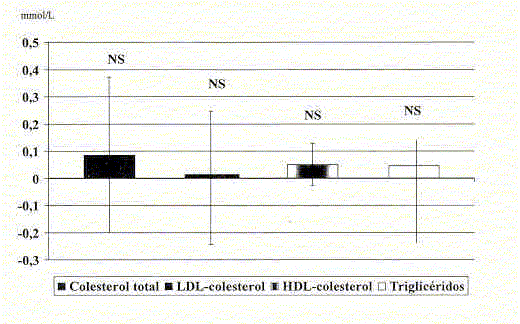
<P ALIGN="JUSTIFY">Seg&uacute;n Berthold y colaboradores, algunos <FONT COLOR="#008000">estudios investigando</FONT> los efectos hipolipemiantes del ajo est&aacute;n a veces mal dise&ntilde;ados a causa de la descripci&oacute;n inadecuada de los m&eacute;todos y de los pacientes estudiados o est&aacute;n sujetos a conflictos de inter&eacute;s (36). Adem&aacute;s la precisi&oacute;n de los datos obtenidos en los meta-an&aacute;lisis est&aacute; limitada por la pobre calidad de los estudios revisados y el peque&ntilde;o n&uacute;mero de estudios donde se se&ntilde;alan resultados negativos (36). </P>     <P ALIGN="JUSTIFY">Sin embargo, diversas referencias epidemiol&oacute;gicas apoyan los efectos beneficiosos del ajo en las enfermedades cardiovasculares. Sainani y colaboradores estudiaron la influencia del ajo, como componente de la dieta, sobre el perfil lip&iacute;dico sangu&iacute;neo de una comunidad y observaron que los niveles de colesterol m&aacute;s bajos se daban en aquellos individuos que mayor cantidad de ajos consum&iacute;an, mientras que los niveles de colesterol eran progresivamente mas elevados a medida que disminu&iacute;a la ingesta de ajo, presentando los niveles m&aacute;s altos de este l&iacute;pido aquellos individuos que no consum&iacute;an nada de ajo (40). Bien conocido es el estudio de los Siete Pa&iacute;ses, en el que se encontr&oacute; una correlaci&oacute;n inversa entre el consumo medio de ajo y la incidencia de enfermedad coronaria (41). Un trabajo anterior realizado en Hungr&iacute;a tambi&eacute;n comprob&oacute; que la poblaci&oacute;n que consum&iacute;a cantidades promedio elevadas de ajo estaba especialmente protegida frente a la cardiopat&iacute;a coronaria (42). Otros estudios han se&ntilde;alado que el consumo de ajos puede disminuir la lipemia postprandial (43). Aunque los mecanismos bioqu&iacute;micos responsables de estas acciones no est&aacute;n totalmente definidos, se cree que este vegetal puede actuar como modulador de muchas enzimas que participan en el metabolismo lipoproteico y que podr&iacute;an explicar, al menos en parte, las modificaciones encontradas en los l&iacute;pidos plasm&aacute;ticos. As&iacute; se ha definido el efecto inhibidor del ajo sobre el enzima clave de la s&iacute;ntesis de colesterol, la 3-hydroxy-3-metil-glutaril-CoA-reductasa (44). </P> <B>    ]]></body>
<body><![CDATA[<P ALIGN="JUSTIFY">Efectos del consumo de ajos sobre el status antioxidante y la peroxidaci&oacute;n del suero y las lipoprote&iacute;nas </P> </B>    <P ALIGN="JUSTIFY">En 1989 Steinberg y colaboradores combinaban la teor&iacute;a lip&iacute;dica de la aterosclerosis y la respuesta al da&ntilde;o endotelial, con los conocimientos referentes a la modificaci&oacute;n oxidativa de las LDL, insistiendo en el importante papel de las LDL oxidadas en la g&eacute;nesis y en la progresi&oacute;n del proceso ateroscler&oacute;tico (45). Seg&uacute;n Witzum algunos factores afectan de forma determinante la susceptibilidad de las LDL a la oxidaci&oacute;n (46). Entre los factores intr&iacute;nsecos merecen destacarse el contenido en dichas lipoprote&iacute;nas de &aacute;cidos grasos (AG) poliinsaturados y AG monoinsaturados y antioxidantes end&oacute;genos, tambi&eacute;n el tama&ntilde;o de estas part&iacute;culas lipoproteicas. Respecto a los factores extr&iacute;nsecos destaca el equilibrio entre el contenido extracelular de algunos componentes prooxidantes y la concentraci&oacute;n de antioxidantes, as&iacute; como los niveles de lipoprote&iacute;nas de alta densidad (HDL) (46). A su vez se ha demostrado en las lesiones ateroscler&oacute;ticas la presencia de tales LDL-oxidadas y anticuerpos autoinmunes contra LDL- oxidadas (47). Seg&uacute;n Holvoet y Collen estas part&iacute;culas lipoproteicas y sus anticuerpos correspondientes acelerar&iacute;an la progresi&oacute;n de las lesiones (i) incrementando la adhesi&oacute;n de monocitos y macr&oacute;fagos generando c&eacute;lulas espumosas, (ii) induciendo la migraci&oacute;n de las c&eacute;lulas de m&uacute;sculo liso y su proliferaci&oacute;n y transformaci&oacute;n en c&eacute;lulas espumosas, (iii) incrementando la adhesi&oacute;n de las plaquetas y su agregaci&oacute;n, la cual estimular&iacute;a la formaci&oacute;n de c&eacute;lulas espumosas y proliferaci&oacute;n de c&eacute;lulas de m&uacute;sculo liso; (iv) desencadenando trombosis, y (v) dificultando la vasodilataci&oacute;n la cual resultar&iacute;a en un incremento del stress circulatorio (48). </P>     <P ALIGN="JUSTIFY">Scherat y colaboradores (49) estudiaron en 25 voluntarios (13 mujeres y 12 hombres) con edad media de 35,2±15,1 a&ntilde;os la influencia de la aplicaci&oacute;n de una dosis diaria de 900 mg de polvo seco de ajo conteniendo 1,3% de alicina durante un periodo de 9 semanas sobre la peroxidaci&oacute;n del suero y el status del glutation (un marcador del balance prooxidante/ antioxidante) (49). Estos autores encontraron al completarse el tratamiento un descenso del 63% en el status del glutation (glutation reducido (GSH) y glutation peroxidado (GSSG) despu&eacute;s de 9 semanas de tratamiento. Esta disminuci&oacute;n fue porcentualmente mas importante en los 9 individuos de mas de 40 a&ntilde;os (76%) que en los 16 con menos de 30 a&ntilde;os (50%). Las diferencias significativas debidas a la edad al principio del estudio desaparecieron al final del tratamiento. En los eritrocitos se encontr&oacute; un incremento significativo del GSH que afect&oacute; al cociente GSSG/GSH (49). Estos resultados sugieren que dicha preparaci&oacute;n de ajo tuvo una buena actividad antioxidante en los humanos in vivo y est&aacute; de acuerdo con otros estudios (50,51). </P>     <P ALIGN="JUSTIFY">Se ha propuesto que la alicina muestra una analog&iacute;a estructural con el dimetilsulf&oacute;xido el cual posee una buena capacidad scavenger de radicales libres (49). Adem&aacute;s, el ajo contiene adem&aacute;s selenio de reconocido papel antioxidante (49). La modificaci&oacute;n del balance prooxidante/antioxidante promovido por el consumo de ajo se realizar&iacute;a a trav&eacute;s de los enzimas relacionados con el glutation y del sistema del citocromo P-450. As&iacute; se ha definido que dicha liliacea es activadora de los citocromos P-450 IIEI y P-450 IIBI (52), y de los enzimas glutation-S-transferasa, glutation peroxidasa y glutation reductasa (53). Adem&aacute;s, puede suponerse que los componentes azufrados del ajo act&uacute;an como precursores y regeneradores del GSH, como inductores enzim&aacute;ticos de la s&iacute;ntesis y regeneraci&oacute;n de GSH o como antioxidantes per se (49). </P>     <P ALIGN="JUSTIFY">Ismail y colaboradores estudiaron en conejos las propiedades antioxidantes de dietas hipercolesterolemiantes enrique- cidas con un 2% de ajo frente a otras conteniendo 10% de pectina, 2% de ginseng o 135 mg de gemfibrocil/kg de peso corporal. El incremento de la peroxidaci&oacute;n plasm&aacute;tica observado fue mucho significativamente menor en los animales que recibieron la dieta que conten&iacute;a ajo (22). </P> <B>    <P ALIGN="JUSTIFY">Aumento de la actividad tibrinolitica y acci&oacute;n antiagregante plaquetaria </P> </B>    <P ALIGN="JUSTIFY">Para asegurar la hemostasis, la coagulaci&oacute;n sangu&iacute;nea es equilibrada de manera fisiol&oacute;gica por lafibrinolisis. La alteraci&oacute;n de la actividad fibrinol&iacute;tica predispone a la formaci&oacute;n de co&aacute;gulos y a la trombosis. De otro lado, el aumento de la fibrinolisis puede proteger contra la trombosis y el infarto de miocardio o cerebral. </P>     <P ALIGN="JUSTIFY">Uno de los investigadores que m&aacute;s ha estudiado los efectos del ajo es Arun Bordia, de la India (24, 54-60). Para conocer los posibles efecto fibrinol&iacute;ticos del mismo, Bordia y colaboradores administraron l00g de mantequilla a 10 personas sanas, lo que produjo un marcada disminuci&oacute;n de la actividad fibrinol&iacute;tica. La adici&oacute;n de 50 g de ajo a la comida de cada participante produjo una disminuci&oacute;n en el tiempo de coagulaci&oacute;n y un incremento en la actividad fibrinol&iacute;tica (24). </P>     <P ALIGN="JUSTIFY">En otro estudio cl&iacute;nico reciente dos grupos de pacientes hipercolesterol&eacute;micos se trataron con un extracto envejecido, de ajo o con placebo, durante 10 meses y se observ&oacute; que la adhesi&oacute;n plaquetaria con fibrin&oacute;geno disminuy&oacute; un 30% en el grupo tratado con el extracto antiguo del ajo en comparaci&oacute;n con el grupo tratado con placebo (61). Por otra parte, Chutani y Bordia observaron que tal incremento ten&iacute;a lugar entre 6,5 y 12 horas despu&eacute;s de la toma de ajo (62). Asimismo, despu&eacute;s de la ingesta diaria de ajo durante un mes, detectaron en pacientes con cardiopat&iacute;a isqu&eacute;mica un incremento entre un 72% y un 85% de la fibrinolisis (62). Seg&uacute;n Bordia y colaboradores, tanto en voluntarios sanos como en enfermos con cardiopat&iacute;a isqu&eacute;mica, el ajo tambi&eacute;n previno el descenso post-prandial de la actividad fibrinol&iacute;tica (58). Despu&eacute;s de tres meses de tratamiento con aceite de ajo la actividad fibrinol&iacute;tica se elev&oacute; en voluntarios un 130%, mientras que en pacientes con antecedentes previos de infarto de miocardio lo hizo en un 84%, cifra que se redujo a un 24% en pacientes que hab&iacute;an sufrido un infarto de miocardio reciente. Sin embargo otros autores se&ntilde;alan que el ajo no modifica la fibrinog&eacute;nesis (63). </P>     <P ALIGN="JUSTIFY">Ali y colaboradores han comparado muy recientemente el efecto de extractos acuosos de ajo y cebolla crudos y hervidos sobre la agregaci&oacute;n plaquetaria inducida por col&aacute;geno. Ambos extractos crudos inhibieron de forma dosis-dependiente la agregaci&oacute;n plaquetaria, sin embargo el ajo se mostr&oacute; aproximadamente 13 veces mas activo que la cebolla. Los extractos hervidos fueron menos activos que los crudos, perdi&eacute;ndose la relaci&oacute;n dosis-respuesta en el extracto de cebolla (64). </P>     ]]></body>
<body><![CDATA[<P ALIGN="JUSTIFY">Bordia y colaboradores sugieren que los componentes del ajo (y de la cebolla) que act&uacute;an previendo la trombosis o la formaci&oacute;n de co&aacute;gulos o disolviendo los existentes -lo hacen gracias a suprimir la formaci&oacute;n de dos grupos de sustancias que intervienen en la trombog&eacute;nesis y coagulaci&oacute;n sangu&iacute;nea: las prostaglandinas y los tromboxanos (57). </P>     <P ALIGN="JUSTIFY">Los datos epidemiol&oacute;gicos est&aacute;n en sinton&iacute;a con los descubrimientos cl&iacute;nicos. As&iacute;, Sainani y colaboradores encontraron una correlaci&oacute;n positiva entre actividad fibrinol&iacute;tica y consumo declarado de ajo (40). </P>     <P ALIGN="JUSTIFY">Varios compuestos azufrados del ajo han sido asociados con dicho efecto. Uno de ellos es el ajoeno, el cual se presenta s&oacute;lo en preparaciones de base oleosa. La v&iacute;a precisa por la que el ajoeno previene la formaci&oacute;n de co&aacute;gulos no es completamente conocida. Uno de los grupos de investigaci&oacute;n que aisl&oacute; primero el ajoeno fue el de Apitz-Castro, quienes, adem&aacute;s encontraron que dicho compuesto del ajo potenciaba el efecto antitromb&oacute;tico de medicamentos antiinflamatorios (65). Este equipo investigador se&ntilde;ala que el ajoeno act&uacute;a bloqueando el receptor GP IIb/IIIa en ocasiones llamado el receptor de fibrin&oacute;geno. El GP IIb/IIIa es una prote&iacute;na que aparece en abundancia en la superficie de las plaquetas una vez que &eacute;stas han recibido la se&ntilde;al de formar agregados. Sin embargo, otros estudios se&ntilde;alan que el consumo de ajo no reduce in vitro la uni&oacute;n del fibrin&oacute;geno al receptor GP IIb/IIIa en cerdos (66). Tambi&eacute;n se ha atribuido este efecto antitromb&oacute;tico a la inhibici&oacute;n de la s&iacute;ntesis de tromboxano (67, 68), aunque otros estudios se&ntilde;alan que la producci&oacute;n in vitro de troboxano A2 no cambia en seres humanos (69). La alteraci&oacute;n de las propiedades de la membrana de las plaquetas (70) tambi&eacute;n ha sido considerada para explicar los beneficios observados. Asimismo, se ha comprobado que otro componente del ajo, el metil (2-propenil) trisulfito, es diez veces m&aacute;s potente inhibiendo la agregaci&oacute;n plaquetaria que el dialil-disulfito o trisulfito (71). </P>     <P ALIGN="JUSTIFY">El ajoeno podr&iacute;a no ser el principal componente activo antiplaquetario, porque no existe en el ajo de forma natural ni en sus preparaciones comerciales; pudiendo encontrarse s&oacute;lo una peque&ntilde;a cantidad peque&ntilde;a de ajoeno en la maceraci&oacute;n oleica del ajo. No obstante, el ajoeno se ha desarrollado como f&aacute;rmaco para tratamiento de desordenes tromboemb&oacute;licos, lleg&aacute;ndose incluso a pensar que el ajoeno puede ser &uacute;til como antigregante plaquetario en caso de intolerancia al &aacute;cido acetil-salic&iacute;lico (72). </P>     <P ALIGN="JUSTIFY">Algunos trabajos han estudiado la posible conexi&oacute;n entre el ajo, la regulaci&oacute;n de la coagulaci&oacute;n sangu&iacute;nea y la v&iacute;a L- arginina-&oacute;xido n&iacute;trico, sin resultados concluyentes por el momento (73). </P> <B>    <P ALIGN="JUSTIFY">Efecto sobre la tensi&oacute;n arterial </P> </B>    <P ALIGN="JUSTIFY">Los efectos hipotensores del ajo ya fueron descritos en el a&ntilde;o 1921 por Loepery Debray (74). M&aacute;s tarde, otros estudios llegaron a la conclusi&oacute;n que la administraci&oacute;n regular de ajo a pacientes con hipertensi&oacute;n esencial puede inducir una reducci&oacute;n de la tensi&oacute;n sist&oacute;lica entre 12 y 30 mmHg, y de la diast&oacute;lica entre 7 y 20 mmHg (27,75,76). Trabajos m&aacute;s recientes han confirmado este efecto hipotensor del ajo (77, 78). No obstante el estudio de McCrindle y colaboradores realizado en chicos de 8 a 18 a&ntilde;os con hiperlipemia familiar el suplemento de 300 mg de extracto de ajo 3 veces al d&iacute;a result&oacute; ineficaz para disminuir la tensi&oacute;n arterial (32). </P>     <P ALIGN="JUSTIFY">En un estudio no controlado de corta duraci&oacute;n realizado en seres humanos con hipertensi&oacute;n arterial moderada se ha sugerido un efecto hipotensor moderado del consumo de ajos (79). Este efecto tambi&eacute;n ha sido corroborado en ratas y podr&iacute;a ser debido a una acci&oacute;n directa de algunos componentes del ajo sobre el endotelio vascular (80). </P>     <P ALIGN="JUSTIFY">No se conoce con certeza cual o cuales son los ingredientes del ajo que intervienen en la reducci&oacute;n de la presi&oacute;n arterial. Melzig y Krause se&ntilde;alan que determinados componentes del ajo (saponinas y carbohidratos afines a la fructosa) act&uacute;an como inhibidores del enzima adenosina deaminasa (ADA) en la aorta (81). La adenosina est&aacute; presente en cantidades significativas en el ajo. Si el enzima ADA es inhibida, m&aacute;s adenosina se encuentra disponible. De esta forma la adenosina puede ayudar a dilatar los vasos sangu&iacute;neos y a relajar la musculatura lisa intramural. Ambos efectos conducen a reducir la presi&oacute;n arterial. En dicho estudio tambi&eacute;n se indica que algunos de los efectos encontrados desaparecieron cuando en los experimentos se emple&oacute; extracto en polvo en lugar de ajo fresco (81). </P>     <P ALIGN="JUSTIFY">Otra posible explicaci&oacute;n se encuentra en los trabajos llevados a cabo en la Charing Cross and Westminister Medical School de Londres por un grupo de investigadores dirigidos por el doctor Indrajit Das (82). Este grupo encontr&oacute; una relaci&oacute;n entre las cantidades de ajo consumidas y los niveles de &oacute;xido n&iacute;trico en sangre. Entre otras muchas funciones, el &oacute;xido n&iacute;trico ejerce un importante efecto vasodilatador en arterias intactas. En experimentos realizados con cultivos celulares estos autores comprobaron que a medida que se incrementaba la dosis de ajo, tambi&eacute;n se incrementaban los niveles de la enzima &oacute;xido n&iacute;trico sintetasa, la cual interviene en la formaci&oacute;n de &oacute;xido n&iacute;trico. </P>     ]]></body>
<body><![CDATA[<P ALIGN="JUSTIFY">Asimismo, con la intenci&oacute;n de justificar el efecto hipotensor del ajo se han propuesto algunos otros mecanismos, tales como la modulaci&oacute;n de la producci&oacute;n de prostaglandinas (83), o el bloqueo de los beta-adrenoreceptores (78). </P> <B>    <P ALIGN="JUSTIFY">Efecto sobre la elasticidad vascular</P> </B>    <P ALIGN="JUSTIFY">En un estudio epidemiol&oacute;gico reciente se ha se&ntilde;alado el efecto protector del consumo prolongado de ajo frente a la p&eacute;rdida fisiol&oacute;gica de la elasticidad vascular secundaria al envejecimiento (84). En &eacute;l se seleccionaron 101 adultos sanos de ambos sexos, con edades entre 50 y 80 a&ntilde;os, que tomaron una cantidad diaria 300mg de extracto de polvo de ajo durante un periodo de 2&oacute; m&aacute;s a&ntilde;os, frente a otro grupo control de 101 sujetos. Se midi&oacute; la elasticidad de la aorta por medio de la velocidad de onda del pulso (PWV) y de la resistencia el&aacute;stica vascular (EVR). Las conclusiones de dicho estudio fueron que la toma prolongada de polvo de ajo contribuye a atenuar la progresiva falta de estabilidad que con el paso del tiempo se produce en la pared de la aorta (84). </P>     <P ALIGN="JUSTIFY">Tambi&eacute;n se ha visto, sobre todo en animales de laboratorio, que la administraci&oacute;n de ajo disminuye la acumulaci&oacute;n de l&iacute;pidos en las arterias repercutiendo por tanto en la elasticidad vascular (37,64,80). </P>     <P ALIGN="JUSTIFY">En arterias ateroscler&oacute;ticas humanas el enzima &oacute;xido n&iacute;trico sintetasa puede promover vasoconstricci&oacute;n. Dirch y colaboradores estudiaron el efecto de la alicina y el ajoeno sobre la inducci&oacute;n del enzima oxido nitrico sintetasa en macr&oacute;fagos estimulados con mucopolisac&aacute;ridos (85). Tanto el ajoeno como la alicina redujeron la acumulaci&oacute;n de nitrito (un marcador de la s&iacute;ntesis de &oacute;xido n&iacute;trico) en el sobrenadante de los cultivos de macr&oacute;fagos. Tambi&eacute;n la expresi&oacute;n g&eacute;nica y la actividad de la &oacute;xido n&iacute;trico sintetasa estuvieron disminuidas. Dado el papel de los macr&oacute;fagos en el desarrollo de la enfermedad cardiovascular (45,48), Dirch y colaboradores sugieren que los efectos cardiovasculares beneficiosos del consumo de ajo podr&iacute;an deberse a este mecanismo (85). </P> <B>    <P ALIGN="JUSTIFY">CONCLUSIONES E IMPLICACIONES</P> </B>    <P ALIGN="JUSTIFY">El grueso de estudios, tanto epidemiol&oacute;gicos como cl&iacute;nicos y de laboratorio, se&ntilde;ala que el ajo puede tener efectos positivos sobre los factores de riesgo cardiovascular, ya que reduce la hiperlipidemia, la hipertensi&oacute;n, y previene la formaci&oacute;n de trombos. En base a su potencial antiarterioscler&oacute;tico (77,85), grupos prominentes de investigaci&oacute;n han apoyado el uso del ajo para la prevenci&oacute;n de las enfermedades cardiovasculares (83,87,88). Los escasos efectos secundarios del ajo - olor, molestias digestivas, etc. (6,76), hacen del ajo y de sus componentes qu&iacute;micos una atractiva herramienta terap&eacute;utica en el campo cardiovascular, acercando la posibilidad de prolongar la vida sin poner en peligro su calidad. </P>     <P ALIGN="JUSTIFY">Aunque los resultados de numerosas investigaciones han encontrado un efecto dosis-dependiente en la actividad del ajo, no hay consenso en cuanto a la dosis m&iacute;nima requerida para obtener cambios beneficiosos. No obstante, en cuanto al extracto en polvo, se suele recomendar una toma m&iacute;nima de 600 mg por d&iacute;a (lo dosis m&aacute;s habitual empleada suele ser de 900 mg, dividida en tres tomas). Dada la perdida producida durante la preparaciones t&eacute;rmicas y culinarias en compuestos qu&iacute;micos activos, se aconseja tomar el ajo crudo o en preparaciones espec&iacute;ficas. Entre las m&aacute;s usuales se encuentran: los aceites esenciales y los extractos secos en polvo; productos que adem&aacute;s tienen la ventaja de carecer del fuerte olor propio del ajo crudo. </P>     <P ALIGN="JUSTIFY">Es importante tener presente que la U. S. Food and Drug Administration no ha aprobado el ajo - ni los productos derivados del mismo - como agentes reductores del colesterol. Sin embargo, el gobierno alem&aacute;n si ha dado un paso en esta direcci&oacute;n. Como resultado, la Kommission E de la Agencia Federal Alemana de Salud equivalente a la FDA norteamericana -, ha incluido en su monograf&iacute;a que una dosis de 4 g diarios de ajo crudo, o bien 8 mg de aceite esencial de ajo, son apropiados para controlar el colesterol y prevenir otros factores de riesgo cardiovascular. Puesto que el peso medio de un diente de ajo es de tres a cuatro gramos, seg&uacute;n las recomendaciones del organismo alem&aacute;n, un poco menos de un diente y medio de ajo al d&iacute;a proveer&iacute;a la cantidad terap&eacute;utica suficiente. </P>     <P ALIGN="JUSTIFY">No obstante debemos tambi&eacute;n considerar que en nutrici&oacute;n un producto puede ponerse de moda y ser consumido de forma indiscriminada y en grandes cantidades, pudiendo ocurrir que algo beneficioso se convirtiera en t&oacute;xico, ya que se es conocido que a dosis altas puede ser causante de irritaci&oacute;n g&aacute;strica y na&uacute;seas. </P>     ]]></body>
<body><![CDATA[<P ALIGN="JUSTIFY">Por &uacute;ltimo creemos que los diferentes resultados obtenidos sobre los efectos del ajo se deben: </P>     <p>a)&nbsp; a la diversidad de preparaciones del ajo utilizadas</p>     <p>b)&nbsp; a la diversidad de dosis y periodos de tratamiento</p>     <p>c)&nbsp; a la naturaleza de los componentes del ajo, ya que su composici&oacute;n qu&iacute;mica cambia en funci&oacute;n de frescura y secado del ajo.</p>      <P ALIGN="JUSTIFY">S&oacute;lo ensayos qu&iacute;micos realizados con preparaciones estrictamente definidas podr&aacute;n permitir la desaparici&oacute;n de estas big&uuml;edades y de ciertos efectos adversos del ajo. La existencia de sospechas acerca de la validez de la metodolog&iacute;a utilizada en muchos estudios, la aparici&oacute;n de algunos trabajos ponen en duda los efectos beneficiosos potenciales del ajo falta de consenso sobre cuales son las dosis y las formas o presentaciones m&aacute;s adecuadas, hace necesario que se realicen un mayor n&uacute;mero de investigaciones al respecto. </P> <B>    <P ALIGN="JUSTIFY">REFERENCIAS</P>  </B>     <!-- ref --><p>1. Block E. The chemistry of garlic and onions. Sci Am 1985;252:114-119.&nbsp;&nbsp;&nbsp;&nbsp;&nbsp;&nbsp;&nbsp;&nbsp;[&#160;<a href="javascript:void(0);" onclick="javascript: window.open('/scielo.php?script=sci_nlinks&ref=353549&pid=S0004-0622200000030000200001&lng=','','width=640,height=500,resizable=yes,scrollbars=1,menubar=yes,');">Links</a>&#160;]<!-- end-ref --><!-- ref --><p>2. Block E. Antithrombotic agent of gar1ic: A lesson from 5000 years of folk medicine. In: Steiner RP, editor. Folk Medicine: The Art and the Science. Washington, DC: American Chemical Society, 1986:125-137.&nbsp;&nbsp;&nbsp;&nbsp;&nbsp;&nbsp;&nbsp;&nbsp;[&#160;<a href="javascript:void(0);" onclick="javascript: window.open('/scielo.php?script=sci_nlinks&ref=353550&pid=S0004-0622200000030000200002&lng=','','width=640,height=500,resizable=yes,scrollbars=1,menubar=yes,');">Links</a>&#160;]<!-- end-ref --><!-- ref --><p>3. Srivastava KC, Bordiov A, Verma K. Garlic <I>(Allium sativum) </I>for disease prevention. South African J Sci 1995;91:68-77.&nbsp;&nbsp;&nbsp;&nbsp;&nbsp;&nbsp;&nbsp;&nbsp;[&#160;<a href="javascript:void(0);" onclick="javascript: window.open('/scielo.php?script=sci_nlinks&ref=353551&pid=S0004-0622200000030000200003&lng=','','width=640,height=500,resizable=yes,scrollbars=1,menubar=yes,');">Links</a>&#160;]<!-- end-ref --><!-- ref --><p>4. Fenwick GR, Hanley AB. The genus Allium. Part 1. CRC Crit Rev Food Sci Nutr 1985;22:199-271.&nbsp;&nbsp;&nbsp;&nbsp;&nbsp;&nbsp;&nbsp;&nbsp;[&#160;<a href="javascript:void(0);" onclick="javascript: window.open('/scielo.php?script=sci_nlinks&ref=353552&pid=S0004-0622200000030000200004&lng=','','width=640,height=500,resizable=yes,scrollbars=1,menubar=yes,');">Links</a>&#160;]<!-- end-ref --><!-- ref --><p>5. Hanly AB, Fenwick GR. Cultivated alliums. J Plant Foods 1985; 6:211-238.&nbsp;&nbsp;&nbsp;&nbsp;&nbsp;&nbsp;&nbsp;&nbsp;[&#160;<a href="javascript:void(0);" onclick="javascript: window.open('/scielo.php?script=sci_nlinks&ref=353553&pid=S0004-0622200000030000200005&lng=','','width=640,height=500,resizable=yes,scrollbars=1,menubar=yes,');">Links</a>&#160;]<!-- end-ref --><!-- ref --><p>6. Moyers S. Garlic in health, history, and world cuisine. St. Petersburg, USA: Suncoast Press, 1996.&nbsp;&nbsp;&nbsp;&nbsp;&nbsp;&nbsp;&nbsp;&nbsp;[&#160;<a href="javascript:void(0);" onclick="javascript: window.open('/scielo.php?script=sci_nlinks&ref=353554&pid=S0004-0622200000030000200006&lng=','','width=640,height=500,resizable=yes,scrollbars=1,menubar=yes,');">Links</a>&#160;]<!-- end-ref --><!-- ref --><p>7. Souci SW, Fachmann W, Krant H. Food Composition and Nutrition Tables. Stuttgart: Medpharm, 1994.&nbsp;&nbsp;&nbsp;&nbsp;&nbsp;&nbsp;&nbsp;&nbsp;[&#160;<a href="javascript:void(0);" onclick="javascript: window.open('/scielo.php?script=sci_nlinks&ref=353555&pid=S0004-0622200000030000200007&lng=','','width=640,height=500,resizable=yes,scrollbars=1,menubar=yes,');">Links</a>&#160;]<!-- end-ref --><!-- ref --><p>8. Ministerio de Sanidad y Consumo. Secretar&iacute;a General T&eacute;cnica. Carretero Baeza ML, G&oacute;mez Vazquez MD revisi&oacute;n y coordinaci&oacute;n. Tablas de Composici&oacute;n de Alimentos Espa&ntilde;oles 1995.&nbsp;&nbsp;&nbsp;&nbsp;&nbsp;&nbsp;&nbsp;&nbsp;[&#160;<a href="javascript:void(0);" onclick="javascript: window.open('/scielo.php?script=sci_nlinks&ref=353556&pid=S0004-0622200000030000200008&lng=','','width=640,height=500,resizable=yes,scrollbars=1,menubar=yes,');">Links</a>&#160;]<!-- end-ref --><!-- ref --><p>9. Lancaster JE, McCallion BJ, Shaw ML. The levels of precursors, the S-alk(en)yl-L-cysteine sulphoxides during the growth of the onion (Allium cepa L.). J Sci Food Agric 1984;35:415-421.&nbsp;&nbsp;&nbsp;&nbsp;&nbsp;&nbsp;&nbsp;&nbsp;[&#160;<a href="javascript:void(0);" onclick="javascript: window.open('/scielo.php?script=sci_nlinks&ref=353557&pid=S0004-0622200000030000200009&lng=','','width=640,height=500,resizable=yes,scrollbars=1,menubar=yes,');">Links</a>&#160;]<!-- end-ref --><!-- ref --><p>10. Mazza G. Functional Foods. Biochernical &amp; Processing Aspects. Lancaster, Basel: Technomic Publishing CO., Inc. 1998:204- 233.&nbsp;&nbsp;&nbsp;&nbsp;&nbsp;&nbsp;&nbsp;&nbsp;[&#160;<a href="javascript:void(0);" onclick="javascript: window.open('/scielo.php?script=sci_nlinks&ref=353558&pid=S0004-0622200000030000200010&lng=','','width=640,height=500,resizable=yes,scrollbars=1,menubar=yes,');">Links</a>&#160;]<!-- end-ref --><!-- ref --><p>11. Freeman GG. Distribution of flavour components in onion <I>(Allium cepa l.), </I>leek <I>(Allium porrum) </I>and garlic <I>(Allium sativum). </I>J Sci Food Agric 1975;26:471-481.&nbsp;&nbsp;&nbsp;&nbsp;&nbsp;&nbsp;&nbsp;&nbsp;[&#160;<a href="javascript:void(0);" onclick="javascript: window.open('/scielo.php?script=sci_nlinks&ref=353559&pid=S0004-0622200000030000200011&lng=','','width=640,height=500,resizable=yes,scrollbars=1,menubar=yes,');">Links</a>&#160;]<!-- end-ref --><!-- ref --><p>12. Malkeja AN, Bailey JM. Antiplatelet constituents of garlic and onions. Agent Actions 1990;29:360-363.&nbsp;&nbsp;&nbsp;&nbsp;&nbsp;&nbsp;&nbsp;&nbsp;[&#160;<a href="javascript:void(0);" onclick="javascript: window.open('/scielo.php?script=sci_nlinks&ref=353560&pid=S0004-0622200000030000200012&lng=','','width=640,height=500,resizable=yes,scrollbars=1,menubar=yes,');">Links</a>&#160;]<!-- end-ref --><!-- ref --><p>13. Freeman GG, Whenham RJ. Changes in onion <I>(Allium cepa L.) </I>flavour components resulting from some postharvest processes. J Sci Food Agric 1974;25:499-515.&nbsp;&nbsp;&nbsp;&nbsp;&nbsp;&nbsp;&nbsp;&nbsp;[&#160;<a href="javascript:void(0);" onclick="javascript: window.open('/scielo.php?script=sci_nlinks&ref=353561&pid=S0004-0622200000030000200013&lng=','','width=640,height=500,resizable=yes,scrollbars=1,menubar=yes,');">Links</a>&#160;]<!-- end-ref --><!-- ref --><p>14. Freeman GG, Whenham RJ. Nature and origin of volatile flavour components of onions and re1ated species. Flavours 1976;910:222-229&nbsp;&nbsp;&nbsp;&nbsp;&nbsp;&nbsp;&nbsp;&nbsp;[&#160;<a href="javascript:void(0);" onclick="javascript: window.open('/scielo.php?script=sci_nlinks&ref=353562&pid=S0004-0622200000030000200014&lng=','','width=640,height=500,resizable=yes,scrollbars=1,menubar=yes,');">Links</a>&#160;]<!-- end-ref --><!-- ref --><p>15. Breu W, Dorch W. <I>Allium cepa L </I>(onion): Chemistry analysis and pharmacology. Econ Med Plant Res 1994;6: 116-147.&nbsp;&nbsp;&nbsp;&nbsp;&nbsp;&nbsp;&nbsp;&nbsp;[&#160;<a href="javascript:void(0);" onclick="javascript: window.open('/scielo.php?script=sci_nlinks&ref=353563&pid=S0004-0622200000030000200015&lng=','','width=640,height=500,resizable=yes,scrollbars=1,menubar=yes,');">Links</a>&#160;]<!-- end-ref --><!-- ref --><p>16. Sumiyoshi H, Wargovich MJ. Garlic <I>(Allium sativum): </I>A review of its relationship to cancer. Asia Pacific J Pharmacol 1989;4:133-140.&nbsp;&nbsp;&nbsp;&nbsp;&nbsp;&nbsp;&nbsp;&nbsp;[&#160;<a href="javascript:void(0);" onclick="javascript: window.open('/scielo.php?script=sci_nlinks&ref=353564&pid=S0004-0622200000030000200016&lng=','','width=640,height=500,resizable=yes,scrollbars=1,menubar=yes,');">Links</a>&#160;]<!-- end-ref --><!-- ref --><p>17. Bobbol A, Augusti KT, Joseph PK. Hypolipidemic effects of onion oil and garlic oil in ethano1-fed rats. Indian J Biochem Biophys 1984;21,211-213.&nbsp;&nbsp;&nbsp;&nbsp;&nbsp;&nbsp;&nbsp;&nbsp;[&#160;<a href="javascript:void(0);" onclick="javascript: window.open('/scielo.php?script=sci_nlinks&ref=353565&pid=S0004-0622200000030000200017&lng=','','width=640,height=500,resizable=yes,scrollbars=1,menubar=yes,');">Links</a>&#160;]<!-- end-ref --><!-- ref --><p>18. Chi MS, Koh ET, Stewart TI. Effects of garlic on lipid metabolism in rats fed cholesterol or lard. J Nutr 1982;112:241- 248.&nbsp;&nbsp;&nbsp;&nbsp;&nbsp;&nbsp;&nbsp;&nbsp;[&#160;<a href="javascript:void(0);" onclick="javascript: window.open('/scielo.php?script=sci_nlinks&ref=353566&pid=S0004-0622200000030000200018&lng=','','width=640,height=500,resizable=yes,scrollbars=1,menubar=yes,');">Links</a>&#160;]<!-- end-ref --><!-- ref --><p>19. Kamanna VS, Cahdrasekhara N. Hypocholesterolemic activity of different fractions of garlic. Indian J Med Res 1984;79:580- 583.&nbsp;&nbsp;&nbsp;&nbsp;&nbsp;&nbsp;&nbsp;&nbsp;[&#160;<a href="javascript:void(0);" onclick="javascript: window.open('/scielo.php?script=sci_nlinks&ref=353567&pid=S0004-0622200000030000200019&lng=','','width=640,height=500,resizable=yes,scrollbars=1,menubar=yes,');">Links</a>&#160;]<!-- end-ref --><!-- ref --><p>20. Pushpendran CK, Devasagayam TPA, Banerji A, Eapen J. Cholesterol-lowering effect of allicin in suckling rats. Indian J Exp Biol 1980;18:858-861.&nbsp;&nbsp;&nbsp;&nbsp;&nbsp;&nbsp;&nbsp;&nbsp;[&#160;<a href="javascript:void(0);" onclick="javascript: window.open('/scielo.php?script=sci_nlinks&ref=353568&pid=S0004-0622200000030000200020&lng=','','width=640,height=500,resizable=yes,scrollbars=1,menubar=yes,');">Links</a>&#160;]<!-- end-ref --><!-- ref --><p>21. Srivastava M, Swarn N, Kapoor NK. Effect of hypocholesterolemic agents of plant origin on catecholamine biosynthesis in normal and cholesterol red rabbits. J Biosci 1984;3:277-282.&nbsp;&nbsp;&nbsp;&nbsp;&nbsp;&nbsp;&nbsp;&nbsp;[&#160;<a href="javascript:void(0);" onclick="javascript: window.open('/scielo.php?script=sci_nlinks&ref=353569&pid=S0004-0622200000030000200021&lng=','','width=640,height=500,resizable=yes,scrollbars=1,menubar=yes,');">Links</a>&#160;]<!-- end-ref --><!-- ref --><p>22. Ismai1 MF, Gad MZ, Hamdy MA. Study of the hypolipidemic properties of pectin, garlic and ginseng in hypercholesterolemic rabbits. Pharmacol Res 1999;39:157-166.&nbsp;&nbsp;&nbsp;&nbsp;&nbsp;&nbsp;&nbsp;&nbsp;[&#160;<a href="javascript:void(0);" onclick="javascript: window.open('/scielo.php?script=sci_nlinks&ref=353570&pid=S0004-0622200000030000200022&lng=','','width=640,height=500,resizable=yes,scrollbars=1,menubar=yes,');">Links</a>&#160;]<!-- end-ref --><!-- ref --><p>23. Basksh R, Chughatai MID. Influence of garlic on serum cholesterol, serum triglycerides, serum total lipids and serum glucose in human subjects. Nahrung 1984;28:159-163.&nbsp;&nbsp;&nbsp;&nbsp;&nbsp;&nbsp;&nbsp;&nbsp;[&#160;<a href="javascript:void(0);" onclick="javascript: window.open('/scielo.php?script=sci_nlinks&ref=353571&pid=S0004-0622200000030000200023&lng=','','width=640,height=500,resizable=yes,scrollbars=1,menubar=yes,');">Links</a>&#160;]<!-- end-ref --><!-- ref --><p>24. Bordia AK, Bansai HC, Arora SK, Rathore <I>AS, </I>Ranawat RVS, Singh SV. Effects of the essential oil (active principle) of garlic on serum cholesterol, plasma fibrinogen, whole blood coagu1ation time and fibrinolytic activity in alimentary lipaemia. J Assoc Physicians India 1974;22:267-270.&nbsp;&nbsp;&nbsp;&nbsp;&nbsp;&nbsp;&nbsp;&nbsp;[&#160;<a href="javascript:void(0);" onclick="javascript: window.open('/scielo.php?script=sci_nlinks&ref=353572&pid=S0004-0622200000030000200024&lng=','','width=640,height=500,resizable=yes,scrollbars=1,menubar=yes,');">Links</a>&#160;]<!-- end-ref --><!-- ref --><p>25. Bhushan S, Sharma SP, Agrawall S, Indraycin A, Seth P. Effects of garlic on normal blood cholesterol levels. Indian J Physiol Pharmacol 1979;23:211-214.&nbsp;&nbsp;&nbsp;&nbsp;&nbsp;&nbsp;&nbsp;&nbsp;[&#160;<a href="javascript:void(0);" onclick="javascript: window.open('/scielo.php?script=sci_nlinks&ref=353573&pid=S0004-0622200000030000200025&lng=','','width=640,height=500,resizable=yes,scrollbars=1,menubar=yes,');">Links</a>&#160;]<!-- end-ref --><!-- ref --><p>26. Augusti KT. Hypocholesterolaemic effect of garlic <I>(Allium sativum). </I>Indian J Exp Biol1977;15:489-490.&nbsp;&nbsp;&nbsp;&nbsp;&nbsp;&nbsp;&nbsp;&nbsp;[&#160;<a href="javascript:void(0);" onclick="javascript: window.open('/scielo.php?script=sci_nlinks&ref=353574&pid=S0004-0622200000030000200026&lng=','','width=640,height=500,resizable=yes,scrollbars=1,menubar=yes,');">Links</a>&#160;]<!-- end-ref --><!-- ref --><p>27. Damnau F. The use of garlic concentrate in vascular hypertension. Med Record 1941;153:249-251.&nbsp;&nbsp;&nbsp;&nbsp;&nbsp;&nbsp;&nbsp;&nbsp;[&#160;<a href="javascript:void(0);" onclick="javascript: window.open('/scielo.php?script=sci_nlinks&ref=353575&pid=S0004-0622200000030000200027&lng=','','width=640,height=500,resizable=yes,scrollbars=1,menubar=yes,');">Links</a>&#160;]<!-- end-ref --><!-- ref --><p>28. Sucur M. Effect of garlic on serum lipids and lipoproteins in patients suffering from hyperlipoproteinernia. Diabetol Croatica 1980;9:323-338.&nbsp;&nbsp;&nbsp;&nbsp;&nbsp;&nbsp;&nbsp;&nbsp;[&#160;<a href="javascript:void(0);" onclick="javascript: window.open('/scielo.php?script=sci_nlinks&ref=353576&pid=S0004-0622200000030000200028&lng=','','width=640,height=500,resizable=yes,scrollbars=1,menubar=yes,');">Links</a>&#160;]<!-- end-ref --><!-- ref --><p>29. Ernst E, Weihmayr T, Matrai A. Garlic and blood lipids. Br Med J 1985;291:139.&nbsp;&nbsp;&nbsp;&nbsp;&nbsp;&nbsp;&nbsp;&nbsp;[&#160;<a href="javascript:void(0);" onclick="javascript: window.open('/scielo.php?script=sci_nlinks&ref=353577&pid=S0004-0622200000030000200029&lng=','','width=640,height=500,resizable=yes,scrollbars=1,menubar=yes,');">Links</a>&#160;]<!-- end-ref --><!-- ref --><p>30. Warshafsky S, Kamer RS, Sivak SI. Effect of garlic on total serum cholesterol: a meta-analysis. Ann Intern Med 1993;119; 599-615.&nbsp;&nbsp;&nbsp;&nbsp;&nbsp;&nbsp;&nbsp;&nbsp;[&#160;<a href="javascript:void(0);" onclick="javascript: window.open('/scielo.php?script=sci_nlinks&ref=353578&pid=S0004-0622200000030000200030&lng=','','width=640,height=500,resizable=yes,scrollbars=1,menubar=yes,');">Links</a>&#160;]<!-- end-ref --><!-- ref --><p>31. Silagy C, Nei1 A. Garlic as a lipid lowering agent- a meta- analysis, J R Coll Physicians London 1994;28:39-45.&nbsp;&nbsp;&nbsp;&nbsp;&nbsp;&nbsp;&nbsp;&nbsp;[&#160;<a href="javascript:void(0);" onclick="javascript: window.open('/scielo.php?script=sci_nlinks&ref=353579&pid=S0004-0622200000030000200031&lng=','','width=640,height=500,resizable=yes,scrollbars=1,menubar=yes,');">Links</a>&#160;]<!-- end-ref --><!-- ref --><p>32. McCrindle BW, Helden E, Conner WT. Garlic extract therapy in children with hypercholesterolemia. Arch Pediatr Adolesc Med 1998;152:1089-94.&nbsp;&nbsp;&nbsp;&nbsp;&nbsp;&nbsp;&nbsp;&nbsp;[&#160;<a href="javascript:void(0);" onclick="javascript: window.open('/scielo.php?script=sci_nlinks&ref=353580&pid=S0004-0622200000030000200032&lng=','','width=640,height=500,resizable=yes,scrollbars=1,menubar=yes,');">Links</a>&#160;]<!-- end-ref --><!-- ref --><p>33. Isaacsohn J L, Moser M, Stein EA, Dudley K, Liskov E, Black HR. Garlic powder and plasma lipids and lipoproteins: a multicenter, randornized, placebo-controlled trial. Arch Intern Med 1998;158:1189-94.&nbsp;&nbsp;&nbsp;&nbsp;&nbsp;&nbsp;&nbsp;&nbsp;[&#160;<a href="javascript:void(0);" onclick="javascript: window.open('/scielo.php?script=sci_nlinks&ref=353581&pid=S0004-0622200000030000200033&lng=','','width=640,height=500,resizable=yes,scrollbars=1,menubar=yes,');">Links</a>&#160;]<!-- end-ref --><!-- ref --><p>34. Simons LA, Balasubramiam S, Von Konigsmark M, Parfitt A, Simons J, Peters W. On the effect of garlic on plasma lipids and lipoproteins in mild hypercholesterolaemia. Atherosclerosis 1995;113:219-225.&nbsp;&nbsp;&nbsp;&nbsp;&nbsp;&nbsp;&nbsp;&nbsp;[&#160;<a href="javascript:void(0);" onclick="javascript: window.open('/scielo.php?script=sci_nlinks&ref=353582&pid=S0004-0622200000030000200034&lng=','','width=640,height=500,resizable=yes,scrollbars=1,menubar=yes,');">Links</a>&#160;]<!-- end-ref --><!-- ref --><p>35. Gordon T . Mortality experience among the Japanese in the United States, Hawaii and Japan. Public Health Rep 1957;72:543-553.&nbsp;&nbsp;&nbsp;&nbsp;&nbsp;&nbsp;&nbsp;&nbsp;[&#160;<a href="javascript:void(0);" onclick="javascript: window.open('/scielo.php?script=sci_nlinks&ref=353583&pid=S0004-0622200000030000200035&lng=','','width=640,height=500,resizable=yes,scrollbars=1,menubar=yes,');">Links</a>&#160;]<!-- end-ref --><!-- ref --><p>36. Berthold HK, Sudhop T, von Bergmann K Effect of a garlic oil preparation on serum lipoproteins and cholesterol metabolism. A randomized controlled trial. JAMA 1998;279:1900-1902.&nbsp;&nbsp;&nbsp;&nbsp;&nbsp;&nbsp;&nbsp;&nbsp;[&#160;<a href="javascript:void(0);" onclick="javascript: window.open('/scielo.php?script=sci_nlinks&ref=353584&pid=S0004-0622200000030000200036&lng=','','width=640,height=500,resizable=yes,scrollbars=1,menubar=yes,');">Links</a>&#160;]<!-- end-ref --><!-- ref --><p>37. Neil HAW, Silagy CA, Lancaster T. Garlic powder in the treatment of moderate hyperlipidemia. J R Coll Physicians London 1996;30:329-334.&nbsp;&nbsp;&nbsp;&nbsp;&nbsp;&nbsp;&nbsp;&nbsp;[&#160;<a href="javascript:void(0);" onclick="javascript: window.open('/scielo.php?script=sci_nlinks&ref=353585&pid=S0004-0622200000030000200037&lng=','','width=640,height=500,resizable=yes,scrollbars=1,menubar=yes,');">Links</a>&#160;]<!-- end-ref --><!-- ref --><p>38. Jain AK, Vargas R, Gotzkowsky S, McMahon FG. Can garlic reduce levels of serum lipids? A controlled clinical study. Am J Med 1993;94:632-635.&nbsp;&nbsp;&nbsp;&nbsp;&nbsp;&nbsp;&nbsp;&nbsp;[&#160;<a href="javascript:void(0);" onclick="javascript: window.open('/scielo.php?script=sci_nlinks&ref=353586&pid=S0004-0622200000030000200038&lng=','','width=640,height=500,resizable=yes,scrollbars=1,menubar=yes,');">Links</a>&#160;]<!-- end-ref --><!-- ref --><p>39. Steiner M, Khan AH, Holvert D, Lin RI. A doble-blind crossover study in moderately hypercholesterolemic men that compared the effect of aged garlic extract and placebo administration on blood lipids. Am J Clin Nutr 1996;64:866-870.&nbsp;&nbsp;&nbsp;&nbsp;&nbsp;&nbsp;&nbsp;&nbsp;[&#160;<a href="javascript:void(0);" onclick="javascript: window.open('/scielo.php?script=sci_nlinks&ref=353587&pid=S0004-0622200000030000200039&lng=','','width=640,height=500,resizable=yes,scrollbars=1,menubar=yes,');">Links</a>&#160;]<!-- end-ref --><!-- ref --><p>40. Sainani GS, Desai DB, Gorke NH, Natu SM, Pise DV, Sanani PO. Effect of dietary garlic and onion on serum lipids profile in Jain community. Indian J Med Res 1979;69:776-780.&nbsp;&nbsp;&nbsp;&nbsp;&nbsp;&nbsp;&nbsp;&nbsp;[&#160;<a href="javascript:void(0);" onclick="javascript: window.open('/scielo.php?script=sci_nlinks&ref=353588&pid=S0004-0622200000030000200040&lng=','','width=640,height=500,resizable=yes,scrollbars=1,menubar=yes,');">Links</a>&#160;]<!-- end-ref --><!-- ref --><p>41. Keys A. Wine, garlic and CHD in seven countries. Lancet 1980;1:145-146.&nbsp;&nbsp;&nbsp;&nbsp;&nbsp;&nbsp;&nbsp;&nbsp;[&#160;<a href="javascript:void(0);" onclick="javascript: window.open('/scielo.php?script=sci_nlinks&ref=353589&pid=S0004-0622200000030000200041&lng=','','width=640,height=500,resizable=yes,scrollbars=1,menubar=yes,');">Links</a>&#160;]<!-- end-ref --><!-- ref --><p>42. Magyrar E. Incidence of coronary sclerosis and myocardial infarction in Hungary in the light of statistical data derived from autopsy material. Acta Med Acad Sci Hung. 1969;26:263- 269.&nbsp;&nbsp;&nbsp;&nbsp;&nbsp;&nbsp;&nbsp;&nbsp;[&#160;<a href="javascript:void(0);" onclick="javascript: window.open('/scielo.php?script=sci_nlinks&ref=353590&pid=S0004-0622200000030000200042&lng=','','width=640,height=500,resizable=yes,scrollbars=1,menubar=yes,');">Links</a>&#160;]<!-- end-ref --><!-- ref --><p>43. Rotzsch W, Richter V, Rassoul F, and Walper A. Postprandiale Lip&auml;mie unter Medikation von Allium sativum. Kontrollierte Doppelblindstudie bei Probanden mit Erniedrigtem HDL2- cholesterin. Arzneimittelforschung 1992;42: 1233-1237.&nbsp;&nbsp;&nbsp;&nbsp;&nbsp;&nbsp;&nbsp;&nbsp;[&#160;<a href="javascript:void(0);" onclick="javascript: window.open('/scielo.php?script=sci_nlinks&ref=353591&pid=S0004-0622200000030000200043&lng=','','width=640,height=500,resizable=yes,scrollbars=1,menubar=yes,');">Links</a>&#160;]<!-- end-ref --><!-- ref --><p>44. Kumar Rv, Banerji A, Kuurup CK, Ramasama T. The nature of inhibition of 3-hydroxy-3-methylglutaryl CoA reductase by garlic-derived diallyl disulfide. Biochim Biophys Acta 1991: 1078:219-225.&nbsp;&nbsp;&nbsp;&nbsp;&nbsp;&nbsp;&nbsp;&nbsp;[&#160;<a href="javascript:void(0);" onclick="javascript: window.open('/scielo.php?script=sci_nlinks&ref=353592&pid=S0004-0622200000030000200044&lng=','','width=640,height=500,resizable=yes,scrollbars=1,menubar=yes,');">Links</a>&#160;]<!-- end-ref --><!-- ref --><p>45. Steinberg D, Parthasarathy S, Carew TE, Khoo JC, Witztum JL. Beyond cholesterol: Modifications of low density lipoproteins that increase its atherogenicity. N Engl J Med 1989;320:915-924.&nbsp;&nbsp;&nbsp;&nbsp;&nbsp;&nbsp;&nbsp;&nbsp;[&#160;<a href="javascript:void(0);" onclick="javascript: window.open('/scielo.php?script=sci_nlinks&ref=353593&pid=S0004-0622200000030000200045&lng=','','width=640,height=500,resizable=yes,scrollbars=1,menubar=yes,');">Links</a>&#160;]<!-- end-ref --><!-- ref --><p>46. Witzum J. Susceptibility of low density lipoprotein to oxidative modification. Am J Med 1993;94:347-349.&nbsp;&nbsp;&nbsp;&nbsp;&nbsp;&nbsp;&nbsp;&nbsp;[&#160;<a href="javascript:void(0);" onclick="javascript: window.open('/scielo.php?script=sci_nlinks&ref=353594&pid=S0004-0622200000030000200046&lng=','','width=640,height=500,resizable=yes,scrollbars=1,menubar=yes,');">Links</a>&#160;]<!-- end-ref --><!-- ref --><p>47. Yl&auml;-Hertuala S. Palinski W, Rosenfeld ME, Parthasarathy S, Carew TE, Butler S, Witztum JL, Steinberg D. Evidence for the presence of oxidatively modified low density lipoprotein in atherosclerotic lesions of rabbits and man. J Clin Invest 1989;84:1086-1095.&nbsp;&nbsp;&nbsp;&nbsp;&nbsp;&nbsp;&nbsp;&nbsp;[&#160;<a href="javascript:void(0);" onclick="javascript: window.open('/scielo.php?script=sci_nlinks&ref=353595&pid=S0004-0622200000030000200047&lng=','','width=640,height=500,resizable=yes,scrollbars=1,menubar=yes,');">Links</a>&#160;]<!-- end-ref --><!-- ref --><p>48. Holvoet P, Callen D. Oxidized lipoproteins in atherosclerosis and thrombosis. FASEB J 1994;8:1279-1284.&nbsp;&nbsp;&nbsp;&nbsp;&nbsp;&nbsp;&nbsp;&nbsp;[&#160;<a href="javascript:void(0);" onclick="javascript: window.open('/scielo.php?script=sci_nlinks&ref=353596&pid=S0004-0622200000030000200048&lng=','','width=640,height=500,resizable=yes,scrollbars=1,menubar=yes,');">Links</a>&#160;]<!-- end-ref --><!-- ref --><p>49. Scherat TG, Siems WG, Brenke R, Behrends H, Jakstadt M, Conradi E, Grune T. Influence of a garlic extract on oxidative stress parameters in humans. In: Kumpulainen JT, Salonen JT, editors. Natural antioxidants and food quality in atherosclerosis and cancer prevention. Cambridge UK: The Royal Society of Chemistry. 1996:286-289.&nbsp;&nbsp;&nbsp;&nbsp;&nbsp;&nbsp;&nbsp;&nbsp;[&#160;<a href="javascript:void(0);" onclick="javascript: window.open('/scielo.php?script=sci_nlinks&ref=353597&pid=S0004-0622200000030000200049&lng=','','width=640,height=500,resizable=yes,scrollbars=1,menubar=yes,');">Links</a>&#160;]<!-- end-ref --><!-- ref --><p>50. Phelps S and Harris WS. Garlic supplementation and lipoprotein oxidation susceptibility. Lipids 199328:475-477.&nbsp;&nbsp;&nbsp;&nbsp;&nbsp;&nbsp;&nbsp;&nbsp;[&#160;<a href="javascript:void(0);" onclick="javascript: window.open('/scielo.php?script=sci_nlinks&ref=353598&pid=S0004-0622200000030000200050&lng=','','width=640,height=500,resizable=yes,scrollbars=1,menubar=yes,');">Links</a>&#160;]<!-- end-ref --><!-- ref --><p>51. Popov I, Blumstein A, Lewin G. Antioxidant effect of aqueous garlic extract. 1st communication: Direct detection using the photochemiluminescence. Arzneimittelforschung 1994;44:602- 603.&nbsp;&nbsp;&nbsp;&nbsp;&nbsp;&nbsp;&nbsp;&nbsp;[&#160;<a href="javascript:void(0);" onclick="javascript: window.open('/scielo.php?script=sci_nlinks&ref=353599&pid=S0004-0622200000030000200051&lng=','','width=640,height=500,resizable=yes,scrollbars=1,menubar=yes,');">Links</a>&#160;]<!-- end-ref --><!-- ref --><p>52. Brady JF, Li H, Ishizaki H, Yang CS. Effect of diallyl sulfide on rat liver microsomal nitrosamine metabolism and other monoxygenase activities. Cancer Res 1988;48:5937-5940.&nbsp;&nbsp;&nbsp;&nbsp;&nbsp;&nbsp;&nbsp;&nbsp;[&#160;<a href="javascript:void(0);" onclick="javascript: window.open('/scielo.php?script=sci_nlinks&ref=353600&pid=S0004-0622200000030000200052&lng=','','width=640,height=500,resizable=yes,scrollbars=1,menubar=yes,');">Links</a>&#160;]<!-- end-ref --><!-- ref --><p>53. Maurya AK, Singh SV. Differential induction of glutathine transferase isoenzymes of mice stomach by diallyl sulfide, a naturally occurring anticarcinogen. Cancer Lett 1991 ;57: 121- 129.&nbsp;&nbsp;&nbsp;&nbsp;&nbsp;&nbsp;&nbsp;&nbsp;[&#160;<a href="javascript:void(0);" onclick="javascript: window.open('/scielo.php?script=sci_nlinks&ref=353601&pid=S0004-0622200000030000200053&lng=','','width=640,height=500,resizable=yes,scrollbars=1,menubar=yes,');">Links</a>&#160;]<!-- end-ref --><!-- ref --><p>54. Bordia A. Effects of garlic on human platelet aggregation in vitro. Atherosclerosis 1978;30:355-360.&nbsp;&nbsp;&nbsp;&nbsp;&nbsp;&nbsp;&nbsp;&nbsp;[&#160;<a href="javascript:void(0);" onclick="javascript: window.open('/scielo.php?script=sci_nlinks&ref=353602&pid=S0004-0622200000030000200054&lng=','','width=640,height=500,resizable=yes,scrollbars=1,menubar=yes,');">Links</a>&#160;]<!-- end-ref --><!-- ref --><p>55. Bordia A. Effect of garlic on blood lipids in patients with coronary heart disease. Am J Clin Nutr. 1981;34: 2100-2103.&nbsp;&nbsp;&nbsp;&nbsp;&nbsp;&nbsp;&nbsp;&nbsp;[&#160;<a href="javascript:void(0);" onclick="javascript: window.open('/scielo.php?script=sci_nlinks&ref=353603&pid=S0004-0622200000030000200055&lng=','','width=640,height=500,resizable=yes,scrollbars=1,menubar=yes,');">Links</a>&#160;]<!-- end-ref --><!-- ref --><p>56. Bordia AK, Verna SK. Effect of garlic feeding on regression of experimental atherosclerosis in rabbits. Artery 1980;7:428- 437.&nbsp;&nbsp;&nbsp;&nbsp;&nbsp;&nbsp;&nbsp;&nbsp;[&#160;<a href="javascript:void(0);" onclick="javascript: window.open('/scielo.php?script=sci_nlinks&ref=353604&pid=S0004-0622200000030000200056&lng=','','width=640,height=500,resizable=yes,scrollbars=1,menubar=yes,');">Links</a>&#160;]<!-- end-ref --><!-- ref --><p>57. Bordia AK, Bansai HC, Arora SK, Singh SV. Effects of the essential oils of garlic and onion on alimentary hyperlipemia. Atherosclerosis 1975;21: 15-18.&nbsp;&nbsp;&nbsp;&nbsp;&nbsp;&nbsp;&nbsp;&nbsp;[&#160;<a href="javascript:void(0);" onclick="javascript: window.open('/scielo.php?script=sci_nlinks&ref=353605&pid=S0004-0622200000030000200057&lng=','','width=640,height=500,resizable=yes,scrollbars=1,menubar=yes,');">Links</a>&#160;]<!-- end-ref --><!-- ref --><p>58. Bordia AK, Joshi HK, Sandhya YK, Bhu N. Effects of essential oil of garlic on serum fibrinolylic activity in patients with coronary artery disease. Atherosclerosis 1978;28: 155-159.&nbsp;&nbsp;&nbsp;&nbsp;&nbsp;&nbsp;&nbsp;&nbsp;[&#160;<a href="javascript:void(0);" onclick="javascript: window.open('/scielo.php?script=sci_nlinks&ref=353606&pid=S0004-0622200000030000200058&lng=','','width=640,height=500,resizable=yes,scrollbars=1,menubar=yes,');">Links</a>&#160;]<!-- end-ref --><!-- ref --><p>59. Bordia A, Sharma KD, Parmar YK, Verna SK. Protective effect of garlic oil on the changes produced by 3 weeks of fatty diet on serum cholesterol, serum triglycerides, fibrinolytic activity and platelet adhesivenness in man. Indian Heart J 1982;34:86-88.&nbsp;&nbsp;&nbsp;&nbsp;&nbsp;&nbsp;&nbsp;&nbsp;[&#160;<a href="javascript:void(0);" onclick="javascript: window.open('/scielo.php?script=sci_nlinks&ref=353607&pid=S0004-0622200000030000200059&lng=','','width=640,height=500,resizable=yes,scrollbars=1,menubar=yes,');">Links</a>&#160;]<!-- end-ref --><!-- ref --><p>60. Bordia AK, Sodhya SK, Rathore AS, Bhu N. Essential oil of garlic on blood lipids and fibrinolytic activity in patients with coronary artery disease. J Assoc Physicians India 1978;26:327- 331.&nbsp;&nbsp;&nbsp;&nbsp;&nbsp;&nbsp;&nbsp;&nbsp;[&#160;<a href="javascript:void(0);" onclick="javascript: window.open('/scielo.php?script=sci_nlinks&ref=353608&pid=S0004-0622200000030000200060&lng=','','width=640,height=500,resizable=yes,scrollbars=1,menubar=yes,');">Links</a>&#160;]<!-- end-ref --><!-- ref --><p>61. Steiner M; Li MR. Changes in platelet function and susceptibility of lipoproteins to oxidation associated with administration of aged garlic extract. J Cardiovascular Pharmacology 1998;31:904-908.&nbsp;&nbsp;&nbsp;&nbsp;&nbsp;&nbsp;&nbsp;&nbsp;[&#160;<a href="javascript:void(0);" onclick="javascript: window.open('/scielo.php?script=sci_nlinks&ref=353609&pid=S0004-0622200000030000200061&lng=','','width=640,height=500,resizable=yes,scrollbars=1,menubar=yes,');">Links</a>&#160;]<!-- end-ref --><!-- ref --><p>62. Chutani SK, Bordia A. The effect of fried vs. raw garlic on fibrinolytic activity in man. Atherosclerosis 1981;38: 417-21.&nbsp;&nbsp;&nbsp;&nbsp;&nbsp;&nbsp;&nbsp;&nbsp;[&#160;<a href="javascript:void(0);" onclick="javascript: window.open('/scielo.php?script=sci_nlinks&ref=353610&pid=S0004-0622200000030000200062&lng=','','width=640,height=500,resizable=yes,scrollbars=1,menubar=yes,');">Links</a>&#160;]<!-- end-ref --><!-- ref --><p>63. Legnani C, Frascaro M, Guazzaloca G, et al. Effects of a dried garlic preparation on fibrinolysis and platelet aggregation in healthy subjects. Arzneimittelforschung 1993 ;43: 119-122.&nbsp;&nbsp;&nbsp;&nbsp;&nbsp;&nbsp;&nbsp;&nbsp;[&#160;<a href="javascript:void(0);" onclick="javascript: window.open('/scielo.php?script=sci_nlinks&ref=353611&pid=S0004-0622200000030000200063&lng=','','width=640,height=500,resizable=yes,scrollbars=1,menubar=yes,');">Links</a>&#160;]<!-- end-ref --><!-- ref --><p>64. AlM, Bordia T, Mustafa T. Effect of raw versus boiled aqueous extract of garlic and onion on platelet aggregation. Protag Leukotr Ess Fatty Acids 1999;60:43-47.&nbsp;&nbsp;&nbsp;&nbsp;&nbsp;&nbsp;&nbsp;&nbsp;[&#160;<a href="javascript:void(0);" onclick="javascript: window.open('/scielo.php?script=sci_nlinks&ref=353612&pid=S0004-0622200000030000200064&lng=','','width=640,height=500,resizable=yes,scrollbars=1,menubar=yes,');">Links</a>&#160;]<!-- end-ref --><!-- ref --><p>65. Apitz-Castro R, Escalante J, Vargas R, Jain MK. Ajoene, the antiplatelet principle of garlic, synergistically potentials the antiaggregatory action of prostacyclin, for skolin, indomethacin and dypiridamole on human platelets. Thromb Res 1984;42, 303-311.&nbsp;&nbsp;&nbsp;&nbsp;&nbsp;&nbsp;&nbsp;&nbsp;[&#160;<a href="javascript:void(0);" onclick="javascript: window.open('/scielo.php?script=sci_nlinks&ref=353613&pid=S0004-0622200000030000200065&lng=','','width=640,height=500,resizable=yes,scrollbars=1,menubar=yes,');">Links</a>&#160;]<!-- end-ref --><!-- ref --><p>66. Apitz Castro R, Badimon JJ, Badimon L. A garlic derivative, ajoene, inhibits platelet deposition on severely damaged vessel wall in an in vivo porcine experimental model. Thromb Res 1994;75:246-249.&nbsp;&nbsp;&nbsp;&nbsp;&nbsp;&nbsp;&nbsp;&nbsp;[&#160;<a href="javascript:void(0);" onclick="javascript: window.open('/scielo.php?script=sci_nlinks&ref=353614&pid=S0004-0622200000030000200066&lng=','','width=640,height=500,resizable=yes,scrollbars=1,menubar=yes,');">Links</a>&#160;]<!-- end-ref --><!-- ref --><p>67. Makheja AN, V vanderhoek J, Bailey JM. Inhibition of platelet aggregation and thromboxane synthesis by onion and garlic. Lancet, 1979;1:781.&nbsp;&nbsp;&nbsp;&nbsp;&nbsp;&nbsp;&nbsp;&nbsp;[&#160;<a href="javascript:void(0);" onclick="javascript: window.open('/scielo.php?script=sci_nlinks&ref=353615&pid=S0004-0622200000030000200067&lng=','','width=640,height=500,resizable=yes,scrollbars=1,menubar=yes,');">Links</a>&#160;]<!-- end-ref --><!-- ref --><p>68. Vanderhoek JY, Makheja AN, Bailey JM. Inhibition of fatty acid oxygenases by onion and garlic oils. Evidence for the mechanism by which these oils inhibit platelet aggregation. Biochem PharmacoI1980;29:3169-3173.&nbsp;&nbsp;&nbsp;&nbsp;&nbsp;&nbsp;&nbsp;&nbsp;[&#160;<a href="javascript:void(0);" onclick="javascript: window.open('/scielo.php?script=sci_nlinks&ref=353616&pid=S0004-0622200000030000200068&lng=','','width=640,height=500,resizable=yes,scrollbars=1,menubar=yes,');">Links</a>&#160;]<!-- end-ref --><!-- ref --><p>69. Srivastava KC, Tyagi OD. Effect of garlic-derived principle (ajoene) on aggregation and arachidonic acid metabolism in human blood platelets. Prostag Leukotr Ess Fatty Acids 1993;49:587-595.&nbsp;&nbsp;&nbsp;&nbsp;&nbsp;&nbsp;&nbsp;&nbsp;[&#160;<a href="javascript:void(0);" onclick="javascript: window.open('/scielo.php?script=sci_nlinks&ref=353617&pid=S0004-0622200000030000200069&lng=','','width=640,height=500,resizable=yes,scrollbars=1,menubar=yes,');">Links</a>&#160;]<!-- end-ref --><!-- ref --><p>70. Apitz-Castro R, Cabrera S, Cruz M, Ledezma E, Jain MK. Effects of garlic extracts and three pure components isolated fromit on human platelet aggregation, arachidonate metabolism, release reactivity and platelet ultrastructure. Thromb Res. 1983;32:155-169.&nbsp;&nbsp;&nbsp;&nbsp;&nbsp;&nbsp;&nbsp;&nbsp;[&#160;<a href="javascript:void(0);" onclick="javascript: window.open('/scielo.php?script=sci_nlinks&ref=353618&pid=S0004-0622200000030000200070&lng=','','width=640,height=500,resizable=yes,scrollbars=1,menubar=yes,');">Links</a>&#160;]<!-- end-ref --><!-- ref --><p>71. Ariga T, Oshiba S, Tamada T. Platelet aggregation inhibitor in garlic. Lancet 1981;1:150-151.&nbsp;&nbsp;&nbsp;&nbsp;&nbsp;&nbsp;&nbsp;&nbsp;[&#160;<a href="javascript:void(0);" onclick="javascript: window.open('/scielo.php?script=sci_nlinks&ref=353619&pid=S0004-0622200000030000200071&lng=','','width=640,height=500,resizable=yes,scrollbars=1,menubar=yes,');">Links</a>&#160;]<!-- end-ref --><!-- ref --><p>72. Lawson LD, Ramson DK, Hughes BG. Inhibition of whole blood platelet-aggregation by compounds in garlic cloce extracts and commercial garlic products. Thromb Res 1992:65:141- 156.&nbsp;&nbsp;&nbsp;&nbsp;&nbsp;&nbsp;&nbsp;&nbsp;[&#160;<a href="javascript:void(0);" onclick="javascript: window.open('/scielo.php?script=sci_nlinks&ref=353620&pid=S0004-0622200000030000200072&lng=','','width=640,height=500,resizable=yes,scrollbars=1,menubar=yes,');">Links</a>&#160;]<!-- end-ref --><!-- ref --><p>73. Das I, Hirani J, Sooranna S. Arginine is not responsible for the activation of nitric oxide synthase by garlic. J Ethnopharmacol 1996;53:5-9.&nbsp;&nbsp;&nbsp;&nbsp;&nbsp;&nbsp;&nbsp;&nbsp;[&#160;<a href="javascript:void(0);" onclick="javascript: window.open('/scielo.php?script=sci_nlinks&ref=353621&pid=S0004-0622200000030000200073&lng=','','width=640,height=500,resizable=yes,scrollbars=1,menubar=yes,');">Links</a>&#160;]<!-- end-ref --><!-- ref --><p>74. Loeper M, Debray M. Hypotensive effect of tincture of garlic. Progr Med 1921;36:391-392.&nbsp;&nbsp;&nbsp;&nbsp;&nbsp;&nbsp;&nbsp;&nbsp;[&#160;<a href="javascript:void(0);" onclick="javascript: window.open('/scielo.php?script=sci_nlinks&ref=353622&pid=S0004-0622200000030000200074&lng=','','width=640,height=500,resizable=yes,scrollbars=1,menubar=yes,');">Links</a>&#160;]<!-- end-ref --><!-- ref --><p>75. Pekiov U. Plants with hypotensive, antiatheromatous, and coronary dilating action. Am J Chines Med 1979;7:197-236.&nbsp;&nbsp;&nbsp;&nbsp;&nbsp;&nbsp;&nbsp;&nbsp;[&#160;<a href="javascript:void(0);" onclick="javascript: window.open('/scielo.php?script=sci_nlinks&ref=353623&pid=S0004-0622200000030000200075&lng=','','width=640,height=500,resizable=yes,scrollbars=1,menubar=yes,');">Links</a>&#160;]<!-- end-ref --><!-- ref --><p>76. Rulfin J, Hunter SA. An evaluation of the side-effects of garlic as an antihypertensive agent. Cytobios 1983;37:85-89.&nbsp;&nbsp;&nbsp;&nbsp;&nbsp;&nbsp;&nbsp;&nbsp;[&#160;<a href="javascript:void(0);" onclick="javascript: window.open('/scielo.php?script=sci_nlinks&ref=353624&pid=S0004-0622200000030000200076&lng=','','width=640,height=500,resizable=yes,scrollbars=1,menubar=yes,');">Links</a>&#160;]<!-- end-ref --><!-- ref --><p>77. Kiesewetter H, Jung F, Pindur G, Jung FM, Mrowietz C, Wenzel E. Effect of garlic on trombocyte aggregation, microcirculation and other risk factors. Int J Clin Pharm Ther E Toxicol1991;29:151-155.&nbsp;&nbsp;&nbsp;&nbsp;&nbsp;&nbsp;&nbsp;&nbsp;[&#160;<a href="javascript:void(0);" onclick="javascript: window.open('/scielo.php?script=sci_nlinks&ref=353625&pid=S0004-0622200000030000200077&lng=','','width=640,height=500,resizable=yes,scrollbars=1,menubar=yes,');">Links</a>&#160;]<!-- end-ref --><!-- ref --><p>78. Martin N, Bardisa L, Pantoja C, Roman R, Vargas M. Experimental cardiovascular depressant effects of garlic (Allium sativum) dialysate. J EthnopharmacoI1992;37: 145-149.&nbsp;&nbsp;&nbsp;&nbsp;&nbsp;&nbsp;&nbsp;&nbsp;[&#160;<a href="javascript:void(0);" onclick="javascript: window.open('/scielo.php?script=sci_nlinks&ref=353626&pid=S0004-0622200000030000200078&lng=','','width=640,height=500,resizable=yes,scrollbars=1,menubar=yes,');">Links</a>&#160;]<!-- end-ref --><!-- ref --><p>79. McMahon FG, Vargas R. Can garlic lower blood pressure? A pilot study. Pharmacotherapy 1993,13 :406-407 .&nbsp;&nbsp;&nbsp;&nbsp;&nbsp;&nbsp;&nbsp;&nbsp;[&#160;<a href="javascript:void(0);" onclick="javascript: window.open('/scielo.php?script=sci_nlinks&ref=353627&pid=S0004-0622200000030000200079&lng=','','width=640,height=500,resizable=yes,scrollbars=1,menubar=yes,');">Links</a>&#160;]<!-- end-ref --><!-- ref --><p>80. Ozturk Y, Aydin S, Kosar M, Baser KH. Endothelium-dependem and independent effects of garlic on rat aorta. J Ethnopharmacol 1994;44:109-116.&nbsp;&nbsp;&nbsp;&nbsp;&nbsp;&nbsp;&nbsp;&nbsp;[&#160;<a href="javascript:void(0);" onclick="javascript: window.open('/scielo.php?script=sci_nlinks&ref=353628&pid=S0004-0622200000030000200080&lng=','','width=640,height=500,resizable=yes,scrollbars=1,menubar=yes,');">Links</a>&#160;]<!-- end-ref --><!-- ref --><p>81. Melzig MG, Krause E. Inhibition of adenosine deaminase activity of aortic endothelial cells by extracts of garlic (Allium sativum). Pharmazie 1995;50:359-361&nbsp;&nbsp;&nbsp;&nbsp;&nbsp;&nbsp;&nbsp;&nbsp;[&#160;<a href="javascript:void(0);" onclick="javascript: window.open('/scielo.php?script=sci_nlinks&ref=353629&pid=S0004-0622200000030000200081&lng=','','width=640,height=500,resizable=yes,scrollbars=1,menubar=yes,');">Links</a>&#160;]<!-- end-ref --><!-- ref --><p>82. Das I, Khan NS, Sooranna SR. Potent activation of nitric oxide synthase by garlic: a basis for its therapeutic applications. Curr Med Res Opin 1995;13:257-263.&nbsp;&nbsp;&nbsp;&nbsp;&nbsp;&nbsp;&nbsp;&nbsp;[&#160;<a href="javascript:void(0);" onclick="javascript: window.open('/scielo.php?script=sci_nlinks&ref=353630&pid=S0004-0622200000030000200082&lng=','','width=640,height=500,resizable=yes,scrollbars=1,menubar=yes,');">Links</a>&#160;]<!-- end-ref --><!-- ref --><p>83. Rashid A, Hunter SA. The mechanism of hypotensive effects of garlic extract. JAMA 1985;35:357-362.&nbsp;&nbsp;&nbsp;&nbsp;&nbsp;&nbsp;&nbsp;&nbsp;[&#160;<a href="javascript:void(0);" onclick="javascript: window.open('/scielo.php?script=sci_nlinks&ref=353631&pid=S0004-0622200000030000200083&lng=','','width=640,height=500,resizable=yes,scrollbars=1,menubar=yes,');">Links</a>&#160;]<!-- end-ref --><!-- ref --><p>84. Dirch VM, Kiemer AK, Wagner H, Vollmar AM. Effect of allicin and ajoene, two compounds of garlic, on inducible nitric oxide syntase. Atherosclerosis 1998;139:33-339.&nbsp;&nbsp;&nbsp;&nbsp;&nbsp;&nbsp;&nbsp;&nbsp;[&#160;<a href="javascript:void(0);" onclick="javascript: window.open('/scielo.php?script=sci_nlinks&ref=353632&pid=S0004-0622200000030000200084&lng=','','width=640,height=500,resizable=yes,scrollbars=1,menubar=yes,');">Links</a>&#160;]<!-- end-ref --><!-- ref --><p>85. Breithaupt-Groger K. Ling M, Boudoulas H, Belz GG. Protective effect of chronic garlic intake on elastic properties of aorta in the elderly. Circulation 1997;96:2649-2655.&nbsp;&nbsp;&nbsp;&nbsp;&nbsp;&nbsp;&nbsp;&nbsp;[&#160;<a href="javascript:void(0);" onclick="javascript: window.open('/scielo.php?script=sci_nlinks&ref=353633&pid=S0004-0622200000030000200085&lng=','','width=640,height=500,resizable=yes,scrollbars=1,menubar=yes,');">Links</a>&#160;]<!-- end-ref --><!-- ref --><p>86. Orekhov AN, Grunwald J. Effects of garlic on atherosclerosis. Nutrition 1997;3:656-663.&nbsp;&nbsp;&nbsp;&nbsp;&nbsp;&nbsp;&nbsp;&nbsp;[&#160;<a href="javascript:void(0);" onclick="javascript: window.open('/scielo.php?script=sci_nlinks&ref=353634&pid=S0004-0622200000030000200086&lng=','','width=640,height=500,resizable=yes,scrollbars=1,menubar=yes,');">Links</a>&#160;]<!-- end-ref --><!-- ref --><p>87. Slater NGP. On garlic. Lancet 1979; 1:1294.&nbsp;&nbsp;&nbsp;&nbsp;&nbsp;&nbsp;&nbsp;&nbsp;[&#160;<a href="javascript:void(0);" onclick="javascript: window.open('/scielo.php?script=sci_nlinks&ref=353635&pid=S0004-0622200000030000200087&lng=','','width=640,height=500,resizable=yes,scrollbars=1,menubar=yes,');">Links</a>&#160;]<!-- end-ref --><!-- ref --><p>88. Tyrell H. On garlic. Lancet 1979;1:129.&nbsp;&nbsp;&nbsp;&nbsp;&nbsp;&nbsp;&nbsp;&nbsp;[&#160;<a href="javascript:void(0);" onclick="javascript: window.open('/scielo.php?script=sci_nlinks&ref=353636&pid=S0004-0622200000030000200088&lng=','','width=640,height=500,resizable=yes,scrollbars=1,menubar=yes,');">Links</a>&#160;]<!-- end-ref --> ]]></body>
<back>
<ref-list>
<ref id="B1">
<label>1</label><nlm-citation citation-type="journal">
<person-group person-group-type="author">
<name>
<surname><![CDATA[Block]]></surname>
<given-names><![CDATA[E]]></given-names>
</name>
</person-group>
<article-title xml:lang="en"><![CDATA[The chemistry of garlic and onions]]></article-title>
<source><![CDATA[Sci Am]]></source>
<year>1985</year>
<volume>252</volume>
<page-range>114-119</page-range></nlm-citation>
</ref>
<ref id="B2">
<nlm-citation citation-type="book">
<person-group person-group-type="author">
<name>
<surname><![CDATA[Steiner]]></surname>
<given-names><![CDATA[RP]]></given-names>
</name>
</person-group>
<source><![CDATA[Folk Medicine: The Art and the Science]]></source>
<year>1986</year>
<page-range>125-137</page-range><publisher-loc><![CDATA[Washington, DC ]]></publisher-loc>
<publisher-name><![CDATA[American Chemical Society]]></publisher-name>
</nlm-citation>
</ref>
<ref id="B3">
<label>3</label><nlm-citation citation-type="journal">
<person-group person-group-type="author">
<name>
<surname><![CDATA[Srivastava]]></surname>
<given-names><![CDATA[KC]]></given-names>
</name>
<name>
<surname><![CDATA[Bordiov]]></surname>
<given-names><![CDATA[A]]></given-names>
</name>
<name>
<surname><![CDATA[Verma]]></surname>
<given-names><![CDATA[K]]></given-names>
</name>
</person-group>
<article-title xml:lang="en"><![CDATA[Garlic (Allium sativum) for disease prevention]]></article-title>
<source><![CDATA[South African J Sci]]></source>
<year>1995</year>
<volume>91</volume>
<page-range>68-77</page-range></nlm-citation>
</ref>
<ref id="B4">
<label>4</label><nlm-citation citation-type="journal">
<person-group person-group-type="author">
<name>
<surname><![CDATA[Fenwick]]></surname>
<given-names><![CDATA[GR]]></given-names>
</name>
<name>
<surname><![CDATA[Hanley]]></surname>
<given-names><![CDATA[AB]]></given-names>
</name>
</person-group>
<article-title xml:lang="en"><![CDATA[The genus Allium: Part 1]]></article-title>
<source><![CDATA[CRC Crit Rev Food Sci Nutr]]></source>
<year>1985</year>
<volume>22</volume>
<page-range>199-271.</page-range></nlm-citation>
</ref>
<ref id="B5">
<label>5</label><nlm-citation citation-type="journal">
<person-group person-group-type="author">
<name>
<surname><![CDATA[Hanly]]></surname>
<given-names><![CDATA[AB]]></given-names>
</name>
<name>
<surname><![CDATA[Fenwick]]></surname>
<given-names><![CDATA[GR]]></given-names>
</name>
</person-group>
<article-title xml:lang="en"><![CDATA[Cultivated alliums]]></article-title>
<source><![CDATA[J Plant Foods]]></source>
<year>1985</year>
<volume>6</volume>
<page-range>211-238</page-range></nlm-citation>
</ref>
<ref id="B6">
<label>6</label><nlm-citation citation-type="book">
<person-group person-group-type="author">
<name>
<surname><![CDATA[Moyers]]></surname>
<given-names><![CDATA[S]]></given-names>
</name>
</person-group>
<source><![CDATA[Garlic in health, history, and world cuisine]]></source>
<year>1996</year>
<publisher-loc><![CDATA[St. Petersburg ]]></publisher-loc>
<publisher-name><![CDATA[Suncoast Press]]></publisher-name>
</nlm-citation>
</ref>
<ref id="B7">
<label>7</label><nlm-citation citation-type="book">
<person-group person-group-type="author">
<name>
<surname><![CDATA[Souci]]></surname>
<given-names><![CDATA[SW]]></given-names>
</name>
<name>
<surname><![CDATA[Fachmann]]></surname>
<given-names><![CDATA[W]]></given-names>
</name>
<name>
<surname><![CDATA[Krant]]></surname>
<given-names><![CDATA[H]]></given-names>
</name>
</person-group>
<source><![CDATA[Food Composition and Nutrition Tables]]></source>
<year>1994</year>
<publisher-name><![CDATA[Stuttgart: Medpharm]]></publisher-name>
</nlm-citation>
</ref>
<ref id="B8">
<label>8</label><nlm-citation citation-type="">
<person-group person-group-type="author">
<name>
<surname><![CDATA[Carretero Baeza]]></surname>
<given-names><![CDATA[ML]]></given-names>
</name>
<name>
<surname><![CDATA[Gómez Vazquez]]></surname>
<given-names><![CDATA[MD]]></given-names>
</name>
</person-group>
<collab>Ministerio de Sanidad y Consumo^dSecretaría General Técnica</collab>
<source><![CDATA[Tablas de Composición de Alimentos Españoles]]></source>
<year>1995</year>
</nlm-citation>
</ref>
<ref id="B9">
<label>9</label><nlm-citation citation-type="journal">
<person-group person-group-type="author">
<name>
<surname><![CDATA[Lancaster]]></surname>
<given-names><![CDATA[JE]]></given-names>
</name>
<name>
<surname><![CDATA[McCallion]]></surname>
<given-names><![CDATA[BJ]]></given-names>
</name>
<name>
<surname><![CDATA[Shaw]]></surname>
<given-names><![CDATA[ML]]></given-names>
</name>
</person-group>
<article-title xml:lang="en"><![CDATA[The levels of precursors, the S-alk(en)yl-L-cysteine sulphoxides during the growth of the onion (Allium cepa L.)]]></article-title>
<source><![CDATA[J Sci Food Agric]]></source>
<year>1984</year>
<volume>35</volume>
<page-range>415-421</page-range></nlm-citation>
</ref>
<ref id="B10">
<label>10</label><nlm-citation citation-type="book">
<person-group person-group-type="author">
<name>
<surname><![CDATA[Mazza]]></surname>
<given-names><![CDATA[G]]></given-names>
</name>
</person-group>
<source><![CDATA[Functional Foods: Biochernical & Processing Aspects]]></source>
<year>1998</year>
<page-range>204- 233</page-range><publisher-name><![CDATA[Lancaster, Basel: Technomic Publishing CO., Inc.]]></publisher-name>
</nlm-citation>
</ref>
<ref id="B11">
<label>11</label><nlm-citation citation-type="journal">
<person-group person-group-type="author">
<name>
<surname><![CDATA[Freeman]]></surname>
<given-names><![CDATA[GG]]></given-names>
</name>
</person-group>
<article-title xml:lang="en"><![CDATA[Distribution of flavour components in onion (Allium cepa l.), leek (Allium porrum) and garlic (Allium sativum)]]></article-title>
<source><![CDATA[J Sci Food Agric]]></source>
<year>1975</year>
<volume>26</volume>
<page-range>471-481</page-range></nlm-citation>
</ref>
<ref id="B12">
<label>12</label><nlm-citation citation-type="journal">
<person-group person-group-type="author">
<name>
<surname><![CDATA[Malkeja]]></surname>
<given-names><![CDATA[AN]]></given-names>
</name>
<name>
<surname><![CDATA[Bailey]]></surname>
<given-names><![CDATA[JM]]></given-names>
</name>
</person-group>
<article-title xml:lang="en"><![CDATA[Antiplatelet constituents of garlic and onions]]></article-title>
<source><![CDATA[Agent Actions]]></source>
<year>1990</year>
<volume>29</volume>
<page-range>360-363</page-range></nlm-citation>
</ref>
<ref id="B13">
<label>13</label><nlm-citation citation-type="journal">
<person-group person-group-type="author">
<name>
<surname><![CDATA[Freeman]]></surname>
<given-names><![CDATA[GG]]></given-names>
</name>
<name>
<surname><![CDATA[Whenham]]></surname>
<given-names><![CDATA[RJ]]></given-names>
</name>
</person-group>
<article-title xml:lang="en"><![CDATA[Changes in onion (Allium cepa L.) flavour components resulting from some postharvest processes]]></article-title>
<source><![CDATA[J Sci Food Agric]]></source>
<year>1974</year>
<volume>25</volume>
<page-range>499-515</page-range></nlm-citation>
</ref>
<ref id="B14">
<label>14</label><nlm-citation citation-type="journal">
<person-group person-group-type="author">
<name>
<surname><![CDATA[Freeman]]></surname>
<given-names><![CDATA[GG]]></given-names>
</name>
<name>
<surname><![CDATA[Whenham]]></surname>
<given-names><![CDATA[RJ]]></given-names>
</name>
</person-group>
<article-title xml:lang="en"><![CDATA[Nature and origin of volatile flavour components of onions and re1ated species]]></article-title>
<source><![CDATA[Flavours]]></source>
<year>1976</year>
<volume>910</volume>
<page-range>222-229</page-range></nlm-citation>
</ref>
<ref id="B15">
<label>15</label><nlm-citation citation-type="journal">
<person-group person-group-type="author">
<name>
<surname><![CDATA[Breu]]></surname>
<given-names><![CDATA[W]]></given-names>
</name>
<name>
<surname><![CDATA[Dorch]]></surname>
<given-names><![CDATA[W]]></given-names>
</name>
</person-group>
<article-title xml:lang="en"><![CDATA[Allium cepa L (onion): Chemistry analysis and pharmacology]]></article-title>
<source><![CDATA[Econ Med Plant Res]]></source>
<year>1994</year>
<volume>6</volume>
<page-range>116-147</page-range></nlm-citation>
</ref>
<ref id="B16">
<label>16</label><nlm-citation citation-type="journal">
<person-group person-group-type="author">
<name>
<surname><![CDATA[Sumiyoshi]]></surname>
<given-names><![CDATA[H]]></given-names>
</name>
<name>
<surname><![CDATA[Wargovich]]></surname>
<given-names><![CDATA[MJ]]></given-names>
</name>
</person-group>
<article-title xml:lang="en"><![CDATA[Garlic (Allium sativum): A review of its relationship to cancer]]></article-title>
<source><![CDATA[Asia Pacific J Pharmacol]]></source>
<year>1989</year>
<volume>4</volume>
<page-range>133-140</page-range></nlm-citation>
</ref>
<ref id="B17">
<label>17</label><nlm-citation citation-type="journal">
<person-group person-group-type="author">
<name>
<surname><![CDATA[Bobbol]]></surname>
<given-names><![CDATA[A]]></given-names>
</name>
<name>
<surname><![CDATA[Augusti]]></surname>
<given-names><![CDATA[KT]]></given-names>
</name>
<name>
<surname><![CDATA[Joseph]]></surname>
<given-names><![CDATA[PK]]></given-names>
</name>
</person-group>
<article-title xml:lang="en"><![CDATA[Hypolipidemic effects of onion oil and garlic oil in ethano1-fed rats]]></article-title>
<source><![CDATA[Indian J Biochem Biophys]]></source>
<year>1984</year>
<volume>21</volume>
<page-range>211-213</page-range></nlm-citation>
</ref>
<ref id="B18">
<label>18</label><nlm-citation citation-type="journal">
<person-group person-group-type="author">
<name>
<surname><![CDATA[Chi]]></surname>
<given-names><![CDATA[MS]]></given-names>
</name>
<name>
<surname><![CDATA[Koh]]></surname>
<given-names><![CDATA[ET]]></given-names>
</name>
<name>
<surname><![CDATA[Stewart]]></surname>
<given-names><![CDATA[TI]]></given-names>
</name>
</person-group>
<article-title xml:lang="en"><![CDATA[Effects of garlic on lipid metabolism in rats fed cholesterol or lard]]></article-title>
<source><![CDATA[J Nutr]]></source>
<year>1982</year>
<volume>112</volume>
<page-range>241- 248</page-range></nlm-citation>
</ref>
<ref id="B19">
<label>19</label><nlm-citation citation-type="journal">
<person-group person-group-type="author">
<name>
<surname><![CDATA[Kamanna]]></surname>
<given-names><![CDATA[VS]]></given-names>
</name>
<name>
<surname><![CDATA[Cahdrasekhara]]></surname>
<given-names><![CDATA[N]]></given-names>
</name>
</person-group>
<article-title xml:lang="en"><![CDATA[Hypocholesterolemic activity of different fractions of garlic]]></article-title>
<source><![CDATA[Indian J Med Res]]></source>
<year>1984</year>
<volume>79</volume>
<page-range>580- 583</page-range></nlm-citation>
</ref>
<ref id="B20">
<label>20</label><nlm-citation citation-type="journal">
<person-group person-group-type="author">
<name>
<surname><![CDATA[Pushpendran]]></surname>
<given-names><![CDATA[CK]]></given-names>
</name>
<name>
<surname><![CDATA[Devasagayam]]></surname>
<given-names><![CDATA[TPA]]></given-names>
</name>
<name>
<surname><![CDATA[Banerji]]></surname>
<given-names><![CDATA[A]]></given-names>
</name>
<name>
<surname><![CDATA[Eapen]]></surname>
<given-names><![CDATA[J]]></given-names>
</name>
</person-group>
<article-title xml:lang="en"><![CDATA[Cholesterol-lowering effect of allicin in suckling rats]]></article-title>
<source><![CDATA[Indian J Exp Biol]]></source>
<year>1980</year>
<volume>18</volume>
<page-range>858-861</page-range></nlm-citation>
</ref>
<ref id="B21">
<label>21</label><nlm-citation citation-type="journal">
<person-group person-group-type="author">
<name>
<surname><![CDATA[Srivastava]]></surname>
<given-names><![CDATA[M]]></given-names>
</name>
<name>
<surname><![CDATA[Swarn]]></surname>
<given-names><![CDATA[N]]></given-names>
</name>
<name>
<surname><![CDATA[Kapoor]]></surname>
<given-names><![CDATA[NK]]></given-names>
</name>
</person-group>
<article-title xml:lang="en"><![CDATA[Effect of hypocholesterolemic agents of plant origin on catecholamine biosynthesis in normal and cholesterol red rabbits]]></article-title>
<source><![CDATA[J Biosci]]></source>
<year>1984</year>
<volume>3</volume>
<page-range>277-282</page-range></nlm-citation>
</ref>
<ref id="B22">
<label>22</label><nlm-citation citation-type="journal">
<person-group person-group-type="author">
<name>
<surname><![CDATA[Ismai1]]></surname>
<given-names><![CDATA[MF]]></given-names>
</name>
<name>
<surname><![CDATA[Gad]]></surname>
<given-names><![CDATA[MZ]]></given-names>
</name>
<name>
<surname><![CDATA[Hamdy]]></surname>
<given-names><![CDATA[MA]]></given-names>
</name>
</person-group>
<article-title xml:lang="en"><![CDATA[Study of the hypolipidemic properties of pectin, garlic and ginseng in hypercholesterolemic rabbits]]></article-title>
<source><![CDATA[Pharmacol Res]]></source>
<year>1999</year>
<volume>39</volume>
<page-range>157-166</page-range></nlm-citation>
</ref>
<ref id="B23">
<label>23</label><nlm-citation citation-type="journal">
<person-group person-group-type="author">
<name>
<surname><![CDATA[Basksh]]></surname>
<given-names><![CDATA[R]]></given-names>
</name>
<name>
<surname><![CDATA[Chughatai]]></surname>
<given-names><![CDATA[MID]]></given-names>
</name>
</person-group>
<article-title xml:lang="en"><![CDATA[Influence of garlic on serum cholesterol, serum triglycerides, serum total lipids and serum glucose in human subjects]]></article-title>
<source><![CDATA[Nahrung]]></source>
<year>1984</year>
<volume>28</volume>
<page-range>159-163</page-range></nlm-citation>
</ref>
<ref id="B24">
<label>24</label><nlm-citation citation-type="journal">
<person-group person-group-type="author">
<name>
<surname><![CDATA[Bordia]]></surname>
<given-names><![CDATA[AK]]></given-names>
</name>
<name>
<surname><![CDATA[Bansai]]></surname>
<given-names><![CDATA[HC]]></given-names>
</name>
<name>
<surname><![CDATA[Arora]]></surname>
<given-names><![CDATA[SK]]></given-names>
</name>
<name>
<surname><![CDATA[Rathore]]></surname>
<given-names><![CDATA[AS]]></given-names>
</name>
<name>
<surname><![CDATA[Ranawat]]></surname>
<given-names><![CDATA[RVS]]></given-names>
</name>
<name>
<surname><![CDATA[Singh]]></surname>
<given-names><![CDATA[SV]]></given-names>
</name>
</person-group>
<article-title xml:lang="en"><![CDATA[Effects of the essential oil (active principle) of garlic on serum cholesterol, plasma fibrinogen, whole blood coagu1ation time and fibrinolytic activity in alimentary lipaemia]]></article-title>
<source><![CDATA[J Assoc Physicians India]]></source>
<year>1974</year>
<volume>22</volume>
<page-range>267-270</page-range></nlm-citation>
</ref>
<ref id="B25">
<label>25</label><nlm-citation citation-type="journal">
<person-group person-group-type="author">
<name>
<surname><![CDATA[Bhushan]]></surname>
<given-names><![CDATA[S]]></given-names>
</name>
<name>
<surname><![CDATA[Sharma]]></surname>
<given-names><![CDATA[SP]]></given-names>
</name>
<name>
<surname><![CDATA[Agrawall]]></surname>
<given-names><![CDATA[S]]></given-names>
</name>
<name>
<surname><![CDATA[Indraycin]]></surname>
<given-names><![CDATA[A]]></given-names>
</name>
<name>
<surname><![CDATA[Seth]]></surname>
<given-names><![CDATA[P]]></given-names>
</name>
</person-group>
<article-title xml:lang="en"><![CDATA[Effects of garlic on normal blood cholesterol levels]]></article-title>
<source><![CDATA[Indian J Physiol Pharmacol]]></source>
<year>1979</year>
<volume>23</volume>
<page-range>211-214</page-range></nlm-citation>
</ref>
<ref id="B26">
<label>26</label><nlm-citation citation-type="journal">
<person-group person-group-type="author">
<name>
<surname><![CDATA[Augusti]]></surname>
<given-names><![CDATA[KT]]></given-names>
</name>
</person-group>
<article-title xml:lang="en"><![CDATA[Hypocholesterolaemic effect of garlic (Allium sativum)]]></article-title>
<source><![CDATA[Indian J Exp Biol]]></source>
<year>1977</year>
<volume>15</volume>
<page-range>489-490</page-range></nlm-citation>
</ref>
<ref id="B27">
<label>27</label><nlm-citation citation-type="journal">
<person-group person-group-type="author">
<name>
<surname><![CDATA[Damnau]]></surname>
<given-names><![CDATA[F]]></given-names>
</name>
</person-group>
<article-title xml:lang="en"><![CDATA[The use of garlic concentrate in vascular hypertension]]></article-title>
<source><![CDATA[Med Record]]></source>
<year>1941</year>
<volume>153</volume>
<page-range>249-251</page-range></nlm-citation>
</ref>
<ref id="B28">
<label>28</label><nlm-citation citation-type="journal">
<person-group person-group-type="author">
<name>
<surname><![CDATA[Sucur]]></surname>
<given-names><![CDATA[M]]></given-names>
</name>
</person-group>
<article-title xml:lang="en"><![CDATA[Effect of garlic on serum lipids and lipoproteins in patients suffering from hyperlipoproteinernia]]></article-title>
<source><![CDATA[Diabetol Croatica]]></source>
<year>1980</year>
<volume>9</volume>
<page-range>323-338</page-range></nlm-citation>
</ref>
<ref id="B29">
<label>29</label><nlm-citation citation-type="journal">
<person-group person-group-type="author">
<name>
<surname><![CDATA[Ernst]]></surname>
<given-names><![CDATA[E]]></given-names>
</name>
<name>
<surname><![CDATA[Weihmayr]]></surname>
<given-names><![CDATA[T]]></given-names>
</name>
<name>
<surname><![CDATA[Matrai]]></surname>
<given-names><![CDATA[A]]></given-names>
</name>
</person-group>
<article-title xml:lang="en"><![CDATA[Garlic and blood lipids]]></article-title>
<source><![CDATA[Br Med J]]></source>
<year>1985</year>
<volume>291</volume>
<page-range>139</page-range></nlm-citation>
</ref>
<ref id="B30">
<label>30</label><nlm-citation citation-type="journal">
<person-group person-group-type="author">
<name>
<surname><![CDATA[Warshafsky]]></surname>
<given-names><![CDATA[S]]></given-names>
</name>
<name>
<surname><![CDATA[Kamer]]></surname>
<given-names><![CDATA[RS]]></given-names>
</name>
<name>
<surname><![CDATA[Sivak]]></surname>
<given-names><![CDATA[SI]]></given-names>
</name>
</person-group>
<article-title xml:lang="en"><![CDATA[Effect of garlic on total serum cholesterol: a meta-analysis]]></article-title>
<source><![CDATA[Ann Intern Med]]></source>
<year>1993</year>
<volume>119</volume>
<page-range>599-615</page-range></nlm-citation>
</ref>
<ref id="B31">
<label>31</label><nlm-citation citation-type="journal">
<person-group person-group-type="author">
<name>
<surname><![CDATA[Silagy]]></surname>
<given-names><![CDATA[C]]></given-names>
</name>
<name>
<surname><![CDATA[Nei1]]></surname>
<given-names><![CDATA[A]]></given-names>
</name>
</person-group>
<article-title xml:lang="en"><![CDATA[Garlic as a lipid lowering agent- a meta- analysis]]></article-title>
<source><![CDATA[J R Coll Physicians]]></source>
<year>1994</year>
<volume>28</volume>
<page-range>39-45</page-range><publisher-loc><![CDATA[London ]]></publisher-loc>
</nlm-citation>
</ref>
<ref id="B32">
<label>32</label><nlm-citation citation-type="journal">
<person-group person-group-type="author">
<name>
<surname><![CDATA[McCrindle]]></surname>
<given-names><![CDATA[BW]]></given-names>
</name>
<name>
<surname><![CDATA[Helden]]></surname>
<given-names><![CDATA[E]]></given-names>
</name>
<name>
<surname><![CDATA[Conner]]></surname>
<given-names><![CDATA[WT]]></given-names>
</name>
</person-group>
<article-title xml:lang="en"><![CDATA[Garlic extract therapy in children with hypercholesterolemia]]></article-title>
<source><![CDATA[Arch Pediatr Adolesc Med]]></source>
<year>1998</year>
<volume>152</volume>
<page-range>1089-94</page-range></nlm-citation>
</ref>
<ref id="B33">
<label>33</label><nlm-citation citation-type="journal">
<person-group person-group-type="author">
<name>
<surname><![CDATA[Isaacsohn]]></surname>
<given-names><![CDATA[J L]]></given-names>
</name>
<name>
<surname><![CDATA[Moser]]></surname>
<given-names><![CDATA[M]]></given-names>
</name>
<name>
<surname><![CDATA[Stein]]></surname>
<given-names><![CDATA[EA]]></given-names>
</name>
<name>
<surname><![CDATA[Dudley]]></surname>
<given-names><![CDATA[K]]></given-names>
</name>
<name>
<surname><![CDATA[Liskov]]></surname>
<given-names><![CDATA[E]]></given-names>
</name>
<name>
<surname><![CDATA[Black]]></surname>
<given-names><![CDATA[HR]]></given-names>
</name>
</person-group>
<article-title xml:lang="en"><![CDATA[Garlic powder and plasma lipids and lipoproteins: a multicenter, randornized, placebo-controlled trial]]></article-title>
<source><![CDATA[Arch Intern Med]]></source>
<year>1998</year>
<volume>158</volume>
<page-range>1189-94</page-range></nlm-citation>
</ref>
<ref id="B34">
<label>34</label><nlm-citation citation-type="journal">
<person-group person-group-type="author">
<name>
<surname><![CDATA[Simons]]></surname>
<given-names><![CDATA[LA]]></given-names>
</name>
<name>
<surname><![CDATA[Balasubramiam]]></surname>
<given-names><![CDATA[S]]></given-names>
</name>
<name>
<surname><![CDATA[Von Konigsmark]]></surname>
<given-names><![CDATA[M]]></given-names>
</name>
<name>
<surname><![CDATA[Parfitt]]></surname>
<given-names><![CDATA[A]]></given-names>
</name>
<name>
<surname><![CDATA[Simons]]></surname>
<given-names><![CDATA[J]]></given-names>
</name>
<name>
<surname><![CDATA[Peters]]></surname>
<given-names><![CDATA[W]]></given-names>
</name>
</person-group>
<article-title xml:lang="en"><![CDATA[On the effect of garlic on plasma lipids and lipoproteins in mild hypercholesterolaemia]]></article-title>
<source><![CDATA[Atherosclerosis]]></source>
<year>1995</year>
<volume>113</volume>
<page-range>219-225</page-range></nlm-citation>
</ref>
<ref id="B35">
<label>35</label><nlm-citation citation-type="journal">
<person-group person-group-type="author">
<name>
<surname><![CDATA[Gordon]]></surname>
<given-names><![CDATA[T]]></given-names>
</name>
</person-group>
<article-title xml:lang="en"><![CDATA[Mortality experience among the Japanese in the United States, Hawaii and Japan]]></article-title>
<source><![CDATA[Public Health Rep]]></source>
<year>1957</year>
<volume>72</volume>
<page-range>543-553</page-range></nlm-citation>
</ref>
<ref id="B36">
<label>36</label><nlm-citation citation-type="journal">
<person-group person-group-type="author">
<name>
<surname><![CDATA[Berthold]]></surname>
<given-names><![CDATA[HK]]></given-names>
</name>
<name>
<surname><![CDATA[Sudhop]]></surname>
<given-names><![CDATA[T]]></given-names>
</name>
<name>
<surname><![CDATA[von Bergmann]]></surname>
<given-names><![CDATA[K]]></given-names>
</name>
</person-group>
<article-title xml:lang="en"><![CDATA[Effect of a garlic oil preparation on serum lipoproteins and cholesterol metabolism: A randomized controlled trial]]></article-title>
<source><![CDATA[JAMA]]></source>
<year>1998</year>
<volume>279</volume>
<page-range>1900-1902</page-range></nlm-citation>
</ref>
<ref id="B37">
<label>37</label><nlm-citation citation-type="journal">
<person-group person-group-type="author">
<name>
<surname><![CDATA[Neil]]></surname>
<given-names><![CDATA[HAW]]></given-names>
</name>
<name>
<surname><![CDATA[Silagy]]></surname>
<given-names><![CDATA[CA]]></given-names>
</name>
<name>
<surname><![CDATA[Lancaster]]></surname>
<given-names><![CDATA[T]]></given-names>
</name>
</person-group>
<article-title xml:lang="en"><![CDATA[Garlic powder in the treatment of moderate hyperlipidemia]]></article-title>
<source><![CDATA[J R Coll Physicians]]></source>
<year>1996</year>
<volume>30</volume>
<page-range>329-334</page-range><publisher-loc><![CDATA[London ]]></publisher-loc>
</nlm-citation>
</ref>
<ref id="B38">
<label>38</label><nlm-citation citation-type="journal">
<person-group person-group-type="author">
<name>
<surname><![CDATA[Jain]]></surname>
<given-names><![CDATA[AK]]></given-names>
</name>
<name>
<surname><![CDATA[Vargas]]></surname>
<given-names><![CDATA[R]]></given-names>
</name>
<name>
<surname><![CDATA[Gotzkowsky]]></surname>
<given-names><![CDATA[S]]></given-names>
</name>
<name>
<surname><![CDATA[McMahon]]></surname>
<given-names><![CDATA[FG]]></given-names>
</name>
</person-group>
<article-title xml:lang="en"><![CDATA[Can garlic reduce levels of serum lipids?: A controlled clinical study]]></article-title>
<source><![CDATA[Am J Med]]></source>
<year>1993</year>
<volume>94</volume>
<page-range>632-635</page-range></nlm-citation>
</ref>
<ref id="B39">
<label>39</label><nlm-citation citation-type="journal">
<person-group person-group-type="author">
<name>
<surname><![CDATA[Steiner]]></surname>
<given-names><![CDATA[M]]></given-names>
</name>
<name>
<surname><![CDATA[Khan]]></surname>
<given-names><![CDATA[AH]]></given-names>
</name>
<name>
<surname><![CDATA[Holvert]]></surname>
<given-names><![CDATA[D]]></given-names>
</name>
<name>
<surname><![CDATA[Lin]]></surname>
<given-names><![CDATA[RI]]></given-names>
</name>
</person-group>
<article-title xml:lang="en"><![CDATA[A doble-blind crossover study in moderately hypercholesterolemic men that compared the effect of aged garlic extract and placebo administration on blood lipids]]></article-title>
<source><![CDATA[Am J Clin Nutr]]></source>
<year>1996</year>
<volume>64</volume>
<page-range>866-870</page-range></nlm-citation>
</ref>
<ref id="B40">
<label>40</label><nlm-citation citation-type="journal">
<person-group person-group-type="author">
<name>
<surname><![CDATA[Sainani]]></surname>
<given-names><![CDATA[GS]]></given-names>
</name>
<name>
<surname><![CDATA[Desai]]></surname>
<given-names><![CDATA[DB]]></given-names>
</name>
<name>
<surname><![CDATA[Gorke]]></surname>
<given-names><![CDATA[NH]]></given-names>
</name>
<name>
<surname><![CDATA[Natu]]></surname>
<given-names><![CDATA[SM]]></given-names>
</name>
<name>
<surname><![CDATA[Pise]]></surname>
<given-names><![CDATA[DV]]></given-names>
</name>
<name>
<surname><![CDATA[Sanani]]></surname>
<given-names><![CDATA[PO]]></given-names>
</name>
</person-group>
<article-title xml:lang="en"><![CDATA[Effect of dietary garlic and onion on serum lipids profile in Jain community]]></article-title>
<source><![CDATA[Indian J Med Res]]></source>
<year>1979</year>
<volume>69</volume>
<page-range>776-780</page-range></nlm-citation>
</ref>
<ref id="B41">
<label>41</label><nlm-citation citation-type="journal">
<person-group person-group-type="author">
<name>
<surname><![CDATA[Keys]]></surname>
<given-names><![CDATA[A.]]></given-names>
</name>
</person-group>
<article-title xml:lang="en"><![CDATA[Wine, garlic and CHD in seven countries]]></article-title>
<source><![CDATA[Lancet]]></source>
<year>1980</year>
<volume>1</volume>
<page-range>145-146</page-range></nlm-citation>
</ref>
<ref id="B42">
<label>42</label><nlm-citation citation-type="journal">
<person-group person-group-type="author">
<name>
<surname><![CDATA[Magyrar]]></surname>
<given-names><![CDATA[E]]></given-names>
</name>
</person-group>
<article-title xml:lang="en"><![CDATA[Incidence of coronary sclerosis and myocardial infarction in Hungary in the light of statistical data derived from autopsy material]]></article-title>
<source><![CDATA[Acta Med Acad Sci Hung.]]></source>
<year>1969</year>
<volume>26</volume>
<page-range>263- 269</page-range></nlm-citation>
</ref>
<ref id="B43">
<label>43</label><nlm-citation citation-type="journal">
<person-group person-group-type="author">
<name>
<surname><![CDATA[Rotzsch]]></surname>
<given-names><![CDATA[W]]></given-names>
</name>
<name>
<surname><![CDATA[Richter]]></surname>
<given-names><![CDATA[V]]></given-names>
</name>
<name>
<surname><![CDATA[Rassoul]]></surname>
<given-names><![CDATA[F]]></given-names>
</name>
<name>
<surname><![CDATA[Walper]]></surname>
<given-names><![CDATA[A]]></given-names>
</name>
</person-group>
<article-title xml:lang="de"><![CDATA[Postprandiale Lipämie unter Medikation von Allium sativum. Kontrollierte Doppelblindstudie bei Probanden mit Erniedrigtem HDL2- cholesterin]]></article-title>
<source><![CDATA[Arzneimittelforschung]]></source>
<year>1992</year>
<volume>42</volume>
<page-range>1233-1237</page-range></nlm-citation>
</ref>
<ref id="B44">
<label>44</label><nlm-citation citation-type="journal">
<person-group person-group-type="author">
<name>
<surname><![CDATA[Kumar]]></surname>
<given-names><![CDATA[Rv]]></given-names>
</name>
<name>
<surname><![CDATA[Banerji]]></surname>
<given-names><![CDATA[A]]></given-names>
</name>
<name>
<surname><![CDATA[Kuurup]]></surname>
<given-names><![CDATA[CK]]></given-names>
</name>
<name>
<surname><![CDATA[Ramasama]]></surname>
<given-names><![CDATA[T]]></given-names>
</name>
</person-group>
<article-title xml:lang="en"><![CDATA[The nature of inhibition of 3-hydroxy-3-methylglutaryl CoA reductase by garlic-derived diallyl disulfide]]></article-title>
<source><![CDATA[Biochim Biophys Acta]]></source>
<year>1991</year>
<volume>1078</volume>
<page-range>219-225</page-range></nlm-citation>
</ref>
<ref id="B45">
<label>45</label><nlm-citation citation-type="journal">
<person-group person-group-type="author">
<name>
<surname><![CDATA[Steinberg]]></surname>
<given-names><![CDATA[D]]></given-names>
</name>
<name>
<surname><![CDATA[Parthasarathy]]></surname>
<given-names><![CDATA[S]]></given-names>
</name>
<name>
<surname><![CDATA[Carew]]></surname>
<given-names><![CDATA[TE]]></given-names>
</name>
<name>
<surname><![CDATA[Khoo]]></surname>
<given-names><![CDATA[JC]]></given-names>
</name>
<name>
<surname><![CDATA[Witztum]]></surname>
<given-names><![CDATA[JL]]></given-names>
</name>
</person-group>
<article-title xml:lang="en"><![CDATA[Beyond cholesterol: Modifications of low density lipoproteins that increase its atherogenicity]]></article-title>
<source><![CDATA[N Engl J Med]]></source>
<year>1989</year>
<volume>320</volume>
<page-range>915-924</page-range></nlm-citation>
</ref>
<ref id="B46">
<label>46</label><nlm-citation citation-type="journal">
<person-group person-group-type="author">
<name>
<surname><![CDATA[Witzum]]></surname>
<given-names><![CDATA[J]]></given-names>
</name>
</person-group>
<article-title xml:lang="en"><![CDATA[Susceptibility of low density lipoprotein to oxidative modification]]></article-title>
<source><![CDATA[Am J Med]]></source>
<year>1993</year>
<volume>94</volume>
<page-range>347-349</page-range></nlm-citation>
</ref>
<ref id="B47">
<label>47</label><nlm-citation citation-type="journal">
<person-group person-group-type="author">
<name>
<surname><![CDATA[Ylä-Hertuala]]></surname>
<given-names><![CDATA[S]]></given-names>
</name>
<name>
<surname><![CDATA[Palinski]]></surname>
<given-names><![CDATA[W]]></given-names>
</name>
<name>
<surname><![CDATA[Rosenfeld]]></surname>
<given-names><![CDATA[ME]]></given-names>
</name>
<name>
<surname><![CDATA[Parthasarathy]]></surname>
<given-names><![CDATA[S]]></given-names>
</name>
<name>
<surname><![CDATA[Carew]]></surname>
<given-names><![CDATA[TE]]></given-names>
</name>
<name>
<surname><![CDATA[Butler]]></surname>
<given-names><![CDATA[S]]></given-names>
</name>
<name>
<surname><![CDATA[Witztum]]></surname>
<given-names><![CDATA[JL]]></given-names>
</name>
<name>
<surname><![CDATA[Steinberg]]></surname>
<given-names><![CDATA[D]]></given-names>
</name>
</person-group>
<article-title xml:lang="en"><![CDATA[Evidence for the presence of oxidatively modified low density lipoprotein in atherosclerotic lesions of rabbits and man]]></article-title>
<source><![CDATA[J Clin Invest]]></source>
<year>1989</year>
<volume>84</volume>
<page-range>1086-1095</page-range></nlm-citation>
</ref>
<ref id="B48">
<label>48</label><nlm-citation citation-type="journal">
<person-group person-group-type="author">
<name>
<surname><![CDATA[Holvoet]]></surname>
<given-names><![CDATA[P]]></given-names>
</name>
<name>
<surname><![CDATA[Callen]]></surname>
<given-names><![CDATA[D.]]></given-names>
</name>
</person-group>
<article-title xml:lang="en"><![CDATA[Oxidized lipoproteins in atherosclerosis and thrombosis]]></article-title>
<source><![CDATA[FASEB J]]></source>
<year>1994</year>
<volume>8</volume>
<page-range>1279-1284</page-range></nlm-citation>
</ref>
<ref id="B49">
<nlm-citation citation-type="book">
<person-group person-group-type="author">
<name>
<surname><![CDATA[Kumpulainen]]></surname>
<given-names><![CDATA[JT]]></given-names>
</name>
<name>
<surname><![CDATA[Salonen]]></surname>
<given-names><![CDATA[JT]]></given-names>
</name>
</person-group>
<source><![CDATA[Natural antioxidants and food quality in atherosclerosis and cancer prevention]]></source>
<year>1996</year>
<page-range>286-289</page-range><publisher-loc><![CDATA[Cambridge ]]></publisher-loc>
<publisher-name><![CDATA[The Royal Society of Chemistry]]></publisher-name>
</nlm-citation>
</ref>
<ref id="B50">
<label>50</label><nlm-citation citation-type="journal">
<person-group person-group-type="author">
<name>
<surname><![CDATA[Phelps]]></surname>
<given-names><![CDATA[S]]></given-names>
</name>
<name>
<surname><![CDATA[Harris]]></surname>
<given-names><![CDATA[WS]]></given-names>
</name>
</person-group>
<article-title xml:lang="en"><![CDATA[Garlic supplementation and lipoprotein oxidation susceptibility]]></article-title>
<source><![CDATA[Lipids]]></source>
<year>1993</year>
<volume>28</volume>
<page-range>475-477</page-range></nlm-citation>
</ref>
<ref id="B51">
<label>51</label><nlm-citation citation-type="journal">
<person-group person-group-type="author">
<name>
<surname><![CDATA[Popov]]></surname>
<given-names><![CDATA[I]]></given-names>
</name>
<name>
<surname><![CDATA[Blumstein]]></surname>
<given-names><![CDATA[A]]></given-names>
</name>
<name>
<surname><![CDATA[Lewin]]></surname>
<given-names><![CDATA[G]]></given-names>
</name>
</person-group>
<article-title xml:lang="en"><![CDATA[Antioxidant effect of aqueous garlic extract. 1st communication: Direct detection using the photochemiluminescence]]></article-title>
<source><![CDATA[Arzneimittelforschung]]></source>
<year>1994</year>
<volume>44</volume>
<page-range>602- 603</page-range></nlm-citation>
</ref>
<ref id="B52">
<label>52</label><nlm-citation citation-type="journal">
<person-group person-group-type="author">
<name>
<surname><![CDATA[Brady]]></surname>
<given-names><![CDATA[JF]]></given-names>
</name>
<name>
<surname><![CDATA[Li]]></surname>
<given-names><![CDATA[H]]></given-names>
</name>
<name>
<surname><![CDATA[Ishizaki]]></surname>
<given-names><![CDATA[H]]></given-names>
</name>
<name>
<surname><![CDATA[Yang]]></surname>
<given-names><![CDATA[CS]]></given-names>
</name>
</person-group>
<article-title xml:lang="en"><![CDATA[Effect of diallyl sulfide on rat liver microsomal nitrosamine metabolism and other monoxygenase activities]]></article-title>
<source><![CDATA[Cancer Res]]></source>
<year>1988</year>
<volume>48</volume>
<page-range>5937-5940</page-range></nlm-citation>
</ref>
<ref id="B53">
<label>53</label><nlm-citation citation-type="journal">
<person-group person-group-type="author">
<name>
<surname><![CDATA[Maurya]]></surname>
<given-names><![CDATA[AK]]></given-names>
</name>
<name>
<surname><![CDATA[Singh]]></surname>
<given-names><![CDATA[SV]]></given-names>
</name>
</person-group>
<article-title xml:lang="en"><![CDATA[Differential induction of glutathine transferase isoenzymes of mice stomach by diallyl sulfide, a naturally occurring anticarcinogen]]></article-title>
<source><![CDATA[Cancer Lett]]></source>
<year>1991</year>
<volume>57</volume>
<page-range>121- 129</page-range></nlm-citation>
</ref>
<ref id="B54">
<label>54</label><nlm-citation citation-type="journal">
<person-group person-group-type="author">
<name>
<surname><![CDATA[Bordia]]></surname>
<given-names><![CDATA[A]]></given-names>
</name>
</person-group>
<article-title xml:lang="en"><![CDATA[Effects of garlic on human platelet aggregation in vitro]]></article-title>
<source><![CDATA[Atherosclerosis]]></source>
<year>1978</year>
<volume>30</volume>
<page-range>355-360</page-range></nlm-citation>
</ref>
<ref id="B55">
<label>55</label><nlm-citation citation-type="journal">
<person-group person-group-type="author">
<name>
<surname><![CDATA[Bordia]]></surname>
<given-names><![CDATA[A]]></given-names>
</name>
</person-group>
<article-title xml:lang="en"><![CDATA[Effect of garlic on blood lipids in patients with coronary heart disease]]></article-title>
<source><![CDATA[Am J Clin Nutr.]]></source>
<year>1981</year>
<volume>34</volume>
<page-range>2100-2103</page-range></nlm-citation>
</ref>
<ref id="B56">
<label>56</label><nlm-citation citation-type="journal">
<person-group person-group-type="author">
<name>
<surname><![CDATA[Bordia]]></surname>
<given-names><![CDATA[AK]]></given-names>
</name>
<name>
<surname><![CDATA[Verna]]></surname>
<given-names><![CDATA[SK]]></given-names>
</name>
</person-group>
<article-title xml:lang="en"><![CDATA[Effect of garlic feeding on regression of experimental atherosclerosis in rabbits]]></article-title>
<source><![CDATA[Artery]]></source>
<year>1980</year>
<volume>7</volume>
<page-range>428- 437</page-range></nlm-citation>
</ref>
<ref id="B57">
<label>57</label><nlm-citation citation-type="journal">
<person-group person-group-type="author">
<name>
<surname><![CDATA[Bordia]]></surname>
<given-names><![CDATA[AK]]></given-names>
</name>
<name>
<surname><![CDATA[Bansai]]></surname>
<given-names><![CDATA[HC]]></given-names>
</name>
<name>
<surname><![CDATA[Arora]]></surname>
<given-names><![CDATA[SK]]></given-names>
</name>
<name>
<surname><![CDATA[Singh]]></surname>
<given-names><![CDATA[SV]]></given-names>
</name>
</person-group>
<article-title xml:lang="en"><![CDATA[Effects of the essential oils of garlic and onion on alimentary hyperlipemia]]></article-title>
<source><![CDATA[Atherosclerosis]]></source>
<year>1975</year>
<volume>21</volume>
<page-range>15-18</page-range></nlm-citation>
</ref>
<ref id="B58">
<label>58</label><nlm-citation citation-type="journal">
<person-group person-group-type="author">
<name>
<surname><![CDATA[Bordia]]></surname>
<given-names><![CDATA[AK]]></given-names>
</name>
<name>
<surname><![CDATA[Joshi]]></surname>
<given-names><![CDATA[HK]]></given-names>
</name>
<name>
<surname><![CDATA[Sandhya]]></surname>
<given-names><![CDATA[YK]]></given-names>
</name>
<name>
<surname><![CDATA[Bhu]]></surname>
<given-names><![CDATA[N]]></given-names>
</name>
</person-group>
<article-title xml:lang="en"><![CDATA[Effects of essential oil of garlic on serum fibrinolylic activity in patients with coronary artery disease]]></article-title>
<source><![CDATA[Atherosclerosis]]></source>
<year>1978</year>
<volume>28</volume>
<page-range>155-159</page-range></nlm-citation>
</ref>
<ref id="B59">
<label>59</label><nlm-citation citation-type="journal">
<person-group person-group-type="author">
<name>
<surname><![CDATA[Bordia]]></surname>
<given-names><![CDATA[A]]></given-names>
</name>
<name>
<surname><![CDATA[Sharma]]></surname>
<given-names><![CDATA[KD]]></given-names>
</name>
<name>
<surname><![CDATA[Parmar]]></surname>
<given-names><![CDATA[YK]]></given-names>
</name>
<name>
<surname><![CDATA[Verna]]></surname>
<given-names><![CDATA[SK]]></given-names>
</name>
</person-group>
<article-title xml:lang="en"><![CDATA[Protective effect of garlic oil on the changes produced by 3 weeks of fatty diet on serum cholesterol, serum triglycerides, fibrinolytic activity and platelet adhesivenness in man]]></article-title>
<source><![CDATA[Indian Heart J]]></source>
<year>1982</year>
<volume>34</volume>
<page-range>86-88</page-range></nlm-citation>
</ref>
<ref id="B60">
<label>60</label><nlm-citation citation-type="journal">
<person-group person-group-type="author">
<name>
<surname><![CDATA[Bordia]]></surname>
<given-names><![CDATA[AK]]></given-names>
</name>
<name>
<surname><![CDATA[Sodhya]]></surname>
<given-names><![CDATA[SK]]></given-names>
</name>
<name>
<surname><![CDATA[Rathore]]></surname>
<given-names><![CDATA[AS]]></given-names>
</name>
<name>
<surname><![CDATA[Bhu]]></surname>
<given-names><![CDATA[N]]></given-names>
</name>
</person-group>
<article-title xml:lang="en"><![CDATA[Essential oil of garlic on blood lipids and fibrinolytic activity in patients with coronary artery disease]]></article-title>
<source><![CDATA[J Assoc Physicians India]]></source>
<year>1978</year>
<volume>26</volume>
<page-range>327- 331</page-range></nlm-citation>
</ref>
<ref id="B61">
<label>61</label><nlm-citation citation-type="journal">
<person-group person-group-type="author">
<name>
<surname><![CDATA[Steiner]]></surname>
<given-names><![CDATA[M]]></given-names>
</name>
<name>
<surname><![CDATA[Li]]></surname>
<given-names><![CDATA[MR]]></given-names>
</name>
</person-group>
<article-title xml:lang="en"><![CDATA[Changes in platelet function and susceptibility of lipoproteins to oxidation associated with administration of aged garlic extract]]></article-title>
<source><![CDATA[J Cardiovascular Pharmacology]]></source>
<year>1998</year>
<volume>31</volume>
<page-range>904-908</page-range></nlm-citation>
</ref>
<ref id="B62">
<label>62</label><nlm-citation citation-type="journal">
<person-group person-group-type="author">
<name>
<surname><![CDATA[Chutani]]></surname>
<given-names><![CDATA[SK]]></given-names>
</name>
<name>
<surname><![CDATA[Bordia]]></surname>
<given-names><![CDATA[A]]></given-names>
</name>
</person-group>
<article-title xml:lang="en"><![CDATA[The effect of fried vs. raw garlic on fibrinolytic activity in man]]></article-title>
<source><![CDATA[Atherosclerosis]]></source>
<year>1981</year>
<volume>38</volume>
<page-range>417-21</page-range></nlm-citation>
</ref>
<ref id="B63">
<label>63</label><nlm-citation citation-type="journal">
<person-group person-group-type="author">
<name>
<surname><![CDATA[Legnani]]></surname>
<given-names><![CDATA[C]]></given-names>
</name>
<name>
<surname><![CDATA[Frascaro]]></surname>
<given-names><![CDATA[M]]></given-names>
</name>
<name>
<surname><![CDATA[Guazzaloca]]></surname>
<given-names><![CDATA[G]]></given-names>
</name>
</person-group>
<article-title xml:lang="en"><![CDATA[Effects of a dried garlic preparation on fibrinolysis and platelet aggregation in healthy subjects]]></article-title>
<source><![CDATA[Arzneimittelforschung]]></source>
<year>1993</year>
<volume>43</volume>
<page-range>119-122</page-range></nlm-citation>
</ref>
<ref id="B64">
<label>64</label><nlm-citation citation-type="journal">
<person-group person-group-type="author">
<name>
</name>
<name>
</name>
<name>
<surname><![CDATA[Bordia]]></surname>
<given-names><![CDATA[T]]></given-names>
</name>
<name>
<surname><![CDATA[Mustafa]]></surname>
<given-names><![CDATA[T]]></given-names>
</name>
</person-group>
<article-title xml:lang="en"><![CDATA[Effect of raw versus boiled aqueous extract of garlic and onion on platelet aggregation]]></article-title>
<source><![CDATA[Protag Leukotr Ess Fatty Acids]]></source>
<year>1999</year>
<volume>60</volume>
<page-range>43-47</page-range></nlm-citation>
</ref>
<ref id="B65">
<label>65</label><nlm-citation citation-type="journal">
<person-group person-group-type="author">
<name>
<surname><![CDATA[Apitz-Castro]]></surname>
<given-names><![CDATA[R]]></given-names>
</name>
<name>
<surname><![CDATA[Escalante]]></surname>
<given-names><![CDATA[J]]></given-names>
</name>
<name>
<surname><![CDATA[Vargas]]></surname>
<given-names><![CDATA[R]]></given-names>
</name>
<name>
<surname><![CDATA[Jain]]></surname>
<given-names><![CDATA[MK]]></given-names>
</name>
</person-group>
<article-title xml:lang="en"><![CDATA[Ajoene, the antiplatelet principle of garlic, synergistically potentials the antiaggregatory action of prostacyclin, for skolin, indomethacin and dypiridamole on human platelets]]></article-title>
<source><![CDATA[Thromb Res]]></source>
<year>1984</year>
<volume>42</volume>
<page-range>303-311</page-range></nlm-citation>
</ref>
<ref id="B66">
<label>66</label><nlm-citation citation-type="journal">
<person-group person-group-type="author">
<name>
<surname><![CDATA[Apitz Castro]]></surname>
<given-names><![CDATA[R]]></given-names>
</name>
<name>
<surname><![CDATA[Badimon]]></surname>
<given-names><![CDATA[JJ]]></given-names>
</name>
<name>
<surname><![CDATA[Badimon]]></surname>
<given-names><![CDATA[L]]></given-names>
</name>
</person-group>
<article-title xml:lang="en"><![CDATA[A garlic derivative, ajoene, inhibits platelet deposition on severely damaged vessel wall in an in vivo porcine experimental model]]></article-title>
<source><![CDATA[Thromb Res]]></source>
<year>1994</year>
<volume>75</volume>
<page-range>246-249</page-range></nlm-citation>
</ref>
<ref id="B67">
<label>67</label><nlm-citation citation-type="journal">
<person-group person-group-type="author">
<name>
<surname><![CDATA[Makheja]]></surname>
<given-names><![CDATA[AN]]></given-names>
</name>
<name>
<surname><![CDATA[V vanderhoek]]></surname>
<given-names><![CDATA[J]]></given-names>
</name>
<name>
<surname><![CDATA[Bailey]]></surname>
<given-names><![CDATA[JM]]></given-names>
</name>
</person-group>
<article-title xml:lang="en"><![CDATA[Inhibition of platelet aggregation and thromboxane synthesis by onion and garlic]]></article-title>
<source><![CDATA[Lancet]]></source>
<year>1979</year>
<volume>1</volume>
<page-range>781</page-range></nlm-citation>
</ref>
<ref id="B68">
<label>68</label><nlm-citation citation-type="journal">
<person-group person-group-type="author">
<name>
<surname><![CDATA[Vanderhoek]]></surname>
<given-names><![CDATA[JY]]></given-names>
</name>
<name>
<surname><![CDATA[Makheja]]></surname>
<given-names><![CDATA[AN]]></given-names>
</name>
<name>
<surname><![CDATA[Bailey]]></surname>
<given-names><![CDATA[JM]]></given-names>
</name>
</person-group>
<article-title xml:lang="en"><![CDATA[Inhibition of fatty acid oxygenases by onion and garlic oils: Evidence for the mechanism by which these oils inhibit platelet aggregation]]></article-title>
<source><![CDATA[Biochem Pharmaco I]]></source>
<year>1980</year>
<volume>29</volume>
<page-range>3169-3173</page-range></nlm-citation>
</ref>
<ref id="B69">
<label>69</label><nlm-citation citation-type="journal">
<person-group person-group-type="author">
<name>
<surname><![CDATA[Srivastava]]></surname>
<given-names><![CDATA[KC]]></given-names>
</name>
<name>
<surname><![CDATA[Tyagi]]></surname>
<given-names><![CDATA[OD]]></given-names>
</name>
</person-group>
<article-title xml:lang="en"><![CDATA[Effect of garlic-derived principle (ajoene) on aggregation and arachidonic acid metabolism in human blood platelets]]></article-title>
<source><![CDATA[Prostag Leukotr Ess Fatty Acids]]></source>
<year>1993</year>
<volume>49</volume>
<page-range>587-595</page-range></nlm-citation>
</ref>
<ref id="B70">
<label>70</label><nlm-citation citation-type="journal">
<person-group person-group-type="author">
<name>
<surname><![CDATA[Apitz-Castro]]></surname>
<given-names><![CDATA[R]]></given-names>
</name>
<name>
<surname><![CDATA[Cabrera]]></surname>
<given-names><![CDATA[S]]></given-names>
</name>
<name>
<surname><![CDATA[Cruz]]></surname>
<given-names><![CDATA[M]]></given-names>
</name>
<name>
<surname><![CDATA[Ledezma]]></surname>
<given-names><![CDATA[E]]></given-names>
</name>
<name>
<surname><![CDATA[Jain]]></surname>
<given-names><![CDATA[MK]]></given-names>
</name>
</person-group>
<article-title xml:lang="en"><![CDATA[Effects of garlic extracts and three pure components isolated fromit on human platelet aggregation, arachidonate metabolism, release reactivity and platelet ultrastructure]]></article-title>
<source><![CDATA[Thromb Res.]]></source>
<year>1983</year>
<volume>32</volume>
<page-range>155-169</page-range></nlm-citation>
</ref>
<ref id="B71">
<label>71</label><nlm-citation citation-type="journal">
<person-group person-group-type="author">
<name>
<surname><![CDATA[Ariga]]></surname>
<given-names><![CDATA[T]]></given-names>
</name>
<name>
<surname><![CDATA[Oshiba]]></surname>
<given-names><![CDATA[S]]></given-names>
</name>
<name>
<surname><![CDATA[Tamada]]></surname>
<given-names><![CDATA[T]]></given-names>
</name>
</person-group>
<article-title xml:lang="en"><![CDATA[Platelet aggregation inhibitor in garlic]]></article-title>
<source><![CDATA[Lancet]]></source>
<year>1981</year>
<volume>1</volume>
<page-range>150-151</page-range></nlm-citation>
</ref>
<ref id="B72">
<label>72</label><nlm-citation citation-type="journal">
<person-group person-group-type="author">
<name>
<surname><![CDATA[Lawson]]></surname>
<given-names><![CDATA[LD]]></given-names>
</name>
<name>
<surname><![CDATA[Ramson]]></surname>
<given-names><![CDATA[DK]]></given-names>
</name>
<name>
<surname><![CDATA[Hughes]]></surname>
<given-names><![CDATA[BG]]></given-names>
</name>
</person-group>
<article-title xml:lang="en"><![CDATA[Inhibition of whole blood platelet-aggregation by compounds in garlic cloce extracts and commercial garlic products]]></article-title>
<source><![CDATA[Thromb Res]]></source>
<year>1992</year>
<volume>65</volume>
<page-range>141-156</page-range></nlm-citation>
</ref>
<ref id="B73">
<label>73</label><nlm-citation citation-type="journal">
<person-group person-group-type="author">
<name>
<surname><![CDATA[Das]]></surname>
<given-names><![CDATA[I]]></given-names>
</name>
<name>
<surname><![CDATA[Hirani]]></surname>
<given-names><![CDATA[J]]></given-names>
</name>
<name>
<surname><![CDATA[Sooranna]]></surname>
<given-names><![CDATA[S]]></given-names>
</name>
</person-group>
<article-title xml:lang="en"><![CDATA[Arginine is not responsible for the activation of nitric oxide synthase by garlic]]></article-title>
<source><![CDATA[J Ethnopharmacol]]></source>
<year>1996</year>
<volume>53</volume>
<page-range>5-9</page-range></nlm-citation>
</ref>
<ref id="B74">
<label>74</label><nlm-citation citation-type="journal">
<person-group person-group-type="author">
<name>
<surname><![CDATA[Loeper]]></surname>
<given-names><![CDATA[M]]></given-names>
</name>
<name>
<surname><![CDATA[Debray]]></surname>
<given-names><![CDATA[M]]></given-names>
</name>
</person-group>
<article-title xml:lang="en"><![CDATA[Hypotensive effect of tincture of garlic]]></article-title>
<source><![CDATA[Progr Med]]></source>
<year>1921</year>
<volume>36</volume>
<page-range>391-392</page-range></nlm-citation>
</ref>
<ref id="B75">
<label>75</label><nlm-citation citation-type="journal">
<person-group person-group-type="author">
<name>
<surname><![CDATA[Pekiov]]></surname>
<given-names><![CDATA[U]]></given-names>
</name>
</person-group>
<article-title xml:lang="en"><![CDATA[Plants with hypotensive, antiatheromatous, and coronary dilating action]]></article-title>
<source><![CDATA[Am J Chines Med]]></source>
<year>1979</year>
<volume>7</volume>
<page-range>197-236</page-range></nlm-citation>
</ref>
<ref id="B76">
<label>76</label><nlm-citation citation-type="journal">
<person-group person-group-type="author">
<name>
<surname><![CDATA[Rulfin]]></surname>
<given-names><![CDATA[J]]></given-names>
</name>
<name>
<surname><![CDATA[Hunter]]></surname>
<given-names><![CDATA[SA]]></given-names>
</name>
</person-group>
<article-title xml:lang="en"><![CDATA[An evaluation of the side-effects of garlic as an antihypertensive agent]]></article-title>
<source><![CDATA[Cytobios]]></source>
<year>1983</year>
<volume>37</volume>
<page-range>85-89</page-range></nlm-citation>
</ref>
<ref id="B77">
<label>77</label><nlm-citation citation-type="journal">
<person-group person-group-type="author">
<name>
<surname><![CDATA[Kiesewetter]]></surname>
<given-names><![CDATA[H]]></given-names>
</name>
<name>
<surname><![CDATA[Jung]]></surname>
<given-names><![CDATA[F]]></given-names>
</name>
<name>
<surname><![CDATA[Pindur]]></surname>
<given-names><![CDATA[G]]></given-names>
</name>
<name>
<surname><![CDATA[Jung]]></surname>
<given-names><![CDATA[FM]]></given-names>
</name>
<name>
<surname><![CDATA[Mrowietz]]></surname>
<given-names><![CDATA[C]]></given-names>
</name>
<name>
<surname><![CDATA[Wenzel]]></surname>
<given-names><![CDATA[E]]></given-names>
</name>
</person-group>
<article-title xml:lang="en"><![CDATA[Effect of garlic on trombocyte aggregation, microcirculation and other risk factors]]></article-title>
<source><![CDATA[Int J Clin Pharm Ther E Toxicol]]></source>
<year>1991</year>
<volume>29</volume>
<page-range>151-155</page-range></nlm-citation>
</ref>
<ref id="B78">
<label>78</label><nlm-citation citation-type="journal">
<person-group person-group-type="author">
<name>
<surname><![CDATA[Martin]]></surname>
<given-names><![CDATA[N]]></given-names>
</name>
<name>
<surname><![CDATA[Bardisa]]></surname>
<given-names><![CDATA[L]]></given-names>
</name>
<name>
<surname><![CDATA[Pantoja]]></surname>
<given-names><![CDATA[C]]></given-names>
</name>
<name>
<surname><![CDATA[Roman]]></surname>
<given-names><![CDATA[R]]></given-names>
</name>
<name>
<surname><![CDATA[Vargas]]></surname>
<given-names><![CDATA[M]]></given-names>
</name>
</person-group>
<article-title xml:lang="en"><![CDATA[Experimental cardiovascular depressant effects of garlic (Allium sativum) dialysate]]></article-title>
<source><![CDATA[J Ethnopharmaco I]]></source>
<year>1992</year>
<volume>37</volume>
<page-range>145-149</page-range></nlm-citation>
</ref>
<ref id="B79">
<label>79</label><nlm-citation citation-type="journal">
<person-group person-group-type="author">
<name>
<surname><![CDATA[McMahon]]></surname>
<given-names><![CDATA[FG]]></given-names>
</name>
<name>
<surname><![CDATA[Vargas]]></surname>
<given-names><![CDATA[R]]></given-names>
</name>
</person-group>
<article-title xml:lang="en"><![CDATA[Can garlic lower blood pressure?: A pilot study]]></article-title>
<source><![CDATA[Pharmacotherapy]]></source>
<year>1993</year>
<volume>13</volume>
<page-range>406-407</page-range></nlm-citation>
</ref>
<ref id="B80">
<label>80</label><nlm-citation citation-type="journal">
<person-group person-group-type="author">
<name>
<surname><![CDATA[Ozturk]]></surname>
<given-names><![CDATA[Y]]></given-names>
</name>
<name>
<surname><![CDATA[Aydin]]></surname>
<given-names><![CDATA[S]]></given-names>
</name>
<name>
<surname><![CDATA[Kosar]]></surname>
<given-names><![CDATA[M]]></given-names>
</name>
<name>
<surname><![CDATA[Baser]]></surname>
<given-names><![CDATA[KH]]></given-names>
</name>
</person-group>
<article-title xml:lang="en"><![CDATA[Endothelium-dependem and independent effects of garlic on rat aorta]]></article-title>
<source><![CDATA[J Ethnopharmacol]]></source>
<year>1994</year>
<volume>44</volume>
<page-range>109-116</page-range></nlm-citation>
</ref>
<ref id="B81">
<label>81</label><nlm-citation citation-type="journal">
<person-group person-group-type="author">
<name>
<surname><![CDATA[Melzig]]></surname>
<given-names><![CDATA[MG]]></given-names>
</name>
<name>
<surname><![CDATA[Krause]]></surname>
<given-names><![CDATA[E]]></given-names>
</name>
</person-group>
<article-title xml:lang="en"><![CDATA[Inhibition of adenosine deaminase activity of aortic endothelial cells by extracts of garlic (Allium sativum)]]></article-title>
<source><![CDATA[Pharmazie]]></source>
<year>1995</year>
<volume>50</volume>
<page-range>359-361</page-range></nlm-citation>
</ref>
<ref id="B82">
<label>82</label><nlm-citation citation-type="journal">
<person-group person-group-type="author">
<name>
<surname><![CDATA[Das]]></surname>
<given-names><![CDATA[I]]></given-names>
</name>
<name>
<surname><![CDATA[Khan]]></surname>
<given-names><![CDATA[NS]]></given-names>
</name>
<name>
<surname><![CDATA[Sooranna]]></surname>
<given-names><![CDATA[SR]]></given-names>
</name>
</person-group>
<article-title xml:lang="en"><![CDATA[Potent activation of nitric oxide synthase by garlic: a basis for its therapeutic applications]]></article-title>
<source><![CDATA[Curr Med Res Opin]]></source>
<year>1995</year>
<volume>13</volume>
<page-range>257-263</page-range></nlm-citation>
</ref>
<ref id="B83">
<label>83</label><nlm-citation citation-type="journal">
<person-group person-group-type="author">
<name>
<surname><![CDATA[Rashid]]></surname>
<given-names><![CDATA[A]]></given-names>
</name>
<name>
<surname><![CDATA[Hunter]]></surname>
<given-names><![CDATA[SA]]></given-names>
</name>
</person-group>
<article-title xml:lang="en"><![CDATA[The mechanism of hypotensive effects of garlic extract]]></article-title>
<source><![CDATA[JAMA]]></source>
<year>1985</year>
<volume>35</volume>
<page-range>357-362</page-range></nlm-citation>
</ref>
<ref id="B84">
<label>84</label><nlm-citation citation-type="journal">
<person-group person-group-type="author">
<name>
<surname><![CDATA[Dirch]]></surname>
<given-names><![CDATA[VM]]></given-names>
</name>
<name>
<surname><![CDATA[Kiemer]]></surname>
<given-names><![CDATA[AK]]></given-names>
</name>
<name>
<surname><![CDATA[Wagner]]></surname>
<given-names><![CDATA[H]]></given-names>
</name>
<name>
<surname><![CDATA[Vollmar]]></surname>
<given-names><![CDATA[AM]]></given-names>
</name>
</person-group>
<article-title xml:lang="en"><![CDATA[Effect of allicin and ajoene, two compounds of garlic, on inducible nitric oxide syntase]]></article-title>
<source><![CDATA[Atherosclerosis]]></source>
<year>1998</year>
<volume>139</volume>
<page-range>33-339</page-range></nlm-citation>
</ref>
<ref id="B85">
<label>85</label><nlm-citation citation-type="journal">
<person-group person-group-type="author">
<name>
<surname><![CDATA[Breithaupt-Groger]]></surname>
<given-names><![CDATA[K]]></given-names>
</name>
<name>
<surname><![CDATA[Ling]]></surname>
<given-names><![CDATA[M]]></given-names>
</name>
<name>
<surname><![CDATA[Boudoulas]]></surname>
<given-names><![CDATA[H]]></given-names>
</name>
<name>
<surname><![CDATA[Belz]]></surname>
<given-names><![CDATA[GG]]></given-names>
</name>
</person-group>
<article-title xml:lang="en"><![CDATA[Protective effect of chronic garlic intake on elastic properties of aorta in the elderly]]></article-title>
<source><![CDATA[Circulation]]></source>
<year>1997</year>
<volume>96</volume>
<page-range>2649-2655</page-range></nlm-citation>
</ref>
<ref id="B86">
<label>86</label><nlm-citation citation-type="journal">
<person-group person-group-type="author">
<name>
<surname><![CDATA[Orekhov]]></surname>
<given-names><![CDATA[AN]]></given-names>
</name>
<name>
<surname><![CDATA[Grunwald]]></surname>
<given-names><![CDATA[J]]></given-names>
</name>
</person-group>
<article-title xml:lang="en"><![CDATA[Effects of garlic on atherosclerosis]]></article-title>
<source><![CDATA[Nutrition]]></source>
<year>1997</year>
<volume>3</volume>
<page-range>656-663</page-range></nlm-citation>
</ref>
<ref id="B87">
<label>87</label><nlm-citation citation-type="journal">
<person-group person-group-type="author">
<name>
<surname><![CDATA[Slater]]></surname>
<given-names><![CDATA[NGP]]></given-names>
</name>
</person-group>
<article-title xml:lang="en"><![CDATA[On garlic]]></article-title>
<source><![CDATA[Lancet]]></source>
<year>1979</year>
<volume>1</volume>
<page-range>1294</page-range></nlm-citation>
</ref>
<ref id="B88">
<label>88</label><nlm-citation citation-type="journal">
<person-group person-group-type="author">
<name>
<surname><![CDATA[Tyrell]]></surname>
<given-names><![CDATA[H]]></given-names>
</name>
</person-group>
<article-title xml:lang="en"><![CDATA[On garlic]]></article-title>
<source><![CDATA[Lancet]]></source>
<year>1979</year>
<volume>1</volume>
<page-range>129.</page-range></nlm-citation>
</ref>
</ref-list>
</back>
</article>
