<?xml version="1.0" encoding="ISO-8859-1"?><article xmlns:mml="http://www.w3.org/1998/Math/MathML" xmlns:xlink="http://www.w3.org/1999/xlink" xmlns:xsi="http://www.w3.org/2001/XMLSchema-instance">
<front>
<journal-meta>
<journal-id>0004-0622</journal-id>
<journal-title><![CDATA[Archivos Latinoamericanos de Nutrición]]></journal-title>
<abbrev-journal-title><![CDATA[ALAN]]></abbrev-journal-title>
<issn>0004-0622</issn>
<publisher>
<publisher-name><![CDATA[Sociedad Latinoamericana de Nutrición]]></publisher-name>
</publisher>
</journal-meta>
<article-meta>
<article-id>S0004-06222004000100015</article-id>
<title-group>
<article-title xml:lang="es"><![CDATA[El orégano: propiedades, composición y actividad biológica de sus componentes]]></article-title>
<article-title xml:lang="en"><![CDATA[Oregano: Properties, composition and biological activity]]></article-title>
</title-group>
<contrib-group>
<contrib contrib-type="author">
<name>
<surname><![CDATA[Arcila-Lozano]]></surname>
<given-names><![CDATA[Cynthia Cristina]]></given-names>
</name>
</contrib>
<contrib contrib-type="author">
<name>
<surname><![CDATA[Loarca-Piña]]></surname>
<given-names><![CDATA[Guadalupe]]></given-names>
</name>
</contrib>
<contrib contrib-type="author">
<name>
<surname><![CDATA[Lecona-Uribe]]></surname>
<given-names><![CDATA[Salvador]]></given-names>
</name>
</contrib>
<contrib contrib-type="author">
<name>
<surname><![CDATA[González de Mejía]]></surname>
<given-names><![CDATA[Elvira]]></given-names>
</name>
</contrib>
</contrib-group>
<aff id="A">
<institution><![CDATA[,  ]]></institution>
<addr-line><![CDATA[ ]]></addr-line>
</aff>
<pub-date pub-type="pub">
<day>00</day>
<month>03</month>
<year>2004</year>
</pub-date>
<pub-date pub-type="epub">
<day>00</day>
<month>03</month>
<year>2004</year>
</pub-date>
<volume>54</volume>
<numero>1</numero>
<fpage>100</fpage>
<lpage>111</lpage>
<copyright-statement/>
<copyright-year/>
<self-uri xlink:href="http://ve.scielo.org/scielo.php?script=sci_arttext&amp;pid=S0004-06222004000100015&amp;lng=en&amp;nrm=iso"></self-uri><self-uri xlink:href="http://ve.scielo.org/scielo.php?script=sci_abstract&amp;pid=S0004-06222004000100015&amp;lng=en&amp;nrm=iso"></self-uri><self-uri xlink:href="http://ve.scielo.org/scielo.php?script=sci_pdf&amp;pid=S0004-06222004000100015&amp;lng=en&amp;nrm=iso"></self-uri><abstract abstract-type="short" xml:lang="es"><p><![CDATA[RESUMEN. El orégano comprende varias especies de plantas que son utilizadas con fines culinarios, siendo las más comúnes el Origanum vulgare, nativo de Europa, y el Lippia graveolens, originario de México. Entre las especies de Origanum se encuentran como componentes principales el limoneno, el beta -cariofileno, el rho -cimeno, el canfor, el linalol, el alfa -pineno, el carvacrol y el timol. En el género Lippia pueden encontrarse estos mismos compuestos. Su contenido depende de la especie, el clima, la altitud, la época de recolección y el estado de crecimiento.Algunas propiedades de los extractos del orégano han sido estudiadas debido al creciente interés por sustituir los aditivos sintéticos en los alimentos. El orégano tiene una buena capacidad antioxidante y antimicrobiana contra microorganismos patógenos como Salmonella typhimurium, Escherichia coli, Staphylococcus aureus, Staphylococcus epidermidis, entre otros. Estas características son muy importantes para la industria alimentaria ya que pueden favorecer la inocuidad y estabilidad de los alimentos como también protegerlos contra alteraciones lipídicas. Existen además algunos informes sobre el efecto antimutagénico y anticarcinogénico del orégano sugiriendo que representan una alternativa potencial para el tratamiento y/o prevención de trastornos crónicos como el cáncer.]]></p></abstract>
<abstract abstract-type="short" xml:lang="en"><p><![CDATA[SUMMARY. The oregano spice includes various plant species. The most common are the genus Origanum, native of Europe, and the Lippia, native of Mexico. Among the species of Origanum, their most important components are the limonene, beta -cariofilene, rho -cymenene, canfor, linalol, alpha -pinene, carvacrol and thymol. In the genus Lippia, the same compounds can be found. The oregano composition depends on the specie, climate, altitude, time of recollection and the stage of growth. Some of the properties of this plant’s extracts are being currently studied due to the growing interest for substituting synthetic additives commonly found in foods. Oregano has a good antioxidant capacity and also presents antimicrobial activity against pathogenic microorganisms like Salmonella typhimurium, Escherichia coli, Staphylococcus aureus, Staphylococcus epidermidis, among others. These are all characteristics of interest for the food industry because they may enhance the safety and stability of foods. There are also some reports regarding the antimutagenic and anticarcinogenic effect of oregano; representing an alternative for the potential treatment and/or prevention of certain chronic ailments, like cancer.]]></p></abstract>
<kwd-group>
<kwd lng="es"><![CDATA[Orégano]]></kwd>
<kwd lng="es"><![CDATA[Lippia]]></kwd>
<kwd lng="es"><![CDATA[aceites esenciales]]></kwd>
<kwd lng="es"><![CDATA[aroma]]></kwd>
<kwd lng="es"><![CDATA[timol]]></kwd>
<kwd lng="es"><![CDATA[antioxidante]]></kwd>
<kwd lng="es"><![CDATA[actividad antimicrobiana]]></kwd>
<kwd lng="en"><![CDATA[Oregano]]></kwd>
<kwd lng="en"><![CDATA[Lippia]]></kwd>
<kwd lng="en"><![CDATA[essential oil]]></kwd>
<kwd lng="en"><![CDATA[aroma]]></kwd>
<kwd lng="en"><![CDATA[thymol]]></kwd>
<kwd lng="en"><![CDATA[antioxidant]]></kwd>
<kwd lng="en"><![CDATA[antimicrobial activity]]></kwd>
</kwd-group>
</article-meta>
</front><body><![CDATA[   <B>    <P ALIGN="CENTER"><font face="Times New Roman" size="4">El or&eacute;gano: propiedades, composici&oacute;n y actividad biol&oacute;gica de sus componentes</font></P> </B>    <P ALIGN="CENTER"><font face="Times New Roman" size="3">Cynthia Cristina Arcila-Lozano, Guadalupe<FONT COLOR="#ff0000"> </FONT>Loarca-Pi&ntilde;a, Salvador Lecona-Uribe y Elvira Gonz&aacute;lez de Mej&iacute;a</font></P>     <P><font face="Times New Roman" size="3">PROPAC (Programa de Posgrado en Alimentos del Centro de la Rep&uacute;blica), Facultad de Qu&iacute;mica, Universidad Aut&oacute;noma de Quer&eacute;taro, Departamento de Ciencia de Alimentos y Nutrici&oacute;n Humana, University of Illinois, Urbana-Champaign</font></P>     <P ALIGN="JUSTIFY">&nbsp;</P> <B>    <P ALIGN="JUSTIFY"><font face="Times New Roman" size="3">RESUMEN. </font> </B><font face="Times New Roman" size="3">El or&eacute;gano comprende varias especies de plantas que son utilizadas con fines culinarios, siendo las m&aacute;s com&uacute;nes el <I>Origanum vulgare</I>, nativo de Europa, y el <I>Lippia graveolens</I>, originario de M&eacute;xico. Entre las especies de <I>Origanum</I> se encuentran como componentes principales el limoneno, el </font><font size="3" face="Symbol">&#98;</font><font face="Times New Roman" size="3"> -cariofileno, el </font><font size="3" face="Symbol">&#114;</font><font face="Times New Roman" size="3"> -cimeno, el canfor, el linalol, el </font><font size="3" face="Symbol">&#97;</font><font face="Times New Roman" size="3"> -pineno, el carvacrol y el timol. En el g&eacute;nero <I>Lippia</I> pueden encontrarse estos mismos compuestos. Su contenido depende de la especie, el clima, la altitud, la &eacute;poca de recolecci&oacute;n y el estado de crecimiento.Algunas propiedades de los extractos del or&eacute;gano han sido estudiadas debido al creciente inter&eacute;s por sustituir los aditivos sint&eacute;ticos en los alimentos. El or&eacute;gano tiene una buena capacidad antioxidante y antimicrobiana contra microorganismos pat&oacute;genos como <I>Salmonella typhimurium</I>,  <I>Escherichia coli, Staphylococcus aureus, Staphylococcus epidermidis, </I>entre otros. Estas caracter&iacute;sticas son muy importantes para la industria alimentaria ya que pueden favorecer la inocuidad y estabilidad de los alimentos como tambi&eacute;n protegerlos contra alteraciones lip&iacute;dicas. Existen adem&aacute;s algunos informes sobre el efecto antimutag&eacute;nico y anticarcinog&eacute;nico del or&eacute;gano sugiriendo que representan una alternativa potencial para el tratamiento y/o prevenci&oacute;n de trastornos cr&oacute;nicos como el c&aacute;ncer.</font></P> <B>    <P ALIGN="JUSTIFY"><font face="Times New Roman" size="3">Palabras clave:</font></B> <font face="Times New Roman" size="3"> Or&eacute;gano, <I>Lippia</I>, aceites esenciales, aroma, timol, antioxidante, actividad antimicrobiana.</font></P> <B>    <P ALIGN="center"><font face="Times New Roman" size="3"> Oregano: Properties, composition and biological activity.</font></P>     <P ALIGN="JUSTIFY"><font face="Times New Roman" size="3">SUMMARY.&nbsp; </font></B><font face="Times New Roman" size="3">The oregano spice includes various plant species. The most common are the genus <I>Origanum</I>, native of Europe, and the <I>Lippia</I>, native of Mexico. Among the species of <I>Origanum</I>, their most important components are the limonene, </font><font size="3" face="Symbol">&#98;</font><font face="Times New Roman" size="3"> -cariofilene, </font><font size="3" face="Symbol">&#114;</font><font face="Times New Roman" size="3"> -cymenene, canfor,  linalol, </font><font size="3" face="Symbol">&#97;</font><font face="Times New Roman" size="3"> -pinene, carvacrol and thymol. In the genus <I>Lippia,</I> the same compounds can be found. The oregano composition depends on the specie, climate, altitude, time of recollection and the stage of growth.  Some of the properties of this plant’s extracts are being currently studied due to the growing interest for substituting synthetic additives commonly found in foods. Oregano has a good antioxidant capacity and also presents antimicrobial activity against pathogenic microorganisms like <I>Salmonella typhimurium</I>, <I>Escherichia coli, Staphylococcus aureus, Staphylococcus epidermidis, </I>among others. These are all characteristics of interest for the food industry because they may enhance the safety and stability of foods. There are also some reports regarding the antimutagenic and anticarcinogenic effect of oregano; representing an alternative for the potential treatment and/or prevention of certain chronic ailments, like cancer.</font> </P> <B>    <P ALIGN="JUSTIFY"><font face="Times New Roman" size="3">Key Words</font></B><font face="Times New Roman" size="3">: Oregano, <I>Lippia</I>, essential oil, aroma, thymol, antioxidant, antimicrobial activity.</font></P>     ]]></body>
<body><![CDATA[<P ALIGN="JUSTIFY"><font face="Times New Roman" size="3">Recibido: 22-08-2003&nbsp; Aceptado: 10-12-2003</font></P> <B>     <P><font face="Times New Roman" size="3">INTRODUCCI&Oacute;N</font></P> </B>     <P ALIGN="JUSTIFY"><font face="Times New Roman" size="3">El nombre &quot;or&eacute;gano&quot;comprende  m&aacute;s de dos docenas de diferentes especies de plantas, con flores y hojas que presentan un olor caracter&iacute;stico a &quot;especioso&quot;. Las hojas secas del <I>Origanum vulgare</I>, nativo de Europa y del  <I>Lippia graveolens</I>, planta nativa de M&eacute;xico son de uso culinario com&uacute;n (1). El g&eacute;nero <I>Origanum</I> pertenece a la familia <I>Lamiaceae,</I> mientras que el <I>Lippia graveolens,</I> a la familia <I>Verbenacea. </I>Las <a href="#TABLA 1"> Tablas 1</a> y <a href="#TABLA 2"> 2</a> presentan la clasificaci&oacute;n taxon&oacute;mica de las distintas especias (2) y las caracter&iacute;sticas de los diferentes tipos de or&eacute;gano. La hoja del or&eacute;gano se usa no solo como condimento de alimentos sino tambi&eacute;n en la elaboraci&oacute;n de cosm&eacute;ticos, f&aacute;rmacos y licores; motivos que lo han convertido en un producto de exportaci&oacute;n. Adicionalmente, la Organizaci&oacute;n Mundial de la Salud estima que cerca del 80% de la poblaci&oacute;n en el mundo usa extractos vegetales o sus compuestos activos, por ejemplo los terpenoides,  para sus cuidados primarios de salud.</font></P>     <P ALIGN="JUSTIFY"><font face="Times New Roman" size="3">En base a criterios morfol&oacute;gicos, el g&eacute;nero <I>Origanum</I> se ha clasificado en 3 grupos, 10 secciones, 38 especies, 6 subespecies y 17 h&iacute;bridos (3). Lawrence (4) informa que son cuatro los grupos de or&eacute;gano com&uacute;nmente usados con prop&oacute;sitos culinarios: el griego (<I>Origanum vulgare spp. Hirtum</I> (<I>Link</I>) <I>Ietswaart</I>), el espa&ntilde;ol (<I>Coridohymus capitatus</I> (<I>L</I>.) <I>Hoffmanns y Link</I>), el turco (<I>Origanum onites L</I>.) y el mexicano</font> <font face="Times New Roman" size="3">(<I>Lippia graveolens</I> Kunth) (5). La composici&oacute;n y la cantidad de los metabolitos secundarios de estas plantas dependen de<FONT COLOR="#ff0000"> </FONT>factores clim&aacute;ticos, la altitud, la &eacute;poca de cosecha, y su estado de crecimiento. Por lo anterior el estudio de dichos factores y su influencia en su cultivo es importante para su mejor aprovechamiento y explotaci&oacute;n (6-11). El p-cimeno y los derivados fen&oacute;licos carvacrol y timol han sido encontrados en diversas hierbas y especias incluyendo el or&eacute;gano. Estas sustancias son monoterpenoides representativos de un peque&ntilde;o grupo de compuestos arom&aacute;ticos que la naturaleza produce v&iacute;a la ruta del mevalonato seguido por compuestos arom&aacute;ticos que involucran al &aacute;cido shiqu&iacute;mico (12).</font> </P> <B>    <P ALIGN="JUSTIFY"></P> </B>    <P ALIGN="CENTER"><font face="Times New Roman" size="3"><a name="TABLA 1">TABLA 1</a></font></P>     <P ALIGN="CENTER"><font face="Times New Roman" size="3">Clasificaci&oacute;n taxon&oacute;mica de las especias.</font></P>     <P ALIGN="RIGHT">     <div align="center">       <center><TABLE BORDER="1" CELLSPACING=1 CELLPADDING=4 WIDTH=532> <TR><TD WIDTH="78" VALIGN="TOP" rowspan="16"><font face="Times New Roman" SIZE="2">Angiospermae</font></TD> <TD WIDTH="101" VALIGN="TOP" rowspan="12"> <font face="Times New Roman" SIZE="2">Dicotiledoneae</font></TD> <TD WIDTH="93" VALIGN="TOP" rowspan="5"> <font face="Times New Roman" SIZE="2">Sympetalae</font></TD> <TD WIDTH="93" VALIGN="TOP" rowspan="4"> <font face="Times New Roman" SIZE="2">Tubiflorae</font></TD> <TD WIDTH="78" VALIGN="TOP"><font face="Times New Roman" SIZE="2">Labitae</font></TD> <TD WIDTH="68" VALIGN="TOP"> <FONT SIZE=2>    ]]></body>
<body><![CDATA[<P ALIGN="JUSTIFY"><font face="Times New Roman">Albahaca, Mejorana, Menta, <B>Or&eacute;gano</B>,    <br> Romero, Salvia,  Tomillo</font> </P> </FONT></TD> </TR> <TR> <TD WIDTH="78" VALIGN="TOP"><font face="Times New Roman" SIZE="2">Solan&aacute;ceae</font></TD> <TD WIDTH="68" VALIGN="TOP"> <font face="Times New Roman" SIZE="2">Chile, Piment&oacute;n, Pimiento rojo</font></TD> </TR> <TR> <TD WIDTH="78" VALIGN="TOP"><font face="Times New Roman" SIZE="2">Pedaliaceae</font></TD> <TD WIDTH="68" VALIGN="TOP"> <font face="Times New Roman" SIZE="2">Ajonjol&iacute;</font></TD> </TR> <TR> <TD WIDTH="78" VALIGN="TOP"><font face="Times New Roman" SIZE="2">Vervenaceae</font></TD> <TD WIDTH="68" VALIGN="TOP"> <FONT SIZE=2><B><font face="Times New Roman">Or&eacute;gano Mexicano</font> </B></FONT></TD> </TR> <TR> <TD WIDTH="93" VALIGN="TOP"> <font face="Times New Roman" SIZE="2">Campunulatae</font></TD> <TD WIDTH="78" VALIGN="TOP"><font face="Times New Roman" SIZE="2">Compositae</font></TD> <TD WIDTH="68" VALIGN="TOP"> <font face="Times New Roman" SIZE="2">Camomila, Chicoria, Estrag&oacute;n</font></TD> </TR> <TR> <TD WIDTH="93" VALIGN="TOP" rowspan="7"> <font face="Times New Roman" SIZE="2">Arquiclamydeae</font></TD> <TD WIDTH="93" VALIGN="TOP" rowspan="2"> <font face="Times New Roman" SIZE="2">Piperales</font></TD> <TD WIDTH="78" VALIGN="TOP"><font face="Times New Roman" SIZE="2">Piperaceae</font></TD> <TD WIDTH="68" VALIGN="TOP"> <font face="Times New Roman" SIZE="2">Cubeba, pimienta larga, pimienta</font></TD> </TR> <TR> <TD WIDTH="78" VALIGN="TOP"><font face="Times New Roman" SIZE="2">Myristicaceae</font></TD> <TD WIDTH="68" VALIGN="TOP"> <font face="Times New Roman" SIZE="2"> Macis, Nuez moscada</font></TD> </TR> <TR> <TD WIDTH="93" VALIGN="TOP" rowspan="2"> <font face="Times New Roman" size="2">Ranales</font></TD> <TD WIDTH="78" VALIGN="TOP"><font face="Times New Roman" SIZE="2">Lauraceae</font></TD> <TD WIDTH="68" VALIGN="TOP"> <font face="Times New Roman" SIZE="2">Laurel, Canela, Casia</font></TD> </TR> <TR> <TD WIDTH="78" VALIGN="TOP"><font face="Times New Roman" SIZE="2">Magnoliaceae</font></TD> <TD WIDTH="68" VALIGN="TOP"> <font face="Times New Roman" SIZE="2">An&iacute;s estrella</font></TD> </TR> <TR> <TD WIDTH="93" VALIGN="TOP"> <font face="Times New Roman" size="2">Rhoeadales</font></TD> <TD WIDTH="78" VALIGN="TOP"><font face="Times New Roman" SIZE="2">Cruciferae</font></TD> <TD WIDTH="68" VALIGN="TOP"> <font face="Times New Roman" SIZE="2">Mostaza, Wasabi</font></TD> </TR> <TR> <TD WIDTH="93" VALIGN="TOP"> <font face="Times New Roman" size="2">Myrtiflorae</font></TD> <TD WIDTH="78" VALIGN="TOP"><font face="Times New Roman" SIZE="2">Myrtaceae</font></TD> <TD WIDTH="68" VALIGN="TOP"> <font face="Times New Roman" SIZE="2">Pimienta inglesa, Clavo</font></TD> </TR> <TR> <TD WIDTH="93" VALIGN="TOP"> <font face="Times New Roman" size="2">Unbelliflorae</font></TD> <TD WIDTH="78" VALIGN="TOP"><font face="Times New Roman" SIZE="2">Umbelliferae</font></TD> <TD WIDTH="68" VALIGN="TOP"> <font face="Times New Roman" SIZE="2">An&iacute;s, Comino, Apio, Chiriv&iacute;a, Cilantro, Comino, Eneldo, Hinojo, Perejil</font></TD> </TR> <TR> <TD WIDTH="101" VALIGN="TOP" rowspan="4"> <font face="Times New Roman" SIZE="2">Monocotiledoneae</font></TD> <TD WIDTH="93" VALIGN="TOP" rowspan="2"> <font face="Times New Roman" SIZE="2">Liliiflorae</font></TD> <TD WIDTH="93" VALIGN="TOP"> <font face="Times New Roman" SIZE="2">Liliaceae</font></TD> <TD WIDTH="78" VALIGN="TOP" rowspan="4">&nbsp;</TD> <TD WIDTH="68" VALIGN="TOP"> <font face="Times New Roman" SIZE="2">Ajo, Cebolla</font></TD> </TR> <TR> <TD WIDTH="93" VALIGN="TOP"> <font face="Times New Roman" SIZE="2">Iridaceae</font></TD> <TD WIDTH="68" VALIGN="TOP"> <font face="Times New Roman" SIZE="2">Azafr&aacute;n</font></TD> </TR> <TR> <TD WIDTH="93" VALIGN="TOP"> <font face="Times New Roman" SIZE="2">Scitamineae</font></TD> <TD WIDTH="93" VALIGN="TOP"> <font face="Times New Roman" SIZE="2">Zingiberaceae</font></TD> <TD WIDTH="68" VALIGN="TOP"> <font face="Times New Roman" SIZE="2">Cardamomo, Jengibre</font></TD> </TR> <TR> <TD WIDTH="93" VALIGN="TOP"> <font face="Times New Roman" SIZE="2"> Orchidales</font></TD> <TD WIDTH="93" VALIGN="TOP"> <font face="Times New Roman" SIZE="2">Orquidaceae</font></TD> <TD WIDTH="68" VALIGN="TOP"> <font face="Times New Roman" SIZE="2">Vainilla</font></TD> </TR> </TABLE>   </center> </div>  <FONT SIZE=2>    <P ALIGN="JUSTIFY"><font face="Times New Roman">Adaptado de Nakatani (2).</font></P> </FONT>    <P ALIGN="CENTER"><font face="Times New Roman" size="3"><a name="TABLA 2">TABLA  2</a></font></P>     <P ALIGN="CENTER"><font face="Times New Roman" size="3">Caracter&iacute;sticas de varios tipos de or&eacute;gano</font></P>     <div align="center">       <center> <TABLE BORDER="1" CELLSPACING=1 CELLPADDING=7 WIDTH=575> <TR><TD WIDTH="193" VALIGN="TOP"> <FONT SIZE=2>    <P ALIGN="CENTER"><font face="Times New Roman">Nombre Cient&iacute;fico</font></FONT></TD> <TD WIDTH="136" VALIGN="TOP"><DIR>  <FONT SIZE=2>    <P ALIGN="CENTER"><font face="Times New Roman">Nombre Com&uacute;n</font></DIR> </FONT></TD> <TD WIDTH="55" VALIGN="TOP"> <FONT SIZE=2>    <P ALIGN="CENTER"><font face="Times New Roman">Hojas</font></FONT></TD> <TD WIDTH="55" VALIGN="TOP"> <FONT SIZE=2>    ]]></body>
<body><![CDATA[<P ALIGN="CENTER"><font face="Times New Roman">Altura</font></FONT></TD> <TD WIDTH="54" VALIGN="TOP"> <FONT SIZE=2>    <P ALIGN="CENTER"><font face="Times New Roman">Suelo</font></FONT></TD> <TD WIDTH="54" VALIGN="TOP"> <FONT SIZE=2>    <P ALIGN="CENTER"><font face="Times New Roman">Luz solar</font></FONT></TD> <TD WIDTH="58" VALIGN="TOP"> <FONT SIZE=2>    <P ALIGN="CENTER"><font face="Times New Roman">Color de    <br> las flores</font></FONT></P>   </TD> </TR> <TR><TD WIDTH="193" VALIGN="TOP"> <FONT SIZE=2>    <P ALIGN="CENTER"><font face="Times New Roman">Origanum syriacum</font></P>     <P ALIGN="CENTER"><font face="Times New Roman">Origanum maru</font></FONT></TD> <TD WIDTH="136" VALIGN="bottom"> <FONT SIZE=2>    <P ALIGN="CENTER"><font face="Times New Roman">Or&eacute;gano Sirio</font></FONT></TD> <TD WIDTH="55" VALIGN="bottom"> <FONT SIZE=2>    <P ALIGN="CENTER"><font face="Times New Roman">Perennial</font></FONT></TD> <TD WIDTH="55" VALIGN="bottom"> <FONT SIZE=2>    <P ALIGN="CENTER"><font face="Times New Roman">12&quot;-24&quot;</font></FONT></TD> <TD WIDTH="54" VALIGN="bottom"> <FONT SIZE=2>    ]]></body>
<body><![CDATA[<P ALIGN="CENTER"><font face="Times New Roman">Bien drenado</font></FONT></TD> <TD WIDTH="54" VALIGN="bottom"> <FONT SIZE=2>    <P ALIGN="CENTER"><font face="Times New Roman">Sol</font></FONT></TD> <TD WIDTH="58" VALIGN="bottom"> <FONT SIZE=2>    <P ALIGN="CENTER"><font face="Times New Roman">Blanco</font></FONT></TD> </TR> <TR><TD WIDTH="193" VALIGN="TOP"> <FONT SIZE=2>    <P ALIGN="CENTER"><font face="Times New Roman">Origanum onites</font></FONT></TD> <TD WIDTH="136" VALIGN="TOP"> <FONT SIZE=2>    <P ALIGN="CENTER"><font face="Times New Roman">Or&eacute;gano de Creta</font></P>     <P ALIGN="CENTER"></FONT></TD> <TD WIDTH="55" VALIGN="TOP"> <FONT SIZE=2>    <P ALIGN="CENTER"><font face="Times New Roman">Perennial</font></FONT></TD> <TD WIDTH="55" VALIGN="TOP"> <FONT SIZE=2>    <P ALIGN="CENTER"><font face="Times New Roman">2’</font></FONT></TD> <TD WIDTH="54" VALIGN="TOP"><font face="Times New Roman">&nbsp;</font></TD> <TD WIDTH="54" VALIGN="TOP"> <FONT SIZE=2>    <P ALIGN="CENTER"><font face="Times New Roman">Sol</font></FONT></TD> <TD WIDTH="58" VALIGN="TOP"> <FONT SIZE=2>    <P ALIGN="CENTER"><font face="Times New Roman">Blanco</font></FONT></TD> </TR> <TR><TD WIDTH="193" VALIGN="TOP"> <FONT SIZE=2>    ]]></body>
<body><![CDATA[<P ALIGN="CENTER"><font face="Times New Roman">Origanum dictamus</font></FONT></TD> <TD WIDTH="136" VALIGN="TOP"> <FONT SIZE=2>    <P ALIGN="CENTER"><font face="Times New Roman">Dittany de Creta</font></FONT></TD> <TD WIDTH="55" VALIGN="TOP"> <FONT SIZE=2>    <P ALIGN="CENTER"><font face="Times New Roman">Tender perenial</font></FONT></TD> <TD WIDTH="55" VALIGN="TOP"> <FONT SIZE=2>    <P ALIGN="CENTER"><font face="Times New Roman">12&quot;-15&quot;</font></FONT></TD> <TD WIDTH="54" VALIGN="TOP"> <FONT SIZE=2>    <P ALIGN="CENTER"><font face="Times New Roman">Bien drenado</font></FONT></TD> <TD WIDTH="54" VALIGN="TOP"> <FONT SIZE=2>    <P ALIGN="CENTER"><font face="Times New Roman">Sol</font></FONT></TD> <TD WIDTH="58" VALIGN="TOP"> <FONT SIZE=2>    <P ALIGN="CENTER"><font face="Times New Roman">Rosado</font></FONT></TD> </TR> <TR><TD WIDTH="193" VALIGN="TOP"> <FONT SIZE=2>    <P ALIGN="CENTER"><font face="Times New Roman">Origanum saso</font></FONT></TD> <TD WIDTH="136" VALIGN="TOP"> <FONT SIZE=2>    <P ALIGN="CENTER"><font face="Times New Roman">Or&eacute;gano enano rosado</font></FONT></TD> <TD WIDTH="55" VALIGN="TOP"> <FONT SIZE=2>    <P ALIGN="CENTER"><font face="Times New Roman">Perennial</font></FONT></TD> <TD WIDTH="55" VALIGN="TOP">&nbsp;</TD> <TD WIDTH="54" VALIGN="TOP">&nbsp;</TD> <TD WIDTH="54" VALIGN="TOP">&nbsp;</TD> <TD WIDTH="58" VALIGN="TOP">&nbsp;</TD> </TR> <TR><TD WIDTH="193" VALIGN="TOP"> <FONT SIZE=2>    ]]></body>
<body><![CDATA[<P ALIGN="CENTER"><font face="Times New Roman">Origanum vulgare aureum</font></FONT></TD> <TD WIDTH="136" VALIGN="TOP"> <FONT SIZE=2>    <P ALIGN="CENTER"><font face="Times New Roman">Mejorama dorada trepadora</font></FONT></TD> <TD WIDTH="55" VALIGN="TOP"> <FONT SIZE=2>    <P ALIGN="CENTER"><font face="Times New Roman">Perennial</font></FONT></TD> <TD WIDTH="55" VALIGN="TOP"> <FONT SIZE=2>    <P ALIGN="CENTER"><font face="Times New Roman">3&quot;-8&quot;</font></FONT></TD> <TD WIDTH="54" VALIGN="TOP"> <FONT SIZE=2>    <P ALIGN="CENTER"><font face="Times New Roman">Bien drenado</font></FONT></TD> <TD WIDTH="54" VALIGN="TOP"> <FONT SIZE=2>    <P ALIGN="CENTER"><font face="Times New Roman">Sol</font></FONT></TD> <TD WIDTH="58" VALIGN="TOP"> <FONT SIZE=2>    <P ALIGN="CENTER"><font face="Times New Roman">Blanco</font></FONT></TD> </TR> <TR><TD WIDTH="193" VALIGN="TOP"> <FONT SIZE=2>    <P ALIGN="CENTER"><font face="Times New Roman">Origanum vulgare hirtum</font></FONT></TD> <TD WIDTH="136" VALIGN="TOP"> <FONT SIZE=2>    <P ALIGN="CENTER"><font face="Times New Roman">Or&eacute;gano Griego</font></FONT></TD> <TD WIDTH="55" VALIGN="TOP"> <FONT SIZE=2>    <P ALIGN="CENTER"><font face="Times New Roman">Perennial</font></FONT></TD> <TD WIDTH="55" VALIGN="TOP"> <FONT SIZE=2>    ]]></body>
<body><![CDATA[<P ALIGN="CENTER"><font face="Times New Roman">12&quot;-18&quot;</font></FONT></TD> <TD WIDTH="54" VALIGN="TOP"> <FONT SIZE=2>    <P ALIGN="CENTER"><font face="Times New Roman">Bien drenado</font></FONT></TD> <TD WIDTH="54" VALIGN="TOP"> <FONT SIZE=2>    <P ALIGN="CENTER"><font face="Times New Roman">Sol</font></FONT></TD> <TD WIDTH="58" VALIGN="TOP"> <FONT SIZE=2>    <P ALIGN="CENTER"><font face="Times New Roman">Blanco</font></FONT></TD> </TR> <TR><TD WIDTH="193" VALIGN="TOP"> <FONT SIZE=2>    <P ALIGN="CENTER"><font face="Times New Roman">Origanum vulgare humilen cv</font></FONT></TD> <TD WIDTH="136" VALIGN="TOP"> <FONT SIZE=2>    <P ALIGN="CENTER"><font face="Times New Roman">Or&eacute;gano Griego enano</font></FONT></TD> <TD WIDTH="55" VALIGN="TOP">&nbsp;</TD> <TD WIDTH="55" VALIGN="TOP"> <FONT SIZE=2>    <P ALIGN="CENTER"><font face="Times New Roman">4&quot;</font></FONT></TD> <TD WIDTH="54" VALIGN="TOP">&nbsp;</TD> <TD WIDTH="54" VALIGN="TOP"> <FONT SIZE=2>    <P ALIGN="CENTER"><font face="Times New Roman">Sol</font></FONT></TD> <TD WIDTH="58" VALIGN="TOP">&nbsp;</TD> </TR> <TR><TD WIDTH="193" VALIGN="TOP"> <FONT SIZE=2>    <P ALIGN="CENTER"><font face="Times New Roman">Origanum laevigatum &quot;Herrensausen&quot;</font></FONT></TD> <TD WIDTH="136" VALIGN="TOP"> <FONT SIZE=2>    <P ALIGN="CENTER"><font face="Times New Roman">Or&eacute;gano Herrenhausen</font></FONT></TD> <TD WIDTH="55" VALIGN="TOP"> <FONT SIZE=2>    ]]></body>
<body><![CDATA[<P ALIGN="CENTER"><font face="Times New Roman">Perennial</font></FONT></TD> <TD WIDTH="55" VALIGN="TOP"> <FONT SIZE=2>    <P ALIGN="CENTER"><font face="Times New Roman">2’</font></FONT></TD> <TD WIDTH="54" VALIGN="TOP"> <FONT SIZE=2>    <P ALIGN="CENTER"><font face="Times New Roman">Bien drenado</font></FONT></TD> <TD WIDTH="54" VALIGN="TOP"> <FONT SIZE=2>    <P ALIGN="CENTER"><font face="Times New Roman">Sol</font></FONT></TD> <TD WIDTH="58" VALIGN="TOP"> <FONT SIZE=2>    <P ALIGN="CENTER"><font face="Times New Roman">Purpura</font></FONT></TD> </TR> <TR><TD WIDTH="193" VALIGN="TOP"> <FONT SIZE=2>    <P ALIGN="CENTER"><font face="Times New Roman">Origanum laevigatum &quot;Hopleys’&quot;</font></FONT></TD> <TD WIDTH="136" VALIGN="TOP"> <FONT SIZE=2>    <P ALIGN="CENTER"><font face="Times New Roman">Or&eacute;gano P&uacute;rpura</font></FONT></TD> <TD WIDTH="55" VALIGN="TOP"> <FONT SIZE=2>    <P ALIGN="CENTER"><font face="Times New Roman">Perennial</font></FONT></TD> <TD WIDTH="55" VALIGN="TOP"> <FONT SIZE=2>    <P ALIGN="CENTER"><font face="Times New Roman">12&quot; – 15&quot;</font></FONT></TD> <TD WIDTH="54" VALIGN="TOP"> <FONT SIZE=2>    <P ALIGN="CENTER"><font face="Times New Roman">Bien drenado</font></FONT></TD> <TD WIDTH="54" VALIGN="TOP"> <FONT SIZE=2>    ]]></body>
<body><![CDATA[<P ALIGN="CENTER"><font face="Times New Roman">Sol</font></FONT></TD> <TD WIDTH="58" VALIGN="TOP"> <FONT SIZE=2>    <P ALIGN="CENTER"><font face="Times New Roman">Purpura</font></FONT></TD> </TR> <TR><TD WIDTH="193" VALIGN="TOP"> <FONT SIZE=2>    <P ALIGN="CENTER"><font face="Times New Roman">Origanum sipyleum</font></FONT></TD> <TD WIDTH="136" VALIGN="TOP"> <FONT SIZE=2>    <P ALIGN="CENTER"><font face="Times New Roman">Or&eacute;gano rosados</font></FONT></TD> <TD WIDTH="55" VALIGN="TOP">&nbsp;</TD> <TD WIDTH="55" VALIGN="TOP">&nbsp;</TD> <TD WIDTH="54" VALIGN="TOP">&nbsp;</TD> <TD WIDTH="54" VALIGN="TOP">&nbsp;</TD> <TD WIDTH="58" VALIGN="TOP">&nbsp;</TD> </TR> <TR><TD WIDTH="193" VALIGN="TOP"> <FONT SIZE=2>    <P ALIGN="CENTER"><font face="Times New Roman">Origanum majoricum</font></FONT></TD> <TD WIDTH="136" VALIGN="TOP"> <FONT SIZE=2>    <P ALIGN="CENTER"><font face="Times New Roman">Or&eacute;gano Italiano</font></FONT></TD> <TD WIDTH="55" VALIGN="TOP"> <FONT SIZE=2>    <P ALIGN="CENTER"><font face="Times New Roman">Perennial</font></FONT></TD> <TD WIDTH="55" VALIGN="TOP"> <FONT SIZE=2>    <P ALIGN="CENTER"><font face="Times New Roman">12&quot;-15&quot;</font></FONT></TD> <TD WIDTH="54" VALIGN="TOP"> <FONT SIZE=2>    <P ALIGN="CENTER"><font face="Times New Roman">Humedo, bien drenado</font></FONT></TD> <TD WIDTH="54" VALIGN="TOP"> <FONT SIZE=2>    <P ALIGN="CENTER"><font face="Times New Roman">Sol y sombra</font></FONT></TD> <TD WIDTH="58" VALIGN="TOP"> <FONT SIZE=2>    ]]></body>
<body><![CDATA[<P ALIGN="CENTER"><font face="Times New Roman">Blanco</font></FONT></TD> </TR> <TR><TD WIDTH="193" VALIGN="TOP"> <FONT SIZE=2>    <P ALIGN="CENTER"><font face="Times New Roman">Origanum kaliteri</font></FONT></TD> <TD WIDTH="136" VALIGN="TOP"> <FONT SIZE=2>    <P ALIGN="CENTER"><font face="Times New Roman">Or&eacute;gano Kaliteri</font></FONT></TD> <TD WIDTH="55" VALIGN="TOP"> <FONT SIZE=2>    <P ALIGN="CENTER"><font face="Times New Roman">Tender perennial</font></FONT></TD> <TD WIDTH="55" VALIGN="TOP"> <FONT SIZE=2>    <P ALIGN="CENTER"><font face="Times New Roman">12&quot;-24&quot;</font></FONT></TD> <TD WIDTH="54" VALIGN="TOP"> <FONT SIZE=2>    <P ALIGN="CENTER"><font face="Times New Roman">Bien drenado</font></FONT></TD> <TD WIDTH="54" VALIGN="TOP"> <FONT SIZE=2>    <P ALIGN="CENTER"><font face="Times New Roman">Sol</font></FONT></TD> <TD WIDTH="58" VALIGN="TOP"> <FONT SIZE=2>    <P ALIGN="CENTER"><font face="Times New Roman">Blanco</font></FONT></TD> </TR> <TR><TD WIDTH="193" VALIGN="TOP"> <FONT SIZE=2>    <P ALIGN="CENTER"><font face="Times New Roman">Origanum rotundifolium x dictamnus</font></FONT></TD> <TD WIDTH="136" VALIGN="TOP"> <FONT SIZE=2>    <P ALIGN="CENTER"><font face="Times New Roman">Or&eacute;gano algodonoso</font></FONT></TD> <TD WIDTH="55" VALIGN="TOP">&nbsp;</TD> <TD WIDTH="55" VALIGN="TOP">&nbsp;</TD> <TD WIDTH="54" VALIGN="TOP">&nbsp;</TD> <TD WIDTH="54" VALIGN="TOP">&nbsp;</TD> <TD WIDTH="58" VALIGN="TOP">&nbsp;</TD> </TR> <TR><TD WIDTH="193" VALIGN="TOP"> <FONT SIZE=2>    ]]></body>
<body><![CDATA[<P ALIGN="CENTER"><font face="Times New Roman">Origanum rotundifolium cv</font></FONT></TD> <TD WIDTH="136" VALIGN="TOP"> <FONT SIZE=2>    <P ALIGN="CENTER"><font face="Times New Roman">Or&eacute;gano hermoso</font></FONT></TD> <TD WIDTH="55" VALIGN="TOP">&nbsp;</TD> <TD WIDTH="55" VALIGN="TOP"> <FONT SIZE=2>    <P ALIGN="CENTER"><font face="Times New Roman">15&quot;</font></FONT></TD> <TD WIDTH="54" VALIGN="TOP"> <FONT SIZE=2>    <P ALIGN="CENTER"><font face="Times New Roman">Seco a humedo</font></FONT></TD> <TD WIDTH="54" VALIGN="TOP"> <FONT SIZE=2>    <P ALIGN="CENTER"><font face="Times New Roman">Sol</font></FONT></TD> <TD WIDTH="58" VALIGN="TOP"> <FONT SIZE=2>    <P ALIGN="CENTER"><font face="Times New Roman">Rosado</font></FONT></TD> </TR> <TR><TD WIDTH="193" VALIGN="TOP"> <FONT SIZE=2>    <P ALIGN="CENTER"><font face="Times New Roman">Lippia graveolens</font></FONT></TD> <TD WIDTH="136" VALIGN="TOP"> <FONT SIZE=2>    <P ALIGN="CENTER"><font face="Times New Roman">Or&eacute;gano Mexicano</font></FONT></TD> <TD WIDTH="55" VALIGN="TOP"> <FONT SIZE=2>    <P ALIGN="CENTER"><font face="Times New Roman">Tender perennial</font></FONT></TD> <TD WIDTH="55" VALIGN="TOP"> <FONT SIZE=2>    <P ALIGN="CENTER"><font face="Times New Roman">2’- 3’</font></FONT></TD> <TD WIDTH="54" VALIGN="TOP"> <FONT SIZE=2>    ]]></body>
<body><![CDATA[<P ALIGN="CENTER"><font face="Times New Roman">Bien drenado</font></FONT></TD> <TD WIDTH="54" VALIGN="TOP"> <FONT SIZE=2>    <P ALIGN="CENTER"><font face="Times New Roman">Sol</font></FONT></TD> <TD WIDTH="58" VALIGN="TOP"> <FONT SIZE=2>    <P ALIGN="CENTER"><font face="Times New Roman">Blanco</font></FONT></TD> </TR> <TR><TD WIDTH="193" VALIGN="TOP"> <FONT SIZE=2>    <P ALIGN="CENTER"><font face="Times New Roman">Origanum majorana</font></FONT></TD> <TD WIDTH="136" VALIGN="TOP"> <FONT SIZE=2>    <P ALIGN="CENTER"><font face="Times New Roman">Or&eacute;gano Siciliano  o mejorama dulce</font></FONT></TD> <TD WIDTH="55" VALIGN="TOP"> <FONT SIZE=2>    <P ALIGN="CENTER"><font face="Times New Roman">Tender perennial</font></FONT></TD> <TD WIDTH="55" VALIGN="TOP"> <FONT SIZE=2>    <P ALIGN="CENTER"><font face="Times New Roman">8&quot;-10&quot;</font></FONT></TD> <TD WIDTH="54" VALIGN="TOP"> <FONT SIZE=2>    <P ALIGN="CENTER"><font face="Times New Roman">Humedo, bien drenado</font></FONT></TD> <TD WIDTH="54" VALIGN="TOP"> <FONT SIZE=2>    <P ALIGN="CENTER"><font face="Times New Roman">Sol</font></FONT></TD> <TD WIDTH="58" VALIGN="TOP"> <FONT SIZE=2>    <P ALIGN="CENTER"><font face="Times New Roman">Blanco</font></FONT></TD> </TR> </TABLE>    </center> </div>  <B>    ]]></body>
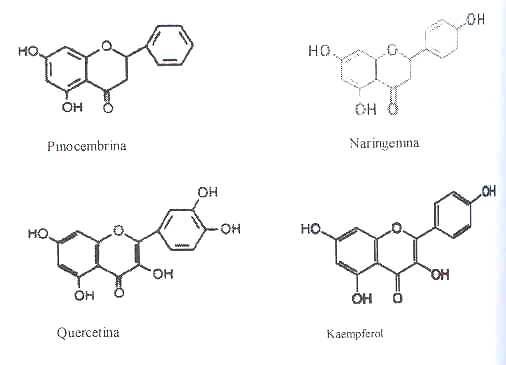
<body><![CDATA[<P ALIGN="JUSTIFY"></P>     <P ALIGN="JUSTIFY"><font face="Times New Roman" size="3">Composici&oacute;n qu&iacute;mica del or&eacute;gano</font></P> </B>    <P ALIGN="JUSTIFY"><font face="Times New Roman" size="3">Existen diversos estudios sobre la composici&oacute;n qu&iacute;mica del or&eacute;gano, usando extractos acuosos y sus aceites esenciales (13). Se han identificado flavonoides como la apigenina y la luteolina, agliconas, alcoholes alif&aacute;ticos, compuestos terp&eacute;nicos y derivados del fenilpropano (14). En <I>O. vulgare</I> se han encontrado &aacute;cidos coum&eacute;rico, fer&uacute;lico, caf&eacute;ico, </font><font size="3" face="Symbol">&#114;</font><font face="Times New Roman" size="3"> -hidroxibenz&oacute;ico y vainill&iacute;nico (15). Los &aacute;cidos fer&uacute;lico, caf&eacute;ico, </font><font size="3" face="Symbol">&#114;</font><font face="Times New Roman" size="3"> -hidroxibenz&oacute;ico y vainill&iacute;nico est&aacute;n presentes en <I>O. onites</I> (16). Los aceites esenciales de especies de <I>Lippia</I> contienen limoneno, </font><font size="3" face="Symbol">&#98;</font><font face="Times New Roman" size="3"> -cariofileno, </font><font size="3" face="Symbol">&#114;</font><font face="Times New Roman" size="3"> -cimeno, canfor, linalol, </font><font size="3" face="Symbol">&#97;</font><font face="Times New Roman" size="3"> -pineno y timol, los cu&aacute;les pueden variar de acuerdo al quimiotipo (13). En extractos metan&oacute;licos de hojas de <I>L. graveolens</I> se han encontrado siete iridoides minoritarios conocidos como loganina, secologanina, secoxiloganina, dimetilsecologanosido, &aacute;cido log&aacute;nico, &aacute;cido 8-epi-log&aacute;nico y carioptosido; y tres iridoides mayoritarios como el &aacute;cido carioptos&iacute;dico y sus derivados 6’-O-p-coumaroil y 6’-O-cafeoil (17). Tambi&eacute;n contiene flavonoides como naringenina y pinocembrina, lapachenol e icterogenina (18, 19).  Las <a href="#FIGURA 1">Figuras 1</a> y <a href="#FIGURA 2"> 2</a> presentan las estructuras qu&iacute;micas de algunos de los compuestos principales presentes en el or&eacute;gano y la <a href="#FIGURA 3">Figura 3</a> muestra un m&eacute;todo general para la extracci&oacute;n de las fracciones activas.</font> </P>     <P ALIGN="CENTER"><font face="Times New Roman" size="3"><a name="FIGURA 1">FIGURA 1</a></font></P>     <P ALIGN="CENTER"><font face="Times New Roman" size="3">Estructura qu&iacute;mica de los principales componentes en &oacute;regano</font></P>     <P ALIGN="center"><img border="0" src="/img/fbpe/alan/v54n1/art15img01.jpg" width="533" height="505"></P>     
<P ALIGN="JUSTIFY">&nbsp;</P>     <P ALIGN="CENTER"><font face="Times New Roman" size="3"><a name="FIGURA 2">FIGURA 2</a></font></P>     <P ALIGN="CENTER"><font face="Times New Roman" size="3">Estructura qu&iacute;mica de los principios flavonoides en or&eacute;gano</font></P>     <P ALIGN="center"><img border="0" src="/img/fbpe/alan/v54n1/art15img02.jpg" width="506" height="365"></P>     
]]></body>
<body><![CDATA[<P ALIGN="JUSTIFY">&nbsp;</P>     <P ALIGN="CENTER"><font face="Times New Roman" size="3"><a name="FIGURA 3">FIGURA 3</a></font></P>     <P ALIGN="CENTER"><font face="Times New Roman" size="3">M&eacute;todo general de la extracci&oacute;n de fracciones activas de or&eacute;gano (adaptado de 37,103)</font></P>     <P ALIGN="JUSTIFY"></P>     <P ALIGN="center"><img border="0" src="/img/fbpe/alan/v54n1/art15img03.jpg" width="553" height="555"></P>     
<P ALIGN="JUSTIFY"><font face="Times New Roman" size="3">Los monoterpenoides, compuestos vol&aacute;tiles con olores  intensamente pungentes, son los responsables de las fragancias y las sensaciones de olor-sabor de muchas plantas (12). Estructural y biol&oacute;gicamente son muy diferentes, lleg&aacute;ndose a clasific&aacute;rseles hasta en 35 grupos (20). Los principales quimiotipos de la especie <I>O. vulgare</I> son el carvacrol y el timol cada una con enzimas espec&iacute;ficas que dirigen su bios&iacute;ntesis (21).</font> </P>     <P ALIGN="JUSTIFY"><font face="Times New Roman" size="3">La subespecie<I> O. vulgare ssp.Hirtum</I> es la m&aacute;s estudiada, especialmente en relaci&oacute;n a la composici&oacute;n y calidad de su aceite esencial, ya que este &uacute;ltimo tiene un importante valor comercial. En esta subespecie el rendimiento del aceite esencial en la hoja seca var&iacute;a entre 2% y 6% (5,15). Este porcentaje se ve afectado por la altitud del lugar de cultivo (5), y por la &eacute;poca de recolecci&oacute;n, siendo este m&aacute;s bajo en el oto&ntilde;o (6).</font> </P>     <P ALIGN="JUSTIFY"><font face="Times New Roman" size="3">Los compuestos mayoritarios encontrados en <I>O. vulgare ssp</I>. Hirtum son el carvacrol, timol, </font><font size="3" face="Symbol">&#114;</font><font face="Times New Roman" size="3"> -cimeno y </font><font size="3" face="Symbol">&#103;</font><font face="Times New Roman" size="3"> -terpineno, aunque en diversos estudios realizados por cromatograf&iacute;a de gases/espectrometr&iacute;a de masas se han identificado de 16 a 56 compuestos diferentes (5, 15, 22). Estos componentes tambi&eacute;n se han encontrado en <I>O. dictamnus</I> (23) y se sabe que otras especies como <I>O. scabrum</I> y <I>O. microphyllum</I> contienen alrededor de 28 y 41 compuestos diferentes, respectivamente (22). Los investigadores cubanos caracterizaron tres especies de or&eacute;gano y concluyeron que se recomendaba la producci&oacute;n de <I>Lippia micromera</I> (24). La <a href="#TABLA 3"> Tabla 3</a> presenta algunos de los compuestos principales en cada tipo de or&eacute;gano. En el aceite del or&eacute;gano que crece en forma silvestre se ha encontrado la presencia dominante de carvacrol y timol. Se ha observado que un incremento en los porcentajes de timol provoca un decremento en el contenido de carvacrol (5). De igual manera, los hidrocarburos monoterpenoides </font><font size="3" face="Symbol">&#103;</font><font face="Times New Roman" size="3"> -terpineno y </font><font size="3" face="Symbol">&#114;</font><font face="Times New Roman" size="3"> -cimeno est&aacute;n presentes de manera constante en los aceites esenciales, pero siempre en cantidades menores a las de los dos fenoles (6).</font> </P> <DIR>      <P ALIGN="CENTER"><font face="Times New Roman" size="3"><a name="TABLA 3">TABLA  3</a></font> </P>     <P ALIGN="CENTER"><font face="Times New Roman" size="3">Composici&oacute;n qu&iacute;mica de <I>Origanum</I> y </font> <I><font face="Times New Roman" size="3">limpia</font></P>     ]]></body>
<body><![CDATA[<P ALIGN="CENTER"></P></DIR> </I>     <P ALIGN="CENTER">    <CENTER><TABLE BORDER="1" CELLSPACING=1 CELLPADDING=4 WIDTH=542> <TR><TD WIDTH="116" VALIGN="TOP"> <FONT SIZE=2>    <P ALIGN="CENTER"><font face="Times New Roman">Nombre Cient&iacute;fico</font></FONT></TD> <TD WIDTH="458" VALIGN="TOP"> <FONT SIZE=2>    <P ALIGN="CENTER"><font face="Times New Roman">Principales componentes</font></FONT></TD> <TD WIDTH="64" VALIGN="TOP"> <FONT SIZE=2>    <P ALIGN="CENTER"><font face="Times New Roman">Referencias</font></FONT></TD> </TR> <TR><TD WIDTH="116" VALIGN="TOP"> <I><FONT SIZE=2>    <P ALIGN="CENTER"><font face="Times New Roman">O. vulgare</font></FONT></I></TD> <TD WIDTH="458" VALIGN="TOP"> <FONT SIZE=2>    <P><font face="Times New Roman">&Aacute;cido &#111; -cum&aacute;rico, acido fer&uacute;lico,</font></FONT> <FONT SIZE=2><font face="Times New Roman">&aacute;cido cafeico, &aacute;cido </font><font face="Symbol">&#114;</font><font face="Times New Roman"> -hidroxibenzoico,&aacute;cido vainill&iacute;nico, &aacute;cido rosmar&iacute;nico. Mirceno, </font><font face="Symbol">&#97;</font><font face="Times New Roman"> -terpineno </font><font face="Symbol">&#114;</font><font face="Times New Roman"> -cimeno, </font><font face="Symbol">&#103;</font><font face="Times New Roman"> -terpineno, timol, carvacrol, </font><font face="Symbol">&#98;</font><font face="Times New Roman"> -cariofileno</font></FONT></P>   </TD> <TD WIDTH="64" VALIGN="TOP"> <FONT SIZE=2>    <P ALIGN="CENTER"><font face="Times New Roman">5, 6, 15, 16, 53</font></FONT></TD> </TR> <TR><TD WIDTH="116" VALIGN="TOP"> <I><FONT SIZE=2>    <P ALIGN="CENTER"><font face="Times New Roman">O. dictamnus</font></FONT></I></P>   </TD> <TD WIDTH="458" VALIGN="TOP"> <FONT SIZE=2>    ]]></body>
<body><![CDATA[<P><font face="Symbol">&#114;</font><font face="Times New Roman"> -cimeno, timoquinona, carvacrol&nbsp;</font></FONT></TD> <TD WIDTH="64" VALIGN="TOP"> <FONT SIZE=2>    <P ALIGN="CENTER"><font face="Times New Roman">25</font></FONT></P>   </TD> </TR> <TR><TD WIDTH="116" VALIGN="TOP">     <p align="center"><I><font face="Times New Roman" SIZE="2">O. onites</font></I></TD> <TD WIDTH="458" VALIGN="TOP"> <FONT SIZE=2><font face="Times New Roman">Acido ferúlico, ácido cafeico, </font><font face="Symbol">r</font><font face="Times New Roman"> -hidroxibenzoico acido vainillinico</font></FONT></TD> <TD WIDTH="64" VALIGN="TOP">     <p align="center"><font face="Times New Roman" SIZE="2">16</font></TD> </TR> <TR><TD WIDTH="116" VALIGN="TOP"> <I><FONT SIZE=2>    <P ALIGN="CENTER"><font face="Times New Roman">O. glandulosum</font></FONT></I></P>   </TD> <TD WIDTH="458" VALIGN="TOP"> <FONT SIZE=2>    <P><font face="Symbol">&#114;</font><font face="Times New Roman"> -cimeno, </font><font face="Symbol">&#103;</font><font face="Times New Roman"> -terpineno, timol, carvacrol</font></FONT></TD> <TD WIDTH="64" VALIGN="TOP"> <FONT SIZE=2>    <P ALIGN="CENTER"><font face="Times New Roman">99</font></P> </FONT></TD> </TR> <TR><TD WIDTH="116" VALIGN="TOP">     <p align="center"><I><font face="Times New Roman" SIZE="2">L. multiflora</font></I></TD> <TD WIDTH="458" VALIGN="TOP"> <FONT SIZE=2><font face="Times New Roman">1, 8-cineol, linalool, </font><font face="Symbol">&#98;</font><font face="Times New Roman"> -cariofileno, (Z)b-farneseno, germacreno D, (Z)-nerolidol</font></FONT></TD> <TD WIDTH="64" VALIGN="TOP">     <p align="center"><font face="Times New Roman" SIZE="2">64</font></TD> </TR> <TR><TD WIDTH="116" VALIGN="TOP"> <I><FONT SIZE=2>    <P ALIGN="CENTER"><font face="Times New Roman">L. graveolens</font></FONT></I></TD> <TD WIDTH="458" VALIGN="TOP"> <FONT SIZE=2>    ]]></body>
<body><![CDATA[<P><font face="Times New Roman">&aacute;cido carioptosidico, naringenina, pinocembrina,</font><font face="Symbol">&#98;</font><font face="Times New Roman"> -felandreno, carvacrol, 1,8-cineol, </font><font face="Symbol">&#114;</font><font face="Times New Roman"> -cimeno, metil timol, timol</font></FONT></TD> <TD WIDTH="64" VALIGN="TOP"> <FONT SIZE=2>    <P ALIGN="CENTER"><font face="Times New Roman">17, 19, 13,32,100</font></FONT></TD> </TR> <TR><TD WIDTH="116" VALIGN="TOP"> <I><FONT SIZE=2>    <P ALIGN="CENTER"><font face="Times New Roman">L. sidoides</font></FONT></I></TD> <TD WIDTH="458" VALIGN="TOP"> <FONT SIZE=2>    <P><font face="Times New Roman">metil 3, 4-dihidroxibenzoato, lapachenol, quercetin, luteolin, lipsidoquinona</font></FONT></TD> <TD WIDTH="64" VALIGN="TOP"> <FONT SIZE=2>    <P ALIGN="CENTER"><font face="Times New Roman">83</font></FONT></TD> </TR> </TABLE> </CENTER>       <P ALIGN="JUSTIFY"><font face="Times New Roman" size="3">En el aceite del or&eacute;gano silvestre cultivado en hidroponia y adicionado de f&oacute;sforo se han identificado 46 componentes. En este caso, los principales compuestos fueron el carvacrol (29%-73%) y el p-cimeno (11%-42%). Al mismo tiempo se observ&oacute; un incremento en el porcentaje de p-cimeno y un decremento de carvacrol cuando se compar&oacute; con el aceite de plantas enriquecidas con nitr&oacute;geno (25).</font></P> <B>    <P ALIGN="JUSTIFY"><font face="Times New Roman" size="3">M&eacute;todos de extracci&oacute;n  y an&aacute;lisis de aceites esenciales</font></B><font face="Times New Roman" size="3">.</font></P>     <P ALIGN="JUSTIFY"><font face="Times New Roman" size="3">Los aceites esenciales son metabolitos secundarios de las plantas por lo que un metabolismo m&aacute;s activo puede asociarse con una mayor producci&oacute;n de aceites (26). En un aceite esencial pueden encontrarse hidrocarburos alic&iacute;clicos y arom&aacute;ticos, as&iacute; como sus derivados oxigenados (alcoholes, aldeh&iacute;dos, cetonas y &eacute;steres), sustancias azufradas y nitrogenadas. Los compuestos m&aacute;s frecuentes se derivan del &aacute;cido meval&oacute;nico y se les clasifica en monoterpenoides y sesquiterpenoides (18). La <a href="#FIGURA 4">Figura 4</a> muestra los factores que afectan la calidad del aceite esencial de or&eacute;gano (27). En este aspecto existe a&uacute;n controversia. Algunos autores se&ntilde;alan que la gran variabilidad en la composici&oacute;n qu&iacute;mica de los aceites esenciales es debida, sobre todo, al origen del material m&aacute;s que a la influencia del medio ambiente (28, 29). Otros autores otorgan un papel m&aacute;s preponderante al medio ambiente, sobre todo en lo referente a densidad de planta sembrada, estaci&oacute;n del a&ntilde;o en el corte y a la cantidad de agua usada en el riego (30), o incluso a la cantidad de luz artificial o natural usada en el cultivo de la planta en invernadero (31).</font>   </P>     <P ALIGN="JUSTIFY"><font size="3"><font face="Times New Roman">Los m&eacute;todos convencionales utilizados para la extracci&oacute;n de aceites esenciales son la destilaci&oacute;n con arrastre de vapor y el uso de solventes org&aacute;nicos. En los &uacute;ltimos a&ntilde;os ha crecido el inter&eacute;s por la extracci&oacute;n supercr&iacute;tica y subcr&iacute;tica con di&oacute;xido de carbono como solvente. Este gas es ideal ya que no es t&oacute;xico ni explosivo y es f&aacute;cil de remover de los productos extra&iacute;dos (32, 33). Los rendimientos de extracci&oacute;n generalmente van desde el 1.8% (34) hasta el 5.6%. En cuanto a su composici&oacute;n se han logrado identificar hasta 56 compuestos, y se han encontrado diferencias cuantitativamente significativas en s&oacute;lo dos fenoles isom&eacute;ricos, carvacrol (0.1-56.6%) o fenol no-cristalizable y  timol (7.9-53.6%) o fenol cristalizable; incluy&eacute;ndose sus precursores biosint&eacute;ticos el </font><font face="Symbol">&#103;</font><font face="Times New Roman"> -terpineno y el p-cimeno (5).  Algunos autores se&ntilde;alan que el aceite con mayor cantidad de carvacrol es el preferido  (34). Se han encontrado contenidos de timol superiores al 30% en muestras de or&eacute;gano (<I>L. graveolens </I>Kunth) recolectadas en el estado de Jalisco (35). Vernin <I>et al.</I> (36) obtuvieron el aceite esencial de <I>Lippia graveolens</I> HBK por hidrodestilaci&oacute;n y encontraron 45 compuestos que constituyeron el 92-93% del aceite. Los components principales fueron carvacrol (71%) y timol (5%).</font></font> </P> <B> </B>    <P ALIGN="CENTER"><font face="Times New Roman" size="3"><a name="FIGURA 4">FIGURA 4</a></font></P>     ]]></body>
<body><![CDATA[<P ALIGN="CENTER"><font face="Times New Roman" size="3">Factores que afectan la calidad del aceite esencial de or&eacute;gano (27)</font></P> <B>    <P ALIGN="center"><img border="0" src="/img/fbpe/alan/v54n1/art15img04.jpg" width="557" height="465"></P> </B> <B>     
<P ALIGN="JUSTIFY"><font face="Times New Roman" size="3">Actividad biol&oacute;gica de los componentes del or&eacute;gano</font> </P>     <P ALIGN="JUSTIFY"><font face="Times New Roman" size="3">Antioxidante</font></P> </B>    <P ALIGN="JUSTIFY"><font face="Times New Roman" size="3">En la <a href="#TABLA 4"> Tabla 4</a> se menciona que una de las principales actividades biol&oacute;gicas del or&eacute;gano es su capacidad antioxidante, especialmente en especies del g&eacute;nero <I>Oreganum</I> (37).<FONT COLOR="#ff0000"> </FONT>La funci&oacute;n antioxidante de diversos compuestos en los alimentos ha atra&iacute;do mucha atenci&oacute;n en relaci&oacute;n con el papel que tienen en la dieta en la prevenci&oacute;n de enfermedades (38). Los compuestos antioxidantes son importantes porque poseen la capacidad de proteger a las c&eacute;lulas contra el da&ntilde;o oxidativo, el cual provoca envejecimiento y enfermedades cr&oacute;nico-degenerativas, tales como el c&aacute;ncer, enfermedad cardiovascular y diabetes. Los antioxidantes como los tocoferoles, los carotenoides, el &aacute;cido asc&oacute;rbico y los compuestos fen&oacute;licos se consumen a trav&eacute;s de los alimentos. En algunos estudios de especias se han aislado una amplia variedad de compuestos antioxidantes fen&oacute;licos (39).</font> </P>     <P ALIGN="CENTER"><font face="Times New Roman" size="3"><a name="TABLA 4">TABLA 4</a></font></P>     <P ALIGN="CENTER"><font face="Times New Roman" size="3">Actividades biol&oacute;gicas de or&eacute;gano</font></P>     <P ALIGN="CENTER">    <CENTER><TABLE BORDER="1" CELLSPACING=1 CELLPADDING=4 WIDTH=343> <TR><TD WIDTH="30%" VALIGN="bottom"> <font face="Times New Roman" SIZE="2">Acitivadad</font></TD> <TD WIDTH="24%" VALIGN="bottom"> <font face="Times New Roman" SIZE="2">Genero</font></TD> <TD WIDTH="45%" VALIGN="TOP"> <font face="Times New Roman" SIZE="2">Referencias</font></TD> </TR> <TR><TD WIDTH="30%" VALIGN="TOP" rowspan="2"> <font face="Times New Roman" SIZE="2">Antioxidante</font></TD> <TD WIDTH="24%" VALIGN="bottom"> <I><font face="Times New Roman" SIZE="2">Origanum</font> </I></TD> <TD WIDTH="45%" VALIGN="TOP" align="center"> <font face="Times New Roman" SIZE="2">15,42,47,48,53,54,99-102</font></TD> </TR> <TR> <TD WIDTH="24%" VALIGN="bottom"> <I><font face="Times New Roman" SIZE="2">Lippia</font> </I></TD> <TD WIDTH="45%" VALIGN="TOP" align="center"> <font face="Times New Roman" SIZE="2">55</font></TD> </TR> <TR><TD WIDTH="30%" VALIGN="TOP" rowspan="2"> <font face="Times New Roman" SIZE="2">Antimicrobiana</font></TD> <TD WIDTH="24%" VALIGN="bottom"> <I><font face="Times New Roman" SIZE="2">Origanum</font> </I></TD> <TD WIDTH="45%" VALIGN="TOP" align="center"> <font face="Times New Roman" size="2">22,23,56-58,97</font></TD> </TR> <TR> <TD WIDTH="24%" VALIGN="bottom"> <I><font face="Times New Roman" SIZE="2">Lippia</font> </I></TD> <TD WIDTH="45%" VALIGN="TOP" align="center"> <font face="Times New Roman" size="2">59</font></TD> </TR> <TR><TD WIDTH="30%" VALIGN="bottom"> <font face="Times New Roman" SIZE="2">Antiparas&iacute;tica</font></TD> <TD WIDTH="24%" VALIGN="bottom"> <I><font face="Times New Roman" SIZE="2">Lippia</font> </I></TD> <TD WIDTH="45%" VALIGN="TOP" align="center"> <font face="Times New Roman" size="2">64,65,66</font></TD> </TR> <TR><TD WIDTH="30%" VALIGN="bottom"> <font face="Times New Roman" SIZE="2">Estrog&eacute;nica</font></TD> <TD WIDTH="24%" VALIGN="bottom"> <I><font face="Times New Roman" SIZE="2">Origanum</font> </I></TD> <TD WIDTH="45%" VALIGN="TOP" align="center"> <font face="Times New Roman" size="2">69,90</font></TD> </TR> <TR><TD WIDTH="30%" VALIGN="TOP" rowspan="2"> <font face="Times New Roman" SIZE="2">Antigenot&oacute;xica</font></TD> <TD WIDTH="24%" VALIGN="bottom"> <I><font face="Times New Roman" SIZE="2">Origanum</font> </I></TD> <TD WIDTH="45%" VALIGN="TOP" align="center"> <font face="Times New Roman" SIZE="2">75,75,78-81,85-89</font></TD> </TR> <TR> <TD WIDTH="24%" VALIGN="bottom"> <I><font face="Times New Roman" SIZE="2">Lippia</font> </I></TD> <TD WIDTH="45%" VALIGN="TOP" align="center"> <font face="Times New Roman" SIZE="2">82-84</font></TD> </TR> <TR><TD WIDTH="30%" VALIGN="bottom"> <font face="Times New Roman" SIZE="2">Insecticida</font></TD> <TD WIDTH="24%" VALIGN="bottom"> <I><font face="Times New Roman" SIZE="2">Origanum</font> </I></TD> <TD WIDTH="45%" VALIGN="TOP" align="center"> <font face="Times New Roman" SIZE="2">73,74</font></TD> </TR> </TABLE> </CENTER>      <P ALIGN="JUSTIFY"> </P>     ]]></body>
<body><![CDATA[<P ALIGN="JUSTIFY"><font face="Times New Roman" size="3">El efecto antioxidante de las plantas arom&aacute;ticas se debe a la presencia de grupos hidroxilo en los compuestos fen&oacute;licos (40).  Entre las diferentes variedades de or&eacute;gano se han encontrado altos niveles de antioxidantes (&gt;140 mmol/100 g) (41). El potencial antioxidante de los extractos de or&eacute;gano ha sido determinado por su capacidad para inhibir la peroxidaci&oacute;n lip&iacute;dica, protegiendo al ADN del da&ntilde;o por radicales hidroxilo, con los m&eacute;todos de atrapamiento de  per&oacute;xido de hidr&oacute;geno, atrapamiento de HOCl y por la prueba de la rancidez. En todas estas pruebas, los extractos de or&eacute;gano han mostrado ser efectivos, en algunos casos a niveles superiores a los exhibidos por el propil galato, BHT y BHA (42). Sin embargo, sus aplicaciones industriales son limitadas debido al aroma y sabor que pueden conferir a los alimentos donde se aplicar&iacute;an, por lo que se requiere de investigaci&oacute;n en procesos de deodorizaci&oacute;n (43). La actividad antioxidante depende del tipo y polaridad del solvente extractante; por ejemplo, los antioxidantes obtenidos con agentes lipof&iacute;licos son m&aacute;s efectivos en emulsiones (43). El aceite esencial de <I>O. vulgare</I> tiene actividad anti-radical y esta propiedad se le atribuye a los monofenoles carvacrol y timol (44). Varios investigadores confirman el potencial antioxidante de extractos y aceites esenciales de diferentes variedades de or&eacute;gano (<I>O. vulgare, O. compactum, O. majorana</I>) (37, 45, 46). En nuestro laboratorio se evalu&oacute; el potencial antioxidante del aceite esencial de or&eacute;gano mexicano (<I>Lippia graveolens Kunth</I>) obtenido de hojas secadas a la sombra y al sol, los resultados se muestran en la <a href="#TABLA 5"> Tabla 5</a>. La mejor actividad antioxidante, con el m&eacute;todo del &#946;-caroteno, se obtuvo en el aceite que proviene de las hojas de or&#953;gano secadas a la sombra, siendo &eacute;sta dosis dependiente y mayor que el BHT (27).  Otros m&eacute;todos que han sido empleados para medir el grado de oxidaci&oacute;n son la t&eacute;cnica de espectroscop&iacute;a de resonancia electr&oacute;nica (se basa en las etapas tempranas del proceso de oxidaci&oacute;n); el del radical libre, el cual relaciona el efecto antioxidante en la iniciaci&oacute;n del proceso oxidativo; y el de depleci&oacute;n de ox&iacute;geno, en el cu&aacute;l se mide el efecto antioxidante en la etapa de propagaci&oacute;n. <I>O.vulgare</I> y <I>O. onites</I>, sometidos a esta &uacute;ltima determinaci&oacute;n, demostraron alta actividad antioxidante en la etapa de propagaci&oacute;n (&iacute;ndice antioxidativo 0.064 y 0.050, respectivamente) (47).</font></P>     <P ALIGN="CENTER"><font face="Times New Roman" size="3"><a name="TABLA 5">TABLA 5</a></font></P>     <P ALIGN="CENTER"> <font face="Times New Roman" size="3"> Actividad antioxidante y anti-radical del aceite esencial de or&eacute;gano Mexicano (<I> Lippia graveolens Kunth</I>)</font></P>     <div align="center"> <TABLE BORDER="1" CELLSPACING=1 CELLPADDING=4 WIDTH=571> <TR><TD WIDTH="101%" VALIGN="TOP" HEIGHT=36 colspan="5"> <FONT SIZE=2>     <P><font face="Times New Roman">&nbsp;&nbsp;&nbsp;&nbsp;&nbsp;&nbsp;&nbsp;&nbsp;&nbsp;&nbsp;&nbsp;&nbsp;&nbsp;&nbsp;&nbsp;&nbsp;&nbsp;&nbsp;&nbsp;&nbsp;&nbsp;&nbsp;&nbsp;&nbsp;&nbsp;&nbsp;&nbsp;&nbsp;&nbsp;&nbsp;&nbsp;&nbsp;&nbsp;&nbsp;&nbsp;&nbsp;&nbsp;&nbsp;&nbsp;&nbsp;&nbsp;&nbsp;&nbsp;&nbsp;&nbsp;&nbsp;&nbsp;&nbsp;&nbsp;&nbsp;&nbsp;&nbsp;&nbsp;&nbsp;&nbsp;&nbsp;&nbsp;&nbsp;&nbsp;&nbsp;&nbsp;&nbsp;&nbsp;&nbsp;&nbsp;&nbsp;&nbsp;&nbsp;&nbsp;&nbsp;&nbsp;&nbsp;&nbsp;&nbsp;&nbsp;&nbsp;&nbsp;&nbsp;&nbsp;&nbsp;&nbsp;&nbsp;&nbsp;&nbsp;&nbsp;&nbsp;&nbsp;&nbsp;&nbsp;&nbsp;&nbsp;&nbsp;&nbsp;&nbsp; Actividad antioxidante</font></P>     <P><font face="Times New Roman">&nbsp;&nbsp;&nbsp;&nbsp;&nbsp;&nbsp;&nbsp;&nbsp;&nbsp;&nbsp;&nbsp;&nbsp;&nbsp;&nbsp;&nbsp;&nbsp;&nbsp;&nbsp;&nbsp;&nbsp;&nbsp;&nbsp;&nbsp;&nbsp;&nbsp;&nbsp;&nbsp;&nbsp;&nbsp;&nbsp;&nbsp;&nbsp;&nbsp;&nbsp;&nbsp;&nbsp;&nbsp;&nbsp;&nbsp;&nbsp;&nbsp;&nbsp;&nbsp;&nbsp;&nbsp;&nbsp;&nbsp;&nbsp;&nbsp;&nbsp;&nbsp;&nbsp;&nbsp;&nbsp;&nbsp;&nbsp;&nbsp;&nbsp;&nbsp;&nbsp;&nbsp;&nbsp;&nbsp;&nbsp;&nbsp;&nbsp;&nbsp;&nbsp;&nbsp;&nbsp;&nbsp;&nbsp;&nbsp;&nbsp;&nbsp;&nbsp;&nbsp;&nbsp;&nbsp;&nbsp;&nbsp;&nbsp;&nbsp;&nbsp;&nbsp;&nbsp;&nbsp;&nbsp;&nbsp;&nbsp;&nbsp; M&eacute;todo del &#946;-caroteno</font><SUP><font face="Times New Roman">a</font> </SUP></P> </FONT></TD> </TR>     <center>     <TR><TD WIDTH="33%" VALIGN="TOP" HEIGHT=36>     <font face="Times New Roman" SIZE="2">Muestra</font></TD>     <TD WIDTH="17%" VALIGN="TOP" HEIGHT=36 align="center">     ]]></body>
<body><![CDATA[<font face="Times New Roman" SIZE="2">     AOX<SUP>1</SUP>                 </font></TD>     <TD WIDTH="17%" VALIGN="TOP" HEIGHT=36 align="center">     <font face="Times New Roman" SIZE="2">                 AA<SUP>2</SUP>             &nbsp;</font></TD>     <TD WIDTH="17%" VALIGN="TOP" HEIGHT=36 align="center">     <font face="Times New Roman" SIZE="2">             ORR<SUP>3</SUP>             </font></TD>     <TD WIDTH="17%" VALIGN="TOP" HEIGHT=36 align="center">     <font face="Times New Roman" SIZE="2">             AAC<SUP>4</SUP></font></TD>     </TR>     <TR><TD WIDTH="33%" VALIGN="TOP" HEIGHT=36>     <font face="Times New Roman" SIZE="2">Control (DMSO)</font></TD>     ]]></body>
<body><![CDATA[<TD WIDTH="17%" VALIGN="TOP" HEIGHT=36 align="center">     <FONT SIZE=2><font face="Times New Roman">9.92</font><SUP><font face="Times New Roman">a</font>     </SUP></FONT></TD>     <TD WIDTH="17%" VALIGN="TOP" HEIGHT=36 align="center">     <font face="Times New Roman" size="2">0</font></TD>     <TD WIDTH="17%" VALIGN="TOP" HEIGHT=36 align="center">     <font face="Times New Roman" size="2">1.0</font></TD>     <TD WIDTH="17%" VALIGN="TOP" HEIGHT=36 align="center">     <font face="Times New Roman" size="2">0.0</font></TD>     </TR>     ]]></body>
<body><![CDATA[<TR><TD WIDTH="101%" VALIGN="TOP" HEIGHT=36 colspan="5">     <font face="Times New Roman" SIZE="2">Trolox</font></TD>     </TR>     <TR><TD WIDTH="33%" VALIGN="TOP" HEIGHT=36>     <font face="Times New Roman" SIZE="2">125 mg/ml</font></TD>     <TD WIDTH="17%" VALIGN="TOP" HEIGHT=36 align="center">     <FONT SIZE=2><font face="Times New Roman">   5.49</font><SUP><font face="Times New Roman">b</font>     </SUP></FONT></TD>     <TD WIDTH="17%" VALIGN="TOP" HEIGHT=36 align="center">     <FONT SIZE=2><font face="Times New Roman">92.37</font><SUP><font face="Times New Roman">a</font>     ]]></body>
<body><![CDATA[</SUP></FONT></TD>     <TD WIDTH="17%" VALIGN="TOP" HEIGHT=36 align="center">     <FONT SIZE=2><font face="Times New Roman">0.08</font><SUP><font face="Times New Roman">a</font>     </SUP></FONT></TD>     <TD WIDTH="17%" VALIGN="TOP" HEIGHT=36 align="center">     <FONT SIZE=2><font face="Times New Roman">536.33</font><SUP><font face="Times New Roman">a</font>     </SUP></FONT></TD>     </TR>     <TR><TD WIDTH="33%" VALIGN="TOP" HEIGHT=36>     <font face="Times New Roman" SIZE="2">250 mg/ml</font></TD>     ]]></body>
<body><![CDATA[<TD WIDTH="17%" VALIGN="TOP" HEIGHT=36 align="center">     <FONT SIZE=2><font face="Times New Roman">11.04</font><SUP><font face="Times New Roman">c</font>     </SUP></FONT></TD>     <TD WIDTH="17%" VALIGN="TOP" HEIGHT=36 align="center">     <FONT SIZE=2><font face="Times New Roman">94.86</font><SUP><font face="Times New Roman">b</font>     </SUP></FONT></TD>     <TD WIDTH="17%" VALIGN="TOP" HEIGHT=36 align="center">     <FONT SIZE=2><font face="Times New Roman">0.05</font><SUP><font face="Times New Roman">b</font>     </SUP></FONT></TD>     <TD WIDTH="17%" VALIGN="TOP" HEIGHT=36 align="center">     ]]></body>
<body><![CDATA[<FONT SIZE=2><font face="Times New Roman">756.98</font><SUP><font face="Times New Roman">b</font>     </SUP></FONT></TD>     </TR>     <TR><TD WIDTH="101%" VALIGN="TOP" HEIGHT=36 colspan="5">     <font face="Times New Roman" SIZE="2">BHT</font></TD>     </TR>     <TR><TD WIDTH="33%" VALIGN="TOP" HEIGHT=36>     <font face="Times New Roman" SIZE="2">110 mg/ml</font></TD>     <TD WIDTH="17%" VALIGN="TOP" HEIGHT=36 align="center">     <FONT SIZE=2><font face="Times New Roman">31.63</font><SUP><font face="Times New Roman">d</font>     ]]></body>
<body><![CDATA[</SUP></FONT></TD>     <TD WIDTH="17%" VALIGN="TOP" HEIGHT=36 align="center">     <FONT SIZE=2><font face="Times New Roman">83.76</font><SUP><font face="Times New Roman">c</font>     </SUP></FONT></TD>     <TD WIDTH="17%" VALIGN="TOP" HEIGHT=36 align="center">     <FONT SIZE=2><font face="Times New Roman">0.20</font><SUP><font face="Times New Roman">c</font>     </SUP></FONT></TD>     <TD WIDTH="17%" VALIGN="TOP" HEIGHT=36 align="center">     <FONT SIZE=2><font face="Times New Roman">490.87</font><SUP><font face="Times New Roman">c</font>     </SUP></FONT></TD>     ]]></body>
<body><![CDATA[</TR>     <TR><TD WIDTH="101%" VALIGN="TOP" HEIGHT=36 colspan="5">     <font face="Times New Roman" size="2">Oregano mexicano secado a la sombra</font></TD>     </TR>     <TR><TD WIDTH="33%" VALIGN="TOP" HEIGHT=36>     <font face="Times New Roman" SIZE="2">  8 mg/ml</font></TD>     <TD WIDTH="17%" VALIGN="TOP" HEIGHT=36 align="center">     <FONT SIZE=2><font face="Times New Roman">79.12</font><SUP><font face="Times New Roman">e</font>     </SUP></FONT></TD>     <TD WIDTH="17%" VALIGN="TOP" HEIGHT=36 align="center">     ]]></body>
<body><![CDATA[<FONT SIZE=2><font face="Times New Roman">52.62</font><SUP><font face="Times New Roman">d</font>     </SUP></FONT></TD>     <TD WIDTH="17%" VALIGN="TOP" HEIGHT=36 align="center">     <FONT SIZE=2><font face="Times New Roman">0.48</font><SUP><font face="Times New Roman">d</font>     </SUP></FONT></TD>     <TD WIDTH="17%" VALIGN="TOP" HEIGHT=36 align="center">     <FONT SIZE=2><font face="Times New Roman">249.51</font><SUP><font face="Times New Roman">d</font>     </SUP></FONT></TD>     </TR>     <TR><TD WIDTH="33%" VALIGN="TOP" HEIGHT=36>     ]]></body>
<body><![CDATA[<font face="Times New Roman" SIZE="2">16 mg/ml</font></TD>     <TD WIDTH="17%" VALIGN="TOP" HEIGHT=36 align="center">     <FONT SIZE=2><font face="Times New Roman">82.63</font><SUP><font face="Times New Roman">e</font>     </SUP></FONT></TD>     <TD WIDTH="17%" VALIGN="TOP" HEIGHT=36 align="center">     <FONT SIZE=2><font face="Times New Roman">50.17</font><SUP><font face="Times New Roman">d</font>     </SUP></FONT></TD>     <TD WIDTH="17%" VALIGN="TOP" HEIGHT=36 align="center">     <FONT SIZE=2><font face="Times New Roman">0.50</font><SUP><font face="Times New Roman">d</font>     </SUP></FONT></TD>     ]]></body>
<body><![CDATA[<TD WIDTH="17%" VALIGN="TOP" HEIGHT=36 align="center">     <FONT SIZE=2><font face="Times New Roman">136.56</font><SUP><font face="Times New Roman">e</font>     </SUP></FONT></TD>     </TR>     <TR><TD WIDTH="33%" VALIGN="TOP" HEIGHT=36>     <font face="Times New Roman" SIZE="2">32 mg/ml</font></TD>     <TD WIDTH="17%" VALIGN="TOP" HEIGHT=36 align="center">     <FONT SIZE=2><font face="Times New Roman">44.32</font><SUP><font face="Times New Roman">f</font>     </SUP></FONT></TD>     <TD WIDTH="17%" VALIGN="TOP" HEIGHT=36 align="center">     ]]></body>
<body><![CDATA[<FONT SIZE=2><font face="Times New Roman">67.96</font><SUP><font face="Times New Roman">e</font>     </SUP></FONT></TD>     <TD WIDTH="17%" VALIGN="TOP" HEIGHT=36 align="center">     <FONT SIZE=2><font face="Times New Roman">0.32</font><SUP><font face="Times New Roman">e</font>     </SUP></FONT></TD>     <TD WIDTH="17%" VALIGN="TOP" HEIGHT=36 align="center">     <FONT SIZE=2><font face="Times New Roman">355.93</font><SUP><font face="Times New Roman">f</font>     </SUP></FONT></TD>     </TR>     <TR><TD WIDTH="33%" VALIGN="TOP" HEIGHT=36>     ]]></body>
<body><![CDATA[<font face="Times New Roman" SIZE="2">64 mg/ml</font></TD>     <TD WIDTH="17%" VALIGN="TOP" HEIGHT=36 align="center">     <FONT SIZE=2><font face="Times New Roman">41.17</font><SUP><font face="Times New Roman">f</font>     </SUP></FONT></TD>     <TD WIDTH="17%" VALIGN="TOP" HEIGHT=36 align="center">     <FONT SIZE=2><font face="Times New Roman">73.23</font><SUP><font face="Times New Roman">e</font>     </SUP></FONT></TD>     <TD WIDTH="17%" VALIGN="TOP" HEIGHT=36 align="center">     <FONT SIZE=2><font face="Times New Roman">0.30</font><SUP><font face="Times New Roman">e</font>     </SUP></FONT></TD>     ]]></body>
<body><![CDATA[<TD WIDTH="17%" VALIGN="TOP" HEIGHT=36 align="center">     <FONT SIZE=2><font face="Times New Roman">337.08</font><SUP><font face="Times New Roman">f</font>     </SUP></FONT></TD>     </TR>     <TR><TD WIDTH="101%" VALIGN="TOP" HEIGHT=36 colspan="5">     <font face="Times New Roman" SIZE="2">Secado al sol (38°C)</font></TD>     </TR>     <TR><TD WIDTH="33%" VALIGN="TOP" HEIGHT=36>     <font face="Times New Roman" SIZE="2">10 mg/ml</font></TD>     <TD WIDTH="17%" VALIGN="TOP" HEIGHT=36 align="center">     ]]></body>
<body><![CDATA[<FONT SIZE=2><font face="Times New Roman">29.47</font><SUP><font face="Times New Roman">g</font>     </SUP></FONT></TD>     <TD WIDTH="17%" VALIGN="TOP" HEIGHT=36 align="center">     <FONT SIZE=2><font face="Times New Roman">82.49</font><SUP><font face="Times New Roman">f</font>     </SUP></FONT></TD>     <TD WIDTH="17%" VALIGN="TOP" HEIGHT=36 align="center">     <FONT SIZE=2><font face="Times New Roman">0.18</font><SUP><font face="Times New Roman">f</font>     </SUP></FONT></TD>     <TD WIDTH="17%" VALIGN="TOP" HEIGHT=36 align="center">     <FONT SIZE=2><font face="Times New Roman">399.38</font><SUP><font face="Times New Roman">g</font>     ]]></body>
<body><![CDATA[</SUP></FONT></TD>     </TR>     <TR><TD WIDTH="33%" VALIGN="TOP" HEIGHT=36>     <font face="Times New Roman" SIZE="2">20 mg/ml</font></TD>     <TD WIDTH="17%" VALIGN="TOP" HEIGHT=36 align="center">     <FONT SIZE=2><font face="Times New Roman">20.01</font><SUP><font face="Times New Roman">h</font>     </SUP></FONT></TD>     <TD WIDTH="17%" VALIGN="TOP" HEIGHT=36 align="center">     <FONT SIZE=2><font face="Times New Roman">87.82</font><SUP><font face="Times New Roman">g</font>     </SUP></FONT></TD>     ]]></body>
<body><![CDATA[<TD WIDTH="17%" VALIGN="TOP" HEIGHT=36 align="center">     <FONT SIZE=2><font face="Times New Roman">0.12</font><SUP><font face="Times New Roman">g</font>     </SUP></FONT></TD>     <TD WIDTH="17%" VALIGN="TOP" HEIGHT=36 align="center">     <FONT SIZE=2><font face="Times New Roman">472.13</font><SUP><font face="Times New Roman">h</font>     </SUP></FONT></TD>     </TR>     <TR><TD WIDTH="33%" VALIGN="TOP" HEIGHT=36>     <font face="Times New Roman" SIZE="2">40 mg/ml</font></TD>     <TD WIDTH="17%" VALIGN="TOP" HEIGHT=36 align="center">     ]]></body>
<body><![CDATA[<FONT SIZE=2><font face="Times New Roman">15.10</font><SUP><font face="Times New Roman">i</font>     </SUP></FONT></TD>     <TD WIDTH="17%" VALIGN="TOP" HEIGHT=36 align="center">     <FONT SIZE=2><font face="Times New Roman">90.04</font><SUP><font face="Times New Roman">g</font>     </SUP></FONT></TD>     <TD WIDTH="17%" VALIGN="TOP" HEIGHT=36 align="center">     <FONT SIZE=2><font face="Times New Roman">0.10</font><SUP><font face="Times New Roman">h</font>     </SUP></FONT></TD>     <TD WIDTH="17%" VALIGN="TOP" HEIGHT=36 align="center">     <FONT SIZE=2><font face="Times New Roman">432.60</font><SUP><font face="Times New Roman">i</font>     ]]></body>
<body><![CDATA[</SUP></FONT></TD>     </TR>     <TR><TD WIDTH="33%" VALIGN="TOP" HEIGHT=36>     <font face="Times New Roman" SIZE="2">80 mg/ml</font></TD>     <TD WIDTH="17%" VALIGN="TOP" HEIGHT=36 align="center">     <FONT SIZE=2><font face="Times New Roman">  6.69</font><SUP><font face="Times New Roman">j</font>     </SUP></FONT></TD>     <TD WIDTH="17%" VALIGN="TOP" HEIGHT=36 align="center">     <FONT SIZE=2><font face="Times New Roman">85.83</font><SUP><font face="Times New Roman">f</font>     </SUP></FONT></TD>     ]]></body>
<body><![CDATA[<TD WIDTH="17%" VALIGN="TOP" HEIGHT=36 align="center">     <FONT SIZE=2><font face="Times New Roman">0.14</font><SUP><font face="Times New Roman">i</font>     </SUP></FONT></TD>     <TD WIDTH="17%" VALIGN="TOP" HEIGHT=36 align="center">     <FONT SIZE=2><font face="Times New Roman">617.33</font><SUP><font face="Times New Roman">j</font>     </SUP></FONT></TD>     </TR>     </TABLE>       </center>     </div>     ]]></body>
<body><![CDATA[<FONT SIZE=2>    <P ALIGN="JUSTIFY"><font face="Times New Roman"><sup>&nbsp;&nbsp;&nbsp;&nbsp;&nbsp;&nbsp;&nbsp;&nbsp;&nbsp;&nbsp;&nbsp;&nbsp;&nbsp;&nbsp;&nbsp; </sup><sup>a </sup> </font> </FONT> <FONT SIZE=2><font face="Times New Roman">Letra diferente en la columna  indica diferencias estad&iacute;sticamente significativas (Tukey, </font><font face="Symbol">&#97;</font><font face="Times New Roman">  = 0.05).</font></P>     <P ALIGN="JUSTIFY"><font face="Times New Roman"><sup>&nbsp;&nbsp;&nbsp;&nbsp;&nbsp;&nbsp;&nbsp;&nbsp;&nbsp;&nbsp;&nbsp;&nbsp;&nbsp;&nbsp;&nbsp; </sup><sup>1</sup></font> <font face="Times New Roman"> Actividad antioxidante, <SUP>2</SUP> % de la inhibici&oacute;n de la coloraci&oacute;n de &#946;-caroteno, <SUP>3</SUP> Relaci&oacute;n antioxidante,&nbsp;</font>   </P>     <P ALIGN="JUSTIFY"><font face="Times New Roman">&nbsp;&nbsp;&nbsp;&nbsp;&nbsp;&nbsp;&nbsp;&nbsp;&nbsp;&nbsp;&nbsp;&nbsp;&nbsp;&nbsp;&nbsp; <SUP>4</SUP> Coeficiente de actividad antioxidante, <SUP>5</SUP> Actividad anti-radical.</font> </FONT> <FONT SIZE=2><font face="Times New Roman">(Adaptado de 27).</font>   </P> </FONT>    <P ALIGN="JUSTIFY"></P>     <P ALIGN="JUSTIFY"><font face="Times New Roman" size="3">Las hierbas y especias como el or&eacute;gano son tambi&eacute;n una fuente potencial de vitamina C y de otros compuestos antioxidantes como los carotenoides. En el or&eacute;gano (<I>O. vulgare</I>) se ha encontrado un contenido de &aacute;cido asc&oacute;rbico de 26 &#177;  3 </font><font size="3" face="Symbol">&#109;</font><font face="Times New Roman" size="3">M/g,  de lute&iacute;na  de 206 &#177;  6 </font><font size="3" face="Symbol">&#109;</font><font face="Times New Roman" size="3">g/g y de zeaxantina de 44 &#177;  1</font><font size="3" face="Symbol">&#109;</font><font face="Times New Roman" size="3">g/g (48).</font> </P>     <P ALIGN="JUSTIFY"><font face="Times New Roman" size="3">El efecto antioxidante de los extractos metan&oacute;licos del or&eacute;gano se debe a la presencia de &aacute;cido cafeico y rosmar&iacute;nico. Los glic&oacute;sidos son capaces de liberar compuestos vol&aacute;tiles por hidr&oacute;lisis &aacute;cida o enzim&aacute;tica, por lo que pueden considerarse como precursores de sustancias antioxidantes en las plantas. Los extractos alcoh&oacute;licos y &eacute;tereos  del clavo, la salvia, el or&eacute;gano, el romero y el tomillo mostraron actividad antioxidante en todos los tipos de grasa que se han evaluado (49, 50). En el or&eacute;gano, los compuestos activos, son derivados fen&oacute;licos de los &aacute;cidos cafeico y rom&eacute;rico (51). A partir de las hojas secas de or&eacute;gano (<I>O. vulgare </I>L.) se ha identificado como principal antioxidante un glic&oacute;sido fen&oacute;lico (52). La timoquinona se ha encontrado como la aglicona mayoritaria en <I>O. vulgare ssp</I>. Hirtum. Las agliconas y el aceite esencial presentaron una actividad antioxidante equivalente e inhibieron la formaci&oacute;n del hidroper&oacute;xido a&uacute;n despu&eacute;s de 80 d&iacute;as. Por su parte, el timol puro y la timoquinona tienen una actividad considerablemente menor, alcanzando un valor de per&oacute;xido de 250 mM/kg en tan s&oacute;lo 30 y 22 d&iacute;as, respectivamente  (15). El carvacrol, tambi&eacute;n contribuye a la actividad antioxidante (15, 53, 54).</font></P>     <P ALIGN="JUSTIFY"><font face="Times New Roman" size="3">En infusiones de <I>L. citriodora</I>, se ha encontrado actividad para atrapar radicales hidroxi y &aacute;cido hipocloroso, aunque tambi&eacute;n se ha observado un efecto prooxidante en concentraciones arriba de 4 </font><font size="3" face="Symbol">&#109;</font><font face="Times New Roman" size="3">g/ml. Estas infusiones se caracterizan por la presencia de verbascosido, un compuesto fenil-etanoide ampliamente estudiado en cuanto a su actividad antioxidante, cuyo efecto protector se atribuye al residuo cafeoil o a la porci&oacute;n feniletilo (55).</font></P> <B>    <P ALIGN="JUSTIFY"><font face="Times New Roman" size="3">Potencial Antimicrobiano.</font> </P> </B>    <P ALIGN="JUSTIFY"><font face="Times New Roman" size="3">Existen m&uacute;ltiples estudios sobre la actividad antimicrobiana de los extractos de diferentes tipos de or&eacute;gano. Se ha encontrado que los aceites esenciales de las especies del g&eacute;nero <I>Origanum</I> presentan actividad contra bacterias gram negativas como <I>Salmonella typhimurium</I>,  <I>Escherichia coli , Klebsiella pneumoniae, Yersinia enterocolitica y Enterobacter cloacae</I>; y las gram positivas como <I>Staphylococcus aureus, Staphylococcus epidermidis, Listeria monocytogenes y Bacillus subtilis </I>(56, 22)<I>. </I>Tienen adem&aacute;s capacidad antifungicida contra<I> C&aacute;ndida</I> <I>albicans</I>, <I>C.tropicalis</I>, <I>Torulopsis</I> <I>glabrata</I>, <I>Aspergillus N&iacute;ger</I>, <I>Geotrichum</I> y <I>Rhodotorula</I>; pero no contra <I>Pseudomona aeruginosa </I>(23). Se ha evaluado la actividad antimicrobiana de los componentes aislados, as&iacute; como el del aceite esencial. Los fenoles carvacrol y timol  poseen los niveles m&aacute;s altos de actividad contra microorganismos gram negativos, excepto para <I>P. aeruginosa</I>, siendo el timol m&aacute;s activo (23, 56). Otros compuestos, como el </font><font size="3" face="Symbol">&#103;</font><font face="Times New Roman" size="3">-terpineno y </font><font size="3" face="Symbol">&#114;</font><font face="Times New Roman" size="3">-cimeno no mostraron actividad contra las bacterias estudiadas (22, 23).  Los valores de la concentraci&oacute;n m&iacute;nima inhibitoria (CMI) para los aceites esenciales se han establecido entre 0.28-1.27 mg/ml para bacterias, y de 0.65-1.27 mg/ml para hongos (22).</font> </P>     ]]></body>
<body><![CDATA[<P ALIGN="JUSTIFY"><font face="Times New Roman" size="3">En el caso de <I>E.coli</I> O157:H7 existe una relaci&oacute;n concentraci&oacute;n/efecto a 625 </font><font size="3" face="Symbol">&#109;</font><font face="Times New Roman" size="3">l/L con actividad bactericida despu&eacute;s de 1 minuto de exposici&oacute;n al aceite, mientras que despu&eacute;s de 5 minutos se requirieron 156 y 312 </font><font size="3" face="Symbol">&#109;</font><font face="Times New Roman" size="3">l/L. Dicha acci&oacute;n antimicrobiana posiblemente se debe al efecto sobre los fosfol&iacute;pidos de la capa externa de la membrana celular bacteriana, provocando cambios en la composici&oacute;n de los &aacute;cidos grasos. Se ha informado que las c&eacute;lulas que crecen en concentraciones subletales de carvacrol, sintetizan dos fosfol&iacute;pidos adicionales y omiten uno de los fosfol&iacute;pidos originales (57, 58).</font> </P>     <P ALIGN="JUSTIFY"><font face="Times New Roman" size="3">Se ha demostrado que para los aceites de <I>L. multiflora</I> y <I>L. chevalieri,</I> los valores de CMI y de la concentraci&oacute;n m&iacute;nima bactericida (CMB) son m&aacute;s bajos para inhibir los microorganismos gram negativos (<I>Salmonella enterica</I>, <I>Escherichia coli</I>, <I>Shigella disenter&iacute;a</I>, <I>Proteus mirabilis</I>, <I>Enterococcus faecalis</I>) que para los gram positivos (<I>Staphylococcus camorum</I>, <I>Staphylococcus aureus</I>, <I>Listeria innocua, Bacillus cereus</I>). <I>L. multiflora </I>presenta alta actividad antimicrobiana debido a su alto contenido de timol y sus derivados. <I>L. chevalieri</I> contiene un alto porcentaje de p-cimeno, el cual ejerce un efecto antag&oacute;nico con el carvacrol y el timol, lo que explica su baja actividad antimicrobiana  (59, 60).</font></P>     <P ALIGN="JUSTIFY"><font face="Times New Roman" size="3">El extracto etan&oacute;lico de una l&iacute;nea clonal de or&eacute;gano inhibi&oacute; la acci&oacute;n de <I>Listeria monocytogenes</I> en caldo y otros productos de carne (61). Tambi&eacute;n se ha encontrado que el aceite esencial de or&eacute;gano es muy valioso en la inhibicion de <I>E. coli</I> O157:H7 (62). Otros microorganismos como <I>Acinetobacter baumanii, Aeromonas veronii biogroup sobria, Candida albicans, Enterococcus faecalis, Escherichia coli, Klebsiella pneumoniae, Pseudomonas aeruginosa, Salmonella enterica subsp. enterica serotype typhimurium, Serratia marcescens and Staphylococcus aureus, </I>se han logrado inhibir gracias a la presencia de extractos de or&eacute;gano (2% v/v) (63). Estos estudios tienen importantes implicaciones para la industria alimentaria.</font></P> <B>    <P ALIGN="JUSTIFY"><font face="Times New Roman" size="3">Efecto antiparas&iacute;tico</font> </P> </B>    <P ALIGN="JUSTIFY"><font face="Times New Roman" size="3">El aceite esencial de <I>L. multiflora</I> es considerado un agente efectivo contra la infestaci&oacute;n por piojos (<I>Pediculus humanus corporis</I> y <I>Pediculus humanus capitatis</I>) y por el artr&oacute;podo<B> </B><EM>Sarcoptes scabiei; incluso</EM> en mayor grado que el bencil benzoato, la droga mas com&uacute;nmente empleada contra estos par&aacute;sitos. En esta especie de or&eacute;gano, los componentes mayoritarios en su aceite son el cimeno (8%), limoneno (15%), linalol (34%), geraniol (20%) y timol (4%). Entre los compuestos monoterp&eacute;nicos vol&aacute;tiles presentes com&uacute;nmente en aceites esenciales, es conocida la capacidad del terpineol y del </font><font size="3" face="Symbol">&#97;</font><font face="Times New Roman" size="3"> - y </font><font size="3" face="Symbol">&#98;</font><font face="Times New Roman" size="3">-pineno para matar piojos, aunque estos compuestos s&oacute;lo se encuentran en bajas cantidades en dicho aceite esencial (3%, 1% y 4% respectivamente) (64). El aceite esencial de <I>L. multiflora</I> posee actividad antimalaria en diluciones tan altas como 1/8000 y 1/12000 lo que representa una alternativa interesante contra esta enfermedad debido a su baja toxicidad (65). Los extractos<I> de L. beriandieri </I>poseen actividad antigiardia elevada, con una mortalidad de los trofozoitos del 90%, mayor que la causada por timidazol (79 %), la droga t&iacute;pica usada para el tratamiento de la giardiasis (66).</font> </P>  <B>    <P ALIGN="JUSTIFY"><font face="Times New Roman" size="3">Acci&oacute;n Estrog&eacute;nica</font></P> </B>    <P ALIGN="JUSTIFY"><font face="Times New Roman" size="3">Los flavonoides son un grupo de fitoqu&iacute;micos que poseen actividad hormonal. La habilidad de proteger contra la osteoporosis y enfermedades cardiovasculares, acciones atribu&iacute;das a estr&oacute;genos end&oacute;nenos como el 17</font><font size="3" face="Symbol">&#98;</font><font face="Times New Roman" size="3">-estradiol, ha fundamentado la acci&oacute;n estrog&eacute;nica de los flavonoides. Por otro lado, algunos de ellos presentan actividad antiestrog&eacute;nica pues han demostrado prevenir la formaci&oacute;n de tumores de mama (67,68).</font></P>     <P ALIGN="JUSTIFY"><font face="Times New Roman" size="3">Se ha encontrado que algunos alimentos, hierbas y especias contienen una gran cantidad de sustancias con actividad estrog&eacute;nica. Zava, <I>et al</I>. (69) demostraron que el or&eacute;gano (<I>O. vulgare</I>) es una de las seis especias con m&aacute;s alta capacidad para ligar progesterona, junto con la verbena, la c&uacute;rcuma, el tomillo, el tr&eacute;bol rojo y la damiana. Adem&aacute;s se cree que  el or&eacute;gano puede poseer una ligera actividad estrog&eacute;nica <I>in vivo</I> cuando es consumido a trav&eacute;s de los alimentos (69, 70). Sin embargo, se requiere m&aacute;s investigaci&oacute;n para determinar con exactitud si los componentes del or&eacute;gano posee actividad estrog&eacute;nica.</font></P> <B>     <P ALIGN="JUSTIFY"><font face="Times New Roman" size="3">Actividad insecticida</font></P> </B>    <P ALIGN="JUSTIFY"><font face="Times New Roman" size="3">Los aceites esenciales de plantas representan una alternativa para la protecci&oacute;n de los cultivos contra plagas (71). Algunos aceites esenciales y sus componentes poseen un amplio espectro de actividad contra insectos, &aacute;caros, hongos y nem&aacute;todos, tales como <I>Rhyzopertha dominica</I>, <I>Tribolium castaneum</I>, y <I>Sitophilus oryzae</I>, plagas que atacan granos almacenados y contra <I>Musca domestica</I> (71, 72).</font></P>     ]]></body>
<body><![CDATA[<P ALIGN="JUSTIFY"><font face="Times New Roman" size="3">El aceite esencial de <I>O. syriacum</I> contiene un alto nivel de carvacrol (61%), el cual posee una concentraci&oacute;n letal media (LC<SUB>50</SUB>) = 37.6 mg/L, seguido del timol (21.8%) con un LC<SUB>50</SUB>= 36 mg/L contra larvas del mosquito <I>Culex pipiens molestus</I>. Entre otros compuestos activos se tiene a la mentona, el 1,8-cineol, el linalol y el terpineol (73). Los aceites esenciales de <I>O. majorana</I> y <I>O. compactum</I> poseen una alta actividad insecticida contra huevos y adultos de <I>Mayetiola destructor </I>(74).</font></P> <B>     <P ALIGN="JUSTIFY"><font face="Times New Roman" size="3">Capacidad antigenot&oacute;xica</font></P> </B>    <P ALIGN="JUSTIFY"><font face="Times New Roman" size="3">La dieta es una fuente potencial de sustancias carcinog&eacute;nicas a las que se exponen los humanos. Esto ha provocado un gran inter&eacute;s en buscar fuentes de nutrientes y de no-nutrientes que ayuden a prevenir o contrarrestar el efecto adverso que pudiesen ocasionar los aditivos sint&eacute;ticos, t&oacute;xicos naturales, las sustancias generadas durante el procesamiento y los contaminantes accidentales. Se ha encontrado que algunos monoterpenos presentes en los aceites esenciales son inhibidores efectivos de la carcinog&eacute;nesis. El aceite esencial de or&eacute;gano tiene la capacidad de inducir un incremento en la actividad de la enzima destoxificante glutation S-transferasa (GST) cuando se administra oralmente, lo cual sugiere un potencial anticarcinog&eacute;nico (75). Los monoterpenos con diferentes grupos funcionales tales como hidrocarbonos, aldeh&iacute;dos y cetonas son inhibidores <I>in vitro</I> de las monooxigenasas CYP2B1, por lo que pueden alterar la biotransformaci&oacute;n de sustancias t&oacute;xicas (76). Algunos modelos animales para c&aacute;ncer han demostrado que varios monoterpenos poseen propiedades anticarcinog&eacute;nicas actuando a diferentes niveles moleculares y celulares (77).<FONT COLOR="#ff0000"> </FONT>Por ejemplo<B> </B>el carvacrol (50 y 100</font><font size="3" face="Symbol">&#109;</font><font face="Times New Roman" size="3">M) reduce en 25 y 35 %, respectivamente, el n&uacute;mero de c&eacute;lulas de melanoma murino (B16F10), l&iacute;nea celular con un potencial metast&aacute;sico elevado (78). Los extractos acuosos de <I>O. vulgare</I> y <I>O. majorama</I> presentaron importantes efectos antimutag&eacute;nicos (79, 80). La galangina y la quercetina, obtenidas de extractos metan&oacute;licos de hojas de or&eacute;gano (<I>O. vulgare</I>), son flavonoides con actividad antimutag&eacute;nica contra sustancias encontradas com&uacute;nmente en los alimentos (81). Por ejemplo, en nuestro laboratorio hemos encontrado un efecto protector del aceite esencial de or&eacute;gano mexicano (<I>L. graveolens</I>) en la cepa TA98 de <I>S. thypimurium</I>, contra 1-nitropireno, con una reducci&oacute;n de la mutagenicidad del 46% a una diluci&oacute;n de 1.25 x 10<SUP>-5</SUP> (82).  La cantidad de galangina y quercetina requerida para inhibir el 50% de la<B> </B>mutagenicidad de 20 ng del carcin&oacute;geno Trp-P-2 fue de 0.12 y de 0.81 </font><font size="3" face="Symbol">&#109;</font><font face="Times New Roman" size="3">g, respectivamente, mientras que los extractos de hexano, cloruro de metilo y acetato de etilo de or&eacute;gano presentaron la mayor actividad inhibitoria (68-72%) (81).</font></P>     <P ALIGN="JUSTIFY"><font face="Times New Roman" size="3">El tectol y la lipsidoquinona presentes en <I>L. sidoides</I> mostraron inhibici&oacute;n <I>in vitro</I> contra c&eacute;lulas humanas de leucemia promieloc&iacute;tica (HL60) y leucemia linfobl&aacute;stica aguda (CEM) (83). En <I>L. dulcis</I>, (+)-animol inhibe c&eacute;lulas de melanoma murino (B16F10). Tambi&eacute;n las celulas HeLa fueron muy sensibles a los flavonas como la eupafolina (84). Se sabe que los patrones de sustituci&oacute;n en los anillos A y B tienen diferente influencia en la actividad contra diferentes c&eacute;lulas tumorales. El aceite de <I>O. vulgare</I> (diluci&oacute;n hasta 1:10000) present&oacute; altos niveles de citotoxicidad contra c&eacute;lulas HeLa  y de c&aacute;ncer ov&aacute;rico humano (85, 86). Tambi&eacute;n <I>O. majorama</I> presenta actividad antitumoral y citot&oacute;xica contra l&iacute;neas tumorales (87 - 89).</font></P>     <P ALIGN="JUSTIFY"><font face="Times New Roman" size="3">Por otro lado, varios estudios cl&iacute;nicos han demostrado que <I>Oregano</I> spp presenta alergenicidad, por lo que se debe evitar el consumo excesivo de <I>O vulgare</I> y <I>O. majorama</I> durante el embarazo adem&aacute;s de sus propiedades abortivas (90).</font></P> <B>     <P ALIGN="JUSTIFY"><font face="Times New Roman" size="3">Usos y aplicaciones industriales</font></P> </B>    <P ALIGN="JUSTIFY"><font face="Times New Roman" size="3">El or&eacute;gano (<I>O. vulgare</I>) tiene usos medicinales, culinarios y cosm&eacute;ticos. Es utilizado en forma fresca y seca en la cocina mediterr&aacute;nea y de Am&eacute;rica Latina. Las especies de <I>Lippia</I> tiene usos tradicionales y farmacol&oacute;gicos tales como culinarios, analg&eacute;sicos, antiinflamatorios, antipir&eacute;ticos, sedantes, antidiarr&eacute;ico, tratamiento de infecciones cut&aacute;neas, antif&uacute;ngico, tratamiento de des&oacute;rdenes hep&aacute;ticos, diur&eacute;tico, antihipertensivo, remedio de des&oacute;rdenes menstruales, antimicrobiano, repelente, antimalaria, antiespasm&oacute;dico, tratamiento de enfermedades respiratorias, de s&iacute;filis y gonorrea, contra la diabetes, abortivo y anest&eacute;sico local (13, 91).</font></P>     <P ALIGN="JUSTIFY"><font face="Times New Roman" size="3">Debido a la capacidad antioxidante de los extractos acuosos del or&eacute;gano, se sugiere que &eacute;stos pueden ser empleados como sustituto de los antioxidantes sint&eacute;ticos (42). La peroxidaci&oacute;n lip&iacute;dica es uno de los principales problemas en la industria de los c&aacute;rnicos, durante el procesamiento, la preparaci&oacute;n y el almacenamiento (<a href="#FIGURA 5">Figura 5</a>). En un intento por disminu&iacute;r este problema se ha probado el efecto antioxidante de hojas, flores, extractos y aceite esencial de or&eacute;gano con resultados positivos. Otra forma interesante de evitar la peroxidaci&oacute;n de los &aacute;cidos grasos en la carne es utilizando los aceites esenciales del or&eacute;gano como suplemento en la alimentaci&oacute;n de los animales destinados para consumo humano.</font> </P>     <P ALIGN="CENTER"><font face="Times New Roman" size="3"><a name="FIGURA 5">FIGURA 5</a></font></P>     <P ALIGN="CENTER"><font face="Times New Roman" size="3">Inhibici&oacute;n de la peroxidaci&oacute;n   lip&iacute;dica de algunas especies y aditivos comunes (Adaptado de 103)</font></P>     ]]></body>
<body><![CDATA[<P ALIGN="CENTER"><font face="Times New Roman"><IMG SRC="/img/fbpe/alan/v54n1/art15img05.gif" WIDTH=429 HEIGHT=244></font></P>     
<P ALIGN="JUSTIFY"><font face="Times New Roman" size="3">En el caso de aves como el pavo y el pollo cuya alimentaci&oacute;n es enriquecida con aceite esencial de or&eacute;gano se observa una reducci&oacute;n significativa de la oxidaci&oacute;n lip&iacute;dica en la carne cruda y cocinada mantenida en refrigeraci&oacute;n, lo cual representa una buena alternativa al uso del &#97; -tocoferol. Lo anterior es una evidencia de que los compuestos antioxidantes presentes en or&eacute;gano, son absorbidos y entran al sistema circulatorio despu&eacute;s de ser ingeridos (92-96). Sus propiedades antimicrobianas acent&uacute;an su uso potencial en diferentes formulaciones de alimentos, sobre todo en aquellas susceptibles a ser colonizadas por bacterias como <I>Salmonella spp, E. coli, Bacillus</I>, entre otras. Se ha observado que en carne almacenada en empaques al vac&iacute;o y en atm&oacute;sferas modificadas, la adici&oacute;n del aceite esencial de or&eacute;gano es un medio efectivo para controlar el deterioro del producto aumentando con esto la inocuidad de su consumo (97, 98).</font> </P> <B>     <P><font face="Times New Roman" size="3">CONCLUSIONES</font></P> </B>     <P ALIGN="JUSTIFY"><font face="Times New Roman" size="3">El creciente inter&eacute;s por el uso de extractos naturales como alternativa para la prevenci&oacute;n y tratamiento de enfermedades ha revelado un importante potencial del or&eacute;gano. Se ha demostrado que el or&eacute;gano contiene sustancias antioxidantes, por lo que no s&oacute;lo es ben&eacute;fico para la salud humana, sino que adem&aacute;s puede sustituir los aditivos sint&eacute;ticos de los alimentos. Los aceites esenciales del or&eacute;gano son tambi&eacute;n inhibidores de la mutagenicidad, propiedad que ha despertado el inter&eacute;s por este tipo de hierbas, como posible tratamiento contra el c&aacute;ncer<B>.</B> Por otro lado, el extracto de or&eacute;gano puede funcionar como antibatericida e insecticida, siendo igual o incluso m&aacute;s efectivo que los compuestos t&iacute;picamente utilizados para estos prop&oacute;sitos. Los resultados de los experimentos con or&eacute;gano confirman el potencial de esta planta y motivan su mejor aprovechamiento. Es de gran importancia explorar m&aacute;s los beneficios del or&eacute;gano y entender m&aacute;s a fondo los procesos que le dan a esta especia sus propiedades biol&oacute;gicas tan diversas y atractivas.</font></P> <B>     <P><font face="Times New Roman" size="3">AGRADECIMIENTOS</font></P> </B>     <P ALIGN="JUSTIFY"><font face="Times New Roman" size="3">Esta publicaci&oacute;n fue posible gracias al financiamiento de la Agencia para el Desarrollo Internacional (US-AID) proporcionado a trav&eacute;s de la Oficina de la Asociaci&oacute;n de Enlace para la Cooperaci&oacute;n Universitaria para el Desarrollo (Association Liaison Office for University Cooperation in Development). Programa TIES-ENLACES, University of Illinois y Universidad Aut&oacute;noma de Quer&eacute;taro, M&eacute;xico.</font></P> <B>    <!-- ref --><P><font face="Times New Roman" size="3">REFERENCIAS</font>&nbsp;&nbsp;&nbsp;&nbsp;&nbsp;&nbsp;&nbsp;&nbsp;[&#160;<a href="javascript:void(0);" onclick="javascript: window.open('/scielo.php?script=sci_nlinks&ref=434786&pid=S0004-0622200400010001500001&lng=','','width=640,height=500,resizable=yes,scrollbars=1,menubar=yes,');">Links</a>&#160;]<!-- end-ref --><!-- ref --><p><font face="Times New Roman" size="3">2. Nakatani N. Natural antioxidants from spices. In: Ho, C., Lee, C. Y., and Huang, M. Phenolic compounds in food and their effects on health II. American Chemical Society. 1992; Chap. 6: 72-85.</font>    &nbsp;&nbsp;&nbsp;&nbsp;&nbsp;&nbsp;&nbsp;&nbsp;[&#160;<a href="javascript:void(0);" onclick="javascript: window.open('/scielo.php?script=sci_nlinks&ref=434787&pid=S0004-0622200400010001500002&lng=','','width=640,height=500,resizable=yes,scrollbars=1,menubar=yes,');">Links</a>&#160;]<!-- end-ref --><!-- ref --><p><font face="Times New Roman" size="3">3. Skuola M, Gotsiou P, Naxakis G, Johnson CB. A chemosystematic investigation on the mono- and sesquiterpenoids in the genus <I>Origanum</I> (Labiatae). Phytochem. 1999; 52: 649-657.</font>    &nbsp;&nbsp;&nbsp;&nbsp;&nbsp;&nbsp;&nbsp;&nbsp;[&#160;<a href="javascript:void(0);" onclick="javascript: window.open('/scielo.php?script=sci_nlinks&ref=434788&pid=S0004-0622200400010001500003&lng=','','width=640,height=500,resizable=yes,scrollbars=1,menubar=yes,');">Links</a>&#160;]<!-- end-ref --><!-- ref --><p><font face="Times New Roman" size="3">4. Lawrence BM. The botanical and chemical aspects of oregano. Perfum. Flavorist. 1984; 9 (5): 41-44, 49-51.</font>    &nbsp;&nbsp;&nbsp;&nbsp;&nbsp;&nbsp;&nbsp;&nbsp;[&#160;<a href="javascript:void(0);" onclick="javascript: window.open('/scielo.php?script=sci_nlinks&ref=434789&pid=S0004-0622200400010001500004&lng=','','width=640,height=500,resizable=yes,scrollbars=1,menubar=yes,');">Links</a>&#160;]<!-- end-ref --><!-- ref --><p><font face="Times New Roman" size="3">5. Russo M, Galletti GC, Bocchini P, Carnacini A. Essential oil chemical composition of wild populations of Italian oregano spice (<I>Origanum vulgare ssp</I>. hirtum (Link) Ietswaart): A preliminary evaluation of their use in chemotaxonomy by cluster analysis. 1. Inflorescences. J. Agric. Food Chem. 1998; 46: 3741-3746.</font>    &nbsp;&nbsp;&nbsp;&nbsp;&nbsp;&nbsp;&nbsp;&nbsp;[&#160;<a href="javascript:void(0);" onclick="javascript: window.open('/scielo.php?script=sci_nlinks&ref=434790&pid=S0004-0622200400010001500005&lng=','','width=640,height=500,resizable=yes,scrollbars=1,menubar=yes,');">Links</a>&#160;]<!-- end-ref --><!-- ref --><p><font face="Times New Roman" size="3">6. Kokkini S, Karousou R, Dardioti A, Krigas N, Lanaras T. Autumn essential oils of greek oregano. Phytochem. 1997; 44 (5): 883-886.</font>    &nbsp;&nbsp;&nbsp;&nbsp;&nbsp;&nbsp;&nbsp;&nbsp;[&#160;<a href="javascript:void(0);" onclick="javascript: window.open('/scielo.php?script=sci_nlinks&ref=434791&pid=S0004-0622200400010001500006&lng=','','width=640,height=500,resizable=yes,scrollbars=1,menubar=yes,');">Links</a>&#160;]<!-- end-ref --><!-- ref --><p><font face="Times New Roman" size="3">7. Mart&iacute;nez-Salvador M. Caracterizaci&oacute;n y evaluaci&oacute;n del potencial productivo de or&eacute;gano (Lippia berlandieri Shauer) en el municipio de Mapimi, Durango. Universidad Aut&oacute;noma Chapingo. Chapingo, Mex. (M&eacute;xico). Departamento de Zonas Aridas. Chapingo, M&eacute;xico (M&eacute;xico). 1997. 62 p. + mapa.(Tesis).</font>    &nbsp;&nbsp;&nbsp;&nbsp;&nbsp;&nbsp;&nbsp;&nbsp;[&#160;<a href="javascript:void(0);" onclick="javascript: window.open('/scielo.php?script=sci_nlinks&ref=434792&pid=S0004-0622200400010001500007&lng=','','width=640,height=500,resizable=yes,scrollbars=1,menubar=yes,');">Links</a>&#160;]<!-- end-ref --><!-- ref --><p><font face="Times New Roman" size="3">8. Mart&iacute;nez-Dom&iacute;nguez M. Gu&iacute;a para el aprovechamiento del or&eacute;gano Lippia berlandieri Schauer, en la zona norte de Jalisco. Guadalajara, Jalisco, M&eacute;xico. Campo Experimental Forestal Los Colomos. CIR Pacifico Centro. 1993. 11 p. Folleto para productores. Campo. Campo experimental los Colomos M&eacute;xico. No. 1  INIFAP. C.E. Forestal Los Colomos. Apdo. Postal 6-163. Guadalajara, Jal. 44600. (M&eacute;xico).</font>    &nbsp;&nbsp;&nbsp;&nbsp;&nbsp;&nbsp;&nbsp;&nbsp;[&#160;<a href="javascript:void(0);" onclick="javascript: window.open('/scielo.php?script=sci_nlinks&ref=434793&pid=S0004-0622200400010001500008&lng=','','width=640,height=500,resizable=yes,scrollbars=1,menubar=yes,');">Links</a>&#160;]<!-- end-ref --><!-- ref --><p><font face="Times New Roman" size="3">9. Alarcon-Bustamante M. M&eacute;todo pr&aacute;ctico para la predicci&oacute;n del rendimiento de hoja seca de or&eacute;gano (Lippia graveolens HBK). Cd. Madera, Chih. (M&eacute;xico). Campo Experimental Madera. CIR Norte Centro. Sep 1993. 11 p. Folleto T&eacute;cnico. Campo Experimental Madera, M&eacute;xico. No.1  INIFAP. C.E. Madera. Aldama s/n, Cd. Madera,</font>    &nbsp;&nbsp;&nbsp;&nbsp;&nbsp;&nbsp;&nbsp;&nbsp;[&#160;<a href="javascript:void(0);" onclick="javascript: window.open('/scielo.php?script=sci_nlinks&ref=434794&pid=S0004-0622200400010001500009&lng=','','width=640,height=500,resizable=yes,scrollbars=1,menubar=yes,');">Links</a>&#160;]<!-- end-ref --><!-- ref --><p><font face="Times New Roman" size="3">10. Mart&iacute;nez-Dom&iacute;nguez M. Detecci&oacute;n y evaluaci&oacute;n de or&eacute;gano (Lippia berlandieri Shawer) en las zonas del norte de Jalisco y suroeste de Zacatecas.  Universidad Aut&oacute;noma Chapingo, Chapingo (M&eacute;xico). Divisi&oacute;n de Ciencias Forestales. 1990. 145 p. (Tesis)</font>    &nbsp;&nbsp;&nbsp;&nbsp;&nbsp;&nbsp;&nbsp;&nbsp;[&#160;<a href="javascript:void(0);" onclick="javascript: window.open('/scielo.php?script=sci_nlinks&ref=434795&pid=S0004-0622200400010001500010&lng=','','width=640,height=500,resizable=yes,scrollbars=1,menubar=yes,');">Links</a>&#160;]<!-- end-ref --><!-- ref --><p><font face="Times New Roman" size="3">11. Mart&iacute;nez-Dom&iacute;nguez M. Innovaci&oacute;n tecnol&oacute;gica para eficientar el rendimiento en cosecha de or&eacute;gano Lippia berlandieri Shawer. Instituto Nacional de Investigaciones Forestales y Agropecuarias (M&eacute;xico). Centro Regional de Investigaci&oacute;n Forestal y Agropecuaria del Pac&iacute;fico Centro. Estado de Jalisco. Reunion Cient&iacute;fica Forestal y Agropecuaria del Centro de Investigaci&oacute;n Regional del Pac&iacute;fico Centro. Resumenes. Guadalajara, Jalisco (M&eacute;xico). 1991. No. 5 p. 104.</font>    &nbsp;&nbsp;&nbsp;&nbsp;&nbsp;&nbsp;&nbsp;&nbsp;[&#160;<a href="javascript:void(0);" onclick="javascript: window.open('/scielo.php?script=sci_nlinks&ref=434796&pid=S0004-0622200400010001500011&lng=','','width=640,height=500,resizable=yes,scrollbars=1,menubar=yes,');">Links</a>&#160;]<!-- end-ref --><!-- ref --><p><font face="Times New Roman" size="3">12. Dewick PM. Medicinal natural products. A biosyntetic approach. John Wiley &amp; sons. 1997; Chap. 5: 152-213.</font>    &nbsp;&nbsp;&nbsp;&nbsp;&nbsp;&nbsp;&nbsp;&nbsp;[&#160;<a href="javascript:void(0);" onclick="javascript: window.open('/scielo.php?script=sci_nlinks&ref=434797&pid=S0004-0622200400010001500012&lng=','','width=640,height=500,resizable=yes,scrollbars=1,menubar=yes,');">Links</a>&#160;]<!-- end-ref --><!-- ref --><p><font face="Times New Roman" size="3">13. Pascual ME, Slowing K, Carretero E, S&aacute;nchez Mata D, Villar A. Lippia: traditional uses, chemistry and pharmacology: A review. J. Ethnopharmacol. 2001: 76, 201-214.</font>    &nbsp;&nbsp;&nbsp;&nbsp;&nbsp;&nbsp;&nbsp;&nbsp;[&#160;<a href="javascript:void(0);" onclick="javascript: window.open('/scielo.php?script=sci_nlinks&ref=434798&pid=S0004-0622200400010001500013&lng=','','width=640,height=500,resizable=yes,scrollbars=1,menubar=yes,');">Links</a>&#160;]<!-- end-ref --><!-- ref --><p><font face="Times New Roman" size="3">14. Justesen U,  Knuthsen P. Composition of flavonoids in fresh herbs and calculation of flavonoid intake by use of herbs in traditional Danish dishes. Food Chemistry. 2001; 73, 245-250.</font>    &nbsp;&nbsp;&nbsp;&nbsp;&nbsp;&nbsp;&nbsp;&nbsp;[&#160;<a href="javascript:void(0);" onclick="javascript: window.open('/scielo.php?script=sci_nlinks&ref=434799&pid=S0004-0622200400010001500014&lng=','','width=640,height=500,resizable=yes,scrollbars=1,menubar=yes,');">Links</a>&#160;]<!-- end-ref --><!-- ref --><p><font face="Times New Roman" size="3">15. Milos M, Mastelic J, Jerkovic I. Chemical composition and antioxidant effect of glycosidically bound volatile compounds from oregano (<I>Origanum vulgare L. ssp</I>. hirtum). Food Chem.  2000; 71, 79-83.</font>    &nbsp;&nbsp;&nbsp;&nbsp;&nbsp;&nbsp;&nbsp;&nbsp;[&#160;<a href="javascript:void(0);" onclick="javascript: window.open('/scielo.php?script=sci_nlinks&ref=434800&pid=S0004-0622200400010001500015&lng=','','width=640,height=500,resizable=yes,scrollbars=1,menubar=yes,');">Links</a>&#160;]<!-- end-ref --><!-- ref --><p><font face="Times New Roman" size="3">16. Gerothanassis IP, Exarchou V, Lagouri V, Troganis A, Tsimidou M, Boskou D. Methodology for identification of phenolic acids in complex phenolic mixtures by High-Resolution Two-Dimensional Nuclear Magnetic Resonance. Application to methanolic extracts of two Oregano species. J. Agric. Food Chem. 1998; 46, 4185-4192.</font>    &nbsp;&nbsp;&nbsp;&nbsp;&nbsp;&nbsp;&nbsp;&nbsp;[&#160;<a href="javascript:void(0);" onclick="javascript: window.open('/scielo.php?script=sci_nlinks&ref=434801&pid=S0004-0622200400010001500016&lng=','','width=640,height=500,resizable=yes,scrollbars=1,menubar=yes,');">Links</a>&#160;]<!-- end-ref --><!-- ref --><p><font face="Times New Roman" size="3">17. Rastrelli L, Caceres A, Morales C, De Simone F, Aquino R. Iridoids from <I>Lippia gaveolens</I>. Phytochem. 1998; 49 (6), 1829-1832.</font>    &nbsp;&nbsp;&nbsp;&nbsp;&nbsp;&nbsp;&nbsp;&nbsp;[&#160;<a href="javascript:void(0);" onclick="javascript: window.open('/scielo.php?script=sci_nlinks&ref=434802&pid=S0004-0622200400010001500017&lng=','','width=640,height=500,resizable=yes,scrollbars=1,menubar=yes,');">Links</a>&#160;]<!-- end-ref --><!-- ref --><p><font face="Times New Roman" size="3">18. Wagner KH, Elmadfa I. Biological relevance of terpenoids. Overview focusing on mono-, di- and tetraterpenes.  Ann. Nutr. Metabol. 2003; 47 (3-4): 95-106.</font>    &nbsp;&nbsp;&nbsp;&nbsp;&nbsp;&nbsp;&nbsp;&nbsp;[&#160;<a href="javascript:void(0);" onclick="javascript: window.open('/scielo.php?script=sci_nlinks&ref=434803&pid=S0004-0622200400010001500018&lng=','','width=640,height=500,resizable=yes,scrollbars=1,menubar=yes,');">Links</a>&#160;]<!-- end-ref --><!-- ref --><p><font face="Times New Roman" size="3">19. Hutchings A,  van Staden J. Plants for stress-related ailments in traditional Zulu, Xhosa and Sotho medicine. Part 1: Plants used for headaches. J. Ethnopharmacol. 1994; 43(2): 89-124.</font>    &nbsp;&nbsp;&nbsp;&nbsp;&nbsp;&nbsp;&nbsp;&nbsp;[&#160;<a href="javascript:void(0);" onclick="javascript: window.open('/scielo.php?script=sci_nlinks&ref=434804&pid=S0004-0622200400010001500019&lng=','','width=640,height=500,resizable=yes,scrollbars=1,menubar=yes,');">Links</a>&#160;]<!-- end-ref --><!-- ref --><p><font face="Times New Roman" size="3">20. Robbers J E, Speedie M K, Tyler VE. Pharmacog. Pharmabiotech. 1996; Chap. 6: 80-107.</font>    &nbsp;&nbsp;&nbsp;&nbsp;&nbsp;&nbsp;&nbsp;&nbsp;[&#160;<a href="javascript:void(0);" onclick="javascript: window.open('/scielo.php?script=sci_nlinks&ref=434805&pid=S0004-0622200400010001500020&lng=','','width=640,height=500,resizable=yes,scrollbars=1,menubar=yes,');">Links</a>&#160;]<!-- end-ref --><!-- ref --><p><font face="Times New Roman" size="3">21. D’antuono  LF, Galletti GC,  Bocchini P. Variability of essential oil content and composition of <I>Origanum vulgare</I> L. Populations from a north mediterranean area (Liguria region, north Italy). Ann. Bot. 2000; 86: 471-478.</font>    &nbsp;&nbsp;&nbsp;&nbsp;&nbsp;&nbsp;&nbsp;&nbsp;[&#160;<a href="javascript:void(0);" onclick="javascript: window.open('/scielo.php?script=sci_nlinks&ref=434806&pid=S0004-0622200400010001500021&lng=','','width=640,height=500,resizable=yes,scrollbars=1,menubar=yes,');">Links</a>&#160;]<!-- end-ref --><!-- ref --><p><font face="Times New Roman" size="3">22. Aligiannis N, Kalpoutzakis E, Mitaku S, Chinou IB, Composition and antimicrobial activity of the essential oils of two Origanum species. J. Agric. Food Chem. 2001; 49: 4168-4170.</font>    &nbsp;&nbsp;&nbsp;&nbsp;&nbsp;&nbsp;&nbsp;&nbsp;[&#160;<a href="javascript:void(0);" onclick="javascript: window.open('/scielo.php?script=sci_nlinks&ref=434807&pid=S0004-0622200400010001500022&lng=','','width=640,height=500,resizable=yes,scrollbars=1,menubar=yes,');">Links</a>&#160;]<!-- end-ref --><!-- ref --><p><font face="Times New Roman" size="3">23. Sivropoulou A, Papanikolaou E, Nikolaou C, Kokkini S, Lanaras T, Arsenakis M. Antimicrobial and cytotoxic activities of <I>Origanum</I> essential oils. J. Agric. Food Chem. 1996;  44: 1202-1205.</font>    &nbsp;&nbsp;&nbsp;&nbsp;&nbsp;&nbsp;&nbsp;&nbsp;[&#160;<a href="javascript:void(0);" onclick="javascript: window.open('/scielo.php?script=sci_nlinks&ref=434808&pid=S0004-0622200400010001500023&lng=','','width=640,height=500,resizable=yes,scrollbars=1,menubar=yes,');">Links</a>&#160;]<!-- end-ref --><!-- ref --><p><font face="Times New Roman" size="3">24. Pino JA, Boroes P, Fuentes V, Martinez MA, Rosado A. Production of oregano in Cuba: An alternative to importation. Alimentaria 1997; 35 (280): 69-71.</font>    &nbsp;&nbsp;&nbsp;&nbsp;&nbsp;&nbsp;&nbsp;&nbsp;[&#160;<a href="javascript:void(0);" onclick="javascript: window.open('/scielo.php?script=sci_nlinks&ref=434809&pid=S0004-0622200400010001500024&lng=','','width=640,height=500,resizable=yes,scrollbars=1,menubar=yes,');">Links</a>&#160;]<!-- end-ref --><!-- ref --><p><font face="Times New Roman" size="3">25. Economakis C, Skaltsa H, Demetzos C, Sokovic  M, Thanos CA.  Effect of phosphorus concentration of nutrient solution on the volatile constituents of leaves and bracts of <I>Origanum dictamnus</I>. J. Agric. Food Chem. 2002; 50: 6276-6280.</font>    &nbsp;&nbsp;&nbsp;&nbsp;&nbsp;&nbsp;&nbsp;&nbsp;[&#160;<a href="javascript:void(0);" onclick="javascript: window.open('/scielo.php?script=sci_nlinks&ref=434810&pid=S0004-0622200400010001500025&lng=','','width=640,height=500,resizable=yes,scrollbars=1,menubar=yes,');">Links</a>&#160;]<!-- end-ref --><!-- ref --><p><font face="Times New Roman" size="3">26. Wilkins MB. The physiology of plant and development, McGraw-Hill. 1998-University of California-Small Farm Center. Culture Information for Oregano.</font>    &nbsp;&nbsp;&nbsp;&nbsp;&nbsp;&nbsp;&nbsp;&nbsp;[&#160;<a href="javascript:void(0);" onclick="javascript: window.open('/scielo.php?script=sci_nlinks&ref=434811&pid=S0004-0622200400010001500026&lng=','','width=640,height=500,resizable=yes,scrollbars=1,menubar=yes,');">Links</a>&#160;]<!-- end-ref --><!-- ref --><p><font face="Times New Roman" size="3">27. Lecona-Uribe S, Loarca-Pi&ntilde;a F G, Arcila-Lozano C, D&iacute;az-Moscoso C, Ocampo R. Nutraceutical potential of Mexican oregano (<I>Lippia graveolens </I>K). IFT Annual Meeting, 2003; 14E-28.</font>    &nbsp;&nbsp;&nbsp;&nbsp;&nbsp;&nbsp;&nbsp;&nbsp;[&#160;<a href="javascript:void(0);" onclick="javascript: window.open('/scielo.php?script=sci_nlinks&ref=434812&pid=S0004-0622200400010001500027&lng=','','width=640,height=500,resizable=yes,scrollbars=1,menubar=yes,');">Links</a>&#160;]<!-- end-ref --><!-- ref --><p><font face="Times New Roman" size="3">28. De Mastro, G. Crop domestication and variability within accessions of <I>Origanum</I> genus. <U>In</U>: Padulosi., S., editor. Oregano. Promoting the conservation and use of underutilized and neglected crops. Proceedings of the IPGRI International Workshop on Oregano, 8-12 May 1996. CIHEAM, Valenzano (Bari), Italy. Institute of Plant Genetics and Crop Plant Research, Gatersleben/International Plant Genetic Resources Institute, Rome Italy. 1997; p. 34-48.</font>    &nbsp;&nbsp;&nbsp;&nbsp;&nbsp;&nbsp;&nbsp;&nbsp;[&#160;<a href="javascript:void(0);" onclick="javascript: window.open('/scielo.php?script=sci_nlinks&ref=434813&pid=S0004-0622200400010001500028&lng=','','width=640,height=500,resizable=yes,scrollbars=1,menubar=yes,');">Links</a>&#160;]<!-- end-ref --><!-- ref --><p><font face="Times New Roman" size="3">29. Chlodwig F, Novak J. Breeding of <I>Origanum</I> species. <U>In</U>: Padulosi., S., editor. Oregano. Promoting the conservation and use of underutilized and neglected crops. Proceedings of the IPGRI International Workshop on Oregano, 8-12 May 1996. CIHEAM, Valenzano (Bari), Italy. Institute of Plant Genetics and Crop Plant Research, Gatersleben/International Plant Genetic Resources Institute, Rome Italy. 1997; p. 49-56.</font>    &nbsp;&nbsp;&nbsp;&nbsp;&nbsp;&nbsp;&nbsp;&nbsp;[&#160;<a href="javascript:void(0);" onclick="javascript: window.open('/scielo.php?script=sci_nlinks&ref=434814&pid=S0004-0622200400010001500029&lng=','','width=640,height=500,resizable=yes,scrollbars=1,menubar=yes,');">Links</a>&#160;]<!-- end-ref --><!-- ref --><p><font face="Times New Roman" size="3">30. Marzi, V. Agricultural practices for oregano. <U>In</U>: Padulosi., S., editor. 1997 Oregano. Promoting the conservation and use of underutilized and neglected crops. 14. Proceedings of the IPGRI International Workshop on Oregano, 8-12 May 1996. CIHEAM, Valenzano (Bari), Italy. Institute of Plant Genetics and Crop Plant Research, Gatersleben/International Plant Genetic Resources Institute, Rome Italy. 1997; p. 61-67.</font>    &nbsp;&nbsp;&nbsp;&nbsp;&nbsp;&nbsp;&nbsp;&nbsp;[&#160;<a href="javascript:void(0);" onclick="javascript: window.open('/scielo.php?script=sci_nlinks&ref=434815&pid=S0004-0622200400010001500030&lng=','','width=640,height=500,resizable=yes,scrollbars=1,menubar=yes,');">Links</a>&#160;]<!-- end-ref --><!-- ref --><p><font face="Times New Roman" size="3">31. Putievsky E, Dudai N, Ravid U. Cultivation, selection and conservation of oregano species in Israel. <U>In</U>: Padulosi, S., editor. Oregano. Promoting the conservation and use of underutilized and neglected crops. 14. Proceedings of the IPGRI International Workshop on Oregano, 8-12 May 1996. CIHEAM, Valenzano (Bari), Italy. Institute of Plant Genetics and Crop Plant Research, Gatersleben/International Plant Genetic Resources Institute, Rome Italy. 1997; p. 102-109</font>    &nbsp;&nbsp;&nbsp;&nbsp;&nbsp;&nbsp;&nbsp;&nbsp;[&#160;<a href="javascript:void(0);" onclick="javascript: window.open('/scielo.php?script=sci_nlinks&ref=434816&pid=S0004-0622200400010001500031&lng=','','width=640,height=500,resizable=yes,scrollbars=1,menubar=yes,');">Links</a>&#160;]<!-- end-ref --><!-- ref --><p><font face="Times New Roman" size="3">32. Thomann RJ, Ehrich J, Bauermann U. Destillation and use of essential oils from dill, celery, lovage and parsley made in Germany. Acta Hortic. 1993; 333:101-111.</font>    &nbsp;&nbsp;&nbsp;&nbsp;&nbsp;&nbsp;&nbsp;&nbsp;[&#160;<a href="javascript:void(0);" onclick="javascript: window.open('/scielo.php?script=sci_nlinks&ref=434817&pid=S0004-0622200400010001500032&lng=','','width=640,height=500,resizable=yes,scrollbars=1,menubar=yes,');">Links</a>&#160;]<!-- end-ref --><!-- ref --><p><font face="Times New Roman" size="3">33. Sim&aacute;ndi B, Oszagy&aacute;n M, Lemberkovics &Eacute;, K&eacute;ry &Aacute;, Kasz&aacute;cs J, Thyrion F, M&aacute;ty&aacute;s T. Supercritical carbon dioxide extraction and fractionation of oregano oleoresin. Food Res. Int. 1998; 31 (10): 723-728.</font>    &nbsp;&nbsp;&nbsp;&nbsp;&nbsp;&nbsp;&nbsp;&nbsp;[&#160;<a href="javascript:void(0);" onclick="javascript: window.open('/scielo.php?script=sci_nlinks&ref=434818&pid=S0004-0622200400010001500033&lng=','','width=640,height=500,resizable=yes,scrollbars=1,menubar=yes,');">Links</a>&#160;]<!-- end-ref --><!-- ref --><p><font face="Times New Roman" size="3">34. McGimpsey, J. Oregano. Origanum vulgare. Crop &amp; Food research. 1993. http://www.crop.cri.nz/psp/broadshe/oregano.htm</font>    &nbsp;&nbsp;&nbsp;&nbsp;&nbsp;&nbsp;&nbsp;&nbsp;[&#160;<a href="javascript:void(0);" onclick="javascript: window.open('/scielo.php?script=sci_nlinks&ref=434819&pid=S0004-0622200400010001500034&lng=','','width=640,height=500,resizable=yes,scrollbars=1,menubar=yes,');">Links</a>&#160;]<!-- end-ref --><!-- ref --><p><font face="Times New Roman" size="3">35. Uribe-Hern&aacute;ndez  CJ. The essential oil of Lippia graveolens H.B. K. from Jalisco M&eacute;xico. J. Essential Oil Res.  1992; 4 (6): 647-649.</font>    &nbsp;&nbsp;&nbsp;&nbsp;&nbsp;&nbsp;&nbsp;&nbsp;[&#160;<a href="javascript:void(0);" onclick="javascript: window.open('/scielo.php?script=sci_nlinks&ref=434820&pid=S0004-0622200400010001500035&lng=','','width=640,height=500,resizable=yes,scrollbars=1,menubar=yes,');">Links</a>&#160;]<!-- end-ref --><!-- ref --><p><font face="Times New Roman" size="3">36. Vernin G, Lageot C, Gaydou E, Parkanyi C. Analysis of the essential oil of Lippia graveolens HBK from El Salvador. Flavour Fragrance J. 2001; 16 (3): 219-226.</font>    &nbsp;&nbsp;&nbsp;&nbsp;&nbsp;&nbsp;&nbsp;&nbsp;[&#160;<a href="javascript:void(0);" onclick="javascript: window.open('/scielo.php?script=sci_nlinks&ref=434821&pid=S0004-0622200400010001500036&lng=','','width=640,height=500,resizable=yes,scrollbars=1,menubar=yes,');">Links</a>&#160;]<!-- end-ref --><!-- ref --><p><font face="Times New Roman" size="3">37. Baricevik D, Bartol T. In: Oregano. The genera Origanum and Lippia. Medicinal and Aromatic Plants-Industrial Profiles. Edited by Spiridon E. Kintzios, Athens, Greece. Taylor and Francis. London and New York. 2002. Chap.8. p 177-213.</font>    &nbsp;&nbsp;&nbsp;&nbsp;&nbsp;&nbsp;&nbsp;&nbsp;[&#160;<a href="javascript:void(0);" onclick="javascript: window.open('/scielo.php?script=sci_nlinks&ref=434822&pid=S0004-0622200400010001500037&lng=','','width=640,height=500,resizable=yes,scrollbars=1,menubar=yes,');">Links</a>&#160;]<!-- end-ref --><!-- ref --><p><font face="Times New Roman" size="3">38. Kahkoren MP, Hopia AI, Vucrela HJ, Rauha J-P, Pihlaja, Kujala TS, Heinonen M. Antioxidant activity of plant extracts containing phenolic compounds. J. Agric. Food Chem. 1999; 47: 3954-3962.</font>    &nbsp;&nbsp;&nbsp;&nbsp;&nbsp;&nbsp;&nbsp;&nbsp;[&#160;<a href="javascript:void(0);" onclick="javascript: window.open('/scielo.php?script=sci_nlinks&ref=434823&pid=S0004-0622200400010001500038&lng=','','width=640,height=500,resizable=yes,scrollbars=1,menubar=yes,');">Links</a>&#160;]<!-- end-ref --><!-- ref --><p><font face="Times New Roman" size="3">39. Azuma K, Ippoushi K, Ito H, Higashio H, Terao J. Evaluation of antioxidative activity of vegetable extracts in linoleic acid emulsion and phospholipid bilayers, J. Sci. Food and Agric. 1999; 79: 2010-2016.</font>    &nbsp;&nbsp;&nbsp;&nbsp;&nbsp;&nbsp;&nbsp;&nbsp;[&#160;<a href="javascript:void(0);" onclick="javascript: window.open('/scielo.php?script=sci_nlinks&ref=434824&pid=S0004-0622200400010001500039&lng=','','width=640,height=500,resizable=yes,scrollbars=1,menubar=yes,');">Links</a>&#160;]<!-- end-ref --><!-- ref --><p><font face="Times New Roman" size="3">40. Shahidi F, Janitha PK, Wanasundara PD. Phenolic Antioxidants. Crit. Rev. Food Sci. Nutr. 1992; 32: 67-103.</font>    &nbsp;&nbsp;&nbsp;&nbsp;&nbsp;&nbsp;&nbsp;&nbsp;[&#160;<a href="javascript:void(0);" onclick="javascript: window.open('/scielo.php?script=sci_nlinks&ref=434825&pid=S0004-0622200400010001500040&lng=','','width=640,height=500,resizable=yes,scrollbars=1,menubar=yes,');">Links</a>&#160;]<!-- end-ref --><!-- ref --><p><font face="Times New Roman" size="3">41. Dragland S, Senoo H, Wake K, Holte K, Blomhoff R. Several culinary and medicinal herbs are important sources of dietary antioxidants. Am Soc Nutr Sci. 2003; 133(5): 1286-1290.</font>    &nbsp;&nbsp;&nbsp;&nbsp;&nbsp;&nbsp;&nbsp;&nbsp;[&#160;<a href="javascript:void(0);" onclick="javascript: window.open('/scielo.php?script=sci_nlinks&ref=434826&pid=S0004-0622200400010001500041&lng=','','width=640,height=500,resizable=yes,scrollbars=1,menubar=yes,');">Links</a>&#160;]<!-- end-ref --><!-- ref --><p><font face="Times New Roman" size="3">42. Mart&iacute;nez-Tom&eacute; M, Jim&eacute;nez AM, Ruggieri S, Frega N, Strabbioli R, Murcia MA. Antioxidant properties of Mediterranean spices compared with common food additives. J. Food Protect. 2001; 64 (9): 1412-1419.</font>    &nbsp;&nbsp;&nbsp;&nbsp;&nbsp;&nbsp;&nbsp;&nbsp;[&#160;<a href="javascript:void(0);" onclick="javascript: window.open('/scielo.php?script=sci_nlinks&ref=434827&pid=S0004-0622200400010001500042&lng=','','width=640,height=500,resizable=yes,scrollbars=1,menubar=yes,');">Links</a>&#160;]<!-- end-ref --><!-- ref --><p><font face="Times New Roman" size="3">43. Moure A, Cruz J M, Franco D, Dom&iacute;nguez J M, Sineiro J, Dom&iacute;nguez H, N&uacute;&ntilde;ez M J and Paraj&oacute; J C. Natural antioxidants from residual sources. Food Chem. 2001; 72(2): 145-171.</font>    &nbsp;&nbsp;&nbsp;&nbsp;&nbsp;&nbsp;&nbsp;&nbsp;[&#160;<a href="javascript:void(0);" onclick="javascript: window.open('/scielo.php?script=sci_nlinks&ref=434828&pid=S0004-0622200400010001500043&lng=','','width=640,height=500,resizable=yes,scrollbars=1,menubar=yes,');">Links</a>&#160;]<!-- end-ref --><!-- ref --><p><font face="Times New Roman" size="3">44. Deighton N, Gridewell S M, Deans S J,  Groodman B A. Identification by EPR spectroscopy of Carvacrol and Thymol as the major sources of free radicals in the oxidation of plant essential oils. J. Sci. Food Agric. 1993; 63: 221-225.</font>    &nbsp;&nbsp;&nbsp;&nbsp;&nbsp;&nbsp;&nbsp;&nbsp;[&#160;<a href="javascript:void(0);" onclick="javascript: window.open('/scielo.php?script=sci_nlinks&ref=434829&pid=S0004-0622200400010001500044&lng=','','width=640,height=500,resizable=yes,scrollbars=1,menubar=yes,');">Links</a>&#160;]<!-- end-ref --><!-- ref --><p><font face="Times New Roman" size="3">45. Baratta MT, Dorman HJD, Deans SJ, Biondi DM, Ruberto G. Chemical composition, antimicrobial and antioxidative activity of laurel, sage, rosemary, oregano and coriander essential oils. J. Essent. Oil Res. 1998; 10(6): 618-627.</font>    &nbsp;&nbsp;&nbsp;&nbsp;&nbsp;&nbsp;&nbsp;&nbsp;[&#160;<a href="javascript:void(0);" onclick="javascript: window.open('/scielo.php?script=sci_nlinks&ref=434830&pid=S0004-0622200400010001500045&lng=','','width=640,height=500,resizable=yes,scrollbars=1,menubar=yes,');">Links</a>&#160;]<!-- end-ref --><!-- ref --><p><font face="Times New Roman" size="3">46. Baratta MT, Dorman HJD, Deans SJ, Figueiredo AC, Barroso JG, Ruberto G. Antimicrobial and antioxidant properties of some commercial essential oils. Flavour Fragance J. 1998; 13: 235-244</font>    &nbsp;&nbsp;&nbsp;&nbsp;&nbsp;&nbsp;&nbsp;&nbsp;[&#160;<a href="javascript:void(0);" onclick="javascript: window.open('/scielo.php?script=sci_nlinks&ref=434831&pid=S0004-0622200400010001500046&lng=','','width=640,height=500,resizable=yes,scrollbars=1,menubar=yes,');">Links</a>&#160;]<!-- end-ref --><!-- ref --><p><font face="Times New Roman" size="3">47. Madsen HL, Rud Nielsen B, Bertelsen G, Skibsted LH. Screening of antioxidative activity of spices. A comparison between assays based on ESR spin trapping and electrochemical measurement of oxygen consumption. Food Chem. 1996; 57 (2): 331-337.</font>    &nbsp;&nbsp;&nbsp;&nbsp;&nbsp;&nbsp;&nbsp;&nbsp;[&#160;<a href="javascript:void(0);" onclick="javascript: window.open('/scielo.php?script=sci_nlinks&ref=434832&pid=S0004-0622200400010001500047&lng=','','width=640,height=500,resizable=yes,scrollbars=1,menubar=yes,');">Links</a>&#160;]<!-- end-ref --><!-- ref --><p><font face="Times New Roman" size="3">48. Calucci L, Pinzino C, Zandomeneghi M, Capocchi A, Ghiringhelli  S, Saviozzi F, Tozzi S, Galleschi L. Effects of&nbsp;<font FACE="Times New Roman"> &#947;</font> -irradiation on the free radical and antioxidant contents in nine aromatic herbs and spices. J. Agric. Food Chem. 2003; 51: 927-934.</font>    &nbsp;&nbsp;&nbsp;&nbsp;&nbsp;&nbsp;&nbsp;&nbsp;[&#160;<a href="javascript:void(0);" onclick="javascript: window.open('/scielo.php?script=sci_nlinks&ref=434833&pid=S0004-0622200400010001500048&lng=','','width=640,height=500,resizable=yes,scrollbars=1,menubar=yes,');">Links</a>&#160;]<!-- end-ref --><!-- ref --><p><font face="Times New Roman" size="3">49. Shahidi F, Naczk M. Antioxidant properties of food phenolics. In: Food phenolics. Sources, chemistry, effects, applications. Technomic. Pub, Co., Inc., 1995; 8:267.</font>    &nbsp;&nbsp;&nbsp;&nbsp;&nbsp;&nbsp;&nbsp;&nbsp;[&#160;<a href="javascript:void(0);" onclick="javascript: window.open('/scielo.php?script=sci_nlinks&ref=434834&pid=S0004-0622200400010001500049&lng=','','width=640,height=500,resizable=yes,scrollbars=1,menubar=yes,');">Links</a>&#160;]<!-- end-ref --><!-- ref --><p><font face="Times New Roman" size="3">50. Madhavi DL, Singhal RS, Kulkarni PR. Technological aspects of food antioxidants. In: Madhavi, D.L., Deshpande, S. S. and Salunkhe, D.K. (eds). Food Antioxidants. Technological, toxicological and health perspectives. Marcel Dekker, Inc. 1996; 4:159-265</font>    &nbsp;&nbsp;&nbsp;&nbsp;&nbsp;&nbsp;&nbsp;&nbsp;[&#160;<a href="javascript:void(0);" onclick="javascript: window.open('/scielo.php?script=sci_nlinks&ref=434835&pid=S0004-0622200400010001500050&lng=','','width=640,height=500,resizable=yes,scrollbars=1,menubar=yes,');">Links</a>&#160;]<!-- end-ref --><!-- ref --><p><font face="Times New Roman" size="3">51. Rajalakshmi D, Narasimhan S. Food antioxidants: sources and methods of evaluation. In: Madhavi, D.L., Deshpande, S. S. and Salunkhe, D.K. (eds). Food Antioxidants. Technological, toxicological and health perspectives. Marcel Dekker, Inc. 1996; 3:65-157</font>    &nbsp;&nbsp;&nbsp;&nbsp;&nbsp;&nbsp;&nbsp;&nbsp;[&#160;<a href="javascript:void(0);" onclick="javascript: window.open('/scielo.php?script=sci_nlinks&ref=434836&pid=S0004-0622200400010001500051&lng=','','width=640,height=500,resizable=yes,scrollbars=1,menubar=yes,');">Links</a>&#160;]<!-- end-ref --><!-- ref --><p><font face="Times New Roman" size="3">52. Nakatani N, Kikuzaki H. A new antioxidative glycoside isolates from oregano. Agric. Biol. Chem. 1987; 51:2727.</font>    &nbsp;&nbsp;&nbsp;&nbsp;&nbsp;&nbsp;&nbsp;&nbsp;[&#160;<a href="javascript:void(0);" onclick="javascript: window.open('/scielo.php?script=sci_nlinks&ref=434837&pid=S0004-0622200400010001500052&lng=','','width=640,height=500,resizable=yes,scrollbars=1,menubar=yes,');">Links</a>&#160;]<!-- end-ref --><!-- ref --><p><font face="Times New Roman" size="3">53. Exarchou V, Nenadis N, Tsimidou M, Gerothanassis IP, Troganis A, Boskou D. Antioxidant activities and phenolic composition of extracts from greek oregano, greek sage, and summer savory. J. Agric. Food Chem., 2002; 50: 5294-5299.</font>    &nbsp;&nbsp;&nbsp;&nbsp;&nbsp;&nbsp;&nbsp;&nbsp;[&#160;<a href="javascript:void(0);" onclick="javascript: window.open('/scielo.php?script=sci_nlinks&ref=434838&pid=S0004-0622200400010001500053&lng=','','width=640,height=500,resizable=yes,scrollbars=1,menubar=yes,');">Links</a>&#160;]<!-- end-ref --><!-- ref --><p><font face="Times New Roman" size="3">54. Vichi S, Zitterl-Eglseer K, Jugl M, Franz Ch. Determination of the presence of antioxidants deriving from sage and oregano extracts added to animal fat means of assessment of the radical scavenging capacity by photochemiluminescence an&aacute;lisis. Nahrung/Food. 2001; 45 (2): 101-104.</font>    &nbsp;&nbsp;&nbsp;&nbsp;&nbsp;&nbsp;&nbsp;&nbsp;[&#160;<a href="javascript:void(0);" onclick="javascript: window.open('/scielo.php?script=sci_nlinks&ref=434839&pid=S0004-0622200400010001500054&lng=','','width=640,height=500,resizable=yes,scrollbars=1,menubar=yes,');">Links</a>&#160;]<!-- end-ref --><!-- ref --><p><font face="Times New Roman" size="3">55. Valent&atilde;o P, Fernandes E, Carvalho F, Andrade PB, Seabra RM, Bastos M de L. Studies on the antioxidant activity of <I>Lippia citriodora</I> infusion: Scavenging effect on superoxide radical, hidroxyl radical and hypochlorus acid. Biol. Pharm. Bull. 2002; 25(10): 1324-1327.</font>    &nbsp;&nbsp;&nbsp;&nbsp;&nbsp;&nbsp;&nbsp;&nbsp;[&#160;<a href="javascript:void(0);" onclick="javascript: window.open('/scielo.php?script=sci_nlinks&ref=434840&pid=S0004-0622200400010001500055&lng=','','width=640,height=500,resizable=yes,scrollbars=1,menubar=yes,');">Links</a>&#160;]<!-- end-ref --><!-- ref --><p><font face="Times New Roman" size="3">56. Elgayyar M, Draughon F., Golden DA, Mount JR. Antimicrobial activity of essential oils from plants against selected pathogenic and saprophytic microorganisms. J. Food Protect. 2001; 64 (7): 1019-1024.</font>    &nbsp;&nbsp;&nbsp;&nbsp;&nbsp;&nbsp;&nbsp;&nbsp;[&#160;<a href="javascript:void(0);" onclick="javascript: window.open('/scielo.php?script=sci_nlinks&ref=434841&pid=S0004-0622200400010001500056&lng=','','width=640,height=500,resizable=yes,scrollbars=1,menubar=yes,');">Links</a>&#160;]<!-- end-ref --><!-- ref --><p><font face="Times New Roman" size="3">57. Burt SA, Reinders RD, Antibacterial activity of selected plant essential oils against Escherichia coli O157:H7. Lett Applied Microbiol. 2003; 36: 162-167.</font>    &nbsp;&nbsp;&nbsp;&nbsp;&nbsp;&nbsp;&nbsp;&nbsp;[&#160;<a href="javascript:void(0);" onclick="javascript: window.open('/scielo.php?script=sci_nlinks&ref=434842&pid=S0004-0622200400010001500057&lng=','','width=640,height=500,resizable=yes,scrollbars=1,menubar=yes,');">Links</a>&#160;]<!-- end-ref --><!-- ref --><p><font face="Times New Roman" size="3">58. Ultee A, Kets EPW, Alberda M, Hoekstra FA, Smid EJ. Adaptation of food-borne pathogen <I>Bacillus</I> <I>cereus</I> to carvacrol. Arch. Microbiol. 2000; 174: 233-238.</font>    &nbsp;&nbsp;&nbsp;&nbsp;&nbsp;&nbsp;&nbsp;&nbsp;[&#160;<a href="javascript:void(0);" onclick="javascript: window.open('/scielo.php?script=sci_nlinks&ref=434843&pid=S0004-0622200400010001500058&lng=','','width=640,height=500,resizable=yes,scrollbars=1,menubar=yes,');">Links</a>&#160;]<!-- end-ref --><!-- ref --><p><font face="Times New Roman" size="3">59. Bassole IHN, Ouattara AS, Nebie R, Ouattara CAT, Kabore ZI, Traore SA. Chemical composition and antibacterial activities of the essential oils of <I>Lippia chevalieri </I>and <I>Lippia multiflora</I> from Burkina Faso. Phytochem. 2003; 62(2): 209-212.</font>    &nbsp;&nbsp;&nbsp;&nbsp;&nbsp;&nbsp;&nbsp;&nbsp;[&#160;<a href="javascript:void(0);" onclick="javascript: window.open('/scielo.php?script=sci_nlinks&ref=434844&pid=S0004-0622200400010001500059&lng=','','width=640,height=500,resizable=yes,scrollbars=1,menubar=yes,');">Links</a>&#160;]<!-- end-ref --><!-- ref --><p><font face="Times New Roman" size="3">60. Cosentino S, Tuberoso CIG, Pisano B, Satta M, Mascia V, Arzedi E, Palma, F. In-vitro antimicrobial activity and composition of Sardinian Thymus essential oils. Lett. Appl. Microbiol. 1999; 29: 130-135.</font>    &nbsp;&nbsp;&nbsp;&nbsp;&nbsp;&nbsp;&nbsp;&nbsp;[&#160;<a href="javascript:void(0);" onclick="javascript: window.open('/scielo.php?script=sci_nlinks&ref=434845&pid=S0004-0622200400010001500060&lng=','','width=640,height=500,resizable=yes,scrollbars=1,menubar=yes,');">Links</a>&#160;]<!-- end-ref --><!-- ref --><p><font face="Times New Roman" size="3">61. Saeberg AC, Labbe RG, Shetty K.  Inhibition of Listeria monocytogenes by elite clonal extracts of oregano (Origanum vulgare).  Food Biotechnol. 2003; 17 (2): 129-149.</font>    &nbsp;&nbsp;&nbsp;&nbsp;&nbsp;&nbsp;&nbsp;&nbsp;[&#160;<a href="javascript:void(0);" onclick="javascript: window.open('/scielo.php?script=sci_nlinks&ref=434846&pid=S0004-0622200400010001500061&lng=','','width=640,height=500,resizable=yes,scrollbars=1,menubar=yes,');">Links</a>&#160;]<!-- end-ref --><!-- ref --><p><font face="Times New Roman" size="3">62. Sagdic O, Kuscu A, Ozcan M, Ozcelik S. Effects of Turkish spice extracts at various concentrations on the growth of Escherichia coli O157:H7. Food Microbiol. 2002; 19 (5): 473-480.</font>    &nbsp;&nbsp;&nbsp;&nbsp;&nbsp;&nbsp;&nbsp;&nbsp;[&#160;<a href="javascript:void(0);" onclick="javascript: window.open('/scielo.php?script=sci_nlinks&ref=434847&pid=S0004-0622200400010001500062&lng=','','width=640,height=500,resizable=yes,scrollbars=1,menubar=yes,');">Links</a>&#160;]<!-- end-ref --><!-- ref --><p><font face="Times New Roman" size="3">63. Hammer KA, Carson CF, Riley TV. Antimicrobial activity of essential oils and other plant extracts. J. Appl. Microbiol. 1999; 86 (6): 985-990.</font>    &nbsp;&nbsp;&nbsp;&nbsp;&nbsp;&nbsp;&nbsp;&nbsp;[&#160;<a href="javascript:void(0);" onclick="javascript: window.open('/scielo.php?script=sci_nlinks&ref=434848&pid=S0004-0622200400010001500063&lng=','','width=640,height=500,resizable=yes,scrollbars=1,menubar=yes,');">Links</a>&#160;]<!-- end-ref --><!-- ref --><p><font face="Times New Roman" size="3">64. Oladimeji FA, Orafidiya OO, Ogunniyi TAB, Adewunmi TA. Pediculocidal and scabicidal properties of <I>Lippia multiflora</I> essential oil. J. Ethnopharmacol. 2000; 72: 305-311.</font>    &nbsp;&nbsp;&nbsp;&nbsp;&nbsp;&nbsp;&nbsp;&nbsp;[&#160;<a href="javascript:void(0);" onclick="javascript: window.open('/scielo.php?script=sci_nlinks&ref=434849&pid=S0004-0622200400010001500064&lng=','','width=640,height=500,resizable=yes,scrollbars=1,menubar=yes,');">Links</a>&#160;]<!-- end-ref --><!-- ref --><p><font face="Times New Roman" size="3">65. Valentin A, P&eacute;lissier Y, Benoit F, Marion C, Kone D, Mallie M, Bastide J-M, Bessi&egrave;re J-M. Composition and antimalarial activity in vitro of volatile components of <I>Lippia multiflora</I>. Phytochem. 1995; 40 (5): 1439-1442.</font>    &nbsp;&nbsp;&nbsp;&nbsp;&nbsp;&nbsp;&nbsp;&nbsp;[&#160;<a href="javascript:void(0);" onclick="javascript: window.open('/scielo.php?script=sci_nlinks&ref=434850&pid=S0004-0622200400010001500065&lng=','','width=640,height=500,resizable=yes,scrollbars=1,menubar=yes,');">Links</a>&#160;]<!-- end-ref --><!-- ref --><p><font face="Times New Roman" size="3">66. Ponce-Macotela M, Navarro-Alegria I, Martinez-Gordillo MN, Alvarez-Chacon R. In vitro effect against Giardia of 14 plant extracts. Rev. Invest. Clin. 1994; 46(5): 343-347.</font>    &nbsp;&nbsp;&nbsp;&nbsp;&nbsp;&nbsp;&nbsp;&nbsp;[&#160;<a href="javascript:void(0);" onclick="javascript: window.open('/scielo.php?script=sci_nlinks&ref=434851&pid=S0004-0622200400010001500066&lng=','','width=640,height=500,resizable=yes,scrollbars=1,menubar=yes,');">Links</a>&#160;]<!-- end-ref --><!-- ref --><p><font face="Times New Roman" size="3">67. Frigo DE, Duong BN, Melnik LI, Schief LS, Collins-Burow BM, Pace DK, McLachlan JA, Burow ME. Flavonoid phytochemicals regulate activator protein-1 signal transduction pathways in endometrial and kidney stable cell lines. Am. Soc. Nutr. Sci. 2002; 132(7): 1848-1853.</font>    &nbsp;&nbsp;&nbsp;&nbsp;&nbsp;&nbsp;&nbsp;&nbsp;[&#160;<a href="javascript:void(0);" onclick="javascript: window.open('/scielo.php?script=sci_nlinks&ref=434852&pid=S0004-0622200400010001500067&lng=','','width=640,height=500,resizable=yes,scrollbars=1,menubar=yes,');">Links</a>&#160;]<!-- end-ref --><!-- ref --><p><font face="Times New Roman" size="3">68. Mauvais-Jarvis P, Kuttenn F, Gompel A. Estradiol/progesterone interaction in normal and pathologic breast cells. Annals New York Academy Sci, 1986; 464: 152-167.</font>    &nbsp;&nbsp;&nbsp;&nbsp;&nbsp;&nbsp;&nbsp;&nbsp;[&#160;<a href="javascript:void(0);" onclick="javascript: window.open('/scielo.php?script=sci_nlinks&ref=434853&pid=S0004-0622200400010001500068&lng=','','width=640,height=500,resizable=yes,scrollbars=1,menubar=yes,');">Links</a>&#160;]<!-- end-ref --><!-- ref --><p><font face="Times New Roman" size="3">69. Zava DT, Dollbaum CM, Blen M. Estrogen and progestin bioactivity of foods, herbs and spices. Soc. Exp. Biol. Med. 1998; 217(3): 369-378.</font>    &nbsp;&nbsp;&nbsp;&nbsp;&nbsp;&nbsp;&nbsp;&nbsp;[&#160;<a href="javascript:void(0);" onclick="javascript: window.open('/scielo.php?script=sci_nlinks&ref=434854&pid=S0004-0622200400010001500069&lng=','','width=640,height=500,resizable=yes,scrollbars=1,menubar=yes,');">Links</a>&#160;]<!-- end-ref --><!-- ref --><p><font face="Times New Roman" size="3">70. Howes M-JR, Houghton PJ, Barlow DJ, Pocock VJ, Milligan SR, Assessment of estrogenic activity in some common essential oil constituents. J. Pharmacy Pharmacol. 2002; 54: 1521-1528.</font>    &nbsp;&nbsp;&nbsp;&nbsp;&nbsp;&nbsp;&nbsp;&nbsp;[&#160;<a href="javascript:void(0);" onclick="javascript: window.open('/scielo.php?script=sci_nlinks&ref=434855&pid=S0004-0622200400010001500070&lng=','','width=640,height=500,resizable=yes,scrollbars=1,menubar=yes,');">Links</a>&#160;]<!-- end-ref --><!-- ref --><p><font face="Times New Roman" size="3">71. Isman M. Plant essential oils for pest and disease management. Crop Protection. 2000; 19: 603-608.</font>    &nbsp;&nbsp;&nbsp;&nbsp;&nbsp;&nbsp;&nbsp;&nbsp;[&#160;<a href="javascript:void(0);" onclick="javascript: window.open('/scielo.php?script=sci_nlinks&ref=434856&pid=S0004-0622200400010001500071&lng=','','width=640,height=500,resizable=yes,scrollbars=1,menubar=yes,');">Links</a>&#160;]<!-- end-ref --><!-- ref --><p><font face="Times New Roman" size="3">72. Prates HT, Santos JP, Waquil JM, Fabris JD, Oliveira AB, Foster JE. Insecticidal activity of monoterpens against Rhyzopertha dominica (F.) and Tribolium castaneum (Herbs). J. Stored Prod. Res. 1998; 34 (4): 243-249.</font>    &nbsp;&nbsp;&nbsp;&nbsp;&nbsp;&nbsp;&nbsp;&nbsp;[&#160;<a href="javascript:void(0);" onclick="javascript: window.open('/scielo.php?script=sci_nlinks&ref=434857&pid=S0004-0622200400010001500072&lng=','','width=640,height=500,resizable=yes,scrollbars=1,menubar=yes,');">Links</a>&#160;]<!-- end-ref --><!-- ref --><p><font face="Times New Roman" size="3">73. Traboulsi AF, Taoubi K, El-Haj S, Bessiere JM, Rammal S, Insecticidal properties of essential plant oils against the mosquito <I>Culex pipiens molestus</I> (Diptera: Culicidae). Pest Management Sci. 2002; 58: 491-495.</font>    &nbsp;&nbsp;&nbsp;&nbsp;&nbsp;&nbsp;&nbsp;&nbsp;[&#160;<a href="javascript:void(0);" onclick="javascript: window.open('/scielo.php?script=sci_nlinks&ref=434858&pid=S0004-0622200400010001500073&lng=','','width=640,height=500,resizable=yes,scrollbars=1,menubar=yes,');">Links</a>&#160;]<!-- end-ref --><!-- ref --><p><font face="Times New Roman" size="3">74. Lamiri A, Lhaloui S, Benjilali B, Berrada M. Insecticidal effects of essential oils against Hessian fly, Mayetiola destructor (Say). Field Crops Res. 2001; 71: 9-15.</font>    &nbsp;&nbsp;&nbsp;&nbsp;&nbsp;&nbsp;&nbsp;&nbsp;[&#160;<a href="javascript:void(0);" onclick="javascript: window.open('/scielo.php?script=sci_nlinks&ref=434859&pid=S0004-0622200400010001500074&lng=','','width=640,height=500,resizable=yes,scrollbars=1,menubar=yes,');">Links</a>&#160;]<!-- end-ref --><!-- ref --><p><font face="Times New Roman" size="3">75. Lam LKT, Zheng B. Effects of essential oils on Glutathione S-transferase activity in mice. J. Agric. Food Chem. 1991; 39, 660-662.</font>    &nbsp;&nbsp;&nbsp;&nbsp;&nbsp;&nbsp;&nbsp;&nbsp;[&#160;<a href="javascript:void(0);" onclick="javascript: window.open('/scielo.php?script=sci_nlinks&ref=434860&pid=S0004-0622200400010001500075&lng=','','width=640,height=500,resizable=yes,scrollbars=1,menubar=yes,');">Links</a>&#160;]<!-- end-ref --><!-- ref --><p><font face="Times New Roman" size="3">76. De-Oliveira ACAX, Ribeiro-Pinto LF, Paumgartten FJR. In vitro inhibition of CYP2B1 monooxygenase by <font FACE="Times New Roman">&#946;</font> -myrcene and other monoterpenoid compound. Tox Lett. 1999; 92: 39-46.</font>    &nbsp;&nbsp;&nbsp;&nbsp;&nbsp;&nbsp;&nbsp;&nbsp;[&#160;<a href="javascript:void(0);" onclick="javascript: window.open('/scielo.php?script=sci_nlinks&ref=434861&pid=S0004-0622200400010001500076&lng=','','width=640,height=500,resizable=yes,scrollbars=1,menubar=yes,');">Links</a>&#160;]<!-- end-ref --><!-- ref --><p><font face="Times New Roman" size="3">77. Loza-Tavera H. Monoterpenes in essential Olis. Bios&iacute;ntesis and properties. Adv. Exp. Med. Biol. 1999; 464: 49-62.</font>    &nbsp;&nbsp;&nbsp;&nbsp;&nbsp;&nbsp;&nbsp;&nbsp;[&#160;<a href="javascript:void(0);" onclick="javascript: window.open('/scielo.php?script=sci_nlinks&ref=434862&pid=S0004-0622200400010001500077&lng=','','width=640,height=500,resizable=yes,scrollbars=1,menubar=yes,');">Links</a>&#160;]<!-- end-ref --><!-- ref --><p><font face="Times New Roman" size="3">78. He L, Mo H, Hadisusilo S, Quresh, AA, Elson CE. Isoprenoids suppress the growth of murine B16 melanomas in vitro and in vivo. Am Soc Nutr Sci. 1997; 127(5): 668-673.</font>    &nbsp;&nbsp;&nbsp;&nbsp;&nbsp;&nbsp;&nbsp;&nbsp;[&#160;<a href="javascript:void(0);" onclick="javascript: window.open('/scielo.php?script=sci_nlinks&ref=434863&pid=S0004-0622200400010001500078&lng=','','width=640,height=500,resizable=yes,scrollbars=1,menubar=yes,');">Links</a>&#160;]<!-- end-ref --><!-- ref --><p><font face="Times New Roman" size="3">79. Ueda S, Kuwabara Y, Hirai N, Sasaki H, Sugahara T. Antimutagenic capacities of different kinds of vegetables and mushrooms. J. Japn Soc. Food Sci. Technol. 1991; 38 (6): 507-514.</font>    &nbsp;&nbsp;&nbsp;&nbsp;&nbsp;&nbsp;&nbsp;&nbsp;[&#160;<a href="javascript:void(0);" onclick="javascript: window.open('/scielo.php?script=sci_nlinks&ref=434864&pid=S0004-0622200400010001500079&lng=','','width=640,height=500,resizable=yes,scrollbars=1,menubar=yes,');">Links</a>&#160;]<!-- end-ref --><!-- ref --><p><font face="Times New Roman" size="3">80. Nakate M. Kanazawa K, Mizuno M, Ueno N, Kobayashi T, Danno G, Minamoto S. Herb-water extracts markedly suppress the mutagenicity of Try-P-2. Agric. Biol. Chem. 1989; 53 (5): 1423-1425.</font>    &nbsp;&nbsp;&nbsp;&nbsp;&nbsp;&nbsp;&nbsp;&nbsp;[&#160;<a href="javascript:void(0);" onclick="javascript: window.open('/scielo.php?script=sci_nlinks&ref=434865&pid=S0004-0622200400010001500080&lng=','','width=640,height=500,resizable=yes,scrollbars=1,menubar=yes,');">Links</a>&#160;]<!-- end-ref --><!-- ref --><p><font face="Times New Roman" size="3">81. Kanazawa K, Kawasaki H, Samejima K, Ashida H,  Danno G. Specific desmutagens (antimutagens) in oregano against a dietary carcinogen, Trp-P-2, are galangin and quercetin. J. Agric. Food Chem. 1995; 43: 404-409.</font>    &nbsp;&nbsp;&nbsp;&nbsp;&nbsp;&nbsp;&nbsp;&nbsp;[&#160;<a href="javascript:void(0);" onclick="javascript: window.open('/scielo.php?script=sci_nlinks&ref=434866&pid=S0004-0622200400010001500081&lng=','','width=640,height=500,resizable=yes,scrollbars=1,menubar=yes,');">Links</a>&#160;]<!-- end-ref --><!-- ref --><p><font face="Times New Roman" size="3">82. Arcila C, Loarca-Pi&ntilde;a G, Lecona-Uribe S, Gonz&aacute;lez de Mej&iacute;a E. Biological activity and composition of essential oil from Mexican oregano. Botanical and Dietary Supplements for Woman’s Health: Frontiers in Research. Functional Foods for Health Program 12<SUP>th</SUP> Annual Conference, July 9-11 2003; Schaumburg, IL.</font>    &nbsp;&nbsp;&nbsp;&nbsp;&nbsp;&nbsp;&nbsp;&nbsp;[&#160;<a href="javascript:void(0);" onclick="javascript: window.open('/scielo.php?script=sci_nlinks&ref=434867&pid=S0004-0622200400010001500082&lng=','','width=640,height=500,resizable=yes,scrollbars=1,menubar=yes,');">Links</a>&#160;]<!-- end-ref --><!-- ref --><p><font face="Times New Roman" size="3">83. Costa SMO, Lemos TLG, Pessoa OD., Pessoa C, Montenegro RC. Braz-Filho R. Chemical constituents from <I>Lippia sidoides</I> and cytotoxic activity. J. Nat. Prod. 2001; 64: 792-795.</font>    &nbsp;&nbsp;&nbsp;&nbsp;&nbsp;&nbsp;&nbsp;&nbsp;[&#160;<a href="javascript:void(0);" onclick="javascript: window.open('/scielo.php?script=sci_nlinks&ref=434868&pid=S0004-0622200400010001500083&lng=','','width=640,height=500,resizable=yes,scrollbars=1,menubar=yes,');">Links</a>&#160;]<!-- end-ref --><!-- ref --><p><font face="Times New Roman" size="3">84. Abe F, Nagao T, Okabe H. Antiproliferative constituents in plants 9. Aerial parts of <I>Lippia dulcis</I> and <I>Lippia canescens</I>. Biol. Pharm. Bull. 2002; 25(7): 920-922.</font>    &nbsp;&nbsp;&nbsp;&nbsp;&nbsp;&nbsp;&nbsp;&nbsp;[&#160;<a href="javascript:void(0);" onclick="javascript: window.open('/scielo.php?script=sci_nlinks&ref=434869&pid=S0004-0622200400010001500084&lng=','','width=640,height=500,resizable=yes,scrollbars=1,menubar=yes,');">Links</a>&#160;]<!-- end-ref --><!-- ref --><p><font face="Times New Roman" size="3">85. Sivropoulous A, Papanikolaou E, Nikolaou C, Kokkini S, Lanaras T, Arsenakis M. Antimicrobial and cytotoxic activities of Origanum essential oils. J.Agric. Food Chem. 1996; 44 (5): 1202-1205.</font>    &nbsp;&nbsp;&nbsp;&nbsp;&nbsp;&nbsp;&nbsp;&nbsp;[&#160;<a href="javascript:void(0);" onclick="javascript: window.open('/scielo.php?script=sci_nlinks&ref=434870&pid=S0004-0622200400010001500085&lng=','','width=640,height=500,resizable=yes,scrollbars=1,menubar=yes,');">Links</a>&#160;]<!-- end-ref --><!-- ref --><p><font face="Times New Roman" size="3">86. He L, Mo H, Hadisusilo S, Qureshi AA, Elson CE. Isoprenoids suppress the growth of Murine B16 melanoma in vitro and in vivo. Biochemical and molecular roles of nutrients. Am. Soc. Nutr. Sci. 1997; 127(5): 668-674.</font>    &nbsp;&nbsp;&nbsp;&nbsp;&nbsp;&nbsp;&nbsp;&nbsp;[&#160;<a href="javascript:void(0);" onclick="javascript: window.open('/scielo.php?script=sci_nlinks&ref=434871&pid=S0004-0622200400010001500086&lng=','','width=640,height=500,resizable=yes,scrollbars=1,menubar=yes,');">Links</a>&#160;]<!-- end-ref --><!-- ref --><p><font face="Times New Roman" size="3">87. Assaf MH, Ali AA, Makboul MA, Beck JP, Anton R. Preliminary study of phenolic glycosides from Origanum majorama, quantitative estimation of arbutin cytotoxicity activity of hydroquinone. Planta-Medica 1987; 53 (4): 343-345.</font>    &nbsp;&nbsp;&nbsp;&nbsp;&nbsp;&nbsp;&nbsp;&nbsp;[&#160;<a href="javascript:void(0);" onclick="javascript: window.open('/scielo.php?script=sci_nlinks&ref=434872&pid=S0004-0622200400010001500087&lng=','','width=640,height=500,resizable=yes,scrollbars=1,menubar=yes,');">Links</a>&#160;]<!-- end-ref --><!-- ref --><p><font face="Times New Roman" size="3">88. Okuyama T, Matsuda M, Masuda Y, Baba M, Masubuchi H, Adachi M, Okada Y, Hashimoto T, Zou LB, Nishino H. Studies on cancer bio-chemoprevention of natural resources. X. Inhibitory effect of species on TPA-enhanced 3H-choline incorporation in phospholipids of C3H 10T ½ cells and TPA-induced mouse ear edema. Clin. Pharm. J. 1995; 47 (5): 421-430.</font>    &nbsp;&nbsp;&nbsp;&nbsp;&nbsp;&nbsp;&nbsp;&nbsp;[&#160;<a href="javascript:void(0);" onclick="javascript: window.open('/scielo.php?script=sci_nlinks&ref=434873&pid=S0004-0622200400010001500088&lng=','','width=640,height=500,resizable=yes,scrollbars=1,menubar=yes,');">Links</a>&#160;]<!-- end-ref --><!-- ref --><p><font face="Times New Roman" size="3">89. Hirobe C, Qiao ZS, Takeya K, Ibokawa H. Cytotoxic principles from Majorama Syriaca. Nat. Med. 1998; 52 (1): 74-77.</font>    &nbsp;&nbsp;&nbsp;&nbsp;&nbsp;&nbsp;&nbsp;&nbsp;[&#160;<a href="javascript:void(0);" onclick="javascript: window.open('/scielo.php?script=sci_nlinks&ref=434874&pid=S0004-0622200400010001500089&lng=','','width=640,height=500,resizable=yes,scrollbars=1,menubar=yes,');">Links</a>&#160;]<!-- end-ref --><!-- ref --><p><font face="Times New Roman" size="3">90. Brinker F. Herb contraindications and drug interactions. Eclectic Medical Publ. Sandy, Oregon 1998; 263 pp.</font>    &nbsp;&nbsp;&nbsp;&nbsp;&nbsp;&nbsp;&nbsp;&nbsp;[&#160;<a href="javascript:void(0);" onclick="javascript: window.open('/scielo.php?script=sci_nlinks&ref=434875&pid=S0004-0622200400010001500090&lng=','','width=640,height=500,resizable=yes,scrollbars=1,menubar=yes,');">Links</a>&#160;]<!-- end-ref --><!-- ref --><p><font face="Times New Roman" size="3">91. T&aacute;rrega I, Rivas F. Essential oils from wild and micropropagated plants of Origanum bastetanum. Phytochem. 1998; 48 (8): 1347-1349.</font>    &nbsp;&nbsp;&nbsp;&nbsp;&nbsp;&nbsp;&nbsp;&nbsp;[&#160;<a href="javascript:void(0);" onclick="javascript: window.open('/scielo.php?script=sci_nlinks&ref=434876&pid=S0004-0622200400010001500091&lng=','','width=640,height=500,resizable=yes,scrollbars=1,menubar=yes,');">Links</a>&#160;]<!-- end-ref --><!-- ref --><p><font face="Times New Roman" size="3">92. Botsoglou NA, Grigoropoulou SH, Botsoglou E. Govaris A, Papageorgiou G. The effects of dietary or&eacute;gano essential oil and <font FACE="Times New Roman">&#945;</font> -tocopheryl acetate on lipid oxidation in raw and cooked turkey during refrigerated storage. Meat Sci. 2003; 63(3): 1193-1200.</font>    &nbsp;&nbsp;&nbsp;&nbsp;&nbsp;&nbsp;&nbsp;&nbsp;[&#160;<a href="javascript:void(0);" onclick="javascript: window.open('/scielo.php?script=sci_nlinks&ref=434877&pid=S0004-0622200400010001500092&lng=','','width=640,height=500,resizable=yes,scrollbars=1,menubar=yes,');">Links</a>&#160;]<!-- end-ref --><!-- ref --><p><font face="Times New Roman" size="3">93. Botsoglou NA, Govaris A, Botsoglou EN, Grigoropoulou SH, Papageorgiou G. Antioxidant activity of dietary oregano essential oil and alpha-tocopheryl acetate supplementation in long-term frozen stored turkey meat. J. Agric. Food Chem. 2003; 51(10): 2930-2936.</font>    &nbsp;&nbsp;&nbsp;&nbsp;&nbsp;&nbsp;&nbsp;&nbsp;[&#160;<a href="javascript:void(0);" onclick="javascript: window.open('/scielo.php?script=sci_nlinks&ref=434878&pid=S0004-0622200400010001500093&lng=','','width=640,height=500,resizable=yes,scrollbars=1,menubar=yes,');">Links</a>&#160;]<!-- end-ref --><!-- ref --><p><font face="Times New Roman" size="3">94. Abdal&aacute; AE, Roozen JP. The effects of stabilized extracts of sage and oregano on the oxidation of salad dressings. Eur. Food Res. Technol. 2001; 212: 551-560.</font>    &nbsp;&nbsp;&nbsp;&nbsp;&nbsp;&nbsp;&nbsp;&nbsp;[&#160;<a href="javascript:void(0);" onclick="javascript: window.open('/scielo.php?script=sci_nlinks&ref=434879&pid=S0004-0622200400010001500094&lng=','','width=640,height=500,resizable=yes,scrollbars=1,menubar=yes,');">Links</a>&#160;]<!-- end-ref --><!-- ref --><p><font face="Times New Roman" size="3">95. Botsoglou NA, Christaki E, Fletouris DJ, Florou-Paneri P, Spais AB. The effect of dietary oregano essential oil on lipid oxidation in raw and cooked chicken during refrigerated storage. Meat Sci. 2002; 62: 259-265.</font>    &nbsp;&nbsp;&nbsp;&nbsp;&nbsp;&nbsp;&nbsp;&nbsp;[&#160;<a href="javascript:void(0);" onclick="javascript: window.open('/scielo.php?script=sci_nlinks&ref=434880&pid=S0004-0622200400010001500095&lng=','','width=640,height=500,resizable=yes,scrollbars=1,menubar=yes,');">Links</a>&#160;]<!-- end-ref --><!-- ref --><p><font face="Times New Roman" size="3">96. Botsoglou NA, Fletouris DJ, Florou-Paneri P, Christaki E, Spais AB, Inhibition of lipid oxidation in long-term frozen stored chicken meta by dietary oregano essential oil and <font FACE="Times New Roman">&#945;</font> -tocopheryl acetate supplementation. Food Res Int. 2003; 36: 207-213.</font>    &nbsp;&nbsp;&nbsp;&nbsp;&nbsp;&nbsp;&nbsp;&nbsp;[&#160;<a href="javascript:void(0);" onclick="javascript: window.open('/scielo.php?script=sci_nlinks&ref=434881&pid=S0004-0622200400010001500096&lng=','','width=640,height=500,resizable=yes,scrollbars=1,menubar=yes,');">Links</a>&#160;]<!-- end-ref --><!-- ref --><p><font face="Times New Roman" size="3">97. Skandamis P, Tsigarida E, Nychas G-JE. The effect of oregano essential oil on survival/death of Salmonella typhimurium in meat stored at 5° C under aerobic, VP/MAP conditions. Food Microbiol. 2002; 19: 97-103.</font>    &nbsp;&nbsp;&nbsp;&nbsp;&nbsp;&nbsp;&nbsp;&nbsp;[&#160;<a href="javascript:void(0);" onclick="javascript: window.open('/scielo.php?script=sci_nlinks&ref=434882&pid=S0004-0622200400010001500097&lng=','','width=640,height=500,resizable=yes,scrollbars=1,menubar=yes,');">Links</a>&#160;]<!-- end-ref --><!-- ref --><p><font face="Times New Roman" size="3">98. Yousif AN, Durance TD, Scaman CH, Girard B. Headspace volatiles and physical characteristics of vacuum-microwave, air, and freeze-dried oregano (Lippia berlandieri Schauer). J. Food Sci. 2000; 65 (6): 926-930.</font>    &nbsp;&nbsp;&nbsp;&nbsp;&nbsp;&nbsp;&nbsp;&nbsp;[&#160;<a href="javascript:void(0);" onclick="javascript: window.open('/scielo.php?script=sci_nlinks&ref=434883&pid=S0004-0622200400010001500098&lng=','','width=640,height=500,resizable=yes,scrollbars=1,menubar=yes,');">Links</a>&#160;]<!-- end-ref --><!-- ref --><p><font face="Times New Roman" size="3">99. Ruberto G, Baratta MT, Sari M, Ka&acirc;beche M. Chemical composition and antioxidant activity of essential oils from Algerian <I>Origanum glandulosum</I> desf. Flavour Fragrance J. 2002; 17: 251-254.</font>    &nbsp;&nbsp;&nbsp;&nbsp;&nbsp;&nbsp;&nbsp;&nbsp;[&#160;<a href="javascript:void(0);" onclick="javascript: window.open('/scielo.php?script=sci_nlinks&ref=434884&pid=S0004-0622200400010001500099&lng=','','width=640,height=500,resizable=yes,scrollbars=1,menubar=yes,');">Links</a>&#160;]<!-- end-ref --><!-- ref --><p><font face="Times New Roman" size="3">100. Alaniz-Gutierrez L. Contribuci&oacute;n al estudio de la calidad de aceite esencial en oregano Lippia graveolens H.B.K. Universidad Autonoma Chapingo. Chapingo, Mex. (M&eacute;xico). Departamento de Zonas Aridas. Chapingo, Mexico (M&eacute;xico). 1998. 46 p. Tesis (Ingeniero Agron&oacute;mo en Sistemas Agr&iacute;colas de Zonas Aridas).</font>    &nbsp;&nbsp;&nbsp;&nbsp;&nbsp;&nbsp;&nbsp;&nbsp;[&#160;<a href="javascript:void(0);" onclick="javascript: window.open('/scielo.php?script=sci_nlinks&ref=434885&pid=S0004-0622200400010001500100&lng=','','width=640,height=500,resizable=yes,scrollbars=1,menubar=yes,');">Links</a>&#160;]<!-- end-ref --><!-- ref --><p><font face="Times New Roman" size="3">101. Tak&aacute;csov&aacute; M, Pr&iacute;bela A, Faktorov&aacute;. Study of the antioxidative effects of thyme, sage, juniper and oregano. Die Nahrung. 1995; 39: 241-243.</font>    &nbsp;&nbsp;&nbsp;&nbsp;&nbsp;&nbsp;&nbsp;&nbsp;[&#160;<a href="javascript:void(0);" onclick="javascript: window.open('/scielo.php?script=sci_nlinks&ref=434886&pid=S0004-0622200400010001500101&lng=','','width=640,height=500,resizable=yes,scrollbars=1,menubar=yes,');">Links</a>&#160;]<!-- end-ref --><!-- ref --><p><font face="Times New Roman" size="3">102. Dorman HJD, Surai P, Deans SG. In vitro antioxidant activity of a number of plant essential oils and phytoconstituents. J. Essent. Oil Res. 2000; 12 (2): 241-248.</font>    &nbsp;&nbsp;&nbsp;&nbsp;&nbsp;&nbsp;&nbsp;&nbsp;[&#160;<a href="javascript:void(0);" onclick="javascript: window.open('/scielo.php?script=sci_nlinks&ref=434887&pid=S0004-0622200400010001500102&lng=','','width=640,height=500,resizable=yes,scrollbars=1,menubar=yes,');">Links</a>&#160;]<!-- end-ref --><!-- ref --><p><font face="Times New Roman" size="3">103. Avila-Sosa R, Avila-Camacho A, Torres-Mu&ntilde;oz JV. Gast&eacute;lum-Franco MG, Nev&aacute;rez-Moorill&oacute;n GV. Antioxidant and antimicrobial capacity of Mexican Or&eacute;gano.  IFT Annual Meeting, 2002; 46C-32.</font>    &nbsp;&nbsp;&nbsp;&nbsp;&nbsp;&nbsp;&nbsp;&nbsp;[&#160;<a href="javascript:void(0);" onclick="javascript: window.open('/scielo.php?script=sci_nlinks&ref=434888&pid=S0004-0622200400010001500103&lng=','','width=640,height=500,resizable=yes,scrollbars=1,menubar=yes,');">Links</a>&#160;]<!-- end-ref --> ]]></body>
<back>
<ref-list>
<ref id="B1">
<label>1</label><nlm-citation citation-type="book">
<person-group person-group-type="author">
<name>
<surname><![CDATA[Pierce]]></surname>
<given-names><![CDATA[A]]></given-names>
</name>
</person-group>
<source><![CDATA[Practical guide to natural medicines]]></source>
<year>1999</year>
<page-range>728</page-range><publisher-loc><![CDATA[New York ]]></publisher-loc>
<publisher-name><![CDATA[William Morrow and Company, Inc]]></publisher-name>
</nlm-citation>
</ref>
<ref id="B2">
<label>2</label><nlm-citation citation-type="book">
<person-group person-group-type="author">
<name>
<surname><![CDATA[Nakatani]]></surname>
<given-names><![CDATA[N]]></given-names>
</name>
</person-group>
<article-title xml:lang="en"><![CDATA[Natural antioxidants from spices]]></article-title>
<person-group person-group-type="editor">
<name>
<surname><![CDATA[Ho]]></surname>
<given-names><![CDATA[C]]></given-names>
</name>
<name>
<surname><![CDATA[Lee]]></surname>
<given-names><![CDATA[C. Y]]></given-names>
</name>
<name>
<surname><![CDATA[Huang]]></surname>
<given-names><![CDATA[M]]></given-names>
</name>
</person-group>
<source><![CDATA[Phenolic compounds in food and their effects on health II]]></source>
<year>1992</year>
<page-range>72-85</page-range><publisher-name><![CDATA[American Chemical Society]]></publisher-name>
</nlm-citation>
</ref>
<ref id="B3">
<label>3</label><nlm-citation citation-type="journal">
<person-group person-group-type="author">
<name>
<surname><![CDATA[Skuola]]></surname>
<given-names><![CDATA[M]]></given-names>
</name>
<name>
<surname><![CDATA[Gotsiou]]></surname>
<given-names><![CDATA[P]]></given-names>
</name>
<name>
<surname><![CDATA[Naxakis]]></surname>
<given-names><![CDATA[G]]></given-names>
</name>
<name>
<surname><![CDATA[Johnson]]></surname>
<given-names><![CDATA[CB]]></given-names>
</name>
</person-group>
<article-title xml:lang="en"><![CDATA[A chemosystematic investigation on the mono- and sesquiterpenoids in the genus Origanum (Labiatae)]]></article-title>
<source><![CDATA[Phytochem]]></source>
<year>1999</year>
<volume>52</volume>
<page-range>649-657</page-range></nlm-citation>
</ref>
<ref id="B4">
<label>4</label><nlm-citation citation-type="journal">
<person-group person-group-type="author">
<name>
<surname><![CDATA[Lawrence]]></surname>
<given-names><![CDATA[BM]]></given-names>
</name>
</person-group>
<article-title xml:lang="en"><![CDATA[The botanical and chemical aspects of oregano]]></article-title>
<source><![CDATA[Perfum. Flavorist]]></source>
<year>1984</year>
<volume>9</volume>
<numero>5</numero>
<issue>5</issue>
<page-range>41-44, 49-51</page-range></nlm-citation>
</ref>
<ref id="B5">
<label>5</label><nlm-citation citation-type="journal">
<person-group person-group-type="author">
<name>
<surname><![CDATA[Russo]]></surname>
<given-names><![CDATA[M]]></given-names>
</name>
<name>
<surname><![CDATA[Galletti]]></surname>
<given-names><![CDATA[GC]]></given-names>
</name>
<name>
<surname><![CDATA[Bocchini]]></surname>
<given-names><![CDATA[P]]></given-names>
</name>
<name>
<surname><![CDATA[Carnacini]]></surname>
<given-names><![CDATA[A]]></given-names>
</name>
</person-group>
<article-title xml:lang="en"><![CDATA[Essential oil chemical composition of wild populations of Italian oregano spice (Origanum vulgare ssp. hirtum (Link) Ietswaart): A preliminary evaluation of their use in chemotaxonomy by cluster analysis. 1. Inflorescences]]></article-title>
<source><![CDATA[J. Agric. Food Chem]]></source>
<year>1998</year>
<volume>46</volume>
<page-range>3741-3746</page-range></nlm-citation>
</ref>
<ref id="B6">
<label>6</label><nlm-citation citation-type="journal">
<person-group person-group-type="author">
<name>
<surname><![CDATA[Kokkini]]></surname>
<given-names><![CDATA[S]]></given-names>
</name>
<name>
<surname><![CDATA[Karousou]]></surname>
<given-names><![CDATA[R]]></given-names>
</name>
<name>
<surname><![CDATA[Dardioti]]></surname>
<given-names><![CDATA[A]]></given-names>
</name>
<name>
<surname><![CDATA[Krigas]]></surname>
<given-names><![CDATA[N]]></given-names>
</name>
<name>
<surname><![CDATA[Lanaras]]></surname>
<given-names><![CDATA[T]]></given-names>
</name>
</person-group>
<article-title xml:lang="en"><![CDATA[Autumn essential oils of greek oregano]]></article-title>
<source><![CDATA[Phytochem]]></source>
<year>1997</year>
<volume>44</volume>
<numero>5</numero>
<issue>5</issue>
<page-range>883-886</page-range></nlm-citation>
</ref>
<ref id="B7">
<label>7</label><nlm-citation citation-type="">
<person-group person-group-type="author">
<name>
<surname><![CDATA[Martínez-Salvador]]></surname>
<given-names><![CDATA[M]]></given-names>
</name>
</person-group>
<collab>Universidad Autónoma Chapingo</collab>
<source><![CDATA[Caracterización y evaluación del potencial productivo de orégano (Lippia berlandieri Shauer) en el municipio de Mapimi, Durango]]></source>
<year></year>
<publisher-loc><![CDATA[Chapingo ]]></publisher-loc>
</nlm-citation>
</ref>
<ref id="B8">
<label>8</label><nlm-citation citation-type="">
<person-group person-group-type="author">
<name>
<surname><![CDATA[Martínez-Domínguez]]></surname>
<given-names><![CDATA[M]]></given-names>
</name>
</person-group>
<source><![CDATA[Guía para el aprovechamiento del orégano Lippia berlandieri Schauer, en la zona norte de Jalisco]]></source>
<year></year>
<publisher-loc><![CDATA[Guadalajara^eJalisco Jalisco]]></publisher-loc>
</nlm-citation>
</ref>
<ref id="B9">
<label>9</label><nlm-citation citation-type="">
<person-group person-group-type="author">
<name>
<surname><![CDATA[Alarcon-Bustamante]]></surname>
<given-names><![CDATA[M]]></given-names>
</name>
</person-group>
<source><![CDATA[Método práctico para la predicción del rendimiento de hoja seca de orégano (Lippia graveolens HBK)]]></source>
<year></year>
<publisher-loc><![CDATA[Cd. Madera^eChih Chih]]></publisher-loc>
</nlm-citation>
</ref>
<ref id="B10">
<label>10</label><nlm-citation citation-type="">
<person-group person-group-type="author">
<name>
<surname><![CDATA[Martínez-Domínguez]]></surname>
<given-names><![CDATA[M]]></given-names>
</name>
</person-group>
<collab>Universidad Autónoma Chapingo, Chapingo (México)^dDivisión de Ciencias Forestales</collab>
<source><![CDATA[Detección y evaluación de orégano (Lippia berlandieri Shawer) en las zonas del norte de Jalisco y suroeste de Zacatecas]]></source>
<year>1990</year>
<page-range>145</page-range></nlm-citation>
</ref>
<ref id="B11">
<label>11</label><nlm-citation citation-type="">
<person-group person-group-type="author">
<name>
<surname><![CDATA[Martínez-Domínguez]]></surname>
<given-names><![CDATA[M]]></given-names>
</name>
</person-group>
<collab>Instituto Nacional de Investigaciones Forestales y Agropecuarias (México)^dCentro Regional de Investigación Forestal y Agropecuaria del Pacífico Centro</collab>
<source><![CDATA[Innovación tecnológica para eficientar el rendimiento en cosecha de orégano Lippia berlandieri Shawer]]></source>
<year>1991</year>
<page-range>104</page-range><publisher-loc><![CDATA[^eEstado de Jalisco Estado de Jalisco]]></publisher-loc>
</nlm-citation>
</ref>
<ref id="B12">
<label>12</label><nlm-citation citation-type="book">
<person-group person-group-type="author">
<name>
<surname><![CDATA[Dewick]]></surname>
<given-names><![CDATA[PM]]></given-names>
</name>
</person-group>
<source><![CDATA[Medicinal natural products: A biosyntetic approach]]></source>
<year>1997</year>
<page-range>152-213</page-range><publisher-name><![CDATA[John Wiley & sons]]></publisher-name>
</nlm-citation>
</ref>
<ref id="B13">
<label>13</label><nlm-citation citation-type="journal">
<person-group person-group-type="author">
<name>
<surname><![CDATA[Pascual]]></surname>
<given-names><![CDATA[ME]]></given-names>
</name>
<name>
<surname><![CDATA[Slowing]]></surname>
<given-names><![CDATA[K]]></given-names>
</name>
<name>
<surname><![CDATA[Carretero]]></surname>
<given-names><![CDATA[E]]></given-names>
</name>
<name>
<surname><![CDATA[Sánchez Mata]]></surname>
<given-names><![CDATA[D]]></given-names>
</name>
<name>
<surname><![CDATA[Villar]]></surname>
<given-names><![CDATA[A]]></given-names>
</name>
</person-group>
<article-title xml:lang="en"><![CDATA[Lippia: traditional uses, chemistry and pharmacology: A review]]></article-title>
<source><![CDATA[J. Ethnopharmacol]]></source>
<year>2001</year>
<volume>76</volume>
<page-range>201-214</page-range></nlm-citation>
</ref>
<ref id="B14">
<label>14</label><nlm-citation citation-type="journal">
<person-group person-group-type="author">
<name>
<surname><![CDATA[Justesen]]></surname>
<given-names><![CDATA[U]]></given-names>
</name>
<name>
<surname><![CDATA[Knuthsen]]></surname>
<given-names><![CDATA[P]]></given-names>
</name>
</person-group>
<article-title xml:lang="en"><![CDATA[Composition of flavonoids in fresh herbs and calculation of flavonoid intake by use of herbs in traditional Danish dishes]]></article-title>
<source><![CDATA[Food Chemistry]]></source>
<year>2001</year>
<volume>73</volume>
<page-range>245-250</page-range></nlm-citation>
</ref>
<ref id="B15">
<label>15</label><nlm-citation citation-type="journal">
<person-group person-group-type="author">
<name>
<surname><![CDATA[Milos]]></surname>
<given-names><![CDATA[M]]></given-names>
</name>
<name>
<surname><![CDATA[Mastelic]]></surname>
<given-names><![CDATA[J]]></given-names>
</name>
<name>
<surname><![CDATA[Jerkovic]]></surname>
<given-names><![CDATA[I]]></given-names>
</name>
</person-group>
<article-title xml:lang="en"><![CDATA[Chemical composition and antioxidant effect of glycosidically bound volatile compounds from oregano (Origanum vulgare L. ssp. hirtum)]]></article-title>
<source><![CDATA[Food Chem]]></source>
<year>2000</year>
<volume>71</volume>
<page-range>79-83</page-range></nlm-citation>
</ref>
<ref id="B16">
<label>16</label><nlm-citation citation-type="journal">
<person-group person-group-type="author">
<name>
<surname><![CDATA[Gerothanassis]]></surname>
<given-names><![CDATA[IP]]></given-names>
</name>
<name>
<surname><![CDATA[Exarchou]]></surname>
<given-names><![CDATA[V]]></given-names>
</name>
<name>
<surname><![CDATA[Lagouri]]></surname>
<given-names><![CDATA[V]]></given-names>
</name>
<name>
<surname><![CDATA[Troganis]]></surname>
<given-names><![CDATA[A]]></given-names>
</name>
<name>
<surname><![CDATA[Tsimidou]]></surname>
<given-names><![CDATA[M]]></given-names>
</name>
<name>
<surname><![CDATA[Boskou]]></surname>
<given-names><![CDATA[D]]></given-names>
</name>
</person-group>
<article-title xml:lang="en"><![CDATA[Methodology for identification of phenolic acids in complex phenolic mixtures by High-Resolution Two-Dimensional Nuclear Magnetic Resonance: Application to methanolic extracts of two Oregano species]]></article-title>
<source><![CDATA[J. Agric. Food Chem]]></source>
<year>1998</year>
<volume>46</volume>
<page-range>4185-4192</page-range></nlm-citation>
</ref>
<ref id="B17">
<label>17</label><nlm-citation citation-type="journal">
<person-group person-group-type="author">
<name>
<surname><![CDATA[Rastrelli]]></surname>
<given-names><![CDATA[L]]></given-names>
</name>
<name>
<surname><![CDATA[Caceres]]></surname>
<given-names><![CDATA[A]]></given-names>
</name>
<name>
<surname><![CDATA[Morales]]></surname>
<given-names><![CDATA[C]]></given-names>
</name>
<name>
<surname><![CDATA[De Simone]]></surname>
<given-names><![CDATA[F]]></given-names>
</name>
<name>
<surname><![CDATA[Aquino]]></surname>
<given-names><![CDATA[R]]></given-names>
</name>
</person-group>
<article-title xml:lang="en"><![CDATA[Iridoids from Lippia gaveolens]]></article-title>
<source><![CDATA[Phytochem]]></source>
<year>1998</year>
<volume>49</volume>
<numero>6</numero>
<issue>6</issue>
<page-range>1829-1832</page-range></nlm-citation>
</ref>
<ref id="B18">
<label>18</label><nlm-citation citation-type="journal">
<person-group person-group-type="author">
<name>
<surname><![CDATA[Wagner]]></surname>
<given-names><![CDATA[KH]]></given-names>
</name>
<name>
<surname><![CDATA[Elmadfa]]></surname>
<given-names><![CDATA[I]]></given-names>
</name>
</person-group>
<article-title xml:lang="en"><![CDATA[Biological relevance of terpenoids: Overview focusing on mono-, di- and tetraterpenes]]></article-title>
<source><![CDATA[Ann. Nutr. Metabol]]></source>
<year>2003</year>
<volume>47</volume>
<numero>3-4</numero>
<issue>3-4</issue>
<page-range>95-106</page-range></nlm-citation>
</ref>
<ref id="B19">
<label>19</label><nlm-citation citation-type="journal">
<person-group person-group-type="author">
<name>
<surname><![CDATA[Hutchings]]></surname>
<given-names><![CDATA[A]]></given-names>
</name>
<name>
<surname><![CDATA[van Staden]]></surname>
<given-names><![CDATA[J]]></given-names>
</name>
</person-group>
<article-title xml:lang="en"><![CDATA[Plants for stress-related ailments in traditional Zulu, Xhosa and Sotho medicine: Part 1: Plants used for headaches]]></article-title>
<source><![CDATA[J. Ethnopharmacol]]></source>
<year>1994</year>
<volume>43</volume>
<numero>2</numero>
<issue>2</issue>
<page-range>89-124</page-range></nlm-citation>
</ref>
<ref id="B20">
<label>20</label><nlm-citation citation-type="">
<person-group person-group-type="author">
<name>
<surname><![CDATA[Robbers]]></surname>
<given-names><![CDATA[J E]]></given-names>
</name>
<name>
<surname><![CDATA[Speedie]]></surname>
<given-names><![CDATA[M K]]></given-names>
</name>
<name>
<surname><![CDATA[Tyler]]></surname>
<given-names><![CDATA[VE]]></given-names>
</name>
</person-group>
<source><![CDATA[Pharmacog. Pharmabiotech]]></source>
<year>1996</year>
<page-range>80-107</page-range></nlm-citation>
</ref>
<ref id="B21">
<label>21</label><nlm-citation citation-type="journal">
<person-group person-group-type="author">
<name>
<surname><![CDATA[D’antuono]]></surname>
<given-names><![CDATA[LF]]></given-names>
</name>
<name>
<surname><![CDATA[Galletti]]></surname>
<given-names><![CDATA[GC]]></given-names>
</name>
<name>
<surname><![CDATA[Bocchini]]></surname>
<given-names><![CDATA[P]]></given-names>
</name>
</person-group>
<article-title xml:lang="en"><![CDATA[Variability of essential oil content and composition of Origanum vulgare L: Populations from a north mediterranean area (Liguria region, north Italy)]]></article-title>
<source><![CDATA[Ann. Bot]]></source>
<year>2000</year>
<volume>86</volume>
<page-range>471-478</page-range></nlm-citation>
</ref>
<ref id="B22">
<label>22</label><nlm-citation citation-type="journal">
<person-group person-group-type="author">
<name>
<surname><![CDATA[Aligiannis]]></surname>
<given-names><![CDATA[N]]></given-names>
</name>
<name>
<surname><![CDATA[Kalpoutzakis]]></surname>
<given-names><![CDATA[E]]></given-names>
</name>
<name>
<surname><![CDATA[Mitaku]]></surname>
<given-names><![CDATA[S]]></given-names>
</name>
<name>
<surname><![CDATA[Chinou]]></surname>
<given-names><![CDATA[IB]]></given-names>
</name>
</person-group>
<article-title xml:lang="en"><![CDATA[Composition and antimicrobial activity of the essential oils of two Origanum species]]></article-title>
<source><![CDATA[J. Agric. Food Chem]]></source>
<year>2001</year>
<volume>49</volume>
<page-range>4168-4170</page-range></nlm-citation>
</ref>
<ref id="B23">
<label>23</label><nlm-citation citation-type="journal">
<person-group person-group-type="author">
<name>
<surname><![CDATA[Sivropoulou]]></surname>
<given-names><![CDATA[A]]></given-names>
</name>
<name>
<surname><![CDATA[Papanikolaou]]></surname>
<given-names><![CDATA[E]]></given-names>
</name>
<name>
<surname><![CDATA[Nikolaou]]></surname>
<given-names><![CDATA[C]]></given-names>
</name>
<name>
<surname><![CDATA[Kokkini]]></surname>
<given-names><![CDATA[S]]></given-names>
</name>
<name>
<surname><![CDATA[Lanaras]]></surname>
<given-names><![CDATA[T]]></given-names>
</name>
<name>
<surname><![CDATA[Arsenakis]]></surname>
<given-names><![CDATA[M]]></given-names>
</name>
</person-group>
<article-title xml:lang="en"><![CDATA[Antimicrobial and cytotoxic activities of Origanum essential oils]]></article-title>
<source><![CDATA[J. Agric. Food Chem]]></source>
<year>1996</year>
<volume>44</volume>
<page-range>1202-1205</page-range></nlm-citation>
</ref>
<ref id="B24">
<label>24</label><nlm-citation citation-type="journal">
<person-group person-group-type="author">
<name>
<surname><![CDATA[Pino]]></surname>
<given-names><![CDATA[JA]]></given-names>
</name>
<name>
<surname><![CDATA[Boroes]]></surname>
<given-names><![CDATA[P]]></given-names>
</name>
<name>
<surname><![CDATA[Fuentes]]></surname>
<given-names><![CDATA[V]]></given-names>
</name>
<name>
<surname><![CDATA[Martinez]]></surname>
<given-names><![CDATA[MA]]></given-names>
</name>
<name>
<surname><![CDATA[Rosado]]></surname>
<given-names><![CDATA[A]]></given-names>
</name>
</person-group>
<article-title xml:lang="en"><![CDATA[Production of oregano in Cuba: An alternative to importation]]></article-title>
<source><![CDATA[Alimentaria]]></source>
<year>1997</year>
<volume>35</volume>
<numero>280</numero>
<issue>280</issue>
<page-range>69-71</page-range></nlm-citation>
</ref>
<ref id="B25">
<label>25</label><nlm-citation citation-type="journal">
<person-group person-group-type="author">
<name>
<surname><![CDATA[Economakis]]></surname>
<given-names><![CDATA[C]]></given-names>
</name>
<name>
<surname><![CDATA[Skaltsa]]></surname>
<given-names><![CDATA[H]]></given-names>
</name>
<name>
<surname><![CDATA[Demetzos]]></surname>
<given-names><![CDATA[C]]></given-names>
</name>
<name>
<surname><![CDATA[Sokovic]]></surname>
<given-names><![CDATA[M]]></given-names>
</name>
<name>
<surname><![CDATA[Thanos]]></surname>
<given-names><![CDATA[CA]]></given-names>
</name>
</person-group>
<article-title xml:lang="en"><![CDATA[Effect of phosphorus concentration of nutrient solution on the volatile constituents of leaves and bracts of Origanum dictamnus]]></article-title>
<source><![CDATA[J. Agric. Food Chem]]></source>
<year>2002</year>
<volume>50</volume>
<page-range>6276-6280</page-range></nlm-citation>
</ref>
<ref id="B26">
<label>26</label><nlm-citation citation-type="book">
<person-group person-group-type="author">
<name>
<surname><![CDATA[Wilkins]]></surname>
<given-names><![CDATA[MB]]></given-names>
</name>
</person-group>
<source><![CDATA[The physiology of plant and development]]></source>
<year>1998</year>
<publisher-name><![CDATA[McGraw-Hill]]></publisher-name>
</nlm-citation>
</ref>
<ref id="B27">
<label>27</label><nlm-citation citation-type="">
<person-group person-group-type="author">
<name>
<surname><![CDATA[Lecona-Uribe]]></surname>
<given-names><![CDATA[S]]></given-names>
</name>
<name>
<surname><![CDATA[Loarca-Piña]]></surname>
<given-names><![CDATA[F G]]></given-names>
</name>
<name>
<surname><![CDATA[Arcila-Lozano]]></surname>
<given-names><![CDATA[C]]></given-names>
</name>
<name>
<surname><![CDATA[Díaz-Moscoso]]></surname>
<given-names><![CDATA[C]]></given-names>
</name>
<name>
<surname><![CDATA[Ocampo]]></surname>
<given-names><![CDATA[R]]></given-names>
</name>
</person-group>
<source><![CDATA[Nutraceutical potential of Mexican oregano (Lippia graveolens K)]]></source>
<year>2003</year>
<page-range>14E-28</page-range></nlm-citation>
</ref>
<ref id="B28">
<label>28</label><nlm-citation citation-type="">
<person-group person-group-type="author">
<name>
<surname><![CDATA[De Mastro]]></surname>
<given-names><![CDATA[G]]></given-names>
</name>
</person-group>
<article-title xml:lang="en"><![CDATA[Crop domestication and variability within accessions of Origanum genus]]></article-title>
<person-group person-group-type="editor">
<name>
<surname><![CDATA[Padulosi]]></surname>
<given-names><![CDATA[S]]></given-names>
</name>
</person-group>
<source><![CDATA[Oregano: Promoting the conservation and use of underutilized and neglected crops]]></source>
<year>1997</year>
<page-range>34-48</page-range><publisher-loc><![CDATA[Rome ]]></publisher-loc>
</nlm-citation>
</ref>
<ref id="B29">
<label>29</label><nlm-citation citation-type="">
<person-group person-group-type="author">
<name>
<surname><![CDATA[Chlodwig]]></surname>
<given-names><![CDATA[F]]></given-names>
</name>
<name>
<surname><![CDATA[Novak]]></surname>
<given-names><![CDATA[J]]></given-names>
</name>
</person-group>
<article-title xml:lang="en"><![CDATA[Breeding of Origanum species]]></article-title>
<person-group person-group-type="editor">
<name>
<surname><![CDATA[Padulosi]]></surname>
<given-names><![CDATA[S]]></given-names>
</name>
</person-group>
<source><![CDATA[Oregano: Promoting the conservation and use of underutilized and neglected crops]]></source>
<year>1997</year>
<page-range>49-56</page-range><publisher-loc><![CDATA[Rome ]]></publisher-loc>
</nlm-citation>
</ref>
<ref id="B30">
<label>30</label><nlm-citation citation-type="">
<person-group person-group-type="author">
<name>
<surname><![CDATA[Marzi]]></surname>
<given-names><![CDATA[V]]></given-names>
</name>
</person-group>
<article-title xml:lang="en"><![CDATA[Agricultural practices for oregano]]></article-title>
<person-group person-group-type="editor">
<name>
<surname><![CDATA[Padulosi]]></surname>
<given-names><![CDATA[S]]></given-names>
</name>
</person-group>
<source><![CDATA[Oregano: Promoting the conservation and use of underutilized and neglected crops]]></source>
<year>1997</year>
<page-range>61-67</page-range><publisher-loc><![CDATA[Rome ]]></publisher-loc>
</nlm-citation>
</ref>
<ref id="B31">
<label>31</label><nlm-citation citation-type="">
<person-group person-group-type="author">
<name>
<surname><![CDATA[Putievsky]]></surname>
<given-names><![CDATA[E]]></given-names>
</name>
<name>
<surname><![CDATA[Dudai]]></surname>
<given-names><![CDATA[N]]></given-names>
</name>
<name>
<surname><![CDATA[Ravid]]></surname>
<given-names><![CDATA[U]]></given-names>
</name>
</person-group>
<article-title xml:lang="en"><![CDATA[Cultivation, selection and conservation of oregano species in Israel]]></article-title>
<person-group person-group-type="editor">
<name>
<surname><![CDATA[Padulosi]]></surname>
<given-names><![CDATA[S]]></given-names>
</name>
</person-group>
<source><![CDATA[Oregano: Promoting the conservation and use of underutilized and neglected crops]]></source>
<year>1997</year>
<page-range>102-109</page-range><publisher-loc><![CDATA[Rome ]]></publisher-loc>
</nlm-citation>
</ref>
<ref id="B32">
<label>32</label><nlm-citation citation-type="journal">
<person-group person-group-type="author">
<name>
<surname><![CDATA[Thomann]]></surname>
<given-names><![CDATA[RJ]]></given-names>
</name>
<name>
<surname><![CDATA[Ehrich]]></surname>
<given-names><![CDATA[J]]></given-names>
</name>
<name>
<surname><![CDATA[Bauermann]]></surname>
<given-names><![CDATA[U]]></given-names>
</name>
</person-group>
<article-title xml:lang="en"><![CDATA[Destillation and use of essential oils from dill, celery, lovage and parsley made in Germany]]></article-title>
<source><![CDATA[Acta Hortic]]></source>
<year>1993</year>
<volume>333</volume>
<page-range>101-111</page-range></nlm-citation>
</ref>
<ref id="B33">
<label>33</label><nlm-citation citation-type="journal">
<person-group person-group-type="author">
<name>
<surname><![CDATA[Simándi]]></surname>
<given-names><![CDATA[B]]></given-names>
</name>
<name>
<surname><![CDATA[Oszagyán]]></surname>
<given-names><![CDATA[M]]></given-names>
</name>
<name>
<surname><![CDATA[Lemberkovics]]></surname>
<given-names><![CDATA[É]]></given-names>
</name>
<name>
<surname><![CDATA[Kéry]]></surname>
<given-names><![CDATA[Á]]></given-names>
</name>
<name>
<surname><![CDATA[Kaszács]]></surname>
<given-names><![CDATA[J]]></given-names>
</name>
<name>
<surname><![CDATA[Thyrion]]></surname>
<given-names><![CDATA[F]]></given-names>
</name>
<name>
<surname><![CDATA[Mátyás]]></surname>
<given-names><![CDATA[T]]></given-names>
</name>
</person-group>
<article-title xml:lang="en"><![CDATA[Supercritical carbon dioxide extraction and fractionation of oregano oleoresin]]></article-title>
<source><![CDATA[Food Res. Int]]></source>
<year>1998</year>
<volume>31</volume>
<numero>10</numero>
<issue>10</issue>
<page-range>723-728</page-range></nlm-citation>
</ref>
<ref id="B34">
<label>34</label><nlm-citation citation-type="book">
<person-group person-group-type="author">
<name>
<surname><![CDATA[McGimpsey]]></surname>
<given-names><![CDATA[J]]></given-names>
</name>
</person-group>
<source><![CDATA[Oregano. Origanum vulgare]]></source>
<year>1993</year>
<publisher-name><![CDATA[Crop & Food research]]></publisher-name>
</nlm-citation>
</ref>
<ref id="B35">
<label>35</label><nlm-citation citation-type="journal">
<person-group person-group-type="author">
<name>
<surname><![CDATA[Uribe-Hernández]]></surname>
<given-names><![CDATA[CJ]]></given-names>
</name>
</person-group>
<article-title xml:lang="en"><![CDATA[The essential oil of Lippia graveolens H.B. K. from Jalisco México]]></article-title>
<source><![CDATA[J. Essential Oil Res]]></source>
<year>1992</year>
<volume>4</volume>
<numero>6</numero>
<issue>6</issue>
<page-range>647-649</page-range></nlm-citation>
</ref>
<ref id="B36">
<label>36</label><nlm-citation citation-type="journal">
<person-group person-group-type="author">
<name>
<surname><![CDATA[Vernin]]></surname>
<given-names><![CDATA[G]]></given-names>
</name>
<name>
<surname><![CDATA[Lageot]]></surname>
<given-names><![CDATA[C]]></given-names>
</name>
<name>
<surname><![CDATA[Gaydou]]></surname>
<given-names><![CDATA[E]]></given-names>
</name>
<name>
<surname><![CDATA[Parkanyi]]></surname>
<given-names><![CDATA[C]]></given-names>
</name>
</person-group>
<article-title xml:lang="en"><![CDATA[Analysis of the essential oil of Lippia graveolens HBK from El Salvador]]></article-title>
<source><![CDATA[Flavour Fragrance J]]></source>
<year>2001</year>
<volume>16</volume>
<numero>3</numero>
<issue>3</issue>
<page-range>219-226</page-range></nlm-citation>
</ref>
<ref id="B37">
<label>37</label><nlm-citation citation-type="book">
<person-group person-group-type="author">
<name>
<surname><![CDATA[Baricevik]]></surname>
<given-names><![CDATA[D]]></given-names>
</name>
<name>
<surname><![CDATA[Bartol]]></surname>
<given-names><![CDATA[T]]></given-names>
</name>
</person-group>
<person-group person-group-type="editor">
<name>
<surname><![CDATA[Spiridon]]></surname>
<given-names><![CDATA[E]]></given-names>
</name>
</person-group>
<source><![CDATA[Oregano: The genera Origanum and Lippia. Medicinal and Aromatic Plants-Industrial Profiles]]></source>
<year>2002</year>
<page-range>177-213</page-range><publisher-loc><![CDATA[London and New York ]]></publisher-loc>
<publisher-name><![CDATA[Taylor and Francis]]></publisher-name>
</nlm-citation>
</ref>
<ref id="B38">
<label>38</label><nlm-citation citation-type="journal">
<person-group person-group-type="author">
<name>
<surname><![CDATA[Kahkoren]]></surname>
<given-names><![CDATA[MP]]></given-names>
</name>
<name>
<surname><![CDATA[Hopia]]></surname>
<given-names><![CDATA[AI]]></given-names>
</name>
<name>
<surname><![CDATA[Vucrela]]></surname>
<given-names><![CDATA[HJ]]></given-names>
</name>
<name>
<surname><![CDATA[Rauha]]></surname>
<given-names><![CDATA[J-P]]></given-names>
</name>
<name>
<surname><![CDATA[Pihlaja]]></surname>
</name>
<name>
<surname><![CDATA[Kujala]]></surname>
<given-names><![CDATA[TS]]></given-names>
</name>
<name>
<surname><![CDATA[Heinonen]]></surname>
<given-names><![CDATA[M]]></given-names>
</name>
</person-group>
<article-title xml:lang="en"><![CDATA[Antioxidant activity of plant extracts containing phenolic compounds]]></article-title>
<source><![CDATA[J. Agric. Food Chem]]></source>
<year>1999</year>
<volume>47</volume>
<page-range>3954-3962</page-range></nlm-citation>
</ref>
<ref id="B39">
<label>39</label><nlm-citation citation-type="journal">
<person-group person-group-type="author">
<name>
<surname><![CDATA[Azuma]]></surname>
<given-names><![CDATA[K]]></given-names>
</name>
<name>
<surname><![CDATA[Ippoushi]]></surname>
<given-names><![CDATA[K]]></given-names>
</name>
<name>
<surname><![CDATA[Ito]]></surname>
<given-names><![CDATA[H]]></given-names>
</name>
<name>
<surname><![CDATA[Higashio]]></surname>
<given-names><![CDATA[H]]></given-names>
</name>
<name>
<surname><![CDATA[Terao]]></surname>
<given-names><![CDATA[J]]></given-names>
</name>
</person-group>
<article-title xml:lang="en"><![CDATA[Evaluation of antioxidative activity of vegetable extracts in linoleic acid emulsion and phospholipid bilayers]]></article-title>
<source><![CDATA[J. Sci. Food and Agric]]></source>
<year>1999</year>
<volume>79</volume>
<page-range>2010-2016</page-range></nlm-citation>
</ref>
<ref id="B40">
<label>40</label><nlm-citation citation-type="journal">
<person-group person-group-type="author">
<name>
<surname><![CDATA[Shahidi]]></surname>
<given-names><![CDATA[F]]></given-names>
</name>
<name>
<surname><![CDATA[Janitha]]></surname>
<given-names><![CDATA[PK]]></given-names>
</name>
<name>
<surname><![CDATA[Wanasundara]]></surname>
<given-names><![CDATA[PD]]></given-names>
</name>
</person-group>
<article-title xml:lang="en"><![CDATA[Phenolic Antioxidants]]></article-title>
<source><![CDATA[Crit. Rev. Food Sci. Nutr]]></source>
<year>1992</year>
<volume>32</volume>
<page-range>67-103</page-range></nlm-citation>
</ref>
<ref id="B41">
<label>41</label><nlm-citation citation-type="journal">
<person-group person-group-type="author">
<name>
<surname><![CDATA[Dragland]]></surname>
<given-names><![CDATA[S]]></given-names>
</name>
<name>
<surname><![CDATA[Senoo]]></surname>
<given-names><![CDATA[H]]></given-names>
</name>
<name>
<surname><![CDATA[Wake]]></surname>
<given-names><![CDATA[K]]></given-names>
</name>
<name>
<surname><![CDATA[Holte]]></surname>
<given-names><![CDATA[K]]></given-names>
</name>
<name>
<surname><![CDATA[Blomhoff]]></surname>
<given-names><![CDATA[R]]></given-names>
</name>
</person-group>
<article-title xml:lang="en"><![CDATA[Several culinary and medicinal herbs are important sources of dietary antioxidants]]></article-title>
<source><![CDATA[Am Soc Nutr Sci]]></source>
<year>2003</year>
<volume>133</volume>
<numero>5</numero>
<issue>5</issue>
<page-range>1286-1290</page-range></nlm-citation>
</ref>
<ref id="B42">
<label>42</label><nlm-citation citation-type="journal">
<person-group person-group-type="author">
<name>
<surname><![CDATA[Martínez-Tomé]]></surname>
<given-names><![CDATA[M]]></given-names>
</name>
<name>
<surname><![CDATA[Jiménez]]></surname>
<given-names><![CDATA[AM]]></given-names>
</name>
<name>
<surname><![CDATA[Ruggieri]]></surname>
<given-names><![CDATA[S]]></given-names>
</name>
<name>
<surname><![CDATA[Frega]]></surname>
<given-names><![CDATA[N]]></given-names>
</name>
<name>
<surname><![CDATA[Strabbioli]]></surname>
<given-names><![CDATA[R]]></given-names>
</name>
<name>
<surname><![CDATA[Murcia]]></surname>
<given-names><![CDATA[MA]]></given-names>
</name>
</person-group>
<article-title xml:lang="en"><![CDATA[Antioxidant properties of Mediterranean spices compared with common food additives]]></article-title>
<source><![CDATA[J. Food Protect]]></source>
<year>2001</year>
<volume>64</volume>
<numero>9</numero>
<issue>9</issue>
<page-range>1412-1419</page-range></nlm-citation>
</ref>
<ref id="B43">
<label>43</label><nlm-citation citation-type="journal">
<person-group person-group-type="author">
<name>
<surname><![CDATA[Moure]]></surname>
<given-names><![CDATA[A]]></given-names>
</name>
<name>
<surname><![CDATA[Cruz]]></surname>
<given-names><![CDATA[J M]]></given-names>
</name>
<name>
<surname><![CDATA[Franco]]></surname>
<given-names><![CDATA[D]]></given-names>
</name>
<name>
<surname><![CDATA[Domínguez]]></surname>
<given-names><![CDATA[J M]]></given-names>
</name>
<name>
<surname><![CDATA[Sineiro]]></surname>
<given-names><![CDATA[J]]></given-names>
</name>
<name>
<surname><![CDATA[Domínguez]]></surname>
<given-names><![CDATA[H]]></given-names>
</name>
<name>
<surname><![CDATA[Núñez]]></surname>
<given-names><![CDATA[M J]]></given-names>
</name>
<name>
<surname><![CDATA[Parajó]]></surname>
<given-names><![CDATA[J C]]></given-names>
</name>
</person-group>
<article-title xml:lang="en"><![CDATA[Natural antioxidants from residual sources]]></article-title>
<source><![CDATA[Food Chem]]></source>
<year>2001</year>
<volume>72</volume>
<numero>2</numero>
<issue>2</issue>
<page-range>145-171</page-range></nlm-citation>
</ref>
<ref id="B44">
<label>44</label><nlm-citation citation-type="journal">
<person-group person-group-type="author">
<name>
<surname><![CDATA[Deighton]]></surname>
<given-names><![CDATA[N]]></given-names>
</name>
<name>
<surname><![CDATA[Gridewell]]></surname>
<given-names><![CDATA[S M]]></given-names>
</name>
<name>
<surname><![CDATA[Deans]]></surname>
<given-names><![CDATA[S J]]></given-names>
</name>
<name>
<surname><![CDATA[Groodman]]></surname>
<given-names><![CDATA[B A]]></given-names>
</name>
</person-group>
<article-title xml:lang="en"><![CDATA[Identification by EPR spectroscopy of Carvacrol and Thymol as the major sources of free radicals in the oxidation of plant essential oils]]></article-title>
<source><![CDATA[J. Sci. Food Agric]]></source>
<year>1993</year>
<volume>63</volume>
<page-range>221-225</page-range></nlm-citation>
</ref>
<ref id="B45">
<label>45</label><nlm-citation citation-type="journal">
<person-group person-group-type="author">
<name>
<surname><![CDATA[Baratta]]></surname>
<given-names><![CDATA[MT]]></given-names>
</name>
<name>
<surname><![CDATA[Dorman]]></surname>
<given-names><![CDATA[HJD]]></given-names>
</name>
<name>
<surname><![CDATA[Deans]]></surname>
<given-names><![CDATA[SJ]]></given-names>
</name>
<name>
<surname><![CDATA[Biondi]]></surname>
<given-names><![CDATA[DM]]></given-names>
</name>
<name>
<surname><![CDATA[Ruberto]]></surname>
<given-names><![CDATA[G]]></given-names>
</name>
</person-group>
<article-title xml:lang="en"><![CDATA[Chemical composition, antimicrobial and antioxidative activity of laurel, sage, rosemary, oregano and coriander essential oils]]></article-title>
<source><![CDATA[J. Essent. Oil Res]]></source>
<year>1998</year>
<volume>10</volume>
<numero>6</numero>
<issue>6</issue>
<page-range>618-627</page-range></nlm-citation>
</ref>
<ref id="B46">
<label>46</label><nlm-citation citation-type="journal">
<person-group person-group-type="author">
<name>
<surname><![CDATA[Baratta]]></surname>
<given-names><![CDATA[MT]]></given-names>
</name>
<name>
<surname><![CDATA[Dorman]]></surname>
<given-names><![CDATA[HJD]]></given-names>
</name>
<name>
<surname><![CDATA[Deans]]></surname>
<given-names><![CDATA[SJ]]></given-names>
</name>
<name>
<surname><![CDATA[Figueiredo]]></surname>
<given-names><![CDATA[AC]]></given-names>
</name>
<name>
<surname><![CDATA[Barroso]]></surname>
<given-names><![CDATA[JG]]></given-names>
</name>
<name>
<surname><![CDATA[Ruberto]]></surname>
<given-names><![CDATA[G]]></given-names>
</name>
</person-group>
<article-title xml:lang="en"><![CDATA[Antimicrobial and antioxidant properties of some commercial essential oils]]></article-title>
<source><![CDATA[Flavour Fragance J]]></source>
<year>1998</year>
<volume>13</volume>
<page-range>235-244</page-range></nlm-citation>
</ref>
<ref id="B47">
<label>47</label><nlm-citation citation-type="journal">
<person-group person-group-type="author">
<name>
<surname><![CDATA[Madsen]]></surname>
<given-names><![CDATA[HL]]></given-names>
</name>
<name>
<surname><![CDATA[Rud Nielsen]]></surname>
<given-names><![CDATA[B]]></given-names>
</name>
<name>
<surname><![CDATA[Bertelsen]]></surname>
<given-names><![CDATA[G]]></given-names>
</name>
<name>
<surname><![CDATA[Skibsted]]></surname>
<given-names><![CDATA[LH]]></given-names>
</name>
</person-group>
<article-title xml:lang="en"><![CDATA[Screening of antioxidative activity of spices: A comparison between assays based on ESR spin trapping and electrochemical measurement of oxygen consumption]]></article-title>
<source><![CDATA[Food Chem]]></source>
<year>1996</year>
<volume>57</volume>
<numero>2</numero>
<issue>2</issue>
<page-range>331-337</page-range></nlm-citation>
</ref>
<ref id="B48">
<label>48</label><nlm-citation citation-type="journal">
<person-group person-group-type="author">
<name>
<surname><![CDATA[Calucci]]></surname>
<given-names><![CDATA[L]]></given-names>
</name>
<name>
<surname><![CDATA[Pinzino]]></surname>
<given-names><![CDATA[C]]></given-names>
</name>
<name>
<surname><![CDATA[Zandomeneghi]]></surname>
<given-names><![CDATA[M]]></given-names>
</name>
<name>
<surname><![CDATA[Capocchi]]></surname>
<given-names><![CDATA[A]]></given-names>
</name>
<name>
<surname><![CDATA[Ghiringhelli]]></surname>
<given-names><![CDATA[S]]></given-names>
</name>
<name>
<surname><![CDATA[Saviozzi]]></surname>
<given-names><![CDATA[F]]></given-names>
</name>
<name>
<surname><![CDATA[Tozzi]]></surname>
<given-names><![CDATA[S]]></given-names>
</name>
<name>
<surname><![CDATA[Galleschi]]></surname>
<given-names><![CDATA[L]]></given-names>
</name>
</person-group>
<article-title xml:lang="en"><![CDATA[Effects of &#947; -irradiation on the free radical and antioxidant contents in nine aromatic herbs and spices]]></article-title>
<source><![CDATA[J. Agric. Food Chem]]></source>
<year>2003</year>
<volume>51</volume>
<page-range>927-934</page-range></nlm-citation>
</ref>
<ref id="B49">
<label>49</label><nlm-citation citation-type="book">
<person-group person-group-type="author">
<name>
<surname><![CDATA[Shahidi]]></surname>
<given-names><![CDATA[F]]></given-names>
</name>
<name>
<surname><![CDATA[Naczk]]></surname>
<given-names><![CDATA[M]]></given-names>
</name>
</person-group>
<article-title xml:lang="en"><![CDATA[Antioxidant properties of food phenolics]]></article-title>
<source><![CDATA[Food phenolics: Sources, chemistry, effects, applications]]></source>
<year>1995</year>
<volume>8</volume>
<page-range>267</page-range><publisher-name><![CDATA[Technomic. Pub, Co., Inc]]></publisher-name>
</nlm-citation>
</ref>
<ref id="B50">
<label>50</label><nlm-citation citation-type="book">
<person-group person-group-type="author">
<name>
<surname><![CDATA[Madhavi]]></surname>
<given-names><![CDATA[DL]]></given-names>
</name>
<name>
<surname><![CDATA[Singhal]]></surname>
<given-names><![CDATA[RS]]></given-names>
</name>
<name>
<surname><![CDATA[Kulkarni]]></surname>
<given-names><![CDATA[PR]]></given-names>
</name>
</person-group>
<article-title xml:lang="en"><![CDATA[Technological aspects of food antioxidants]]></article-title>
<person-group person-group-type="editor">
<name>
<surname><![CDATA[Madhavi]]></surname>
<given-names><![CDATA[D.L]]></given-names>
</name>
<name>
<surname><![CDATA[Deshpande]]></surname>
<given-names><![CDATA[S. S]]></given-names>
</name>
<name>
<surname><![CDATA[Salunkhe]]></surname>
<given-names><![CDATA[D.K]]></given-names>
</name>
</person-group>
<source><![CDATA[Food Antioxidants: Technological, toxicological and health perspectives]]></source>
<year>1996</year>
<volume>4</volume>
<page-range>159-265</page-range><publisher-name><![CDATA[Marcel Dekker, Inc]]></publisher-name>
</nlm-citation>
</ref>
<ref id="B51">
<label>51</label><nlm-citation citation-type="book">
<person-group person-group-type="author">
<name>
<surname><![CDATA[Rajalakshmi]]></surname>
<given-names><![CDATA[D]]></given-names>
</name>
<name>
<surname><![CDATA[Narasimhan]]></surname>
<given-names><![CDATA[S]]></given-names>
</name>
</person-group>
<article-title xml:lang="en"><![CDATA[Food antioxidants: sources and methods of evaluation]]></article-title>
<person-group person-group-type="editor">
<name>
<surname><![CDATA[Madhavi]]></surname>
<given-names><![CDATA[D.L]]></given-names>
</name>
<name>
<surname><![CDATA[Deshpande]]></surname>
<given-names><![CDATA[S. S]]></given-names>
</name>
<name>
<surname><![CDATA[Salunkhe]]></surname>
<given-names><![CDATA[D.K]]></given-names>
</name>
</person-group>
<source><![CDATA[Food Antioxidants: Technological, toxicological and health perspectives]]></source>
<year>1996</year>
<volume>3</volume>
<page-range>65-157</page-range><publisher-name><![CDATA[Marcel Dekker, Inc]]></publisher-name>
</nlm-citation>
</ref>
<ref id="B52">
<label>52</label><nlm-citation citation-type="journal">
<person-group person-group-type="author">
<name>
<surname><![CDATA[Nakatani]]></surname>
<given-names><![CDATA[N]]></given-names>
</name>
<name>
<surname><![CDATA[Kikuzaki]]></surname>
<given-names><![CDATA[H]]></given-names>
</name>
</person-group>
<article-title xml:lang="en"><![CDATA[A new antioxidative glycoside isolates from oregano]]></article-title>
<source><![CDATA[Agric. Biol. Chem]]></source>
<year>1987</year>
<volume>51</volume>
<page-range>2727</page-range></nlm-citation>
</ref>
<ref id="B53">
<label>53</label><nlm-citation citation-type="journal">
<person-group person-group-type="author">
<name>
<surname><![CDATA[Exarchou]]></surname>
<given-names><![CDATA[V]]></given-names>
</name>
<name>
<surname><![CDATA[Nenadis]]></surname>
<given-names><![CDATA[N]]></given-names>
</name>
<name>
<surname><![CDATA[Tsimidou]]></surname>
<given-names><![CDATA[M]]></given-names>
</name>
<name>
<surname><![CDATA[Gerothanassis]]></surname>
<given-names><![CDATA[IP]]></given-names>
</name>
<name>
<surname><![CDATA[Troganis]]></surname>
<given-names><![CDATA[A]]></given-names>
</name>
<name>
<surname><![CDATA[Boskou]]></surname>
<given-names><![CDATA[D]]></given-names>
</name>
</person-group>
<article-title xml:lang="en"><![CDATA[Antioxidant activities and phenolic composition of extracts from greek oregano, greek sage, and summer savory]]></article-title>
<source><![CDATA[J. Agric. Food Chem]]></source>
<year>2002</year>
<volume>50</volume>
<page-range>5294-5299</page-range></nlm-citation>
</ref>
<ref id="B54">
<label>54</label><nlm-citation citation-type="journal">
<person-group person-group-type="author">
<name>
<surname><![CDATA[Vichi]]></surname>
<given-names><![CDATA[S]]></given-names>
</name>
<name>
<surname><![CDATA[Zitterl-Eglseer]]></surname>
<given-names><![CDATA[K]]></given-names>
</name>
<name>
<surname><![CDATA[Jugl]]></surname>
<given-names><![CDATA[M]]></given-names>
</name>
<name>
<surname><![CDATA[Franz]]></surname>
<given-names><![CDATA[Ch]]></given-names>
</name>
</person-group>
<article-title xml:lang="en"><![CDATA[Determination of the presence of antioxidants deriving from sage and oregano extracts added to animal fat means of assessment of the radical scavenging capacity by photochemiluminescence análisis]]></article-title>
<source><![CDATA[Nahrung/Food]]></source>
<year>2001</year>
<volume>45</volume>
<numero>2</numero>
<issue>2</issue>
<page-range>101-104</page-range></nlm-citation>
</ref>
<ref id="B55">
<label>55</label><nlm-citation citation-type="journal">
<person-group person-group-type="author">
<name>
<surname><![CDATA[Valentão]]></surname>
<given-names><![CDATA[P]]></given-names>
</name>
<name>
<surname><![CDATA[Fernandes]]></surname>
<given-names><![CDATA[E]]></given-names>
</name>
<name>
<surname><![CDATA[Carvalho]]></surname>
<given-names><![CDATA[F]]></given-names>
</name>
<name>
<surname><![CDATA[Andrade]]></surname>
<given-names><![CDATA[PB]]></given-names>
</name>
<name>
<surname><![CDATA[Seabra]]></surname>
<given-names><![CDATA[RM]]></given-names>
</name>
<name>
<surname><![CDATA[Bastos]]></surname>
<given-names><![CDATA[M de L]]></given-names>
</name>
</person-group>
<article-title xml:lang="en"><![CDATA[Studies on the antioxidant activity of Lippia citriodora infusion: Scavenging effect on superoxide radical, hidroxyl radical and hypochlorus acid]]></article-title>
<source><![CDATA[Biol. Pharm. Bull]]></source>
<year>2002</year>
<volume>25</volume>
<numero>10</numero>
<issue>10</issue>
<page-range>1324-1327</page-range></nlm-citation>
</ref>
<ref id="B56">
<label>56</label><nlm-citation citation-type="journal">
<person-group person-group-type="author">
<name>
<surname><![CDATA[Elgayyar]]></surname>
<given-names><![CDATA[M]]></given-names>
</name>
<name>
<surname><![CDATA[Draughon]]></surname>
<given-names><![CDATA[F]]></given-names>
</name>
<name>
<surname><![CDATA[Golden]]></surname>
<given-names><![CDATA[DA]]></given-names>
</name>
<name>
<surname><![CDATA[Mount]]></surname>
<given-names><![CDATA[JR]]></given-names>
</name>
</person-group>
<article-title xml:lang="en"><![CDATA[Antimicrobial activity of essential oils from plants against selected pathogenic and saprophytic microorganisms]]></article-title>
<source><![CDATA[J. Food Protect]]></source>
<year>2001</year>
<volume>64</volume>
<numero>7</numero>
<issue>7</issue>
<page-range>1019-1024</page-range></nlm-citation>
</ref>
<ref id="B57">
<label>57</label><nlm-citation citation-type="journal">
<person-group person-group-type="author">
<name>
<surname><![CDATA[Burt]]></surname>
<given-names><![CDATA[SA]]></given-names>
</name>
<name>
<surname><![CDATA[Reinders]]></surname>
<given-names><![CDATA[RD]]></given-names>
</name>
</person-group>
<article-title xml:lang="en"><![CDATA[Antibacterial activity of selected plant essential oils against Escherichia coli O157:H7]]></article-title>
<source><![CDATA[Lett Applied Microbiol]]></source>
<year>2003</year>
<volume>36</volume>
<page-range>162-167</page-range></nlm-citation>
</ref>
<ref id="B58">
<label>58</label><nlm-citation citation-type="journal">
<person-group person-group-type="author">
<name>
<surname><![CDATA[Ultee]]></surname>
<given-names><![CDATA[A]]></given-names>
</name>
<name>
<surname><![CDATA[Kets]]></surname>
<given-names><![CDATA[EPW]]></given-names>
</name>
<name>
<surname><![CDATA[Alberda]]></surname>
<given-names><![CDATA[M]]></given-names>
</name>
<name>
<surname><![CDATA[Hoekstra]]></surname>
<given-names><![CDATA[FA]]></given-names>
</name>
<name>
<surname><![CDATA[Smid]]></surname>
<given-names><![CDATA[EJ]]></given-names>
</name>
</person-group>
<article-title xml:lang="en"><![CDATA[Adaptation of food-borne pathogen Bacillus cereus to carvacrol]]></article-title>
<source><![CDATA[Arch. Microbiol]]></source>
<year>2000</year>
<volume>174</volume>
<page-range>233-238</page-range></nlm-citation>
</ref>
<ref id="B59">
<label>59</label><nlm-citation citation-type="journal">
<person-group person-group-type="author">
<name>
<surname><![CDATA[Bassole]]></surname>
<given-names><![CDATA[IHN]]></given-names>
</name>
<name>
<surname><![CDATA[Ouattara]]></surname>
<given-names><![CDATA[AS]]></given-names>
</name>
<name>
<surname><![CDATA[Nebie]]></surname>
<given-names><![CDATA[R]]></given-names>
</name>
<name>
<surname><![CDATA[Ouattara]]></surname>
<given-names><![CDATA[CAT]]></given-names>
</name>
<name>
<surname><![CDATA[Kabore]]></surname>
<given-names><![CDATA[ZI]]></given-names>
</name>
<name>
<surname><![CDATA[Traore]]></surname>
<given-names><![CDATA[SA]]></given-names>
</name>
</person-group>
<article-title xml:lang="en"><![CDATA[Chemical composition and antibacterial activities of the essential oils of Lippia chevalieri and Lippia multiflora from Burkina Faso]]></article-title>
<source><![CDATA[Phytochem]]></source>
<year>2003</year>
<volume>62</volume>
<numero>2</numero>
<issue>2</issue>
<page-range>209-212</page-range></nlm-citation>
</ref>
<ref id="B60">
<label>60</label><nlm-citation citation-type="journal">
<person-group person-group-type="author">
<name>
<surname><![CDATA[Cosentino]]></surname>
<given-names><![CDATA[S]]></given-names>
</name>
<name>
<surname><![CDATA[Tuberoso]]></surname>
<given-names><![CDATA[CIG]]></given-names>
</name>
<name>
<surname><![CDATA[Pisano]]></surname>
<given-names><![CDATA[B]]></given-names>
</name>
<name>
<surname><![CDATA[Satta]]></surname>
<given-names><![CDATA[M]]></given-names>
</name>
<name>
<surname><![CDATA[Mascia]]></surname>
<given-names><![CDATA[V]]></given-names>
</name>
<name>
<surname><![CDATA[Arzedi]]></surname>
<given-names><![CDATA[E]]></given-names>
</name>
<name>
<surname><![CDATA[Palma]]></surname>
<given-names><![CDATA[F]]></given-names>
</name>
</person-group>
<article-title xml:lang="en"><![CDATA[In-vitro antimicrobial activity and composition of Sardinian Thymus essential oils]]></article-title>
<source><![CDATA[Lett. Appl. Microbiol]]></source>
<year>1999</year>
<volume>29</volume>
<page-range>130-135</page-range></nlm-citation>
</ref>
<ref id="B61">
<label>61</label><nlm-citation citation-type="journal">
<person-group person-group-type="author">
<name>
<surname><![CDATA[Saeberg]]></surname>
<given-names><![CDATA[AC]]></given-names>
</name>
<name>
<surname><![CDATA[Labbe]]></surname>
<given-names><![CDATA[RG]]></given-names>
</name>
<name>
<surname><![CDATA[Shetty]]></surname>
<given-names><![CDATA[K]]></given-names>
</name>
</person-group>
<article-title xml:lang="en"><![CDATA[Inhibition of Listeria monocytogenes by elite clonal extracts of oregano (Origanum vulgare)]]></article-title>
<source><![CDATA[Food Biotechnol]]></source>
<year>2003</year>
<volume>17</volume>
<numero>2</numero>
<issue>2</issue>
<page-range>129-149</page-range></nlm-citation>
</ref>
<ref id="B62">
<label>62</label><nlm-citation citation-type="journal">
<person-group person-group-type="author">
<name>
<surname><![CDATA[Sagdic]]></surname>
<given-names><![CDATA[O]]></given-names>
</name>
<name>
<surname><![CDATA[Kuscu]]></surname>
<given-names><![CDATA[A]]></given-names>
</name>
<name>
<surname><![CDATA[Ozcan]]></surname>
<given-names><![CDATA[M]]></given-names>
</name>
<name>
<surname><![CDATA[Ozcelik]]></surname>
<given-names><![CDATA[S]]></given-names>
</name>
</person-group>
<article-title xml:lang="en"><![CDATA[Effects of Turkish spice extracts at various concentrations on the growth of Escherichia coli O157:H7]]></article-title>
<source><![CDATA[Food Microbiol]]></source>
<year>2002</year>
<volume>19</volume>
<numero>5</numero>
<issue>5</issue>
<page-range>473-480</page-range></nlm-citation>
</ref>
<ref id="B63">
<label>63</label><nlm-citation citation-type="journal">
<person-group person-group-type="author">
<name>
<surname><![CDATA[Hammer]]></surname>
<given-names><![CDATA[KA]]></given-names>
</name>
<name>
<surname><![CDATA[Carson]]></surname>
<given-names><![CDATA[CF]]></given-names>
</name>
<name>
<surname><![CDATA[Riley]]></surname>
<given-names><![CDATA[TV]]></given-names>
</name>
</person-group>
<article-title xml:lang="en"><![CDATA[Antimicrobial activity of essential oils and other plant extracts]]></article-title>
<source><![CDATA[J. Appl. Microbiol]]></source>
<year>1999</year>
<volume>86</volume>
<numero>6</numero>
<issue>6</issue>
<page-range>985-990</page-range></nlm-citation>
</ref>
<ref id="B64">
<label>64</label><nlm-citation citation-type="journal">
<person-group person-group-type="author">
<name>
<surname><![CDATA[Oladimeji]]></surname>
<given-names><![CDATA[FA]]></given-names>
</name>
<name>
<surname><![CDATA[Orafidiya]]></surname>
<given-names><![CDATA[OO]]></given-names>
</name>
<name>
<surname><![CDATA[Ogunniyi]]></surname>
<given-names><![CDATA[TAB]]></given-names>
</name>
<name>
<surname><![CDATA[Adewunmi]]></surname>
<given-names><![CDATA[TA]]></given-names>
</name>
</person-group>
<article-title xml:lang="en"><![CDATA[Pediculocidal and scabicidal properties of Lippia multiflora essential oil]]></article-title>
<source><![CDATA[J. Ethnopharmacol]]></source>
<year>2000</year>
<volume>72</volume>
<page-range>305-311</page-range></nlm-citation>
</ref>
<ref id="B65">
<label>65</label><nlm-citation citation-type="journal">
<person-group person-group-type="author">
<name>
<surname><![CDATA[Valentin]]></surname>
<given-names><![CDATA[A]]></given-names>
</name>
<name>
<surname><![CDATA[Pélissier]]></surname>
<given-names><![CDATA[Y]]></given-names>
</name>
<name>
<surname><![CDATA[Benoit]]></surname>
<given-names><![CDATA[F]]></given-names>
</name>
<name>
<surname><![CDATA[Marion]]></surname>
<given-names><![CDATA[C]]></given-names>
</name>
<name>
<surname><![CDATA[Kone]]></surname>
<given-names><![CDATA[D]]></given-names>
</name>
<name>
<surname><![CDATA[Mallie]]></surname>
<given-names><![CDATA[M]]></given-names>
</name>
<name>
<surname><![CDATA[Bastide]]></surname>
<given-names><![CDATA[J-M]]></given-names>
</name>
<name>
<surname><![CDATA[Bessière]]></surname>
<given-names><![CDATA[J-M]]></given-names>
</name>
</person-group>
<article-title xml:lang="en"><![CDATA[Composition and antimalarial activity in vitro of volatile components of Lippia multiflora]]></article-title>
<source><![CDATA[Phytochem]]></source>
<year>1995</year>
<volume>40</volume>
<numero>5</numero>
<issue>5</issue>
<page-range>1439-1442</page-range></nlm-citation>
</ref>
<ref id="B66">
<label>66</label><nlm-citation citation-type="journal">
<person-group person-group-type="author">
<name>
<surname><![CDATA[Ponce-Macotela]]></surname>
<given-names><![CDATA[M]]></given-names>
</name>
<name>
<surname><![CDATA[Navarro-Alegria]]></surname>
<given-names><![CDATA[I]]></given-names>
</name>
<name>
<surname><![CDATA[Martinez-Gordillo]]></surname>
<given-names><![CDATA[MN]]></given-names>
</name>
<name>
<surname><![CDATA[Alvarez-Chacon]]></surname>
<given-names><![CDATA[R]]></given-names>
</name>
</person-group>
<article-title xml:lang="en"><![CDATA[In vitro effect against Giardia of 14 plant extracts]]></article-title>
<source><![CDATA[Rev. Invest. Clin]]></source>
<year>1994</year>
<volume>46</volume>
<numero>5</numero>
<issue>5</issue>
<page-range>343-347</page-range></nlm-citation>
</ref>
<ref id="B67">
<label>67</label><nlm-citation citation-type="journal">
<person-group person-group-type="author">
<name>
<surname><![CDATA[Frigo]]></surname>
<given-names><![CDATA[DE]]></given-names>
</name>
<name>
<surname><![CDATA[Duong]]></surname>
<given-names><![CDATA[BN]]></given-names>
</name>
<name>
<surname><![CDATA[Melnik]]></surname>
<given-names><![CDATA[LI]]></given-names>
</name>
<name>
<surname><![CDATA[Schief]]></surname>
<given-names><![CDATA[LS]]></given-names>
</name>
<name>
<surname><![CDATA[Collins-Burow]]></surname>
<given-names><![CDATA[BM]]></given-names>
</name>
<name>
<surname><![CDATA[Pace]]></surname>
<given-names><![CDATA[DK]]></given-names>
</name>
<name>
<surname><![CDATA[McLachlan]]></surname>
<given-names><![CDATA[JA]]></given-names>
</name>
<name>
<surname><![CDATA[Burow]]></surname>
<given-names><![CDATA[ME]]></given-names>
</name>
</person-group>
<article-title xml:lang="en"><![CDATA[Flavonoid phytochemicals regulate activator protein-1 signal transduction pathways in endometrial and kidney stable cell lines]]></article-title>
<source><![CDATA[Am. Soc. Nutr. Sci]]></source>
<year>2002</year>
<volume>132</volume>
<numero>7</numero>
<issue>7</issue>
<page-range>1848-1853</page-range></nlm-citation>
</ref>
<ref id="B68">
<label>68</label><nlm-citation citation-type="journal">
<person-group person-group-type="author">
<name>
<surname><![CDATA[Mauvais-Jarvis]]></surname>
<given-names><![CDATA[P]]></given-names>
</name>
<name>
<surname><![CDATA[Kuttenn]]></surname>
<given-names><![CDATA[F]]></given-names>
</name>
<name>
<surname><![CDATA[Gompel]]></surname>
<given-names><![CDATA[A]]></given-names>
</name>
</person-group>
<article-title xml:lang="en"><![CDATA[Estradiol/progesterone interaction in normal and pathologic breast cells]]></article-title>
<source><![CDATA[Annals New York Academy Sci]]></source>
<year>1986</year>
<volume>464</volume>
<page-range>152-167</page-range></nlm-citation>
</ref>
<ref id="B69">
<label>69</label><nlm-citation citation-type="journal">
<person-group person-group-type="author">
<name>
<surname><![CDATA[Zava]]></surname>
<given-names><![CDATA[DT]]></given-names>
</name>
<name>
<surname><![CDATA[Dollbaum]]></surname>
<given-names><![CDATA[CM]]></given-names>
</name>
<name>
<surname><![CDATA[Blen]]></surname>
<given-names><![CDATA[M]]></given-names>
</name>
</person-group>
<article-title xml:lang="en"><![CDATA[Estrogen and progestin bioactivity of foods, herbs and spices]]></article-title>
<source><![CDATA[Soc. Exp. Biol. Med]]></source>
<year>1998</year>
<volume>217</volume>
<numero>3</numero>
<issue>3</issue>
<page-range>369-378</page-range></nlm-citation>
</ref>
<ref id="B70">
<label>70</label><nlm-citation citation-type="journal">
<person-group person-group-type="author">
<name>
<surname><![CDATA[Howes]]></surname>
<given-names><![CDATA[M-JR]]></given-names>
</name>
<name>
<surname><![CDATA[Houghton]]></surname>
<given-names><![CDATA[PJ]]></given-names>
</name>
<name>
<surname><![CDATA[Barlow]]></surname>
<given-names><![CDATA[DJ]]></given-names>
</name>
<name>
<surname><![CDATA[Pocock]]></surname>
<given-names><![CDATA[VJ]]></given-names>
</name>
<name>
<surname><![CDATA[Milligan]]></surname>
<given-names><![CDATA[SR]]></given-names>
</name>
</person-group>
<article-title xml:lang="en"><![CDATA[Assessment of estrogenic activity in some common essential oil constituents]]></article-title>
<source><![CDATA[J. Pharmacy Pharmacol]]></source>
<year>2002</year>
<volume>54</volume>
<page-range>1521-1528</page-range></nlm-citation>
</ref>
<ref id="B71">
<label>71</label><nlm-citation citation-type="journal">
<person-group person-group-type="author">
<name>
<surname><![CDATA[Isman]]></surname>
<given-names><![CDATA[M]]></given-names>
</name>
</person-group>
<article-title xml:lang="en"><![CDATA[Plant essential oils for pest and disease management]]></article-title>
<source><![CDATA[Crop Protection]]></source>
<year>2000</year>
<volume>19</volume>
<page-range>603-608</page-range></nlm-citation>
</ref>
<ref id="B72">
<label>72</label><nlm-citation citation-type="journal">
<person-group person-group-type="author">
<name>
<surname><![CDATA[Prates]]></surname>
<given-names><![CDATA[HT]]></given-names>
</name>
<name>
<surname><![CDATA[Santos]]></surname>
<given-names><![CDATA[JP]]></given-names>
</name>
<name>
<surname><![CDATA[Waquil]]></surname>
<given-names><![CDATA[JM]]></given-names>
</name>
<name>
<surname><![CDATA[Fabris]]></surname>
<given-names><![CDATA[JD]]></given-names>
</name>
<name>
<surname><![CDATA[Oliveira]]></surname>
<given-names><![CDATA[AB]]></given-names>
</name>
<name>
<surname><![CDATA[Foster]]></surname>
<given-names><![CDATA[JE]]></given-names>
</name>
</person-group>
<article-title xml:lang="en"><![CDATA[Insecticidal activity of monoterpens against Rhyzopertha dominica (F.) and Tribolium castaneum (Herbs)]]></article-title>
<source><![CDATA[J. Stored Prod. Res]]></source>
<year>1998</year>
<volume>34</volume>
<numero>4</numero>
<issue>4</issue>
<page-range>243-249</page-range></nlm-citation>
</ref>
<ref id="B73">
<label>73</label><nlm-citation citation-type="journal">
<person-group person-group-type="author">
<name>
<surname><![CDATA[Traboulsi]]></surname>
<given-names><![CDATA[AF]]></given-names>
</name>
<name>
<surname><![CDATA[Taoubi]]></surname>
<given-names><![CDATA[K]]></given-names>
</name>
<name>
<surname><![CDATA[El-Haj]]></surname>
<given-names><![CDATA[S]]></given-names>
</name>
<name>
<surname><![CDATA[Bessiere]]></surname>
<given-names><![CDATA[JM]]></given-names>
</name>
<name>
<surname><![CDATA[Rammal]]></surname>
<given-names><![CDATA[S]]></given-names>
</name>
</person-group>
<article-title xml:lang="en"><![CDATA[Insecticidal properties of essential plant oils against the mosquito Culex pipiens molestus (Diptera: Culicidae)]]></article-title>
<source><![CDATA[Pest Management Sci]]></source>
<year>2002</year>
<volume>58</volume>
<page-range>491-495</page-range></nlm-citation>
</ref>
<ref id="B74">
<label>74</label><nlm-citation citation-type="journal">
<person-group person-group-type="author">
<name>
<surname><![CDATA[Lamiri]]></surname>
<given-names><![CDATA[A]]></given-names>
</name>
<name>
<surname><![CDATA[Lhaloui]]></surname>
<given-names><![CDATA[S]]></given-names>
</name>
<name>
<surname><![CDATA[Benjilali]]></surname>
<given-names><![CDATA[B]]></given-names>
</name>
<name>
<surname><![CDATA[Berrada]]></surname>
<given-names><![CDATA[M]]></given-names>
</name>
</person-group>
<article-title xml:lang="en"><![CDATA[Insecticidal effects of essential oils against Hessian fly, Mayetiola destructor (Say)]]></article-title>
<source><![CDATA[Field Crops Res]]></source>
<year>2001</year>
<volume>71</volume>
<page-range>9-15</page-range></nlm-citation>
</ref>
<ref id="B75">
<label>75</label><nlm-citation citation-type="journal">
<person-group person-group-type="author">
<name>
<surname><![CDATA[Lam]]></surname>
<given-names><![CDATA[LKT]]></given-names>
</name>
<name>
<surname><![CDATA[Zheng]]></surname>
<given-names><![CDATA[B]]></given-names>
</name>
</person-group>
<article-title xml:lang="en"><![CDATA[Effects of essential oils on Glutathione S-transferase activity in mice]]></article-title>
<source><![CDATA[J. Agric. Food Chem]]></source>
<year>1991</year>
<volume>39</volume>
<page-range>660-662</page-range></nlm-citation>
</ref>
<ref id="B76">
<label>76</label><nlm-citation citation-type="journal">
<person-group person-group-type="author">
<name>
<surname><![CDATA[De-Oliveira]]></surname>
<given-names><![CDATA[ACAX]]></given-names>
</name>
<name>
<surname><![CDATA[Ribeiro-Pinto]]></surname>
<given-names><![CDATA[LF]]></given-names>
</name>
<name>
<surname><![CDATA[Paumgartten]]></surname>
<given-names><![CDATA[FJR]]></given-names>
</name>
</person-group>
<article-title xml:lang="en"><![CDATA[In vitro inhibition of CYP2B1 monooxygenase by &#946; -myrcene and other monoterpenoid compound]]></article-title>
<source><![CDATA[Tox Lett]]></source>
<year>1999</year>
<volume>92</volume>
<page-range>39-46</page-range></nlm-citation>
</ref>
<ref id="B77">
<label>77</label><nlm-citation citation-type="journal">
<person-group person-group-type="author">
<name>
<surname><![CDATA[Loza-Tavera]]></surname>
<given-names><![CDATA[H]]></given-names>
</name>
</person-group>
<article-title xml:lang="en"><![CDATA[Monoterpenes in essential Olis: Biosíntesis and properties]]></article-title>
<source><![CDATA[Adv. Exp. Med. Biol]]></source>
<year>1999</year>
<volume>464</volume>
<page-range>49-62</page-range></nlm-citation>
</ref>
<ref id="B78">
<label>78</label><nlm-citation citation-type="journal">
<person-group person-group-type="author">
<name>
<surname><![CDATA[He]]></surname>
<given-names><![CDATA[L]]></given-names>
</name>
<name>
<surname><![CDATA[Mo]]></surname>
<given-names><![CDATA[H]]></given-names>
</name>
<name>
<surname><![CDATA[Hadisusilo]]></surname>
<given-names><![CDATA[S]]></given-names>
</name>
<name>
<surname><![CDATA[Quresh]]></surname>
<given-names><![CDATA[AA]]></given-names>
</name>
<name>
<surname><![CDATA[Elson]]></surname>
<given-names><![CDATA[CE]]></given-names>
</name>
</person-group>
<article-title xml:lang="en"><![CDATA[Isoprenoids suppress the growth of murine B16 melanomas in vitro and in vivo]]></article-title>
<source><![CDATA[Am Soc Nutr Sci]]></source>
<year>1997</year>
<volume>127</volume>
<numero>5</numero>
<issue>5</issue>
<page-range>668-673</page-range></nlm-citation>
</ref>
<ref id="B79">
<label>79</label><nlm-citation citation-type="journal">
<person-group person-group-type="author">
<name>
<surname><![CDATA[Ueda]]></surname>
<given-names><![CDATA[S]]></given-names>
</name>
<name>
<surname><![CDATA[Kuwabara]]></surname>
<given-names><![CDATA[Y]]></given-names>
</name>
<name>
<surname><![CDATA[Hirai]]></surname>
<given-names><![CDATA[N]]></given-names>
</name>
<name>
<surname><![CDATA[Sasaki]]></surname>
<given-names><![CDATA[H]]></given-names>
</name>
<name>
<surname><![CDATA[Sugahara]]></surname>
<given-names><![CDATA[T]]></given-names>
</name>
</person-group>
<article-title xml:lang="en"><![CDATA[Antimutagenic capacities of different kinds of vegetables and mushrooms]]></article-title>
<source><![CDATA[J. Japn Soc. Food Sci. Technol]]></source>
<year>1991</year>
<volume>38</volume>
<numero>6</numero>
<issue>6</issue>
<page-range>507-514</page-range></nlm-citation>
</ref>
<ref id="B80">
<label>80</label><nlm-citation citation-type="journal">
<person-group person-group-type="author">
<name>
<surname><![CDATA[Nakate]]></surname>
<given-names><![CDATA[M]]></given-names>
</name>
<name>
<surname><![CDATA[Kanazawa]]></surname>
<given-names><![CDATA[K]]></given-names>
</name>
<name>
<surname><![CDATA[Mizuno]]></surname>
<given-names><![CDATA[M]]></given-names>
</name>
<name>
<surname><![CDATA[Ueno]]></surname>
<given-names><![CDATA[N]]></given-names>
</name>
<name>
<surname><![CDATA[Kobayashi]]></surname>
<given-names><![CDATA[T]]></given-names>
</name>
<name>
<surname><![CDATA[Danno]]></surname>
<given-names><![CDATA[G]]></given-names>
</name>
<name>
<surname><![CDATA[Minamoto]]></surname>
<given-names><![CDATA[S]]></given-names>
</name>
</person-group>
<article-title xml:lang="en"><![CDATA[Herb-water extracts markedly suppress the mutagenicity of Try-P-2]]></article-title>
<source><![CDATA[Agric. Biol. Chem]]></source>
<year>1989</year>
<volume>53</volume>
<numero>5</numero>
<issue>5</issue>
<page-range>1423-1425</page-range></nlm-citation>
</ref>
<ref id="B81">
<label>81</label><nlm-citation citation-type="journal">
<person-group person-group-type="author">
<name>
<surname><![CDATA[Kanazawa]]></surname>
<given-names><![CDATA[K]]></given-names>
</name>
<name>
<surname><![CDATA[Kawasaki]]></surname>
<given-names><![CDATA[H]]></given-names>
</name>
<name>
<surname><![CDATA[Samejima]]></surname>
<given-names><![CDATA[K]]></given-names>
</name>
<name>
<surname><![CDATA[Ashida]]></surname>
<given-names><![CDATA[H]]></given-names>
</name>
<name>
<surname><![CDATA[Danno]]></surname>
<given-names><![CDATA[G]]></given-names>
</name>
</person-group>
<article-title xml:lang="en"><![CDATA[Specific desmutagens (antimutagens) in oregano against a dietary carcinogen, Trp-P-2, are galangin and quercetin]]></article-title>
<source><![CDATA[J. Agric. Food Chem]]></source>
<year>1995</year>
<volume>43</volume>
<page-range>404-409</page-range></nlm-citation>
</ref>
<ref id="B82">
<label>82</label><nlm-citation citation-type="confpro">
<person-group person-group-type="author">
<name>
<surname><![CDATA[Arcila]]></surname>
<given-names><![CDATA[C]]></given-names>
</name>
<name>
<surname><![CDATA[Loarca-Piña]]></surname>
<given-names><![CDATA[G]]></given-names>
</name>
<name>
<surname><![CDATA[Lecona-Uribe]]></surname>
<given-names><![CDATA[S]]></given-names>
</name>
<name>
<surname><![CDATA[González de Mejía]]></surname>
<given-names><![CDATA[E]]></given-names>
</name>
</person-group>
<source><![CDATA[Biological activity and composition of essential oil from Mexican oregano: Botanical and Dietary Supplements for Woman’s Health: Frontiers in Research]]></source>
<year></year>
<conf-name><![CDATA[12th Functional Foods for Health Program]]></conf-name>
<conf-date>2003</conf-date>
<conf-loc>Schaumburg, IL </conf-loc>
</nlm-citation>
</ref>
<ref id="B83">
<label>83</label><nlm-citation citation-type="journal">
<person-group person-group-type="author">
<name>
<surname><![CDATA[Costa]]></surname>
<given-names><![CDATA[SMO]]></given-names>
</name>
<name>
<surname><![CDATA[Lemos]]></surname>
<given-names><![CDATA[TLG]]></given-names>
</name>
<name>
<surname><![CDATA[Pessoa]]></surname>
<given-names><![CDATA[OD]]></given-names>
</name>
<name>
<surname><![CDATA[Pessoa]]></surname>
<given-names><![CDATA[C]]></given-names>
</name>
<name>
<surname><![CDATA[Montenegro]]></surname>
<given-names><![CDATA[RC]]></given-names>
</name>
<name>
<surname><![CDATA[Braz-Filho]]></surname>
<given-names><![CDATA[R]]></given-names>
</name>
</person-group>
<article-title xml:lang="en"><![CDATA[Chemical constituents from Lippia sidoides and cytotoxic activity]]></article-title>
<source><![CDATA[J. Nat. Prod]]></source>
<year>2001</year>
<volume>64</volume>
<page-range>792-795</page-range></nlm-citation>
</ref>
<ref id="B84">
<label>84</label><nlm-citation citation-type="journal">
<person-group person-group-type="author">
<name>
<surname><![CDATA[Abe]]></surname>
<given-names><![CDATA[F]]></given-names>
</name>
<name>
<surname><![CDATA[Nagao]]></surname>
<given-names><![CDATA[T]]></given-names>
</name>
<name>
<surname><![CDATA[Okabe]]></surname>
<given-names><![CDATA[H]]></given-names>
</name>
</person-group>
<article-title xml:lang="en"><![CDATA[Antiproliferative constituents in plants 9. Aerial parts of Lippia dulcis and Lippia canescens]]></article-title>
<source><![CDATA[Biol. Pharm. Bull]]></source>
<year>2002</year>
<volume>25</volume>
<numero>7</numero>
<issue>7</issue>
<page-range>920-922</page-range></nlm-citation>
</ref>
<ref id="B85">
<label>85</label><nlm-citation citation-type="journal">
<person-group person-group-type="author">
<name>
<surname><![CDATA[Sivropoulous]]></surname>
<given-names><![CDATA[A]]></given-names>
</name>
<name>
<surname><![CDATA[Papanikolaou]]></surname>
<given-names><![CDATA[E]]></given-names>
</name>
<name>
<surname><![CDATA[Nikolaou]]></surname>
<given-names><![CDATA[C]]></given-names>
</name>
<name>
<surname><![CDATA[Kokkini]]></surname>
<given-names><![CDATA[S]]></given-names>
</name>
<name>
<surname><![CDATA[Lanaras]]></surname>
<given-names><![CDATA[T]]></given-names>
</name>
<name>
<surname><![CDATA[Arsenakis]]></surname>
<given-names><![CDATA[M]]></given-names>
</name>
</person-group>
<article-title xml:lang="en"><![CDATA[Antimicrobial and cytotoxic activities of Origanum essential oils]]></article-title>
<source><![CDATA[J.Agric. Food Chem]]></source>
<year>1996</year>
<volume>44</volume>
<numero>5</numero>
<issue>5</issue>
<page-range>1202-1205</page-range></nlm-citation>
</ref>
<ref id="B86">
<label>86</label><nlm-citation citation-type="journal">
<person-group person-group-type="author">
<name>
<surname><![CDATA[He]]></surname>
<given-names><![CDATA[L]]></given-names>
</name>
<name>
<surname><![CDATA[Mo]]></surname>
<given-names><![CDATA[H]]></given-names>
</name>
<name>
<surname><![CDATA[Hadisusilo]]></surname>
<given-names><![CDATA[S]]></given-names>
</name>
<name>
<surname><![CDATA[Qureshi]]></surname>
<given-names><![CDATA[AA]]></given-names>
</name>
<name>
<surname><![CDATA[Elson]]></surname>
<given-names><![CDATA[CE]]></given-names>
</name>
</person-group>
<article-title xml:lang="en"><![CDATA[Isoprenoids suppress the growth of Murine B16 melanoma in vitro and in vivo: Biochemical and molecular roles of nutrients]]></article-title>
<source><![CDATA[Am. Soc. Nutr. Sci]]></source>
<year>1997</year>
<volume>127</volume>
<numero>5</numero>
<issue>5</issue>
<page-range>668-674</page-range></nlm-citation>
</ref>
<ref id="B87">
<label>87</label><nlm-citation citation-type="journal">
<person-group person-group-type="author">
<name>
<surname><![CDATA[Assaf]]></surname>
<given-names><![CDATA[MH]]></given-names>
</name>
<name>
<surname><![CDATA[Ali]]></surname>
<given-names><![CDATA[AA]]></given-names>
</name>
<name>
<surname><![CDATA[Makboul]]></surname>
<given-names><![CDATA[MA]]></given-names>
</name>
<name>
<surname><![CDATA[Beck]]></surname>
<given-names><![CDATA[JP]]></given-names>
</name>
<name>
<surname><![CDATA[Anton]]></surname>
<given-names><![CDATA[R]]></given-names>
</name>
</person-group>
<article-title xml:lang="en"><![CDATA[Preliminary study of phenolic glycosides from Origanum majorama, quantitative estimation of arbutin cytotoxicity activity of hydroquinone]]></article-title>
<source><![CDATA[Planta-Medica]]></source>
<year>1987</year>
<volume>53</volume>
<numero>4</numero>
<issue>4</issue>
<page-range>343-345</page-range></nlm-citation>
</ref>
<ref id="B88">
<label>88</label><nlm-citation citation-type="journal">
<person-group person-group-type="author">
<name>
<surname><![CDATA[Okuyama]]></surname>
<given-names><![CDATA[T]]></given-names>
</name>
<name>
<surname><![CDATA[Matsuda]]></surname>
<given-names><![CDATA[M]]></given-names>
</name>
<name>
<surname><![CDATA[Masuda]]></surname>
<given-names><![CDATA[Y]]></given-names>
</name>
<name>
<surname><![CDATA[Baba]]></surname>
<given-names><![CDATA[M]]></given-names>
</name>
<name>
<surname><![CDATA[Masubuchi]]></surname>
<given-names><![CDATA[H]]></given-names>
</name>
<name>
<surname><![CDATA[Adachi]]></surname>
<given-names><![CDATA[M]]></given-names>
</name>
<name>
<surname><![CDATA[Okada]]></surname>
<given-names><![CDATA[Y]]></given-names>
</name>
<name>
<surname><![CDATA[Hashimoto]]></surname>
<given-names><![CDATA[T]]></given-names>
</name>
<name>
<surname><![CDATA[Zou]]></surname>
<given-names><![CDATA[LB]]></given-names>
</name>
<name>
<surname><![CDATA[Nishino]]></surname>
<given-names><![CDATA[H]]></given-names>
</name>
</person-group>
<article-title xml:lang="en"><![CDATA[Studies on cancer bio-chemoprevention of natural resources. X: Inhibitory effect of species on TPA-enhanced 3H-choline incorporation in phospholipids of C3H 10T ½ cells and TPA-induced mouse ear edema]]></article-title>
<source><![CDATA[Clin. Pharm. J]]></source>
<year>1995</year>
<volume>47</volume>
<numero>5</numero>
<issue>5</issue>
<page-range>421-430</page-range></nlm-citation>
</ref>
<ref id="B89">
<label>89</label><nlm-citation citation-type="journal">
<person-group person-group-type="author">
<name>
<surname><![CDATA[Hirobe]]></surname>
<given-names><![CDATA[C]]></given-names>
</name>
<name>
<surname><![CDATA[Qiao]]></surname>
<given-names><![CDATA[ZS]]></given-names>
</name>
<name>
<surname><![CDATA[Takeya]]></surname>
<given-names><![CDATA[K]]></given-names>
</name>
<name>
<surname><![CDATA[Ibokawa]]></surname>
<given-names><![CDATA[H]]></given-names>
</name>
</person-group>
<article-title xml:lang="en"><![CDATA[Cytotoxic principles from Majorama Syriaca]]></article-title>
<source><![CDATA[Nat. Med]]></source>
<year>1998</year>
<volume>52</volume>
<numero>1</numero>
<issue>1</issue>
<page-range>74-77</page-range></nlm-citation>
</ref>
<ref id="B90">
<label>90</label><nlm-citation citation-type="book">
<person-group person-group-type="author">
<name>
<surname><![CDATA[Brinker]]></surname>
<given-names><![CDATA[F]]></given-names>
</name>
</person-group>
<source><![CDATA[Herb contraindications and drug interactions]]></source>
<year>1998</year>
<page-range>263</page-range><publisher-loc><![CDATA[Sandy^eOregon Oregon]]></publisher-loc>
<publisher-name><![CDATA[Eclectic Medical Publ]]></publisher-name>
</nlm-citation>
</ref>
<ref id="B91">
<label>91</label><nlm-citation citation-type="journal">
<person-group person-group-type="author">
<name>
<surname><![CDATA[Tárrega]]></surname>
<given-names><![CDATA[I]]></given-names>
</name>
<name>
<surname><![CDATA[Rivas]]></surname>
<given-names><![CDATA[F]]></given-names>
</name>
</person-group>
<article-title xml:lang="en"><![CDATA[Essential oils from wild and micropropagated plants of Origanum bastetanum]]></article-title>
<source><![CDATA[Phytochem]]></source>
<year>1998</year>
<volume>48</volume>
<numero>8</numero>
<issue>8</issue>
<page-range>1347-1349</page-range></nlm-citation>
</ref>
<ref id="B92">
<label>92</label><nlm-citation citation-type="journal">
<person-group person-group-type="author">
<name>
<surname><![CDATA[Botsoglou]]></surname>
<given-names><![CDATA[NA]]></given-names>
</name>
<name>
<surname><![CDATA[Grigoropoulou]]></surname>
<given-names><![CDATA[SH]]></given-names>
</name>
<name>
<surname><![CDATA[Botsoglou]]></surname>
<given-names><![CDATA[E]]></given-names>
</name>
<name>
<surname><![CDATA[Govaris]]></surname>
<given-names><![CDATA[A]]></given-names>
</name>
<name>
<surname><![CDATA[Papageorgiou]]></surname>
<given-names><![CDATA[G]]></given-names>
</name>
</person-group>
<article-title xml:lang="en"><![CDATA[The effects of dietary orégano essential oil and &#945; -tocopheryl acetate on lipid oxidation in raw and cooked turkey during refrigerated storage]]></article-title>
<source><![CDATA[Meat Sci]]></source>
<year>2003</year>
<volume>63</volume>
<numero>3</numero>
<issue>3</issue>
<page-range>1193-1200</page-range></nlm-citation>
</ref>
<ref id="B93">
<label>93</label><nlm-citation citation-type="journal">
<person-group person-group-type="author">
<name>
<surname><![CDATA[Botsoglou]]></surname>
<given-names><![CDATA[NA]]></given-names>
</name>
<name>
<surname><![CDATA[Govaris]]></surname>
<given-names><![CDATA[A]]></given-names>
</name>
<name>
<surname><![CDATA[Botsoglou]]></surname>
<given-names><![CDATA[EN]]></given-names>
</name>
<name>
<surname><![CDATA[Grigoropoulou]]></surname>
<given-names><![CDATA[SH]]></given-names>
</name>
<name>
<surname><![CDATA[Papageorgiou]]></surname>
<given-names><![CDATA[G]]></given-names>
</name>
</person-group>
<article-title xml:lang="en"><![CDATA[Antioxidant activity of dietary oregano essential oil and alpha-tocopheryl acetate supplementation in long-term frozen stored turkey meat]]></article-title>
<source><![CDATA[J. Agric. Food Chem]]></source>
<year>2003</year>
<volume>51</volume>
<numero>10</numero>
<issue>10</issue>
<page-range>2930-2936</page-range></nlm-citation>
</ref>
<ref id="B94">
<label>94</label><nlm-citation citation-type="journal">
<person-group person-group-type="author">
<name>
<surname><![CDATA[Abdalá]]></surname>
<given-names><![CDATA[AE]]></given-names>
</name>
<name>
<surname><![CDATA[Roozen]]></surname>
<given-names><![CDATA[JP]]></given-names>
</name>
</person-group>
<article-title xml:lang="en"><![CDATA[The effects of stabilized extracts of sage and oregano on the oxidation of salad dressings]]></article-title>
<source><![CDATA[Eur. Food Res. Technol]]></source>
<year>2001</year>
<volume>212</volume>
<page-range>551-560</page-range></nlm-citation>
</ref>
<ref id="B95">
<label>95</label><nlm-citation citation-type="journal">
<person-group person-group-type="author">
<name>
<surname><![CDATA[Botsoglou]]></surname>
<given-names><![CDATA[NA]]></given-names>
</name>
<name>
<surname><![CDATA[Christaki]]></surname>
<given-names><![CDATA[E]]></given-names>
</name>
<name>
<surname><![CDATA[Fletouris]]></surname>
<given-names><![CDATA[DJ]]></given-names>
</name>
<name>
<surname><![CDATA[Florou-Paneri]]></surname>
<given-names><![CDATA[P]]></given-names>
</name>
<name>
<surname><![CDATA[Spais]]></surname>
<given-names><![CDATA[AB]]></given-names>
</name>
</person-group>
<article-title xml:lang="en"><![CDATA[The effect of dietary oregano essential oil on lipid oxidation in raw and cooked chicken during refrigerated storage]]></article-title>
<source><![CDATA[Meat Sci]]></source>
<year>2002</year>
<volume>62</volume>
<page-range>259-265</page-range></nlm-citation>
</ref>
<ref id="B96">
<label>96</label><nlm-citation citation-type="journal">
<person-group person-group-type="author">
<name>
<surname><![CDATA[Botsoglou]]></surname>
<given-names><![CDATA[NA]]></given-names>
</name>
<name>
<surname><![CDATA[Fletouris]]></surname>
<given-names><![CDATA[DJ]]></given-names>
</name>
<name>
<surname><![CDATA[Florou-Paneri]]></surname>
<given-names><![CDATA[P]]></given-names>
</name>
<name>
<surname><![CDATA[Christaki]]></surname>
<given-names><![CDATA[E]]></given-names>
</name>
<name>
<surname><![CDATA[Spais]]></surname>
<given-names><![CDATA[AB]]></given-names>
</name>
</person-group>
<article-title xml:lang="en"><![CDATA[Inhibition of lipid oxidation in long-term frozen stored chicken meta by dietary oregano essential oil and &#945; -tocopheryl acetate supplementation]]></article-title>
<source><![CDATA[Food Res Int]]></source>
<year>2003</year>
<volume>36</volume>
<page-range>207-213</page-range></nlm-citation>
</ref>
<ref id="B97">
<label>97</label><nlm-citation citation-type="journal">
<person-group person-group-type="author">
<name>
<surname><![CDATA[Skandamis]]></surname>
<given-names><![CDATA[P]]></given-names>
</name>
<name>
<surname><![CDATA[Tsigarida]]></surname>
<given-names><![CDATA[E]]></given-names>
</name>
<name>
<surname><![CDATA[Nychas]]></surname>
<given-names><![CDATA[G-JE]]></given-names>
</name>
</person-group>
<article-title xml:lang="en"><![CDATA[The effect of oregano essential oil on survival/death of Salmonella typhimurium in meat stored at 5° C under aerobic, VP/MAP conditions]]></article-title>
<source><![CDATA[Food Microbiol]]></source>
<year>2002</year>
<volume>19</volume>
<page-range>97-103</page-range></nlm-citation>
</ref>
<ref id="B98">
<label>98</label><nlm-citation citation-type="journal">
<person-group person-group-type="author">
<name>
<surname><![CDATA[Yousif]]></surname>
<given-names><![CDATA[AN]]></given-names>
</name>
<name>
<surname><![CDATA[Durance]]></surname>
<given-names><![CDATA[TD]]></given-names>
</name>
<name>
<surname><![CDATA[Scaman]]></surname>
<given-names><![CDATA[CH]]></given-names>
</name>
<name>
<surname><![CDATA[Girard]]></surname>
<given-names><![CDATA[B]]></given-names>
</name>
</person-group>
<article-title xml:lang="en"><![CDATA[Headspace volatiles and physical characteristics of vacuum-microwave, air, and freeze-dried oregano (Lippia berlandieri Schauer)]]></article-title>
<source><![CDATA[J. Food Sci]]></source>
<year>2000</year>
<volume>65</volume>
<numero>6</numero>
<issue>6</issue>
<page-range>926-930</page-range></nlm-citation>
</ref>
<ref id="B99">
<label>99</label><nlm-citation citation-type="journal">
<person-group person-group-type="author">
<name>
<surname><![CDATA[Ruberto]]></surname>
<given-names><![CDATA[G]]></given-names>
</name>
<name>
<surname><![CDATA[Baratta]]></surname>
<given-names><![CDATA[MT]]></given-names>
</name>
<name>
<surname><![CDATA[Sari]]></surname>
<given-names><![CDATA[M]]></given-names>
</name>
<name>
<surname><![CDATA[Kaâbeche]]></surname>
<given-names><![CDATA[M]]></given-names>
</name>
</person-group>
<article-title xml:lang="en"><![CDATA[Chemical composition and antioxidant activity of essential oils from Algerian Origanum glandulosum desf]]></article-title>
<source><![CDATA[Flavour Fragrance J]]></source>
<year>2002</year>
<volume>17</volume>
<page-range>251-254</page-range></nlm-citation>
</ref>
<ref id="B100">
<label>100</label><nlm-citation citation-type="">
<person-group person-group-type="author">
<name>
<surname><![CDATA[Alaniz-Gutierrez]]></surname>
<given-names><![CDATA[L]]></given-names>
</name>
</person-group>
<collab>Universidad Autonoma Chapingo^dDepartamento de Zonas Aridas</collab>
<source><![CDATA[Contribución al estudio de la calidad de aceite esencial en oregano Lippia graveolens H.B.K]]></source>
<year>1998</year>
<page-range>46</page-range><publisher-loc><![CDATA[Chapingo^eMexico Mexico]]></publisher-loc>
</nlm-citation>
</ref>
<ref id="B101">
<label>101</label><nlm-citation citation-type="journal">
<person-group person-group-type="author">
<name>
<surname><![CDATA[Takácsová]]></surname>
<given-names><![CDATA[M]]></given-names>
</name>
<name>
<surname><![CDATA[Príbela]]></surname>
<given-names><![CDATA[A]]></given-names>
</name>
<name>
<surname><![CDATA[Faktorová]]></surname>
</name>
</person-group>
<article-title xml:lang="en"><![CDATA[Study of the antioxidative effects of thyme, sage, juniper and oregano]]></article-title>
<source><![CDATA[Die Nahrung]]></source>
<year>1995</year>
<volume>39</volume>
<page-range>241-243</page-range></nlm-citation>
</ref>
<ref id="B102">
<label>102</label><nlm-citation citation-type="journal">
<person-group person-group-type="author">
<name>
<surname><![CDATA[Dorman]]></surname>
<given-names><![CDATA[HJD]]></given-names>
</name>
<name>
<surname><![CDATA[Surai]]></surname>
<given-names><![CDATA[P]]></given-names>
</name>
<name>
<surname><![CDATA[Deans]]></surname>
<given-names><![CDATA[SG]]></given-names>
</name>
</person-group>
<article-title xml:lang="en"><![CDATA[In vitro antioxidant activity of a number of plant essential oils and phytoconstituents]]></article-title>
<source><![CDATA[J. Essent. Oil Res]]></source>
<year>2000</year>
<volume>12</volume>
<numero>2</numero>
<issue>2</issue>
<page-range>241-248</page-range></nlm-citation>
</ref>
<ref id="B103">
<label>103</label><nlm-citation citation-type="">
<person-group person-group-type="author">
<name>
<surname><![CDATA[Avila-Sosa]]></surname>
<given-names><![CDATA[R]]></given-names>
</name>
<name>
<surname><![CDATA[Avila-Camacho]]></surname>
<given-names><![CDATA[A]]></given-names>
</name>
<name>
<surname><![CDATA[Torres-Muñoz]]></surname>
<given-names><![CDATA[JV]]></given-names>
</name>
<name>
<surname><![CDATA[Gastélum-Franco]]></surname>
<given-names><![CDATA[MG]]></given-names>
</name>
<name>
<surname><![CDATA[Nevárez-Moorillón]]></surname>
<given-names><![CDATA[GV]]></given-names>
</name>
</person-group>
<source><![CDATA[Antioxidant and antimicrobial capacity of Mexican Orégano]]></source>
<year>2002</year>
<page-range>46C-32</page-range></nlm-citation>
</ref>
</ref-list>
</back>
</article>