<?xml version="1.0" encoding="ISO-8859-1"?><article xmlns:mml="http://www.w3.org/1998/Math/MathML" xmlns:xlink="http://www.w3.org/1999/xlink" xmlns:xsi="http://www.w3.org/2001/XMLSchema-instance">
<front>
<journal-meta>
<journal-id>0254-0770</journal-id>
<journal-title><![CDATA[Revista Técnica de la Facultad de Ingeniería Universidad del Zulia]]></journal-title>
<abbrev-journal-title><![CDATA[Rev. Téc. Ing. Univ. Zulia]]></abbrev-journal-title>
<issn>0254-0770</issn>
<publisher>
<publisher-name><![CDATA[Facultad de Ingeniería, Universidad del Zulia]]></publisher-name>
</publisher>
</journal-meta>
<article-meta>
<article-id>S0254-07702012000300011</article-id>
<title-group>
<article-title xml:lang="en"><![CDATA[Some results on a fractional q-integral operator involving generalized basic hypergeometric function]]></article-title>
<article-title xml:lang="es"><![CDATA[Algunos resultados sobre un operador q-integral fraccional que incluye la función hipergeométrica básica generalizada]]></article-title>
</title-group>
<contrib-group>
<contrib contrib-type="author">
<name>
<surname><![CDATA[Galué]]></surname>
<given-names><![CDATA[Leda]]></given-names>
</name>
<xref ref-type="aff" rid="A01"/>
</contrib>
</contrib-group>
<aff id="A01">
<institution><![CDATA[,Universidad del Zulia Facultad de Ingeniería Centro de Investigación de Matemática Aplicada]]></institution>
<addr-line><![CDATA[Maracaibo ]]></addr-line>
<country>Venezuela</country>
</aff>
<pub-date pub-type="pub">
<day>00</day>
<month>12</month>
<year>2012</year>
</pub-date>
<pub-date pub-type="epub">
<day>00</day>
<month>12</month>
<year>2012</year>
</pub-date>
<volume>35</volume>
<numero>3</numero>
<fpage>302</fpage>
<lpage>310</lpage>
<copyright-statement/>
<copyright-year/>
<self-uri xlink:href="http://ve.scielo.org/scielo.php?script=sci_arttext&amp;pid=S0254-07702012000300011&amp;lng=en&amp;nrm=iso"></self-uri><self-uri xlink:href="http://ve.scielo.org/scielo.php?script=sci_abstract&amp;pid=S0254-07702012000300011&amp;lng=en&amp;nrm=iso"></self-uri><self-uri xlink:href="http://ve.scielo.org/scielo.php?script=sci_pdf&amp;pid=S0254-07702012000300011&amp;lng=en&amp;nrm=iso"></self-uri><abstract abstract-type="short" xml:lang="en"><p><![CDATA[In this paper the operator L(.) of the basic multiple hypergeometric function given by Yadav et al. is used in order to obtain the fractional q-integral operator L(.) of the generalized basic hypergeometric function r&#934;s(.), also the q-Mellin transformfor the operator L(.) is presented. Various interesting special cases, involving q-special functions, have been derived as application of the main result.]]></p></abstract>
<abstract abstract-type="short" xml:lang="es"><p><![CDATA[En este trabajo el operador L(.) de la función hipergeométrica múltiple básica dado por Yadav et al. es usado con el fin de obtener el operador q-integral fraccional L(.) de la función hipergeométrica básica generalizada r&#934;s(.), además se presenta la transformada q-Mellin del operador L(.). Varios casos especiales interesantes, que incluyen funciones q-especiales, han sido derivados como aplicación del resultado principal.]]></p></abstract>
<kwd-group>
<kwd lng="en"><![CDATA[fractional q-integral operators]]></kwd>
<kwd lng="en"><![CDATA[generalized basic hypergeometric function]]></kwd>
<kwd lng="en"><![CDATA[q-Mellin transform]]></kwd>
<kwd lng="en"><![CDATA[q-special functions]]></kwd>
<kwd lng="es"><![CDATA[operadores q-integrales fraccionales]]></kwd>
<kwd lng="es"><![CDATA[función hipergeométrica básica generalizada]]></kwd>
<kwd lng="es"><![CDATA[transformada q-Mellin]]></kwd>
<kwd lng="es"><![CDATA[funciones q-especiales]]></kwd>
</kwd-group>
</article-meta>
</front><body><![CDATA[ <p style="text-autospace: none" align="center"><b> <span lang="EN-US" style="font-family: Bookman-Demi; color: #231F20"> <font face="Verdana">Some results on a fractional q-integral operator involving  generalized basic hypergeometric function</font></span></b></p>     <p style="text-autospace: none" align="center"><b> <span lang="EN-US" style="font-family: Bookman-DemiItalic; color: #231F20"> <font size="2" face="Verdana">Leda Galué</font></span></b></p>     <p style="text-autospace: none" align="justify"><font face="Verdana"> <span style="font-size: 10.0pt; font-family: Bookman-LightItalic; color: #231F20"> Centro de Investigación de Matemática Aplicada (CIMA), Facultad de Ingeniería,  Universidad del Zulia. Maracaibo, Venezuela. </span> <span style="font-size: 10.0pt; font-family: Bookman-LightItalic"> <a href="mailto:lgalue@hotmail.com">lgalue@hotmail.com</a></span></font></p>     <p style="text-autospace: none" align="justify"><b> <span lang="EN-US" style="font-family: Bookman-Demi; color: #231F20"> <font size="2" face="Verdana">Abstract</font></span></b></p>     <p style="text-autospace: none" align="justify"><font face="Verdana"> <span lang="EN-US" style="font-family: Bookman-Light; color: #231F20"> <font size="2">In this paper the operator </font></span><i> <span lang="EN-US" style="font-family: Bookman-LightItalic; color: #231F20"> <font size="2">L</font></span></i><span lang="EN-US" style="font-family: Bookman-Light; color: #231F20"><font size="2">(.)  of the basic multiple hypergeometric function given by Yadav </font></span><i> <span lang="EN-US" style="font-family: Bookman-LightItalic; color: #231F20"> <font size="2">et al. </font></span></i> <span lang="EN-US" style="font-family: Bookman-Light; color: #231F20"> <font size="2">is used in order to obtain the fractional q-integral operator </font></span><i> <span lang="EN-US" style="font-family: Bookman-LightItalic; color: #231F20"> <font size="2">L</font></span></i><span lang="EN-US" style="font-family: Bookman-Light; color: #231F20"><font size="2">(.)  of the generalized basic hypergeometric function </font></span> <span lang="EN-US" style="font-family: Bookman-LightItalic; color: #231F20"><i> <font size="2"><sub>r</sub></font></i><font size="2">&#934;</font></span><sub><i><span lang="EN-US" style="font-family: Bookman-LightItalic; color: #231F20"><font size="2">s</font></span></i></sub><span lang="EN-US" style="font-family: Bookman-Light; color: #231F20"><font size="2">(.),  also the q-Mellin transformfor the operator </font></span><i> <span lang="EN-US" style="font-family: Bookman-LightItalic; color: #231F20"> <font size="2">L</font></span></i><span lang="EN-US" style="font-family: Bookman-Light; color: #231F20"><font size="2">(.)  is presented. Various interesting special cases, involving q-special functions,  have been derived as application of the main result.</font></span></font></p>     <p style="text-autospace: none" align="justify"><font face="Verdana"><b> <span lang="EN-US" style="font-family: Bookman-Demi; color: #231F20"> <font size="2">Keywords: </font></span></b> <span lang="EN-US" style="font-family: Bookman-Light; color: #231F20"> <font size="2">fractional q-integral operators, generalized basic hypergeometric  function, q-Mellin transform, q-special functions.</font></span></font></p>     <p style="text-autospace: none" align="justify"><font face="Verdana"><b> <span lang="EN-US" style="font-family: Bookman-Demi; color: #231F20"> <font size="2">AMS Subject Classification: </font></span></b> <span lang="EN-US" style="font-family: Bookman-Light; color: #231F20"> <font size="2">33D60, 33D90, 26A33.</font></span></font></p>     <p style="text-autospace: none" align="center"> <span style="font-family: Bookman-Light; color: #231F20; font-weight: 700"> <font size="2" face="Verdana">Algunos resultados sobre un operador q-integral  fraccional que incluye la función hipergeométrica básica generalizada</font></span></p>     <p style="text-autospace: none" align="justify"><b> <span style="font-family: Bookman-Demi; color: #231F20"> <font size="2" face="Verdana">Resumen</font></span></b></p>     <p style="text-autospace: none" align="justify"><font face="Verdana"> <span style="font-family: Bookman-Light; color: #231F20"><font size="2">En este  trabajo el operador </font></span><i> <span style="font-family: Bookman-LightItalic; color: #231F20"><font size="2">L</font></span></i><span style="font-family: Bookman-Light; color: #231F20"><font size="2">(.)  de la función hipergeométrica múltiple básica dado por Yadav </font></span><i> <span style="font-family: Bookman-LightItalic; color: #231F20"><font size="2">et  al. </font></span></i><span style="font-family: Bookman-Light; color: #231F20"> <font size="2">es usado con el fin de obtener el operador q-integral fraccional </font></span><i><span style="font-family: Bookman-LightItalic; color: #231F20"> <font size="2">L</font></span></i><span style="font-family: Bookman-Light; color: #231F20"><font size="2">(.)  de la función hipergeométrica básica generalizada </font></span> <span style="font-family: Bookman-LightItalic; color: #231F20"><sub><i> <font size="2">r</font></i></sub><font size="2">&#934;</font></span><sub><i><span style="font-family: Bookman-LightItalic; color: #231F20"><font size="2">s</font></span></i></sub><span style="font-family: Bookman-Light; color: #231F20"><font size="2">(.),  además se presenta la transformada q-Mellin del operador </font></span><i> <span style="font-family: Bookman-LightItalic; color: #231F20"><font size="2">L</font></span></i><span style="font-family: Bookman-Light; color: #231F20"><font size="2">(.).  Varios casos especiales interesantes, que incluyen funciones q-especiales, han  sido derivados como aplicación del resultado principal.</font></span></font></p>     ]]></body>
<body><![CDATA[<p style="text-autospace: none" align="justify"><font face="Verdana"><b> <span style="font-family: Bookman-Demi; color: #231F20"><font size="2">Palabras  clave: </font></span></b> <span style="font-family: Bookman-Light; color: #231F20"><font size="2"> operadores q-integrales fraccionales, función hipergeométrica básica  generalizada, transformada q-Mellin, funciones q-especiales.</font></span></font></p>     <p style="text-autospace: none" align="justify"><font size="2" face="Verdana"> Recibido el 23 de Febrero de 2012</font></p>     <p style="text-autospace: none" align="justify"><font size="2" face="Verdana">En  forma revisada el 10 de Septiembre de 2012</font></p>     <p style="text-autospace: none" align="justify"><b> <span lang="EN-US" style="font-family: Bookman-Demi; color: #231F20"> <font size="2" face="Verdana">1. Introduction</font></span></b></p>     <p style="text-autospace: none" align="justify"> <span lang="EN-US" style="font-family: Bookman-Light; color: #231F20"> <font size="2" face="Verdana">Nowadays, the fractional calculus theory is  applied in almost all the areas of science and engineering. Operators of  fractional calculus and their q-analogues have many applications, for example,  they can used to solve dual integral and series equations which arise in crack  problems in elasticity [1]. They find applications also in control systems,  signal processing, bio-medical engineering, radars, sonars, etc. [2-4].</font></span></p>     <p align="justify"> <span lang="EN-US" style="font-family: Bookman-Light; color: #231F20"> <font size="2" face="Verdana">The concept of differ-integral of complex order </font></span><span style="font-family: Bookman-Light; color: #231F20"> <font size="2" face="Symbol">n</font></span><font face="Verdana"><span lang="EN-US" style="font-family: Bookman-Light; color: #231F20"><font size="2">,  which is a generalization of the ordinary </font></span><i> <span lang="EN-US" style="font-family: Bookman-LightItalic; color: #231F20"> <font size="2">n</font></span></i><span lang="EN-US" style="font-family: Bookman-Light; color: #231F20"><font size="2">–</font></span><i><span lang="EN-US" style="font-family: Bookman-LightItalic; color: #231F20"><font size="2">th </font></span></i> <span lang="EN-US" style="font-family: Bookman-Light; color: #231F20"> <font size="2">derivative and </font></span><i> <span lang="EN-US" style="font-family: Bookman-LightItalic; color: #231F20"> <font size="2">n </font></span></i> <span lang="EN-US" style="font-family: Bookman-Light; color: #231F20"> <font size="2">times integral to any complex number, can be introduced in  several ways. The most widely used definition of an integral of fractional order  is via an integral transform, called the Riemann-Liouville operator of  fractional integration: [5, p. 146]</font></span></font></p>     <p align="center"> <img border="0" src="/img/fbpe/rtfiuz/v35n3/art11ec1.gif" width="328" height="68"></p>     
<p style="text-autospace: none" align="justify"> <span lang="EN-US" style="font-family: Bookman-Light; color: #231F20"> <font size="2" face="Verdana">Many authors [5-19] have defined and studied  operators of fractional integration through an integral transform. Some of these  operators are:</font></span></p>     <p style="text-autospace: none" align="justify"><font face="Verdana"><b> <span lang="EN-US" style="font-size: 10.0pt; font-family: Bookman-Demi; color: #231F20"> 1.1. Erdélyi-Kober Operator:</span></b></font></p>     <p style="text-autospace: none" align="justify"> <span lang="EN-US" style="font-family: Bookman-Light; color: #231F20"> <font size="2" face="Verdana">[10, p. 4, No. (20)]</font></span></p>     ]]></body>
<body><![CDATA[<p style="text-autospace: none" align="center"> <img border="0" src="/img/fbpe/rtfiuz/v35n3/art11ec2.gif" width="339" height="50"></p>     
<p style="text-autospace: none" align="justify"><font size="2" face="Verdana"> where n is the minor integer major that a.</font></p>     <p align="justify"><font face="Verdana"><b> <span style="font-size: 10.0pt; font-family: Bookman-Demi; color: #231F20">1.2.  Saxena operator: </span></b> <span style="font-family: Bookman-Light; color: #231F20"><font size="2">[17, p.  288, No. (1)]</font></span></font></p>     <p align="center"> <img border="0" src="/img/fbpe/rtfiuz/v35n3/art11ec3.gif" width="324" height="70"></p>     
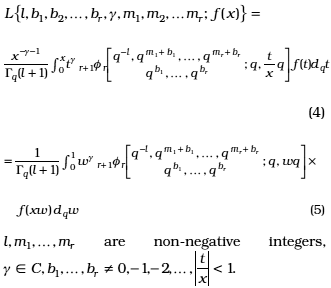
<p style="text-autospace: none" align="justify"><font face="Verdana"> <span lang="EN-US" style="font-family: Bookman-Light; color: #231F20"> <font size="2">where </font></span><i> <span lang="EN-US" style="font-family: Bookman-LightItalic; color: #231F20"> <font size="2">F</font></span></i><span lang="EN-US" style="font-family: Bookman-Light; color: #231F20"><font size="2">(</font></span><i><span lang="EN-US" style="font-family: Bookman-LightItalic; color: #231F20"><font size="2">a,b;c;x</font></span></i><span lang="EN-US" style="font-family: Bookman-Light; color: #231F20"><font size="2">)  denotes the Gauss hypergeometric function, and the parameters involved are  complex numbers.</font></span></font></p>     <p style="text-autospace: none" align="justify"><font face="Verdana"><b> <span lang="EN-US" style="font-size: 10.0pt; font-family: Bookman-Demi; color: #231F20"> 1.3. The operator </span><i> <span lang="EN-US" style="font-size: 10.0pt; font-family: Bookman-DemiItalic; color: #231F20"> L</span></i><span lang="EN-US" style="font-size: 10.0pt; font-family: Bookman-Demi; color: #231F20">(.)</span></b></font></p>     <p align="justify"><font face="Verdana"> <span lang="EN-US" style="font-family: Bookman-Light; color: #231F20"> <font size="2">We consider the operator </font></span><i> <span lang="EN-US" style="font-family: Bookman-LightItalic; color: #231F20"> <font size="2">L</font></span></i><span lang="EN-US" style="font-family: Bookman-Light; color: #231F20"><font size="2">(.)  introduced by Delgado and Galué [8] in the following form:</font></span></font></p>     <p align="center"> <img border="0" src="/img/fbpe/rtfiuz/v35n3/art11ec4.gif" width="331" height="288"></p>     
<p align="justify"><font size="2" face="Verdana">As particular cases of this  operator we have:</font></p>     <p align="center"> <img border="0" src="/img/fbpe/rtfiuz/v35n3/art11ec6.gif" width="339" height="36"></p>     
]]></body>
<body><![CDATA[<p style="text-autospace: none" align="justify"><font face="Verdana"> <span lang="EN-US" style="font-family: Bookman-Light; color: #231F20"> <font size="2">where </font></span> <span lang="EN-US" style="font-family: SymbolPropBT; color: #231F20"> <font size="2">&nbsp;&nbsp;</font></span></font><span lang="EN-US" style="font-family: SymbolPropBT; color: #231F20"><font size="2"><font face="Symbol">g  Î</font></font></span><font face="Verdana"><i><span lang="EN-US" style="font-family: Bookman-LightItalic; color: #231F20"><font size="2">C</font></span></i><span lang="EN-US" style="font-family: Bookman-Light; color: #231F20"><font size="2">, </font></span><i> <span lang="EN-US" style="font-family: Bookman-LightItalic; color: #231F20"> <font size="2">l</font></span></i><span lang="EN-US" style="font-family: Bookman-Light; color: #231F20"><font size="2">,</font></span><i><span lang="EN-US" style="font-family: Bookman-LightItalic; color: #231F20"><font size="2">m</font></span></i><span lang="EN-US" style="font-family: Bookman-Light; color: #231F20"><font size="2"><sub>1</sub>  are non-negative integers, </font></span><i> <span lang="EN-US" style="font-family: Bookman-LightItalic; color: #231F20"> <font size="2">b</font></span></i><span lang="EN-US" style="font-family: Bookman-Light; color: #231F20"><font size="2"><sub>1</sub>  &#8800;0,-1,-2,..., </font></span> <span lang="EN-US" style="font-family: Bookman-Light; color: #231F20"> <font size="2">with </font></span></font> <span lang="EN-US" style="font-family: Bookman-Light; color: #231F20"> <font size="2"><font face="Symbol">Á</font></font></span><font face="Verdana"><span lang="EN-US" style="font-family: Bookman-Light; color: #231F20"><font size="2">[-</font></span><i><span lang="EN-US" style="font-family: Bookman-LightItalic; color: #231F20"><font size="2">l</font></span></i><span lang="EN-US" style="font-family: Bookman-Light; color: #231F20"><font size="2">,</font></span><i><span lang="EN-US" style="font-family: Bookman-LightItalic; color: #231F20"><font size="2">b</font></span></i><span lang="EN-US" style="font-family: Bookman-Light; color: #231F20"><font size="2"><sub>1</sub>, </font></span></font> <span lang="EN-US" style="font-family: Bookman-Light; color: #231F20"> <font size="2"><font face="Symbol">g</font></font></span><font face="Verdana"><span lang="EN-US" style="font-family: Bookman-Light; color: #231F20"><font size="2">, </font></span><i> <span lang="EN-US" style="font-family: Bookman-LightItalic; color: #231F20"> <font size="2">m</font></span></i><span lang="EN-US" style="font-family: Bookman-Light; color: #231F20"><font size="2"><sub>1</sub>; </font></span><i> <span lang="EN-US" style="font-family: Bookman-LightItalic; color: #231F20"> <font size="2">f</font></span></i><span lang="EN-US" style="font-family: Bookman-Light; color: #231F20"><font size="2">(</font></span><i><span lang="EN-US" style="font-family: Bookman-LightItalic; color: #231F20"><font size="2">x</font></span></i><span lang="EN-US" style="font-family: Bookman-Light; color: #231F20"><font size="2">)]  as defined in (3).</font></span></font></p>     <p style="text-autospace: none" align="center"> <img border="0" src="/img/fbpe/rtfiuz/v35n3/art11ec7.gif" width="299" height="32"></p>     
<p style="text-autospace: none" align="justify"><font face="Verdana"> <span lang="EN-US" style="font-family: Bookman-Light; color: #231F20"> <font size="2">with </font></span></font> <span lang="EN-US" style="font-family: SymbolPropBT; color: #231F20"> <font size="2"><font face="Symbol">g</font><font face="Verdana">&nbsp;</font></font></span><span lang="EN-US" style="font-family: SymbolPropBT; color: #231F20"><font size="2"><font face="Symbol">Î</font></font></span><font face="Verdana"><i><span lang="EN-US" style="font-family: Bookman-LightItalic; color: #231F20"><font size="2">C</font></span></i><span lang="EN-US" style="font-family: Bookman-Light; color: #231F20"><font size="2">, </font></span><i> <span lang="EN-US" style="font-family: Bookman-LightItalic; color: #231F20"> <font size="2">l </font></span></i> <span lang="EN-US" style="font-family: Bookman-Light; color: #231F20"> <font size="2">is non-negative integer, </font></span><i> <span lang="EN-US" style="font-family: Bookman-LightItalic; color: #231F20"> <font size="2">b</font></span></i><span lang="EN-US" style="font-family: Bookman-Light; color: #231F20"><font size="2"><sub>1</sub>  &#8800; 0,-1,-2,..., </font></span> <span lang="EN-US" style="font-family: Bookman-Light; color: #231F20"> <font size="2">and </font></span> <span lang="EN-US" style="font-family: Bookman-LightItalic; color: #231F20"><i> <font size="2">I</font></i></span></font><sub><span lang="EN-US" style="font-family: Bookman-LightItalic; color: #231F20"><font size="2" face="Symbol">g</font></span></sub><font face="Verdana"><sub><span lang="EN-US" style="font-family: Bookman-Light; color: #231F20"><font size="2">,</font></span><i><span lang="EN-US" style="font-family: Bookman-LightItalic; color: #231F20"><font size="2">l</font></span></i><span lang="en-us"><font size="2" color="#231F20">+</font></span></sub><span lang="EN-US" style="font-family: Bookman-Light; color: #231F20"><font size="2"><sub>1</sub> </font></span><i> <span lang="EN-US" style="font-family: Bookman-LightItalic; color: #231F20"> <font size="2">f</font></span></i><span lang="EN-US" style="font-family: Bookman-Light; color: #231F20"><font size="2">(</font></span><i><span lang="EN-US" style="font-family: Bookman-LightItalic; color: #231F20"><font size="2">x</font></span></i><span lang="EN-US" style="font-family: Bookman-Light; color: #231F20"><font size="2">)  as in (2).</font></span></font></p>     <p style="text-autospace: none" align="justify"><font face="Verdana"> <span lang="EN-US" style="font-family: Bookman-Light; color: #231F20"> <font size="2">In this paper the operator </font></span><i> <span lang="EN-US" style="font-family: Bookman-LightItalic; color: #231F20"> <font size="2">L</font></span></i><span lang="EN-US" style="font-family: Bookman-Light; color: #231F20"><font size="2">(.)  of the basic multiple hypergeometric function given by Yadav </font></span><i> <span lang="EN-US" style="font-family: Bookman-LightItalic; color: #231F20"> <font size="2">et al. </font></span></i> <span lang="EN-US" style="font-family: Bookman-Light; color: #231F20"> <font size="2">is used in order to obtain the fractional q-integral operator </font></span><i> <span lang="EN-US" style="font-family: Bookman-LightItalic; color: #231F20"> <font size="2">L</font></span></i><span lang="EN-US" style="font-family: Bookman-Light; color: #231F20"><font size="2">(.)  of the generalized basic hypergeometric function </font></span> <span lang="EN-US" style="font-family: Bookman-LightItalic; color: #231F20"> <sub><i><font size="2">r</font></i></sub></span></font><span lang="EN-US" style="font-family: Bookman-LightItalic; color: #231F20"><font size="2"><font face="Symbol">f</font></font></span><font face="Verdana"><sub><i><span lang="EN-US" style="font-family: Bookman-LightItalic; color: #231F20"><font size="2">s</font></span></i></sub><span lang="EN-US" style="font-family: Bookman-Light; color: #231F20"><font size="2">(.),  also the q-Mellin transform for the operator </font></span><i> <span lang="EN-US" style="font-family: Bookman-LightItalic; color: #231F20"> <font size="2">L</font></span></i><span lang="EN-US" style="font-family: Bookman-Light; color: #231F20"><font size="2">(.)  is presented. Various interesting special cases, involving q-special functions,  have been derived as application of the main result.</font></span></font></p>     <p style="text-autospace: none" align="justify"><b> <span lang="EN-US" style="font-family: Bookman-Demi; color: #231F20"> <font size="2" face="Verdana">2. Basic hypergeometric series</font></span></b></p>     <p style="text-autospace: none" align="justify"> <span lang="EN-US" style="font-family: Bookman-Light; color: #231F20"> <font size="2" face="Verdana">In this section we present some definitions  necessary for the development of the next sections.</font></span></p>     <p style="text-autospace: none" align="justify"><font face="Verdana"><b> <span style="font-size: 10.0pt; font-family: Bookman-Demi; color: #231F20">2.1.  The q-shifted factorial</span></b></font></p>     <p align="justify"> <span lang="EN-US" style="font-family: Bookman-Light; color: #231F20"> <font size="2" face="Verdana">The q-shifted factorial is defined as: [20]</font></span></p>     <p align="center"> <img border="0" src="/img/fbpe/rtfiuz/v35n3/art11ec8.gif" width="310" height="65"></p>     
<p align="justify"><font size="2" face="Verdana">Also,</font></p>     ]]></body>
<body><![CDATA[<p align="center"> <img border="0" src="/img/fbpe/rtfiuz/v35n3/art11ec9.gif" width="278" height="37"></p>     
<p align="justify"><font face="Verdana"> <span lang="EN-US" style="font-family: Bookman-Light; color: #231F20"> <font size="2">which converges for |</font></span><i><span lang="EN-US" style="font-family: Bookman-LightItalic; color: #231F20"><font size="2">q|</font></span></i><span lang="en-us"><font size="2" color="#231F20">&lt;</font></span><span lang="EN-US" style="font-family: Bookman-Light; color: #231F20"><font size="2">1  and diverges for </font></span><i> <span lang="EN-US" style="font-family: Bookman-LightItalic; color: #231F20"> <font size="2">a </font></span></i><span lang="en-us"> <font size="2" color="#231F20">&#8800; </font></span> <span lang="EN-US" style="font-family: Bookman-Light; color: #231F20"> <font size="2">0 and </font></span> <span lang="EN-US" style="font-family: Bookman-LightItalic; color: #231F20"> <font size="2"><i>|q|</i></font></span></font><span lang="EN-US" style="font-family: Bookman-LightItalic; color: #231F20"><font face="Verdana" size="2">&#8805;</font></span><font face="Verdana"><span lang="EN-US" style="font-family: Bookman-Light; color: #231F20"><font size="2">1,  and</font></span></font></p>     <p align="center"> <img border="0" src="/img/fbpe/rtfiuz/v35n3/art11ec10.gif" width="273" height="37"></p>     
<p style="text-autospace: none" align="justify"><font face="Verdana"><b> <span lang="EN-US" style="font-size: 10.0pt; font-family: Bookman-Demi; color: #231F20"> 2.2. Identities</span></b></font></p>     <p style="text-autospace: none" align="justify"><font face="Verdana"> <span lang="EN-US" style="font-family: Bookman-Light; color: #231F20"> <font size="2">We recall here the following </font></span><i> <span lang="EN-US" style="font-family: Bookman-LightItalic; color: #231F20"> <font size="2">q</font></span></i><span lang="EN-US" style="font-family: Bookman-Light; color: #231F20"><font size="2">-identities  [20, p. 233, No. (I.13); p. 235, No. (I.35)]:</font></span></font></p>     <p style="text-autospace: none" align="center"> <img border="0" src="/img/fbpe/rtfiuz/v35n3/art11ec11.gif" width="284" height="91"></p>     
<p style="text-autospace: none" align="justify"><font face="Verdana"><b> <span lang="EN-US" style="font-size: 10.0pt; font-family: Bookman-Demi; color: #231F20"> 2.3. Generalized basic hypergeometric series</span></b></font></p>     <p style="text-autospace: none" align="justify"> <span lang="EN-US" style="font-family: Bookman-Light; color: #231F20"> <font face="Verdana"><font size="2">A generalization of the basic hypergeometric  series <sub>2</sub></font></font><font face="Symbol" size="2">f</font></span><font face="Verdana"><span lang="EN-US" style="font-family: Bookman-Light; color: #231F20"><font size="2"><sub>1</sub>  is given by: [20]</font></span></font></p>     <p style="text-autospace: none" align="center"> <img border="0" src="/img/fbpe/rtfiuz/v35n3/art11ec13.gif" width="311" height="198"></p>     
<p style="text-autospace: none" align="justify"><font face="Verdana"> <span lang="EN-US" style="font-family: Bookman-Light; color: #231F20"> <font size="2">Some special cases of the </font></span><sub> <span lang="EN-US" style="font-family: Bookman-LightItalic; color: #231F20"><i> <font size="2">r</font></i></span></sub></font><span lang="EN-US" style="font-family: Bookman-LightItalic; color: #231F20"><font size="2"><font face="Symbol">f</font><sub><font face="Verdana"><i>s</i></font></sub></font></span><font face="Verdana"><span lang="EN-US" style="font-family: Bookman-Light; color: #231F20"><font size="2">(.)  are:</font></span></font></p>     ]]></body>
<body><![CDATA[<p style="text-autospace: none" align="justify"> <span lang="EN-US" style="font-family: Bookman-Light; color: #231F20"> <font size="2" face="Verdana">i) The two q-exponential functions, [20, p. 9,  Nos. (1.3.15), (1.3.16)]</font></span></p>     <p style="text-autospace: none" align="center"> <img border="0" src="/img/fbpe/rtfiuz/v35n3/art11ec14.gif" width="306" height="134"></p>     
<p style="text-autospace: none" align="justify"><font size="2" face="Verdana">ii)  q-analogues of Bessel functions, [20, p. 25]</font></p>     <p style="text-autospace: none" align="center"> <img border="0" src="/img/fbpe/rtfiuz/v35n3/art11ec16.gif" width="310" height="156"></p>     
<p style="text-autospace: none" align="justify"><font size="2" face="Verdana"> iii) The q-Laguerre polynomials defined by [20, p. 194]</font></p>     <p style="text-autospace: none" align="center"> <img border="0" src="/img/fbpe/rtfiuz/v35n3/art11ec18.gif" width="309" height="38"></p>     
<p style="text-autospace: none" align="justify"><font size="2" face="Verdana">iv)  The little q-Jacobi polynomials: [21]</font></p>     <p style="text-autospace: none" align="center"> <img border="0" src="/img/fbpe/rtfiuz/v35n3/art11ec19.gif" width="307" height="54"></p>     
<p style="text-autospace: none" align="justify"><font size="2" face="Verdana">v)  The Wall polynomials: [20, p. 196]</font></p>     <p style="text-autospace: none" align="center"> <img border="0" src="/img/fbpe/rtfiuz/v35n3/art11ec20.gif" width="309" height="97"></p>     
]]></body>
<body><![CDATA[<p style="text-autospace: none" align="justify"><font size="2" face="Verdana">vi)  The generalized Stieltjes-Wigert polynomials: [20, p. 196]</font></p>     <p style="text-autospace: none" align="center"> <img border="0" src="/img/fbpe/rtfiuz/v35n3/art11ec21.gif" width="313" height="89"></p>     
<p style="text-autospace: none" align="justify"><b> <font size="2" face="Verdana">2.4. q-analogue of the Karlsson-Minton summation  formula</font></b></p>     <p style="text-autospace: none" align="justify"><font size="2" face="Verdana"> Gasper (1981) derived a q-analogue of the Karlsson-Minton summation formula,  which is given by: [20, p. 16, No. (1.9.10)]</font></p>     <p style="text-autospace: none" align="center"> <img border="0" src="/img/fbpe/rtfiuz/v35n3/art11ec22.gif" width="312" height="94"></p>     
<p style="text-autospace: none" align="justify"><font face="Verdana"> <span lang="EN-US" style="font-family: Bookman-Light; color: #231F20"> <font size="2">where </font></span> <span lang="EN-US" style="font-family: Bookman-LightItalic; color: #231F20"><i> <font size="2">m</font></i><font size="2"><sub>1</sub><i>, m</i><sub>2</sub><i>,...,m<sub>r</sub> </i></font></span> <span lang="EN-US" style="font-family: Bookman-Light; color: #231F20"> <font size="2">are non-negative integers, </font></span><i> <span lang="EN-US" style="font-family: Bookman-LightItalic; color: #231F20"> <font size="2">n </font></span></i></font><i> <span lang="EN-US" style="font-family: Bookman-LightItalic; color: #231F20"> <font size="2"><font face="Verdana">&#8805;</font><font face="Times New Roman"> </font> <font face="Verdana">m</font></font></span></i><font face="Verdana"><span lang="EN-US" style="font-family: Bookman-Light; color: #231F20"><font size="2"><sub>1</sub>  +...+</font></span></font><i><span lang="EN-US" style="font-family: Bookman-LightItalic; color: #231F20"><font face="Verdana" size="2">  m<sub>r</sub></font></span></i><font face="Verdana"><span lang="EN-US" style="font-family: Bookman-Light; color: #231F20"><font size="2">.</font></span></font></p>     <p style="text-autospace: none" align="justify"><font face="Verdana"><b> <span lang="EN-US" style="font-size: 10.0pt; font-family: Bookman-Demi; color: #231F20"> 2.5. The basic multiple hypergeometric function</span></b></font></p>     <p style="text-autospace: none" align="justify"> <span lang="EN-US" style="font-family: Bookman-Light; color: #231F20"> <font size="2" face="Verdana">It was introduced by H.M. Srivastava [22] and is  given by</font></span></p>     <p style="text-autospace: none" align="center"> <img border="0" src="/img/fbpe/rtfiuz/v35n3/art11ec23.gif" width="505" height="156"></p>     
<p align="justify"><font face="Verdana"> <span lang="EN-US" style="font-family: Bookman-Light; color: #231F20"> <font size="2">where the arguments </font></span><i> <span lang="EN-US" style="font-family: Bookman-LightItalic; color: #231F20"> <font size="2">x</font></span></i><span lang="EN-US" style="font-family: Bookman-Light; color: #231F20"><font size="2"><sub>1</sub>,..., </font></span><i> <span lang="EN-US" style="font-family: Bookman-LightItalic; color: #231F20"> <font size="2">x<sub>n</sub></font></span></i><span lang="EN-US" style="font-family: Bookman-Light; color: #231F20"><font size="2">,  the complex parameters</font></span></font></p>     ]]></body>
<body><![CDATA[<p align="center"> <img border="0" src="/img/fbpe/rtfiuz/v35n3/art11exp1.gif" width="269" height="47"></p>     
<p align="justify"><font size="2" face="Verdana">and the associated coefficients</font></p>     <p align="center"> <img border="0" src="/img/fbpe/rtfiuz/v35n3/art11exp2.gif" width="273" height="48"></p>     
<p style="text-autospace: none" align="justify"> <span lang="EN-US" style="font-family: Bookman-Light; color: #231F20"> <font size="2" face="Verdana">are so constrained that the multiple serie (23)  converges.</font></span></p>     <p style="text-autospace: none" align="justify"><font face="Verdana"> <span lang="EN-US" style="font-family: Bookman-Light; color: #231F20"> <font size="2">As particular case of (23) for </font></span> <span lang="EN-US" style="font-family: Bookman-LightItalic; color: #231F20"><i> <font size="2">n </font></i><font size="2">= </font></span> <span lang="EN-US" style="font-family: Bookman-Light; color: #231F20"> <font size="2">1, </font></span> <span lang="EN-US" style="font-family: Bookman-LightItalic; color: #231F20"><i> <font size="2">A = C </font></i><font size="2">= </font></span> <span lang="EN-US" style="font-family: Bookman-Light; color: #231F20"> <font size="2">0, </font></span></font> <span lang="EN-US" style="font-family: SymbolPropBT; color: #231F20"> <font face="Symbol" size="2">f</font></span><span lang="en-us"><font face="Verdana" size="2" color="#231F20">'</font></span><font face="Verdana"><span lang="EN-US" style="font-family: Bookman-LightItalic; color: #231F20"><i><font size="2"><sub>j</sub> </font></i><font size="2">= </font></span> <span lang="EN-US" style="font-family: Bookman-Light; color: #231F20"> <font size="2">1, </font></span> <span lang="EN-US" style="font-family: Bookman-LightItalic; color: #231F20"><i> <font size="2">j </font></i><font size="2">= </font></span> <span lang="EN-US" style="font-family: Bookman-Light; color: #231F20"> <font size="2">1,...,</font></span><i><span lang="EN-US" style="font-family: Bookman-LightItalic; color: #231F20"><font size="2">B</font></span></i><span lang="en-us"><font size="2" color="#231F20">'</font></span><span lang="EN-US" style="font-family: Bookman-Light; color: #231F20"><font size="2">, </font></span></font> <span lang="EN-US" style="font-family: MTExtra; color: #231F20"> <font face="Symbol" size="2">d</font></span><span lang="en-us"><font face="Verdana" size="2" color="#231F20">'</font></span><font face="Verdana"><i><span lang="EN-US" style="font-family: Bookman-LightItalic; color: #231F20"><font size="2"><sub>j</sub> </font></span></i><span lang="en-us"><font size="2" color="#231F20">= </font> </span><span lang="EN-US" style="font-family: Bookman-Light; color: #231F20"> <font size="2">1, </font></span><i> <span lang="EN-US" style="font-family: Bookman-LightItalic; color: #231F20"> <font size="2">j </font></span></i><span lang="en-us"> <font size="2" color="#231F20">= </font></span> <span lang="EN-US" style="font-family: Bookman-Light; color: #231F20"> <font size="2">1,...,</font></span><i><span lang="EN-US" style="font-family: Bookman-LightItalic; color: #231F20"><font size="2">D</font></span></i><span lang="en-us"><font size="2" color="#231F20">'</font></span><span lang="EN-US" style="font-family: SymbolPropBT; color: #231F20"><font size="2"> </font></span> <span lang="EN-US" style="font-family: Bookman-Light; color: #231F20"> <font size="2">we obtain</font></span></font></p>     <p style="text-autospace: none" align="center"> <img border="0" src="/img/fbpe/rtfiuz/v35n3/art11ec24.gif" width="252" height="159"></p>     
<p style="text-autospace: none" align="justify"> <span lang="EN-US" style="font-family: Bookman-Light; color: #231F20"> <font size="2" face="Verdana">which is a general basic hypergeometric series  [23].</font></span></p>     <p style="text-autospace: none" align="justify"><font face="Verdana"><b> <span lang="EN-US" style="font-size: 10.0pt; font-family: Bookman-Demi; color: #231F20"> 2.6. The </span><i> <span lang="EN-US" style="font-size: 10.0pt; font-family: Bookman-DemiItalic; color: #231F20"> q</span></i><span lang="EN-US" style="font-size: 10.0pt; font-family: Bookman-Demi; color: #231F20">-derivative  operator</span></b></font></p>     <p style="text-autospace: none" align="justify"><font face="Verdana"> <span lang="EN-US" style="font-family: Bookman-Light; color: #231F20"> <font size="2">It is denoted by </font></span><i> <span lang="EN-US" style="font-family: Bookman-LightItalic; color: #231F20"> <font size="2">D<sub>q</sub> </font></span></i> <span lang="EN-US" style="font-family: Bookman-Light; color: #231F20"> <font size="2">and defined for fixed </font></span><i> <span lang="EN-US" style="font-family: Bookman-LightItalic; color: #231F20"> <font size="2">q </font></span></i> <span lang="EN-US" style="font-family: Bookman-Light; color: #231F20"> <font size="2">by [20, p. 22]</font></span></font></p>     <p style="text-autospace: none" align="center"> <img border="0" src="/img/fbpe/rtfiuz/v35n3/art11ec25.gif" width="232" height="39"></p>     
]]></body>
<body><![CDATA[<p style="text-autospace: none" align="justify"><b> <font size="2" face="Verdana">2.7. q-Beta function</font></b></p>     <p style="text-autospace: none" align="justify"><font size="2" face="Verdana">It  is defined by [20, p. 18, No. (1.10.13), p. 19, No. (1.11.7)]</font></p>     <p style="text-autospace: none" align="center"> <img border="0" src="/img/fbpe/rtfiuz/v35n3/art11ec26.gif" width="284" height="121"></p>     
<p style="text-autospace: none" align="justify"><font size="2" face="Verdana"> From these results we have</font></p>     <p style="text-autospace: none" align="center"> <img border="0" src="/img/fbpe/rtfiuz/v35n3/art11ec28.gif" width="309" height="39"></p>     
<p style="text-autospace: none" align="justify"><font face="Verdana"> <span lang="EN-US" style="font-family: Bookman-Light; color: #231F20"> <font size="2">now applying (12), when </font></span> <span lang="EN-US" style="font-family: Bookman-LightItalic; color: #231F20"><i> <font size="2">x </font></i><font size="2">= </font></span><i> <span lang="EN-US" style="font-family: Bookman-LightItalic; color: #231F20"> <font size="2">u </i>+ <i>n</i></font></span><span lang="EN-US" style="font-family: Bookman-Light; color: #231F20"><font size="2">,  Re(</font></span><i><span lang="EN-US" style="font-family: Bookman-LightItalic; color: #231F20"><font size="2">u</font></span></i><span lang="EN-US" style="font-family: Bookman-Light; color: #231F20"><font size="2">)</font></span><span lang="EN-US" style="font-family: SymbolPropBT; color: #231F20"><font size="2">  &gt; </font></span> <span lang="EN-US" style="font-family: Bookman-Light; color: #231F20"> <font size="2">0, </font></span><i> <span lang="EN-US" style="font-family: Bookman-LightItalic; color: #231F20"> <font size="2">n </font></span></i></font> <span lang="EN-US" style="font-family: SymbolPropBT; color: #231F20"> <font face="Symbol" size="2">Î</font><font face="Verdana" size="2"> </font> </span><font face="Verdana"><i> <span lang="EN-US" style="font-family: Bookman-LightItalic; color: #231F20"> <font size="2">Z</font></span></i><span lang="EN-US" style="font-family: Bookman-Light; color: #231F20"><font size="2">,</font></span></font></p>     <p style="text-autospace: none" align="center"> <img border="0" src="/img/fbpe/rtfiuz/v35n3/art11ec29.gif" width="306" height="57"></p>     
<p style="text-autospace: none" align="justify"><font face="Verdana"><b> <span lang="EN-US" style="font-family: Bookman-Demi; color: #231F20"> <font size="2">3. Fractional q-integral operator </font></span><font size="2"> <i><span lang="EN-US" style="font-family: Bookman-DemiItalic; color: #231F20">L</span></i></font><span lang="EN-US" style="font-family: Bookman-Demi; color: #231F20"><font size="2">(.)  of the generalized basic hypergeometric series</font></span></b></font></p>     <p align="justify"><font face="Verdana"> <span lang="EN-US" style="font-family: Bookman-Light; color: #231F20"> <font size="2">R.K. Yadav, S.L. Kalla and G. Kaur [24] applied the operator </font></span><i> <span lang="EN-US" style="font-family: Bookman-LightItalic; color: #231F20"> <font size="2">L</font></span></i><span lang="EN-US" style="font-family: Bookman-Light; color: #231F20"><font size="2">(.)  to the basic multiple hypergeometric function and established the following  result:</font></span></font></p>     <p align="center"> <img border="0" src="/img/fbpe/rtfiuz/v35n3/art11ec30.gif" width="312" height="352"></p>     
]]></body>
<body><![CDATA[<p style="text-autospace: none" align="justify"><font face="Verdana"> <span lang="EN-US" style="font-family: Bookman-Light; color: #231F20"> <font size="2">where</font></span><span lang="EN-US" style="font-family: SymbolPropBT; color: #231F20"><font size="2">&nbsp;</font></span></font><span lang="EN-US" style="font-family: SymbolPropBT; color: #231F20"><font size="2"><font face="Symbol">g</font><font face="Verdana">&nbsp;</font></font></span><span lang="en-us"><font face="Symbol" size="2" color="#231F20">Î</font></span><font face="Verdana"><i><span lang="EN-US" style="font-family: Bookman-LightItalic; color: #231F20"><font size="2">C,  l, m</font></span></i><span lang="EN-US" style="font-family: Bookman-Light; color: #231F20"><font size="2"><sub>1</sub>,...,</font></span><i><span lang="EN-US" style="font-family: Bookman-LightItalic; color: #231F20"><font size="2">m<sub>r</sub></font></span></i><span lang="EN-US" style="font-family: MTExtra; color: #231F20"><font size="2"> </font></span> <span lang="EN-US" style="font-family: Bookman-Light; color: #231F20"> <font size="2">are non-negative integers, </font></span><i> <span lang="EN-US" style="font-family: Bookman-LightItalic; color: #231F20"> <font size="2">b</font></span></i><span lang="EN-US" style="font-family: Bookman-Light; color: #231F20"><font size="2"><sub>1</sub>,...,</font></span><i><span lang="EN-US" style="font-family: Bookman-LightItalic; color: #231F20"><font size="2">b<sub>r</sub>  &#8800;</font></span></i><span lang="EN-US" style="font-family: Bookman-Light; color: #231F20"><font size="2">0,-1,-2,...,</font></span><span lang="EN-US" style="font-family: SymbolPropBT; color: #231F20"><font size="2"> </font></span> <span lang="EN-US" style="font-family: Bookman-Light; color: #231F20"> <font size="2">and </font></span></font> <span lang="EN-US" style="font-family: SymbolPropBT; color: #231F20"> <font size="2" face="Symbol">l</font></span><font face="Verdana"><i><span lang="EN-US" style="font-family: Bookman-LightItalic; color: #231F20"><font size="2"><sub>i</sub></font></span></i><span lang="EN-US" style="font-family: Bookman-Light; color: #231F20"><font size="2">(</font></span><span lang="EN-US" style="font-family: Bookman-LightItalic; color: #231F20"><i><font size="2">i </font></i><font size="2">= </font></span> <span lang="EN-US" style="font-family: Bookman-Light; color: #231F20"> <font size="2">1,...,</font></span><i><span lang="EN-US" style="font-family: Bookman-LightItalic; color: #231F20"><font size="2">n</font></span></i><span lang="EN-US" style="font-family: Bookman-Light; color: #231F20"><font size="2">)  are arbitrary quantities.</font></span></font></p>     <p style="text-autospace: none" align="justify"> <span lang="EN-US" style="font-family: Bookman-Light; color: #231F20"> <font size="2" face="Verdana">From (30) and using (24) we get</font></span></p>     <p style="text-autospace: none" align="center"> <img border="0" src="/img/fbpe/rtfiuz/v35n3/art11ec31.gif" width="306" height="240"></p>     
<p style="text-autospace: none" align="justify"><font face="Verdana"> <span lang="EN-US" style="font-family: Bookman-Light; color: #231F20"> <font size="2">where </font></span></font> <span lang="EN-US" style="font-family: SymbolPropBT; color: #231F20"> <font size="2"><font face="Symbol">g</font><font face="Verdana">&nbsp;</font></font></span><span lang="en-us"><font face="Symbol" size="2" color="#231F20">Î</font></span><font face="Verdana"><i><span lang="EN-US" style="font-family: Bookman-LightItalic; color: #231F20"><font size="2">C,  l, m</font></span></i><span lang="EN-US" style="font-family: Bookman-Light; color: #231F20"><font size="2"><sub>1</sub>,...,</font></span><i><span lang="EN-US" style="font-family: Bookman-LightItalic; color: #231F20"><font size="2">m<sub>r</sub></font></span></i><span lang="EN-US" style="font-family: MTExtra; color: #231F20"><font size="2"> </font></span> <span lang="EN-US" style="font-family: Bookman-Light; color: #231F20"> <font size="2">are non-negative integers, </font></span><i> <span lang="EN-US" style="font-family: Bookman-LightItalic; color: #231F20"> <font size="2">b</font></span></i><span lang="EN-US" style="font-family: Bookman-Light; color: #231F20"><font size="2"><sub>1</sub>,...,</font></span><i><span lang="EN-US" style="font-family: Bookman-LightItalic; color: #231F20"><font size="2">b<sub>r</sub>  &#8800;</font></span></i><font size="2"><span lang="EN-US" style="font-family: Bookman-Light; color: #231F20">0,-1,-2,...</span></font></font></p>     <p align="justify"> <span lang="EN-US" style="font-family: Bookman-Light; color: #231F20"> <font size="2" face="Verdana">In the rest of the paper for convenience we will  use the following notation:</font></span></p>     <p align="center"> <img border="0" src="/img/fbpe/rtfiuz/v35n3/art11exp3.gif" width="248" height="52"></p>     
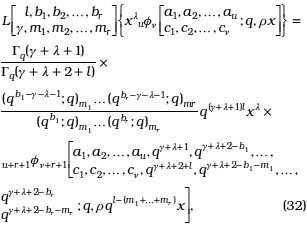
<p style="text-autospace: none" align="justify"><font face="Verdana"><b> <span lang="EN-US" style="font-family: Bookman-Demi; color: #231F20"> <font size="2">Lemma: </font></span></b> <span lang="EN-US" style="font-family: Bookman-LightItalic; color: #231F20"><i> <font size="2">Let <sub> <img border="0" src="/img/fbpe/rtfiuz/v35n3/art11lema.gif" width="136" height="31"></sub> be a  fractional q-integral operator and <sub>r</sub></font></i></span></font><span lang="EN-US" style="font-family: Bookman-LightItalic; color: #231F20"><font face="Symbol" size="2">f</font></span><font face="Verdana"><sub><i><span lang="EN-US" style="font-family: Bookman-LightItalic; color: #231F20"><font size="2">s</font></span></i></sub><span lang="EN-US" style="font-family: Bookman-Light; color: #231F20"><font size="2">(.) </font></span><i> <span lang="EN-US" style="font-family: Bookman-LightItalic; color: #231F20"> <font size="2">the generalized basic hypergeometric series, as defined in (4)  and (13) respectively, then</font></span></i></font></p>     
<p style="text-autospace: none" align="center"> <img border="0" src="/img/fbpe/rtfiuz/v35n3/art11ec32.gif" width="307" height="226"></p>     
<p style="text-autospace: none" align="justify"><font face="Verdana"><i> <span lang="EN-US" style="font-family: Bookman-LightItalic; color: #231F20"> <font size="2">with l, m</font></span></i><span lang="EN-US" style="font-family: Bookman-Light; color: #231F20"><font size="2"><sub>1</sub>,...,</font></span><i><span lang="EN-US" style="font-family: Bookman-LightItalic; color: #231F20"><font size="2">m<sub>r</sub></font></span></i><span lang="EN-US" style="font-family: MTExtra; color: #231F20"><font size="2"> </font></span> <span lang="EN-US" style="font-family: Bookman-LightItalic; color: #231F20"><i> <font size="2">non-negative integers, l </font></i></span></font> <span lang="EN-US" style="font-family: Bookman-LightItalic; color: #231F20"> <font size="2"><i><font face="Verdana">&#8805;</font><font face="Times New Roman"> </font><font face="Verdana">m</font></i><font face="Verdana"><sub>1</sub><i>+...+m<sub>r</sub></i></font></font></span><span lang="PT-BR" style="font-family: Bookman-LightItalic; color: #231F20"><font face="Verdana"><font size="2">;<i> </i></font></font><font size="2"><font face="Symbol">g</font></font></span><span lang="PT-BR" style="font-family: SymbolPropBT; color: #231F20"><font face="Symbol" size="2">Î</font></span><font face="Verdana"><i><span lang="PT-BR" style="font-family: Bookman-LightItalic; color: #231F20"><font size="2">C, </font></span></i> <span lang="PT-BR" style="font-family: Bookman-Light; color: #231F20"> <font size="2">Re(</font></span></font><span lang="PT-BR" style="font-family: SymbolPropBT; color: #231F20"><font size="2"><font face="Symbol">g</font><font face="Verdana">  + </font><font face="Symbol">l</font><font face="Verdana"> + </font></font> </span><font face="Verdana"> <span lang="PT-BR" style="font-family: Bookman-Light; color: #231F20"> <font size="2">1)</font></span><span lang="PT-BR" style="font-family: SymbolPropBT; color: #231F20"><font size="2">  &gt; </font></span> <span lang="PT-BR" style="font-family: Bookman-Light; color: #231F20"> <font size="2">0</font></span><span lang="PT-BR" style="font-family: Bookman-LightItalic; color: #231F20"><font size="2">;<i>  b<sub>j</sub>, </i></font></span></font> <span lang="PT-BR" style="font-family: SymbolPropBT; color: #231F20"> <font size="2"><font face="Symbol">g</font><font face="Verdana"> + </font> <font face="Symbol">l</font><font face="Verdana"> + </font></font></span> <font face="Verdana"> <span lang="PT-BR" style="font-family: Bookman-Light; color: #231F20"> <font size="2">2 -</font></span><span lang="PT-BR" style="font-family: Bookman-LightItalic; color: #231F20"><i><font size="2">  b<sub>j</sub> </font></i><font size="2">- </font></span> <span lang="PT-BR" style="font-family: Bookman-LightItalic; color: #231F20"><i> <font size="2">m<sub>j</sub> </font></i><font size="2">&#8800; </font></span> <span lang="PT-BR" style="font-family: Bookman-Light; color: #231F20"> <font size="2">0,-1,-2,...,</font></span><i><span lang="PT-BR" style="font-family: Bookman-LightItalic; color: #231F20"><font size="2">  j </font></span></i><span lang="pt-br"><font size="2" color="#231F20">= </font> </span><span lang="PT-BR" style="font-family: Bookman-Light; color: #231F20"> <font size="2">1,2,...,</font></span><i><span lang="PT-BR" style="font-family: Bookman-LightItalic; color: #231F20"><font size="2">r</font></span></i><span lang="PT-BR" style="font-family: Bookman-LightItalic; color: #231F20"><font size="2">;<i>  c</i></font></span><font size="2"><span lang="PT-BR" style="font-family: Bookman-Light; color: #231F20"><sub>1</sub>,</span></font><span lang="PT-BR" style="font-family: Bookman-LightItalic; color: #231F20"><font size="2"><i>  c</i></font></span><span lang="PT-BR" style="font-family: Bookman-Light; color: #231F20"><font size="2"><sub>2</sub>,...,</font></span><span lang="PT-BR" style="font-family: Bookman-LightItalic; color: #231F20"><font size="2"><i>c</i></font></span></font><span lang="PT-BR" style="font-family: Bookman-LightItalic; color: #231F20"><font size="2"><i><sub><font face="Symbol">n</font></sub><font face="Verdana">  &#8800; q</font></i><font face="Verdana"><sup>-</sup><i><sup>n</sup></i></font></font></span><font face="Verdana"><span lang="PT-BR" style="font-family: SymbolPropBT; color: #231F20"><font size="2"> </font></span><i> <span lang="PT-BR" style="font-family: Bookman-LightItalic; color: #231F20"> <font size="2">for n </font></span></i><span lang="pt-br"> <font size="2" color="#231F20">= </font></span> <span lang="PT-BR" style="font-family: Bookman-Light; color: #231F20"> <font size="2">0,1,2,</font></span></font><span lang="pt-br"><font face="Verdana" size="2" color="#231F20">...</font></span></p>     <p align="justify"><font face="Verdana"><b> <span lang="EN-US" style="font-family: Bookman-Demi; color: #231F20"> <font size="2">Proof: </font></span></b> <span lang="EN-US" style="font-family: Bookman-Light; color: #231F20"> <font size="2">From (5) we get</font></span></font></p>     ]]></body>
<body><![CDATA[<p align="center"> <img border="0" src="/img/fbpe/rtfiuz/v35n3/art11exp4.gif" width="307" height="73"></p>     
<p style="text-autospace: none" align="justify"><font face="Verdana"> <span lang="EN-US" style="font-family: Bookman-Light; color: #231F20"> <font size="2">now, taking in (31) &#956;<sub>1</sub> </font></span> <span lang="EN-US" style="font-family: SymbolPropBT; color: #231F20"> <font size="2">= </font></span></font> <span lang="EN-US" style="font-family: SymbolPropBT; color: #231F20"> <font size="2"><font face="Symbol">r</font></font></span><font face="Verdana"><span lang="EN-US" style="font-family: Bookman-Light; color: #231F20"><font size="2">, </font></span><i> <span lang="EN-US" style="font-family: Bookman-LightItalic; color: #231F20"> <font size="2">x</font></span></i><span lang="EN-US" style="font-family: Bookman-Light; color: #231F20"><font size="2"><sub>1</sub> </font></span> <span lang="EN-US" style="font-family: SymbolPropBT; color: #231F20"> <font size="2">= </font></span><i> <span lang="EN-US" style="font-family: Bookman-LightItalic; color: #231F20"> <font size="2">x </font></span></i> <span lang="EN-US" style="font-family: Bookman-Light; color: #231F20"> <font size="2">with </font></span><sub> <span lang="EN-US" style="font-family: Bookman-LightItalic; color: #231F20"><i> <font size="2">r</font></i></span></sub></font><span lang="EN-US" style="font-family: Bookman-LightItalic; color: #231F20"><font face="Symbol" size="2">f</font></span><font face="Verdana"><sub><i><span lang="EN-US" style="font-family: Bookman-LightItalic; color: #231F20"><font size="2">s</font></span></i></sub><span lang="EN-US" style="font-family: Bookman-Light; color: #231F20"><font size="2">(.)  as defined in (13), we have</font></span></font></p>     <p style="text-autospace: none" align="center"> <img border="0" src="/img/fbpe/rtfiuz/v35n3/art11ec33.gif" width="310" height="205"></p>     
<p style="text-autospace: none" align="justify"> <span lang="EN-US" style="font-family: Bookman-Light; color: #231F20"> <font size="2" face="Verdana">Now, using the results (11) and (10) joint with  (12) we obtain respectively</font></span></p>     <p style="text-autospace: none" align="center"> <img border="0" src="/img/fbpe/rtfiuz/v35n3/art11ec34.gif" width="308" height="128"></p>     
<p style="text-autospace: none" align="justify"> <span lang="EN-US" style="font-family: Bookman-Light; color: #231F20"> <font size="2" face="Verdana">Then the substitution of (34) and (35) in (33)  leads us to (32).</font></span></p>     <p style="text-autospace: none" align="justify"><font face="Verdana"><b> <span lang="EN-US" style="font-family: Bookman-Demi; color: #231F20"> <font size="2">Particular cases: </font></span></b> <span lang="EN-US" style="font-family: Bookman-Light; color: #231F20"> <font size="2">By replacing </font></span><i> <span lang="EN-US" style="font-family: Bookman-LightItalic; color: #231F20"> <font size="2">a</font></span></i><span lang="EN-US" style="font-family: Bookman-Light; color: #231F20"><font size="2"><sub>1</sub>,</font></span><i><span lang="EN-US" style="font-family: Bookman-LightItalic; color: #231F20"><font size="2">a</font></span></i><span lang="EN-US" style="font-family: Bookman-Light; color: #231F20"><font size="2"><sub>2</sub>,...,</font></span><i><span lang="EN-US" style="font-family: Bookman-LightItalic; color: #231F20"><font size="2">a<sub>u</sub></font></span></i><span lang="EN-US" style="font-family: Bookman-Light; color: #231F20"><font size="2">,</font></span><i><span lang="EN-US" style="font-family: Bookman-LightItalic; color: #231F20"><font size="2">c</font></span></i><span lang="EN-US" style="font-family: Bookman-Light; color: #231F20"><font size="2"><sub>1</sub>,</font></span><i><span lang="EN-US" style="font-family: Bookman-LightItalic; color: #231F20"><font size="2">c</font></span></i><span lang="EN-US" style="font-family: Bookman-Light; color: #231F20"><font size="2"><sub>2</sub>,...,</font></span><i><span lang="EN-US" style="font-family: Bookman-LightItalic; color: #231F20"><font size="2">c</font></span></i></font><i><span lang="EN-US" style="font-family: Bookman-LightItalic; color: #231F20"><font size="2"><sub><font face="Symbol">n</font></sub></font></span></i><font face="Verdana"><span lang="EN-US" style="font-family: SymbolPropBT; color: #231F20"><font size="2"> </font></span> <span lang="EN-US" style="font-family: Bookman-Light; color: #231F20"> <font size="2">in (32) by <sub> <img border="0" src="/img/fbpe/rtfiuz/v35n3/art11ecq.gif" width="136" height="17"></sub>,  respectively, and letting </font></span> <span lang="EN-US" style="font-family: Bookman-LightItalic; color: #231F20"><i> <font size="2">q </font></i></span></font> <span lang="EN-US" style="font-family: Bookman-LightItalic; color: #231F20"> <font size="2"><font face="Symbol">®</font></font></span><font face="Verdana"><span lang="EN-US" style="font-family: Bookman-Light; color: #231F20"><font size="2">1</font></span><sup><span lang="en-us"><font size="2" color="#231F20">-</font></span></sup><span lang="EN-US" style="font-family: SymbolPropBT; color: #231F20"><font size="2"> </font></span> <span lang="EN-US" style="font-family: Bookman-Light; color: #231F20"> <font size="2">we obtain according to (6) and (7)</font></span></font></p>     
<p style="text-autospace: none" align="center"> <img border="0" src="/img/fbpe/rtfiuz/v35n3/art11ec36.gif" width="314" height="184"></p>     
<p style="text-autospace: none" align="justify"><font face="Verdana"><i> <span style="font-family: Bookman-LightItalic; color: #231F20"><font size="2">l</font></span></i><span style="font-family: Bookman-Light; color: #231F20"><font size="2">, </font></span><i><span style="font-family: Bookman-LightItalic; color: #231F20"> <font size="2">m</font></span></i><span style="font-family: Bookman-Light; color: #231F20"><font size="2"><sub>1</sub>  non-negative integres, </font></span><i> <span style="font-family: Bookman-LightItalic; color: #231F20"><font size="2">l </font></span></i></font> <span style="font-family: SymbolPropBT; color: #231F20"> <font face="Verdana" size="2">&#8805; </font></span><font face="Verdana"><i> <span style="font-family: Bookman-LightItalic; color: #231F20"><font size="2">m</font></span></i><span style="font-family: Bookman-Light; color: #231F20"><font size="2"><sub>1</sub>; </font></span></font><span style="font-family: SymbolPropBT; color: #231F20"> <font size="2"><font face="Symbol">g</font><font face="Verdana">&nbsp;</font><font face="Symbol">Î</font><font face="Verdana"> </font></font></span><font face="Verdana"><i> <span style="font-family: Bookman-LightItalic; color: #231F20"><font size="2">C</font></span></i><span style="font-family: Bookman-Light; color: #231F20"><font size="2">, </font></span> <span lang="PT-BR" style="font-family: Bookman-Light; color: #231F20"> <font size="2">Re(</font></span></font><span lang="PT-BR" style="font-family: SymbolPropBT; color: #231F20"><font size="2"><font face="Symbol">g</font><font face="Verdana">  + </font><font face="Symbol">l</font><font face="Verdana"> + </font></font> </span><font face="Verdana"> <span lang="PT-BR" style="font-family: Bookman-Light; color: #231F20"> <font size="2">1)</font></span><span lang="PT-BR" style="font-family: SymbolPropBT; color: #231F20"><font size="2">  &gt; </font></span> <span lang="PT-BR" style="font-family: Bookman-Light; color: #231F20"> <font size="2">0</font></span><span style="font-family: Bookman-Light; color: #231F20"><font size="2">; </font></span><i><span style="font-family: Bookman-LightItalic; color: #231F20"> <font size="2">b</font></span></i><span style="font-family: Bookman-Light; color: #231F20"><font size="2"><sub>1</sub>, </font></span></font> <span lang="PT-BR" style="font-family: SymbolPropBT; color: #231F20"> <font size="2"><font face="Symbol">g</font><font face="Verdana"> + </font> <font face="Symbol">l</font><font face="Verdana"> + </font></font></span> <font face="Verdana"> <span lang="PT-BR" style="font-family: Bookman-Light; color: #231F20"> <font size="2">2 - </font></span><i> <span style="font-family: Bookman-LightItalic; color: #231F20"><font size="2">b</font></span></i><span style="font-family: Bookman-Light; color: #231F20"><font size="2"><sub>1</sub>  - </font></span><i> <span style="font-family: Bookman-LightItalic; color: #231F20"><font size="2">m</font></span></i><span style="font-family: Bookman-Light; color: #231F20"><font size="2"><sub>1</sub> </font></span> <span lang="PT-BR" style="font-family: Bookman-LightItalic; color: #231F20"> <font size="2">&#8800; </font></span><font size="2"> <span lang="PT-BR" style="font-family: Bookman-Light; color: #231F20"> 0,-1,-2,...</span></font><span style="font-family: Bookman-Light; color: #231F20"><font size="2">; </font></span> <span lang="PT-BR" style="font-family: Bookman-LightItalic; color: #231F20"> <font size="2"><i>c</i></font></span><font size="2"><span lang="PT-BR" style="font-family: Bookman-Light; color: #231F20"><sub>1</sub>,</span></font><span lang="PT-BR" style="font-family: Bookman-LightItalic; color: #231F20"><font size="2"><i>  c</i></font></span><span lang="PT-BR" style="font-family: Bookman-Light; color: #231F20"><font size="2"><sub>2</sub>,...,</font></span><span lang="PT-BR" style="font-family: Bookman-LightItalic; color: #231F20"><font size="2"><i>c</i></font></span></font><span lang="PT-BR" style="font-family: Bookman-LightItalic; color: #231F20"><font size="2"><i><sub><font face="Symbol">n</font></sub><font face="Verdana">  &#8800; q</font></i><font face="Verdana"><sup>-</sup><i><sup>n</sup></i></font></font></span><font face="Verdana"><span lang="PT-BR" style="font-family: SymbolPropBT; color: #231F20"><font size="2"> </font></span><i> <span lang="PT-BR" style="font-family: Bookman-LightItalic; color: #231F20"> <font size="2">for n </font></span></i><span lang="pt-br"> <font size="2" color="#231F20">= </font></span> <span lang="PT-BR" style="font-family: Bookman-Light; color: #231F20"> <font size="2">0,1,2,</font></span></font><span lang="pt-br"><font face="Verdana" size="2" color="#231F20">...</font></span></p>     <p style="text-autospace: none" align="center"> <img border="0" src="/img/fbpe/rtfiuz/v35n3/art11ec37.gif" width="309" height="94"></p>     
]]></body>
<body><![CDATA[<p style="text-autospace: none" align="justify"><font face="Verdana"><i> <span lang="EN-US" style="font-family: Bookman-LightItalic; color: #231F20"> <font size="2">l </font></span></i> <span lang="EN-US" style="font-family: Bookman-Light; color: #231F20"> <font size="2">non-negative integer; </font></span></font> <span style="font-family: SymbolPropBT; color: #231F20"><font size="2"> <font face="Symbol">g</font><font face="Verdana">&nbsp;</font><font face="Symbol">Î</font><font face="Verdana"> </font></font></span><font face="Verdana"><i> <span style="font-family: Bookman-LightItalic; color: #231F20"><font size="2">C</font></span></i><span lang="EN-US" style="font-family: Bookman-Light; color: #231F20"><font size="2">, </font></span> <span lang="PT-BR" style="font-family: Bookman-Light; color: #231F20"> <font size="2">Re(</font></span></font><span lang="PT-BR" style="font-family: SymbolPropBT; color: #231F20"><font size="2"><font face="Symbol">g</font><font face="Verdana">  + </font><font face="Symbol">l</font><font face="Verdana"> + </font></font> </span><font face="Verdana"> <span lang="PT-BR" style="font-family: Bookman-Light; color: #231F20"> <font size="2">1)</font></span><span lang="PT-BR" style="font-family: SymbolPropBT; color: #231F20"><font size="2">  &gt; </font></span> <span lang="PT-BR" style="font-family: Bookman-Light; color: #231F20"> <font size="2">0</font></span><span style="font-family: Bookman-Light; color: #231F20"><font size="2">; </font></span><i><span style="font-family: Bookman-LightItalic; color: #231F20"> <font size="2">b</font></span></i><span style="font-family: Bookman-Light; color: #231F20"><font size="2"><sub>1</sub>, </font></span></font> <span lang="PT-BR" style="font-family: SymbolPropBT; color: #231F20"> <font size="2"><font face="Symbol">g</font><font face="Verdana"> + </font> <font face="Symbol">l</font><font face="Verdana"> + </font></font></span> <font face="Verdana"> <span lang="PT-BR" style="font-family: Bookman-Light; color: #231F20"> <font size="2">2 - </font></span><i> <span style="font-family: Bookman-LightItalic; color: #231F20"><font size="2">b</font></span></i><span style="font-family: Bookman-Light; color: #231F20"><font size="2"><sub>1</sub></font></span><span lang="PT-BR" style="font-family: Bookman-Light; color: #231F20"><font size="2"> </font></span> <span lang="PT-BR" style="font-family: Bookman-LightItalic; color: #231F20"> <font size="2">&#8800; </font></span><font size="2"> <span lang="PT-BR" style="font-family: Bookman-Light; color: #231F20"> 0,-1,-2,...</span></font><span style="font-family: Bookman-Light; color: #231F20"><font size="2">; </font></span> <span lang="PT-BR" style="font-family: Bookman-LightItalic; color: #231F20"> <font size="2"><i>c</i></font></span><font size="2"><span lang="PT-BR" style="font-family: Bookman-Light; color: #231F20"><sub>1</sub>,</span></font><span lang="PT-BR" style="font-family: Bookman-LightItalic; color: #231F20"><font size="2"><i>  c</i></font></span><span lang="PT-BR" style="font-family: Bookman-Light; color: #231F20"><font size="2"><sub>2</sub>,...,</font></span><span lang="PT-BR" style="font-family: Bookman-LightItalic; color: #231F20"><font size="2"><i>c</i></font></span></font><span lang="PT-BR" style="font-family: Bookman-LightItalic; color: #231F20"><font size="2"><i><sub><font face="Symbol">n</font></sub><font face="Verdana">  &#8800; q</font></i><font face="Verdana"><sup>-</sup><i><sup>n</sup></i></font></font></span><font face="Verdana"><span lang="PT-BR" style="font-family: SymbolPropBT; color: #231F20"><font size="2"> </font></span><i> <span lang="PT-BR" style="font-family: Bookman-LightItalic; color: #231F20"> <font size="2">for n </font></span></i><span lang="pt-br"> <font size="2" color="#231F20">= </font></span> <span lang="PT-BR" style="font-family: Bookman-Light; color: #231F20"> <font size="2">0,1,2,</font></span></font><span lang="pt-br"><font face="Verdana" size="2" color="#231F20">...</font></span></p>     <p style="text-autospace: none" align="justify"><font face="Verdana"> <span lang="EN-US" style="font-family: Bookman-Light; color: #231F20"> <font size="2">Interestingly, by making a suitable change to the parameters </font></span><i> <span lang="EN-US" style="font-family: Bookman-LightItalic; color: #231F20"> <font size="2">a</font></span></i><span lang="EN-US" style="font-family: Bookman-Light; color: #231F20"><font size="2"><sub>1</sub>,</font></span><i><span lang="EN-US" style="font-family: Bookman-LightItalic; color: #231F20"><font size="2">a</font></span></i><span lang="EN-US" style="font-family: Bookman-Light; color: #231F20"><font size="2"><sub>2</sub>,...,</font></span><i><span lang="EN-US" style="font-family: Bookman-LightItalic; color: #231F20"><font size="2">a<sub>u</sub></font></span></i><span lang="EN-US" style="font-family: Bookman-Light; color: #231F20"><font size="2">,</font></span><i><span lang="EN-US" style="font-family: Bookman-LightItalic; color: #231F20"><font size="2">c</font></span></i><span lang="EN-US" style="font-family: Bookman-Light; color: #231F20"><font size="2"><sub>1</sub>,</font></span><i><span lang="EN-US" style="font-family: Bookman-LightItalic; color: #231F20"><font size="2">c</font></span></i><span lang="EN-US" style="font-family: Bookman-Light; color: #231F20"><font size="2"><sub>2</sub>,...,</font></span><i><span lang="EN-US" style="font-family: Bookman-LightItalic; color: #231F20"><font size="2">c</font></span></i></font><i><span lang="EN-US" style="font-family: Bookman-LightItalic; color: #231F20"><font size="2"><sub><font face="Symbol">n</font></sub><font face="Verdana"> </font></font></span></i><font face="Verdana"> <span lang="EN-US" style="font-family: Bookman-Light; color: #231F20"> <font size="2">and the argument </font></span><i> <span lang="EN-US" style="font-family: Bookman-LightItalic; color: #231F20"> <font size="2">x </font></span></i> <span lang="EN-US" style="font-family: Bookman-Light; color: #231F20"> <font size="2">in conjunction with definitions given in (14)-(21), we obtain the  following results given in  <a target="_blank" href="../img/fbpe/rtfiuz/v35n3/art11tab1.htm">Table 1</a>.</font></span></font></p>     <p style="text-autospace: none" align="justify"> <span style="font-family: Bookman-Light; color: #231F20"> <font size="2" face="Verdana">Where</font></span></p>     <p style="text-autospace: none" align="center"> <img border="0" src="/img/fbpe/rtfiuz/v35n3/art11exp5.gif" width="286" height="238"></p>     
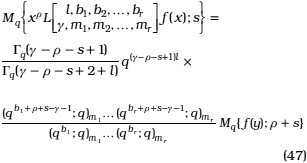
<p style="text-autospace: none" align="justify"><font face="Verdana"><b> <span lang="EN-US" style="font-family: Bookman-Demi; color: #231F20"> <font size="2">4. </font></span><font size="2"><i> <span lang="EN-US" style="font-family: Bookman-DemiItalic; color: #231F20">q</span></i><span lang="EN-US" style="font-family: Bookman-Demi; color: #231F20">-Mellin  Transform of </span><i> <span lang="EN-US" style="font-family: Bookman-DemiItalic; color: #231F20">L</span></i></font><span lang="EN-US" style="font-family: Bookman-Demi; color: #231F20"><font size="2">(.)</font></span></b></font></p>     <p style="text-autospace: none" align="justify"> <span lang="EN-US" style="font-family: Bookman-Light; color: #231F20"> <font size="2" face="Verdana">In this section we establish the q-Mellin  transform of the fractional q-integral operador <sub> <img border="0" src="/img/fbpe/rtfiuz/v35n3/art11oper.gif" width="125" height="34"></sub></font></span></p>     
<p style="text-autospace: none" align="justify"><font face="Verdana"> <span lang="EN-US" style="font-family: Bookman-Light; color: #231F20"> <font size="2">The q-Mellin Transform of </font></span><i> <span lang="EN-US" style="font-family: Bookman-LightItalic; color: #231F20"> <font size="2">f</font></span></i><span lang="EN-US" style="font-family: Bookman-Light; color: #231F20"><font size="2">(</font></span><i><span lang="EN-US" style="font-family: Bookman-LightItalic; color: #231F20"><font size="2">x</font></span></i><span lang="EN-US" style="font-family: Bookman-Light; color: #231F20"><font size="2">)  is defined by [25]</font></span></font></p>     <p style="text-autospace: none" align="center"> <img border="0" src="/img/fbpe/rtfiuz/v35n3/art11ec46.gif" width="276" height="34"></p>     
<p style="text-autospace: none" align="justify"><font face="Verdana"><b> <span lang="EN-US" style="font-family: Bookman-Demi; color: #231F20"> <font size="2">Theorem 1. </font></span></b><i> <span lang="EN-US" style="font-family: Bookman-LightItalic; color: #231F20"> <font size="2">Let <sub> <img border="0" src="/img/fbpe/rtfiuz/v35n3/art11lema.gif" width="136" height="31"></sub>&nbsp;be a  fractional q-integral operator, as defined in (4), then</font></span></i></font></p>     
<p style="text-autospace: none" align="center"> <img border="0" src="/img/fbpe/rtfiuz/v35n3/art11ec47.gif" width="307" height="163"></p>     
]]></body>
<body><![CDATA[<p style="text-autospace: none" align="justify"><font face="Verdana"><i> <span lang="EN-US" style="font-family: Bookman-LightItalic; color: #231F20"> <font size="2">where M<sub>q</sub></font></span></i><span lang="EN-US" style="font-family: Bookman-Light; color: #231F20"><font size="2">{</font></span><i><span lang="EN-US" style="font-family: Bookman-LightItalic; color: #231F20"><font size="2">f</font></span></i><span lang="EN-US" style="font-family: Bookman-Light; color: #231F20"><font size="2">(</font></span><i><span lang="EN-US" style="font-family: Bookman-LightItalic; color: #231F20"><font size="2">x</font></span></i><span lang="EN-US" style="font-family: Bookman-Light; color: #231F20"><font size="2">);</font></span><i><span lang="EN-US" style="font-family: Bookman-LightItalic; color: #231F20"><font size="2">s</font></span></i><span lang="EN-US" style="font-family: Bookman-Light; color: #231F20"><font size="2">} </font></span><i> <span lang="EN-US" style="font-family: Bookman-LightItalic; color: #231F20"> <font size="2">denote the q-Mellin transform of f(x); l, m</font></span></i><span lang="EN-US" style="font-family: Bookman-Light; color: #231F20"><font size="2"><sub>1</sub>,...,</font></span><i><span lang="EN-US" style="font-family: Bookman-LightItalic; color: #231F20"><font size="2">m<sub>r</sub></font></span></i><span lang="EN-US" style="font-family: MTExtra; color: #231F20"><font size="2"> </font></span><i> <span lang="EN-US" style="font-family: Bookman-LightItalic; color: #231F20"> <font size="2">non-negative integers, </font></span></i> <span lang="EN-US" style="font-family: Bookman-LightItalic; color: #231F20"><i> <font size="2">l </font></i></span></font> <span lang="EN-US" style="font-family: Bookman-LightItalic; color: #231F20"> <font size="2"><i><font face="Verdana">&#8805;</font><font face="Times New Roman"> </font><font face="Verdana">m</font></i><font face="Verdana"><sub>1</sub><i>+...+m<sub>r</sub></i></font></font></span><span lang="PT-BR" style="font-family: Bookman-LightItalic; color: #231F20"><font size="2" face="Verdana">;<i> </i></font><font face="Symbol" size="2">g</font></span><span lang="PT-BR" style="font-family: SymbolPropBT; color: #231F20"><font face="Symbol" size="2">Î</font></span><font face="Verdana"><i><span lang="PT-BR" style="font-family: Bookman-LightItalic; color: #231F20"><font size="2">C,</font></span><span lang="EN-US" style="font-family: Bookman-LightItalic; color: #231F20"><font size="2"> </font></span></i> <span lang="EN-US" style="font-family: Bookman-Light; color: #231F20"> <font size="2">Re(</font><font face="Symbol">g</font><font face="Verdana"> -</font></font></span><font face="Verdana"><span lang="EN-US" style="font-family: SymbolPropBT; color: #231F20"><font size="2"> </font><font face="Symbol">r</font><font face="Verdana"> - </font></font></span> <font face="Verdana"> <span lang="EN-US" style="font-family: Bookman-LightItalic; color: #231F20"><i> <font size="2">s +</font></i><font size="2"> </font></span> <span lang="EN-US" style="font-family: Bookman-Light; color: #231F20"> <font size="2">1)</font></span><span lang="EN-US" style="font-family: SymbolPropBT; color: #231F20"><font size="2">  &gt; </font></span> <span lang="EN-US" style="font-family: Bookman-Light; color: #231F20"> <font size="2">0</font></span><i><span lang="EN-US" style="font-family: Bookman-LightItalic; color: #231F20"><font size="2">;  b</font></span></i><span lang="EN-US" style="font-family: Bookman-Light; color: #231F20"><font size="2"><sub>1</sub>,...,</font></span><i><span lang="EN-US" style="font-family: Bookman-LightItalic; color: #231F20"><font size="2">b<sub>r</sub> </font></span></i> <span lang="EN-US" style="font-family: Bookman-Light; color: #231F20"> <font size="2">&#8800;0,-1,-2,...</font></span></font></p>     <p style="text-autospace: none" align="justify"><font face="Verdana"><b> <span lang="EN-US" style="font-family: Bookman-Demi; color: #231F20"> <font size="2">Proof: </font></span></b> <span lang="EN-US" style="font-family: Bookman-Light; color: #231F20"> <font size="2">From (5) and (46) we obtain,</font></span></font></p>     <p style="text-autospace: none" align="center"> <img border="0" src="/img/fbpe/rtfiuz/v35n3/art11ec48.gif" width="311" height="122"></p>     
<p style="text-autospace: none" align="justify"> <span lang="EN-US" style="font-family: Bookman-Light; color: #231F20"> <font size="2" face="Verdana">where we have interchanged the order of  integration.</font></span></p>     <p style="text-autospace: none" align="justify"> <span lang="EN-US" style="font-family: Bookman-Light; color: #231F20"> <font size="2" face="Verdana">Making a change of variable in the inner integral  and using (25) we have,</font></span></p>     <p style="text-autospace: none" align="center"> <img border="0" src="/img/fbpe/rtfiuz/v35n3/art11exp6.gif" width="295" height="53"></p>     
<p style="text-autospace: none" align="justify"> <span lang="EN-US" style="font-family: Bookman-Light; color: #231F20"> <font size="2" face="Verdana">The substitution of this expression in (48) yields</font></span></p>     <p style="text-autospace: none" align="center"> <img border="0" src="/img/fbpe/rtfiuz/v35n3/art11ec49.gif" width="307" height="120"></p>     
<p style="text-autospace: none" align="justify"> <span style="font-family: Bookman-Light; color: #231F20"> <font size="2" face="Verdana">Now, applying (13),</font></span></p>     <p style="text-autospace: none" align="center"> <img border="0" src="/img/fbpe/rtfiuz/v35n3/art11ec50.gif" width="307" height="118"></p>     
]]></body>
<body><![CDATA[<p style="text-autospace: none" align="justify"> <span style="font-family: Bookman-Light; color: #231F20"> <font size="2" face="Verdana">and from (29)</font></span></p>     <p style="text-autospace: none" align="center"> <img border="0" src="/img/fbpe/rtfiuz/v35n3/art11ec51.gif" width="272" height="96"></p>     
<p style="text-autospace: none" align="justify"> <span style="font-family: Bookman-Light; color: #231F20"> <font size="2" face="Verdana">Then, (50) and (51) lead us to</font></span></p>     <p style="text-autospace: none" align="center"> <img border="0" src="/img/fbpe/rtfiuz/v35n3/art11exp7.gif" width="286" height="133"></p>     
<p style="text-autospace: none" align="justify"> <span lang="EN-US" style="font-family: Bookman-Light; color: #231F20"> <font size="2" face="Verdana">which using (13) can be written as</font></span></p>     <p style="text-autospace: none" align="center"> <img border="0" src="/img/fbpe/rtfiuz/v35n3/art11exp8.gif" width="271" height="133"></p>     
<p style="text-autospace: none" align="justify"> <span style="font-family: Bookman-Light; color: #231F20"> <font size="2" face="Verdana">and by virtue of (22)</font></span></p>     <p style="text-autospace: none" align="center"> <img border="0" src="/img/fbpe/rtfiuz/v35n3/art11ec52.gif" width="306" height="208"></p>     
<p style="text-autospace: none" align="justify"> <span lang="EN-US" style="font-family: Bookman-Light; color: #231F20"> <font size="2" face="Verdana">On the other hand, from (10) and (12)</font></span></p>     <p style="text-autospace: none" align="center"> <img border="0" src="/img/fbpe/rtfiuz/v35n3/art11exp9.gif" width="224" height="85"></p>     
]]></body>
<body><![CDATA[<p style="text-autospace: none" align="justify"> <span style="font-family: Bookman-Light; color: #231F20"> <font size="2" face="Verdana">and using newly (12)</font></span></p>     <p style="text-autospace: none" align="center"> <img border="0" src="/img/fbpe/rtfiuz/v35n3/art11ec53.gif" width="276" height="87"></p>     
<p style="text-autospace: none" align="justify"> <span lang="EN-US" style="font-family: Bookman-Light; color: #231F20"> <font size="2" face="Verdana">Finally, from the results (52) and (53) we get  (47).</font></span></p>     <p style="text-autospace: none" align="justify"> <span lang="EN-US" style="font-family: Bookman-Light; color: #231F20"> <font size="2" face="Verdana">As particular case from this theorem we get</font></span></p>     <p style="text-autospace: none" align="center"> <img border="0" src="/img/fbpe/rtfiuz/v35n3/art11ec54.gif" width="312" height="87"></p>     
<p style="text-autospace: none" align="justify"><font face="Verdana"> <span lang="EN-US" style="font-family: Bookman-Light; color: #231F20"> <font size="2">where </font></span><i> <span lang="EN-US" style="font-family: Bookman-LightItalic; color: #231F20"> <font size="2">l,m </font></span></i> <span lang="EN-US" style="font-family: Bookman-Light; color: #231F20"> <font size="2">non-negative integers, </font></span><i> <span lang="EN-US" style="font-family: Bookman-LightItalic; color: #231F20"> <font size="2">l </font></span></i></font> <span lang="EN-US" style="font-family: SymbolPropBT; color: #231F20"> <font face="Verdana" size="2">&#8805; </font></span><font face="Verdana"><i> <span lang="EN-US" style="font-family: Bookman-LightItalic; color: #231F20"> <font size="2">m</font></span></i><span lang="EN-US" style="font-family: Bookman-Light; color: #231F20"><font size="2">; </font></span></font> <span lang="EN-US" style="font-family: SymbolPropBT; color: #231F20"> <font size="2" face="Symbol">g Î </font></span><font face="Verdana"><i> <span lang="EN-US" style="font-family: Bookman-LightItalic; color: #231F20"> <font size="2">C</font></span></i><span lang="EN-US" style="font-family: Bookman-Light; color: #231F20"><font size="2">,  Re(</font></span></font><span lang="EN-US" style="font-family: Bookman-Light; color: #231F20"><font size="2"><font face="Symbol">g</font><font face="Verdana">  -</font></font></span><span lang="EN-US" style="font-family: SymbolPropBT; color: #231F20"><font size="2"><font face="Verdana"> </font><font face="Symbol">r</font><font face="Verdana"> - </font></font></span> <font face="Verdana"> <span lang="EN-US" style="font-family: Bookman-LightItalic; color: #231F20"><i> <font size="2">s +</font></i><font size="2"> </font></span> <span lang="EN-US" style="font-family: Bookman-Light; color: #231F20"> <font size="2">1)</font></span><span lang="EN-US" style="font-family: SymbolPropBT; color: #231F20"><font size="2">  &gt; </font></span> <span lang="EN-US" style="font-family: Bookman-Light; color: #231F20"> <font size="2">0</font></span><i><span lang="EN-US" style="font-family: Bookman-LightItalic; color: #231F20"><font size="2">;  b </font></span></i> <span lang="EN-US" style="font-family: Bookman-Light; color: #231F20"> <font size="2">&#8800; 0,-1,-2,...</font></span></font></p>     <p style="text-autospace: none" align="justify"><b> <span lang="EN-US" style="font-family: Bookman-Demi; color: #231F20"> <font size="2" face="Verdana">Acknowledgement</font></span></b></p>     <p style="text-autospace: none" align="justify"> <span lang="EN-US" style="font-family: Bookman-Light; color: #231F20"> <font size="2" face="Verdana">The author would like to thanks to CONDES-Universidad  del Zulia for financial support.</font></span></p>     <p style="text-autospace: none" align="justify"><b> <span style="font-family: Bookman-Demi; color: #231F20"> <font size="2" face="Verdana">References</font></span></b></p>     <!-- ref --><p style="text-autospace: none" align="justify"><font size="2" face="Verdana">1.  Sneddon I.N.: The use in mathematical physics of Erdélyi-Kober operators and  some of their generalizations, Fractional calculus and its applications, Lecture  Notes in Math., Vol. 457 (1975), 37-39.</font>&nbsp;&nbsp;&nbsp;&nbsp;&nbsp;&nbsp;&nbsp;&nbsp;[&#160;<a href="javascript:void(0);" onclick="javascript: window.open('/scielo.php?script=sci_nlinks&ref=2384989&pid=S0254-0770201200030001100001&lng=','','width=640,height=500,resizable=yes,scrollbars=1,menubar=yes,');">Links</a>&#160;]<!-- end-ref --><!-- ref --><p style="text-autospace: none" align="justify"><font size="2" face="Verdana">2.  Tseng C.C.: Design of fractional order digital FIR differentiators. IEEE Signal  Process. Letters, Vol. 8, No. 3 (2001), 77-79.</font>&nbsp;&nbsp;&nbsp;&nbsp;&nbsp;&nbsp;&nbsp;&nbsp;[&#160;<a href="javascript:void(0);" onclick="javascript: window.open('/scielo.php?script=sci_nlinks&ref=2384990&pid=S0254-0770201200030001100002&lng=','','width=640,height=500,resizable=yes,scrollbars=1,menubar=yes,');">Links</a>&#160;]<!-- end-ref --><!-- ref --><p style="text-autospace: none" align="justify"><font size="2" face="Verdana">3.  Chen Y.Q. and Vinagre B.M.: A new IIR-type digital fractional order  differentiator. Signal Processing, Vol. 83 (2003), 2359-2365.</font>&nbsp;&nbsp;&nbsp;&nbsp;&nbsp;&nbsp;&nbsp;&nbsp;[&#160;<a href="javascript:void(0);" onclick="javascript: window.open('/scielo.php?script=sci_nlinks&ref=2384991&pid=S0254-0770201200030001100003&lng=','','width=640,height=500,resizable=yes,scrollbars=1,menubar=yes,');">Links</a>&#160;]<!-- end-ref --><!-- ref --><p style="text-autospace: none" align="justify"><font size="2" face="Verdana">4.  Vinagre B.M., Chen Y.Q. and Petras I.: Two direct Tustin discretization methods  for fractional- order differentiator and integrator. J. Franklin Institute, Vol.  340, No. 5 (2003), 349-362.</font>&nbsp;&nbsp;&nbsp;&nbsp;&nbsp;&nbsp;&nbsp;&nbsp;[&#160;<a href="javascript:void(0);" onclick="javascript: window.open('/scielo.php?script=sci_nlinks&ref=2384992&pid=S0254-0770201200030001100004&lng=','','width=640,height=500,resizable=yes,scrollbars=1,menubar=yes,');">Links</a>&#160;]<!-- end-ref --><!-- ref --><p style="text-autospace: none" align="justify"><font size="2" face="Verdana">5.  Ross B. (Ed): Fractional Calculus and Its Applications. Lecture Notes in Math.,  Springer- Verlag, Vol. 457, New York, 1975.</font>&nbsp;&nbsp;&nbsp;&nbsp;&nbsp;&nbsp;&nbsp;&nbsp;[&#160;<a href="javascript:void(0);" onclick="javascript: window.open('/scielo.php?script=sci_nlinks&ref=2384993&pid=S0254-0770201200030001100005&lng=','','width=640,height=500,resizable=yes,scrollbars=1,menubar=yes,');">Links</a>&#160;]<!-- end-ref --><!-- ref --><p style="text-autospace: none" align="justify"><font size="2" face="Verdana">6.  Agarwal R.P.: Certain fractional q-integral and q-derivatives. Math. Proc. Camb.  Phil. Soc., Vol. 66 (1969), 365-370.</font>&nbsp;&nbsp;&nbsp;&nbsp;&nbsp;&nbsp;&nbsp;&nbsp;[&#160;<a href="javascript:void(0);" onclick="javascript: window.open('/scielo.php?script=sci_nlinks&ref=2384994&pid=S0254-0770201200030001100006&lng=','','width=640,height=500,resizable=yes,scrollbars=1,menubar=yes,');">Links</a>&#160;]<!-- end-ref --><!-- ref --><p style="text-autospace: none" align="justify"><font size="2" face="Verdana">7.  Al-Salam W.A.: Some fractional q-integrals and q-derivatives, Proc. Edin. Math.  Soc., Vol. 15 (1966), 135-140.</font>&nbsp;&nbsp;&nbsp;&nbsp;&nbsp;&nbsp;&nbsp;&nbsp;[&#160;<a href="javascript:void(0);" onclick="javascript: window.open('/scielo.php?script=sci_nlinks&ref=2384995&pid=S0254-0770201200030001100007&lng=','','width=640,height=500,resizable=yes,scrollbars=1,menubar=yes,');">Links</a>&#160;]<!-- end-ref --><!-- ref --><p style="text-autospace: none" align="justify"><font size="2" face="Verdana">8.  Delgado M. and Galué L.: Fractional q-integral operator involving basic  hypergeometric function. Algebras Groups Geom., Vol. 25 (2008), 53-74.</font>&nbsp;&nbsp;&nbsp;&nbsp;&nbsp;&nbsp;&nbsp;&nbsp;[&#160;<a href="javascript:void(0);" onclick="javascript: window.open('/scielo.php?script=sci_nlinks&ref=2384996&pid=S0254-0770201200030001100008&lng=','','width=640,height=500,resizable=yes,scrollbars=1,menubar=yes,');">Links</a>&#160;]<!-- end-ref --><!-- ref --><p style="text-autospace: none" align="justify"><font size="2" face="Verdana">9.  Galué L.: Generalized Erdélyi-Kober fractional q-integral operator. Kuwait  Journal of Science &amp; Engineering, Vol. 36, No. 2A (2009), 21-34.</font>&nbsp;&nbsp;&nbsp;&nbsp;&nbsp;&nbsp;&nbsp;&nbsp;[&#160;<a href="javascript:void(0);" onclick="javascript: window.open('/scielo.php?script=sci_nlinks&ref=2384997&pid=S0254-0770201200030001100009&lng=','','width=640,height=500,resizable=yes,scrollbars=1,menubar=yes,');">Links</a>&#160;]<!-- end-ref --><!-- ref --><p style="text-autospace: none" align="justify"><font size="2" face="Verdana"> 10. Kalia R.N. (Ed): Recent Advances in Fractional Calculus. Global Publishing  Company, U.S.A., 1993.</font>&nbsp;&nbsp;&nbsp;&nbsp;&nbsp;&nbsp;&nbsp;&nbsp;[&#160;<a href="javascript:void(0);" onclick="javascript: window.open('/scielo.php?script=sci_nlinks&ref=2384998&pid=S0254-0770201200030001100010&lng=','','width=640,height=500,resizable=yes,scrollbars=1,menubar=yes,');">Links</a>&#160;]<!-- end-ref --><!-- ref --><p style="text-autospace: none" align="justify"><font size="2" face="Verdana"> 11. Kalla S.L., Galué L. and Srivastava H.M.: Further results on an H-function  generalized fractional calculus. J. Fract. Calc., Vol. 4 (1993), 89-102.</font>&nbsp;&nbsp;&nbsp;&nbsp;&nbsp;&nbsp;&nbsp;&nbsp;[&#160;<a href="javascript:void(0);" onclick="javascript: window.open('/scielo.php?script=sci_nlinks&ref=2384999&pid=S0254-0770201200030001100011&lng=','','width=640,height=500,resizable=yes,scrollbars=1,menubar=yes,');">Links</a>&#160;]<!-- end-ref --><!-- ref --><p style="text-autospace: none" align="justify"><font size="2" face="Verdana"> 12. Kalla S.L. and Kiryakova V.: An H-function generalized fractional calculus  based upon compositions of Erdélyi-Kober operators in Lp. Math. Japon., Vol. 35  (1990), 1151-1171.</font>&nbsp;&nbsp;&nbsp;&nbsp;&nbsp;&nbsp;&nbsp;&nbsp;[&#160;<a href="javascript:void(0);" onclick="javascript: window.open('/scielo.php?script=sci_nlinks&ref=2385000&pid=S0254-0770201200030001100012&lng=','','width=640,height=500,resizable=yes,scrollbars=1,menubar=yes,');">Links</a>&#160;]<!-- end-ref --><!-- ref --><p style="text-autospace: none" align="justify"><font size="2" face="Verdana"> 13. Kiryakova V.: Generalized Fractional Calculus and Applications. Longman (Pitman,  Res. Notes in Math. Series # 301), London, U. K., 1994.</font>&nbsp;&nbsp;&nbsp;&nbsp;&nbsp;&nbsp;&nbsp;&nbsp;[&#160;<a href="javascript:void(0);" onclick="javascript: window.open('/scielo.php?script=sci_nlinks&ref=2385001&pid=S0254-0770201200030001100013&lng=','','width=640,height=500,resizable=yes,scrollbars=1,menubar=yes,');">Links</a>&#160;]<!-- end-ref --><!-- ref --><p style="text-autospace: none" align="justify"><font size="2" face="Verdana"> 14. McBride A.C. and Roach G.F. (Eds): Fractional Calculus. Res. Notes in Math.,  Vol. 138, Pitman, U. K., 1985.</font>&nbsp;&nbsp;&nbsp;&nbsp;&nbsp;&nbsp;&nbsp;&nbsp;[&#160;<a href="javascript:void(0);" onclick="javascript: window.open('/scielo.php?script=sci_nlinks&ref=2385002&pid=S0254-0770201200030001100014&lng=','','width=640,height=500,resizable=yes,scrollbars=1,menubar=yes,');">Links</a>&#160;]<!-- end-ref --><!-- ref --><p style="text-autospace: none" align="justify"><font size="2" face="Verdana"> 15. Saigo M.: A remark on integral operators involving the Gauss hypergeometric  functions. Kyushu University Mathematics Reports of the College of General  Education, Vol. XI, No. 2 (1978), 135-143.</font>&nbsp;&nbsp;&nbsp;&nbsp;&nbsp;&nbsp;&nbsp;&nbsp;[&#160;<a href="javascript:void(0);" onclick="javascript: window.open('/scielo.php?script=sci_nlinks&ref=2385003&pid=S0254-0770201200030001100015&lng=','','width=640,height=500,resizable=yes,scrollbars=1,menubar=yes,');">Links</a>&#160;]<!-- end-ref --><!-- ref --><p style="text-autospace: none" align="justify"><font size="2" face="Verdana"> 16. Samko S.G., Kilbas A.A. and Marichev O.I.: Fractional Integrals and  Derivatives. Gordon and Breach Science Publishers, New York, 1993.</font>&nbsp;&nbsp;&nbsp;&nbsp;&nbsp;&nbsp;&nbsp;&nbsp;[&#160;<a href="javascript:void(0);" onclick="javascript: window.open('/scielo.php?script=sci_nlinks&ref=2385004&pid=S0254-0770201200030001100016&lng=','','width=640,height=500,resizable=yes,scrollbars=1,menubar=yes,');">Links</a>&#160;]<!-- end-ref --><!-- ref --><p style="text-autospace: none" align="justify"><font size="2" face="Verdana"> 17. Saxena R.K.: On fractional integration operators. Math. Zeitschr., Vol. 96,  No. 4 (1967), 288-291.</font>&nbsp;&nbsp;&nbsp;&nbsp;&nbsp;&nbsp;&nbsp;&nbsp;[&#160;<a href="javascript:void(0);" onclick="javascript: window.open('/scielo.php?script=sci_nlinks&ref=2385005&pid=S0254-0770201200030001100017&lng=','','width=640,height=500,resizable=yes,scrollbars=1,menubar=yes,');">Links</a>&#160;]<!-- end-ref --><!-- ref --><p style="text-autospace: none" align="justify"><font size="2" face="Verdana"> 18. Saxena R.K. and Modi G.C.: Fractional q-integral operators associated with a  basic analogue of Srivastava-Daoust’s function. Indian Journal of Pure Applied  Mathematics, Vol. 16, No. 5 (1985), 491-497.</font>&nbsp;&nbsp;&nbsp;&nbsp;&nbsp;&nbsp;&nbsp;&nbsp;[&#160;<a href="javascript:void(0);" onclick="javascript: window.open('/scielo.php?script=sci_nlinks&ref=2385006&pid=S0254-0770201200030001100018&lng=','','width=640,height=500,resizable=yes,scrollbars=1,menubar=yes,');">Links</a>&#160;]<!-- end-ref --><!-- ref --><p style="text-autospace: none" align="justify"><font size="2" face="Verdana"> 19. Saxena R.K. and Gupta R.K.: Certain multidimensional fractional q-integral  operators involving Srivastava’s generalized q-hypergeometric function of  several variables. Pure and Applied Mathematica Sciences, Vol. XXXI, No. 1-2  (1990), 127-136.</font>&nbsp;&nbsp;&nbsp;&nbsp;&nbsp;&nbsp;&nbsp;&nbsp;[&#160;<a href="javascript:void(0);" onclick="javascript: window.open('/scielo.php?script=sci_nlinks&ref=2385007&pid=S0254-0770201200030001100019&lng=','','width=640,height=500,resizable=yes,scrollbars=1,menubar=yes,');">Links</a>&#160;]<!-- end-ref --><!-- ref --><p style="text-autospace: none" align="justify"><font size="2" face="Verdana"> 20. Gasper G. and Rahman M.: Basic Hypergeometric Series. Encyclopedia of  Mathematics and its Applications, Vol. 35, Cambridge University Press, U. K.,  1990.</font>&nbsp;&nbsp;&nbsp;&nbsp;&nbsp;&nbsp;&nbsp;&nbsp;[&#160;<a href="javascript:void(0);" onclick="javascript: window.open('/scielo.php?script=sci_nlinks&ref=2385008&pid=S0254-0770201200030001100020&lng=','','width=640,height=500,resizable=yes,scrollbars=1,menubar=yes,');">Links</a>&#160;]<!-- end-ref --><!-- ref --><p style="text-autospace: none" align="justify"><font size="2" face="Verdana"> 21. Srivastava H.M. and Agarwal A.K.: Generating functions for a class of q-polynomials.  Annali di Matematica Pura ed Applicata, Vol. IV, No. 154 (1989), 99-109.</font>&nbsp;&nbsp;&nbsp;&nbsp;&nbsp;&nbsp;&nbsp;&nbsp;[&#160;<a href="javascript:void(0);" onclick="javascript: window.open('/scielo.php?script=sci_nlinks&ref=2385009&pid=S0254-0770201200030001100021&lng=','','width=640,height=500,resizable=yes,scrollbars=1,menubar=yes,');">Links</a>&#160;]<!-- end-ref --><!-- ref --><p style="text-autospace: none" align="justify"><font size="2" face="Verdana"> 22. Srivastava H.M. and Karlsson Per W.: Multiple Gaussian Hypergeometric  Series. Jhon Wiley &amp; Sons, New York, 1985.</font>&nbsp;&nbsp;&nbsp;&nbsp;&nbsp;&nbsp;&nbsp;&nbsp;[&#160;<a href="javascript:void(0);" onclick="javascript: window.open('/scielo.php?script=sci_nlinks&ref=2385010&pid=S0254-0770201200030001100022&lng=','','width=640,height=500,resizable=yes,scrollbars=1,menubar=yes,');">Links</a>&#160;]<!-- end-ref --><!-- ref --><p style="text-autospace: none" align="justify"><font size="2" face="Verdana"> 23. Slater, L.J.: Generalized Hypergeometric Functions. Cambridge University  Press, Cambridge, 1966.</font>&nbsp;&nbsp;&nbsp;&nbsp;&nbsp;&nbsp;&nbsp;&nbsp;[&#160;<a href="javascript:void(0);" onclick="javascript: window.open('/scielo.php?script=sci_nlinks&ref=2385011&pid=S0254-0770201200030001100023&lng=','','width=640,height=500,resizable=yes,scrollbars=1,menubar=yes,');">Links</a>&#160;]<!-- end-ref --><!-- ref --><p style="text-autospace: none" align="justify"><font size="2" face="Verdana"> 24. Yadav R.K., Kalla S.L. and Kaur G.: On fractional q-integral operator  involving the basic multiple hypergeometric functions. Algebras Groups and  Geometries, Vol. 27, No.1 (2010), 97-116.</font>&nbsp;&nbsp;&nbsp;&nbsp;&nbsp;&nbsp;&nbsp;&nbsp;[&#160;<a href="javascript:void(0);" onclick="javascript: window.open('/scielo.php?script=sci_nlinks&ref=2385012&pid=S0254-0770201200030001100024&lng=','','width=640,height=500,resizable=yes,scrollbars=1,menubar=yes,');">Links</a>&#160;]<!-- end-ref --><!-- ref --><p style="text-autospace: none" align="justify"><font size="2" face="Verdana"> 25. Fitouhi A., Bettaibi N. and Brahim K.: The Mellin transform in quantum  calculus. Constructive Approximation, Vol. 23, No. 3 (2006), 305-323.</font>&nbsp;&nbsp;&nbsp;&nbsp;&nbsp;&nbsp;&nbsp;&nbsp;[&#160;<a href="javascript:void(0);" onclick="javascript: window.open('/scielo.php?script=sci_nlinks&ref=2385013&pid=S0254-0770201200030001100025&lng=','','width=640,height=500,resizable=yes,scrollbars=1,menubar=yes,');">Links</a>&#160;]<!-- end-ref --> ]]></body>
<back>
<ref-list>
<ref id="B1">
<label>1</label><nlm-citation citation-type="journal">
<person-group person-group-type="author">
<name>
<surname><![CDATA[Sneddon]]></surname>
<given-names><![CDATA[I.N]]></given-names>
</name>
</person-group>
<article-title xml:lang="en"><![CDATA[The use in mathematical physics of Erdélyi-Kober operators and some of their generalizations, Fractional calculus and its applications]]></article-title>
<source><![CDATA[Lecture Notes in Math.]]></source>
<year>1975</year>
<volume>457</volume>
<page-range>37-39</page-range></nlm-citation>
</ref>
<ref id="B2">
<label>2</label><nlm-citation citation-type="journal">
<person-group person-group-type="author">
<name>
<surname><![CDATA[Tseng]]></surname>
<given-names><![CDATA[C.C]]></given-names>
</name>
</person-group>
<article-title xml:lang="en"><![CDATA[Design of fractional order digital FIR differentiators]]></article-title>
<source><![CDATA[IEEE Signal Process. Letters]]></source>
<year>2001</year>
<volume>8</volume>
<numero>3</numero>
<issue>3</issue>
<page-range>77-79</page-range></nlm-citation>
</ref>
<ref id="B3">
<label>3</label><nlm-citation citation-type="journal">
<person-group person-group-type="author">
<name>
<surname><![CDATA[Chen]]></surname>
<given-names><![CDATA[Y.Q.]]></given-names>
</name>
<name>
<surname><![CDATA[Vinagre]]></surname>
<given-names><![CDATA[B.M]]></given-names>
</name>
</person-group>
<article-title xml:lang="en"><![CDATA[A new IIR-type digital fractional order differentiator]]></article-title>
<source><![CDATA[Signal Processing]]></source>
<year>2003</year>
<volume>83</volume>
<page-range>2359-2365</page-range></nlm-citation>
</ref>
<ref id="B4">
<label>4</label><nlm-citation citation-type="journal">
<person-group person-group-type="author">
<name>
<surname><![CDATA[Vinagre]]></surname>
<given-names><![CDATA[B.M]]></given-names>
</name>
<name>
<surname><![CDATA[Chen]]></surname>
<given-names><![CDATA[Y.Q.]]></given-names>
</name>
<name>
<surname><![CDATA[Petras]]></surname>
<given-names><![CDATA[I]]></given-names>
</name>
</person-group>
<article-title xml:lang="en"><![CDATA[Two direct Tustin discretization methods for fractional- order differentiator and integrator]]></article-title>
<source><![CDATA[J. Franklin Institute]]></source>
<year>2003</year>
<volume>340</volume>
<numero>5</numero>
<issue>5</issue>
<page-range>349-362</page-range></nlm-citation>
</ref>
<ref id="B5">
<label>5</label><nlm-citation citation-type="journal">
<person-group person-group-type="author">
<name>
<surname><![CDATA[Ross]]></surname>
<given-names><![CDATA[B]]></given-names>
</name>
</person-group>
<article-title xml:lang="en"><![CDATA[Fractional Calculus and Its Applications]]></article-title>
<source><![CDATA[Lecture Notes in Math.]]></source>
<year>1975</year>
<volume>457</volume>
<publisher-loc><![CDATA[New York ]]></publisher-loc>
<publisher-name><![CDATA[Springer- Verlag]]></publisher-name>
</nlm-citation>
</ref>
<ref id="B6">
<label>6</label><nlm-citation citation-type="journal">
<person-group person-group-type="author">
<name>
<surname><![CDATA[Agarwal]]></surname>
<given-names><![CDATA[R.P]]></given-names>
</name>
</person-group>
<article-title xml:lang="en"><![CDATA[Certain fractional q-integral and q-derivatives]]></article-title>
<source><![CDATA[Math. Proc. Camb. Phil. Soc.]]></source>
<year>1969</year>
<volume>66</volume>
<page-range>365-370</page-range></nlm-citation>
</ref>
<ref id="B7">
<label>7</label><nlm-citation citation-type="journal">
<person-group person-group-type="author">
<name>
<surname><![CDATA[Al-Salam]]></surname>
<given-names><![CDATA[W.A]]></given-names>
</name>
</person-group>
<article-title xml:lang="en"><![CDATA[Some fractional q-integrals and q-derivatives, Proc]]></article-title>
<source><![CDATA[Edin. Math. Soc.]]></source>
<year>1966</year>
<volume>15</volume>
<page-range>135-140</page-range></nlm-citation>
</ref>
<ref id="B8">
<label>8</label><nlm-citation citation-type="journal">
<person-group person-group-type="author">
<name>
<surname><![CDATA[Delgado]]></surname>
<given-names><![CDATA[M.]]></given-names>
</name>
<name>
<surname><![CDATA[Galué]]></surname>
<given-names><![CDATA[L]]></given-names>
</name>
</person-group>
<article-title xml:lang="en"><![CDATA[Fractional q-integral operator involving basic hypergeometric function]]></article-title>
<source><![CDATA[Algebras Groups Geom.]]></source>
<year>2008</year>
<volume>25</volume>
<page-range>53-74</page-range></nlm-citation>
</ref>
<ref id="B9">
<label>9</label><nlm-citation citation-type="journal">
<person-group person-group-type="author">
<name>
<surname><![CDATA[Galué]]></surname>
<given-names><![CDATA[L]]></given-names>
</name>
</person-group>
<article-title xml:lang="en"><![CDATA[Generalized Erdélyi-Kober fractional q-integral operator]]></article-title>
<source><![CDATA[Kuwait Journal of Science & Engineering]]></source>
<year>2009</year>
<volume>36</volume>
<numero>2A</numero>
<issue>2A</issue>
<page-range>21-34</page-range></nlm-citation>
</ref>
<ref id="B10">
<label>10</label><nlm-citation citation-type="book">
<person-group person-group-type="author">
<name>
<surname><![CDATA[Kalia]]></surname>
<given-names><![CDATA[R.N]]></given-names>
</name>
</person-group>
<source><![CDATA[Recent Advances in Fractional Calculus]]></source>
<year>1993</year>
<publisher-name><![CDATA[Global Publishing Company]]></publisher-name>
</nlm-citation>
</ref>
<ref id="B11">
<label>11</label><nlm-citation citation-type="journal">
<person-group person-group-type="author">
<name>
<surname><![CDATA[Kalla]]></surname>
<given-names><![CDATA[S.L]]></given-names>
</name>
<name>
<surname><![CDATA[Galué]]></surname>
<given-names><![CDATA[L.]]></given-names>
</name>
<name>
<surname><![CDATA[Srivastava]]></surname>
<given-names><![CDATA[H.M]]></given-names>
</name>
</person-group>
<article-title xml:lang="en"><![CDATA[Further results on an H-function generalized fractional calculus]]></article-title>
<source><![CDATA[J. Fract. Calc.]]></source>
<year>1993</year>
<volume>4</volume>
<page-range>89-102</page-range></nlm-citation>
</ref>
<ref id="B12">
<label>12</label><nlm-citation citation-type="journal">
<person-group person-group-type="author">
<name>
<surname><![CDATA[Kalla]]></surname>
<given-names><![CDATA[S.L.]]></given-names>
</name>
<name>
<surname><![CDATA[Kiryakova]]></surname>
<given-names><![CDATA[V]]></given-names>
</name>
</person-group>
<article-title xml:lang="en"><![CDATA[An H-function generalized fractional calculus based upon compositions of Erdélyi-Kober operators in Lp]]></article-title>
<source><![CDATA[Math. Japon.]]></source>
<year>1990</year>
<volume>35</volume>
<page-range>1151-1171</page-range></nlm-citation>
</ref>
<ref id="B13">
<label>13</label><nlm-citation citation-type="book">
<person-group person-group-type="author">
<name>
<surname><![CDATA[Kiryakova]]></surname>
<given-names><![CDATA[V]]></given-names>
</name>
</person-group>
<source><![CDATA[Generalized Fractional Calculus and Applications]]></source>
<year>1994</year>
<publisher-loc><![CDATA[London ]]></publisher-loc>
<publisher-name><![CDATA[Pitman]]></publisher-name>
</nlm-citation>
</ref>
<ref id="B14">
<label>14</label><nlm-citation citation-type="book">
<person-group person-group-type="author">
<name>
<surname><![CDATA[McBride]]></surname>
<given-names><![CDATA[A.C]]></given-names>
</name>
<name>
<surname><![CDATA[Roach]]></surname>
<given-names><![CDATA[G.F]]></given-names>
</name>
</person-group>
<source><![CDATA[Fractional Calculus]]></source>
<year>1985</year>
<volume>138</volume>
<publisher-name><![CDATA[Pitman]]></publisher-name>
</nlm-citation>
</ref>
<ref id="B15">
<label>15</label><nlm-citation citation-type="journal">
<person-group person-group-type="author">
<name>
<surname><![CDATA[Saigo]]></surname>
<given-names><![CDATA[M]]></given-names>
</name>
</person-group>
<article-title xml:lang="en"><![CDATA[A remark on integral operators involving the Gauss hypergeometric functions]]></article-title>
<source><![CDATA[Kyushu University Mathematics Reports of the College of General Education]]></source>
<year>1978</year>
<volume>XI</volume>
<numero>2</numero>
<issue>2</issue>
<page-range>135-143</page-range></nlm-citation>
</ref>
<ref id="B16">
<label>16</label><nlm-citation citation-type="book">
<person-group person-group-type="author">
<name>
<surname><![CDATA[Samko]]></surname>
<given-names><![CDATA[S.G]]></given-names>
</name>
<name>
<surname><![CDATA[Kilbas]]></surname>
<given-names><![CDATA[A.A]]></given-names>
</name>
<name>
<surname><![CDATA[Marichev]]></surname>
<given-names><![CDATA[O.I]]></given-names>
</name>
</person-group>
<source><![CDATA[Fractional Integrals and Derivatives]]></source>
<year>1993</year>
<publisher-loc><![CDATA[New York ]]></publisher-loc>
<publisher-name><![CDATA[Gordon and Breach Science Publishers]]></publisher-name>
</nlm-citation>
</ref>
<ref id="B17">
<label>17</label><nlm-citation citation-type="journal">
<person-group person-group-type="author">
<name>
<surname><![CDATA[Saxena]]></surname>
<given-names><![CDATA[R.K]]></given-names>
</name>
</person-group>
<article-title xml:lang="en"><![CDATA[On fractional integration operators]]></article-title>
<source><![CDATA[Math. Zeitschr.]]></source>
<year>1967</year>
<volume>96</volume>
<numero>4</numero>
<issue>4</issue>
<page-range>288-291</page-range></nlm-citation>
</ref>
<ref id="B18">
<label>18</label><nlm-citation citation-type="journal">
<person-group person-group-type="author">
<name>
<surname><![CDATA[Saxena]]></surname>
<given-names><![CDATA[R.K.]]></given-names>
</name>
<name>
<surname><![CDATA[Modi]]></surname>
<given-names><![CDATA[G.C]]></given-names>
</name>
</person-group>
<article-title xml:lang="en"><![CDATA[Fractional q-integral operators associated with a basic analogue of Srivastava-Daoust’s function]]></article-title>
<source><![CDATA[Indian Journal of Pure Applied Mathematics]]></source>
<year>1985</year>
<volume>16</volume>
<numero>5</numero>
<issue>5</issue>
<page-range>491-497</page-range></nlm-citation>
</ref>
<ref id="B19">
<label>19</label><nlm-citation citation-type="journal">
<person-group person-group-type="author">
<name>
<surname><![CDATA[Saxena]]></surname>
<given-names><![CDATA[R.K.]]></given-names>
</name>
<name>
<surname><![CDATA[Gupta]]></surname>
<given-names><![CDATA[R.K]]></given-names>
</name>
</person-group>
<article-title xml:lang="en"><![CDATA[Certain multidimensional fractional q-integral operators involving Srivastava’s generalized q-hypergeometric function of several variables]]></article-title>
<source><![CDATA[Pure and Applied Mathematica Sciences]]></source>
<year>1990</year>
<volume>XXXI</volume>
<numero>1-2</numero>
<issue>1-2</issue>
<page-range>127-136</page-range></nlm-citation>
</ref>
<ref id="B20">
<label>20</label><nlm-citation citation-type="book">
<person-group person-group-type="author">
<name>
<surname><![CDATA[Gasper]]></surname>
<given-names><![CDATA[G]]></given-names>
</name>
<name>
<surname><![CDATA[Rahman]]></surname>
<given-names><![CDATA[M]]></given-names>
</name>
</person-group>
<source><![CDATA[Basic Hypergeometric Series: Encyclopedia of Mathematics and its Applications]]></source>
<year>1990</year>
<volume>35</volume>
<publisher-name><![CDATA[Cambridge University Press]]></publisher-name>
</nlm-citation>
</ref>
<ref id="B21">
<label>21</label><nlm-citation citation-type="journal">
<person-group person-group-type="author">
<name>
<surname><![CDATA[Srivastava]]></surname>
<given-names><![CDATA[H.M.]]></given-names>
</name>
<name>
<surname><![CDATA[Agarwal]]></surname>
<given-names><![CDATA[A.K]]></given-names>
</name>
</person-group>
<article-title xml:lang="en"><![CDATA[Generating functions for a class of q-polynomials]]></article-title>
<source><![CDATA[Annali di Matematica Pura ed Applicata]]></source>
<year>1989</year>
<volume>IV</volume>
<numero>154</numero>
<issue>154</issue>
<page-range>99-109</page-range></nlm-citation>
</ref>
<ref id="B22">
<label>22</label><nlm-citation citation-type="book">
<person-group person-group-type="author">
<name>
<surname><![CDATA[Srivastava]]></surname>
<given-names><![CDATA[H.M]]></given-names>
</name>
<name>
<surname><![CDATA[Karlsson Per]]></surname>
<given-names><![CDATA[W]]></given-names>
</name>
</person-group>
<source><![CDATA[Multiple Gaussian Hypergeometric Series]]></source>
<year>1985</year>
<publisher-loc><![CDATA[New York ]]></publisher-loc>
<publisher-name><![CDATA[Jhon Wiley & Sons]]></publisher-name>
</nlm-citation>
</ref>
<ref id="B23">
<label>23</label><nlm-citation citation-type="book">
<person-group person-group-type="author">
<name>
<surname><![CDATA[Slater]]></surname>
<given-names><![CDATA[L.J]]></given-names>
</name>
</person-group>
<source><![CDATA[Generalized Hypergeometric Functions]]></source>
<year>1966</year>
<publisher-loc><![CDATA[Cambridge ]]></publisher-loc>
<publisher-name><![CDATA[Cambridge University Press]]></publisher-name>
</nlm-citation>
</ref>
<ref id="B24">
<label>24</label><nlm-citation citation-type="journal">
<person-group person-group-type="author">
<name>
<surname><![CDATA[Yadav]]></surname>
<given-names><![CDATA[R.K]]></given-names>
</name>
<name>
<surname><![CDATA[Kalla]]></surname>
<given-names><![CDATA[S.L.]]></given-names>
</name>
<name>
<surname><![CDATA[Kaur]]></surname>
<given-names><![CDATA[G]]></given-names>
</name>
</person-group>
<article-title xml:lang="en"><![CDATA[On fractional q-integral operator involving the basic multiple hypergeometric functions]]></article-title>
<source><![CDATA[Algebras Groups and Geometries]]></source>
<year>2010</year>
<volume>27</volume>
<numero>1</numero>
<issue>1</issue>
<page-range>97-116</page-range></nlm-citation>
</ref>
<ref id="B25">
<label>25</label><nlm-citation citation-type="journal">
<person-group person-group-type="author">
<name>
<surname><![CDATA[Fitouhi]]></surname>
<given-names><![CDATA[A]]></given-names>
</name>
<name>
<surname><![CDATA[Bettaibi]]></surname>
<given-names><![CDATA[N.]]></given-names>
</name>
<name>
<surname><![CDATA[Brahim]]></surname>
<given-names><![CDATA[K]]></given-names>
</name>
</person-group>
<article-title xml:lang="en"><![CDATA[The Mellin transform in quantum calculus]]></article-title>
<source><![CDATA[Constructive Approximation]]></source>
<year>2006</year>
<volume>23</volume>
<numero>3</numero>
<issue>3</issue>
<page-range>305-323</page-range></nlm-citation>
</ref>
</ref-list>
</back>
</article>