<?xml version="1.0" encoding="ISO-8859-1"?><article xmlns:mml="http://www.w3.org/1998/Math/MathML" xmlns:xlink="http://www.w3.org/1999/xlink" xmlns:xsi="http://www.w3.org/2001/XMLSchema-instance">
<front>
<journal-meta>
<journal-id>0798-0752</journal-id>
<journal-title><![CDATA[Anales Venezolanos de Nutrición]]></journal-title>
<abbrev-journal-title><![CDATA[An Venez Nutr]]></abbrev-journal-title>
<issn>0798-0752</issn>
<publisher>
<publisher-name><![CDATA[Fundación Bengoa]]></publisher-name>
</publisher>
</journal-meta>
<article-meta>
<article-id>S0798-07522004000100003</article-id>
<title-group>
<article-title xml:lang="es"><![CDATA[Relactancia metodo exitoso para reinducir el amamantamiento en madres que abandonaron la lactancia natural]]></article-title>
</title-group>
<contrib-group>
<contrib contrib-type="author">
<name>
<surname><![CDATA[Fuenmayor]]></surname>
<given-names><![CDATA[José G]]></given-names>
</name>
<xref ref-type="aff" rid="A01"/>
</contrib>
<contrib contrib-type="author">
<name>
<surname><![CDATA[Alvarez de Acosta.]]></surname>
<given-names><![CDATA[Thaís]]></given-names>
</name>
<xref ref-type="aff" rid="A02"/>
</contrib>
<contrib contrib-type="author">
<name>
<surname><![CDATA[Cluet de Rodríguez]]></surname>
<given-names><![CDATA[Isabel]]></given-names>
</name>
</contrib>
<contrib contrib-type="author">
<name>
<surname><![CDATA[Rossell-Pineda]]></surname>
<given-names><![CDATA[María del R]]></given-names>
</name>
</contrib>
</contrib-group>
<aff id="A01">
<institution><![CDATA[,Residencia de Postgrado de Puericultura y Pediatria  ]]></institution>
<addr-line><![CDATA[ ]]></addr-line>
</aff>
<aff id="A02">
<institution><![CDATA[,Servicio Autonomo del Hospital Universitario de Maracaibo  ]]></institution>
<addr-line><![CDATA[ ]]></addr-line>
</aff>
<pub-date pub-type="pub">
<day>00</day>
<month>01</month>
<year>2004</year>
</pub-date>
<pub-date pub-type="epub">
<day>00</day>
<month>01</month>
<year>2004</year>
</pub-date>
<volume>17</volume>
<numero>1</numero>
<fpage>12</fpage>
<lpage>17</lpage>
<copyright-statement/>
<copyright-year/>
<self-uri xlink:href="http://ve.scielo.org/scielo.php?script=sci_arttext&amp;pid=S0798-07522004000100003&amp;lng=en&amp;nrm=iso"></self-uri><self-uri xlink:href="http://ve.scielo.org/scielo.php?script=sci_abstract&amp;pid=S0798-07522004000100003&amp;lng=en&amp;nrm=iso"></self-uri><self-uri xlink:href="http://ve.scielo.org/scielo.php?script=sci_pdf&amp;pid=S0798-07522004000100003&amp;lng=en&amp;nrm=iso"></self-uri><abstract abstract-type="short" xml:lang="es"><p><![CDATA[Se trata de un trabajo prospectivo, descriptivo y transversal para evaluar el amamantamiento natural en madres que recibieron entrenamiento sobre la relactancia, como técnica para reinducirlo. Se utilizó la técnica de relactación recomendada por la Organización Mundial de la Salud, incluyendo 50 madres y sus respectivos hijos en edades comprendidas entre 2 y 5 meses, hospitalizados en el Servicio de Emergencia Pediátrica del Servicio Autónomo Hospital Universitario de Maracaibo desde Octubre de 2001 hasta Agosto de 2002. Se observó que la edad materna fue 27 ± 12,8 años, el 32% eran solteras, 38% estudiantes y 36% empleadas y obreras, 78% se encontraban en condiciones de pobreza, con un promedio de 4 ± 2 hijos. La edad de los lactantes fue de 3 ± 2 meses con un peso de 4,200 ± 2,900 Kg. y talla de 56,6 ± 5,7 cm. 56% fueron hembras y 40% presentaron diarrea. El 50% del binomio madre-hijo tuvieron una relación psicoafectiva de rechazo antes de la relactación. El 38% de los niños fueron amamantados por última vez, un mes antes de iniciarse el estudio. El inicio de la producción de leche fue de 6,6 ± 2,4 días. A los tres meses de iniciada la relactación hubo incremento significativo de peso (p =< 0.00023), de talla (p = < 0.00095) y del acercamiento en la esfera psicoafectiva (p = < 0.0001). Se concluye que la relactación mejora el estado nutricional y la relación psicoafectiva madre e hijo. Se sugiere estimular la relactación, como método exitoso.]]></p></abstract>
<abstract abstract-type="short" xml:lang="en"><p><![CDATA[It is a prospective, descriptive and transverse work. To evaluate the relactatión like successful technique for reinduce the natural breastfeeding. The technique of recommended relactation was used by the World Organization of the Health, including 50 mothers and hers respective children in understood ages between 2 and 5 months, evaluated in the Service of Pediatric Emergency of the Servicio Autónomo Hospital Universitario de Maracaibo from October of 2001 until August of 2002. The maternal age was 27 ± 12,8 years, 32% was single, 38% students and 36,0% employees and workers, 78% was under conditions of poverty, with an average of 4 ± 2 children. The age of the infants was of 3 ± 2 months with a weight of 4,200 ± 2,900 Kg. and it carves of 56, 6 ± 5, 7 cm. 56% was female and 40% presented diarrhea. 50% of the binomial mother-son had a relationship psycho-affective of rejection before the relactation. 38% of the children were breastfeed by last time, one month before beginning the study. The beginning of the production of milk was of 6, 6 ± 2, 4 days. To the 3 months of initiate the relactation had significant increment of weight (p < 0.00023), of size (p < 0.00095) and of the approach in the sphere psycho-affective (p < 0.0001). It concludes that the relactation improves the nutritional state and the psycho -affective relationship mother and son. It is suggested to stimulate the relactation, as successful method.]]></p></abstract>
<kwd-group>
<kwd lng="es"><![CDATA[relactancia,]]></kwd>
<kwd lng="es"><![CDATA[amamantamiento]]></kwd>
<kwd lng="es"><![CDATA[relación psicoafectiva]]></kwd>
<kwd lng="es"><![CDATA[lactancia materna]]></kwd>
<kwd lng="en"><![CDATA[Relactation]]></kwd>
<kwd lng="en"><![CDATA[breastfeeding]]></kwd>
<kwd lng="en"><![CDATA[psycho-affective relationship]]></kwd>
</kwd-group>
</article-meta>
</front><body><![CDATA[   <FONT SIZE=4>  <B>    <P ALIGN="CENTER"><font face="Times New Roman">Relactancia metodo exitoso</font></B> </FONT> <FONT SIZE=4>  <B><font face="Times New Roman">para reinducir el amamantamiento en madres que abandonaron la lactancia natural</font></P> </B> </FONT>    <P ALIGN="CENTER"><font face="Times New Roman">Fuenmayor V. Jos&eacute; G <SUP>(1)</SUP>, Alvarez de Acosta. Tha&iacute;s <SUP>(2)</SUP>,<SUP> </SUP>Cluet de Rodr&iacute;guez. Isabel <SUP>(2)</SUP>, Rossell-Pineda, Mar&iacute;a del R.</font><SUP><font face="Times New Roman">(2).</font></P> </SUP>    <P ALIGN="center"><font size="3" face="Times New Roman">1. Pediatra. Residencia de Postgrado de Puericultura y Pediatria. Universidad del Zulia.</font></P>     <P ALIGN="center"><font size="3" face="Times New Roman">2. Pediatra Doctora en Ciencias M&eacute;dicas. Servicio Aut&oacute;nomo del Hospital Universitario de Maracaibo. Profesora Titular Escuela de Medicina de La Universidad del Zulia.</font></P>     <P ALIGN="center"><font face="Times New Roman"><b><font size="3">Solicitar copia a:</font> </b> <font size="3"> Dra. Tha&iacute;sAlvarez de Acosta. Servicio de Emergencia Pedi&aacute;trica del Servicio Aut&oacute;nomo Hospital Universitario de Maracaibo, Av. 16 Ziruma, frente al Rectorado de LUZ. Primer piso, oficina 1515. Tel-fax: 0261-7514016.</font> <font size="3" face="Times New Roman">E-mail: tcav1155@cantv.netemergepediasahum@cantv.net</font></font></P>     <P ALIGN="JUSTIFY"><font face="Times New Roman"><B>Resumen: </B>Se trata de un trabajo prospectivo, descriptivo y transversal para<B> </B>evaluar el amamantamiento natural en madres que recibieron entrenamiento sobre la relactancia, como t&eacute;cnica para reinducirlo. Se utiliz&oacute; la t&eacute;cnica de relactaci&oacute;n recomendada por la Organizaci&oacute;n Mundial de la Salud, incluyendo 50 madres y sus respectivos hijos en edades comprendidas entre 2 y 5 meses, hospitalizados en el Servicio de Emergencia Pedi&aacute;trica del Servicio Aut&oacute;nomo Hospital Universitario de Maracaibo desde Octubre de 2001 hasta Agosto de 2002. Se observ&oacute; que la edad materna fue 27 ± 12,8 a&ntilde;os, el 32% eran solteras, 38% estudiantes y 36% empleadas y obreras, 78% se encontraban en condiciones de pobreza, con un promedio de 4 ± 2 hijos. La edad de los lactantes fue de 3 ± 2 meses con un peso de 4,200 ± 2,900 Kg. y talla de 56,6 ± 5,7 cm. 56% fueron hembras y 40% presentaron diarrea. El 50% del binomio madre-hijo tuvieron una relaci&oacute;n psicoafectiva de rechazo antes de la relactaci&oacute;n. El 38% de los ni&ntilde;os fueron amamantados por &uacute;ltima vez, un mes antes de iniciarse el estudio. El inicio de la producci&oacute;n de leche fue de 6,6 ± 2,4 d&iacute;as. A los tres meses de iniciada la relactaci&oacute;n hubo incremento significativo de peso (p =&lt; 0.00023), de talla (p = &lt; 0.00095) y del acercamiento en la esfera psicoafectiva (p = &lt; 0.0001). Se concluye que la relactaci&oacute;n mejora el estado nutricional y la relaci&oacute;n psicoafectiva madre e hijo. Se sugiere estimular la relactaci&oacute;n, como m&eacute;todo exitoso.</font></P> <B>    <P ALIGN="JUSTIFY"><font face="Times New Roman">Palabras clave</font></B><font face="Times New Roman">: relactancia, amamantamiento, relaci&oacute;n psicoafectiva, lactancia materna.</font></P> <B><FONT SIZE=4>    <P ALIGN="justify"><font face="Times New Roman">Relactation as an effective technique that assures excellent breastfeeding</font></P> </FONT>    <P ALIGN="JUSTIFY"><font face="Times New Roman">Abstract: </font> </B><font face="Times New Roman">It is a prospective, descriptive and transverse work. To evaluate the relactati&oacute;n like successful technique for reinduce the natural breastfeeding. The technique of recommended relactation was used by the World Organization of the Health, including 50 mothers and hers respective children in understood ages between 2 and 5 months, evaluated in the Service of Pediatric Emergency of the Servicio Aut&oacute;nomo Hospital Universitario de Maracaibo from October of 2001 until August of 2002. The maternal age was 27 ± 12,8 years, 32% was single, 38% students and 36,0% employees and workers, 78% was under conditions of poverty, with an average of 4 ± 2 children. The age of the infants was of 3 ± 2 months with a weight of 4,200 ± 2,900 Kg. and it carves of 56, 6 ± 5, 7 cm. 56% was female and 40% presented diarrhea. 50% of the binomial mother-son had a relationship psycho-affective of rejection before the relactation. 38% of the children were breastfeed by last time, one month before beginning the study. The beginning of the production of milk was of 6, 6 ± 2, 4 days. To the 3 months of initiate the relactation had significant increment of weight (p &lt; 0.00023), of size (p &lt; 0.00095) and of the approach in the sphere psycho-affective (p &lt; 0.0001). It concludes that the relactation improves the nutritional state and the psycho -affective relationship mother and son. It is suggested to stimulate the relactation, as successful method.</font> </P> <B>    ]]></body>
<body><![CDATA[<P ALIGN="JUSTIFY"><font face="Times New Roman">Key words</font></B><font face="Times New Roman">: Relactation, breastfeeding, psycho-affective relationship.</font></P> <B>    <P ALIGN="justify"><font face="Times New Roman">Introducci&oacute;n</font></P> </B>    <P ALIGN="JUSTIFY"><font face="Times New Roman">Desde la pre-historia y a&uacute;n mucho antes, se conoce que la leche humana es el alimento ideal para el normal crecimiento y desarrollo del ni&ntilde;o incluyendo el aspecto psicoafectivo. Se ha demostrado que la leche humana contiene los requerimientos nutricionales esenciales y en cantidades adecuadas, para que el ni&ntilde;o alimentado al seno materno no necesite ingerir ning&uacute;n otro alimento, ni siquiera agua. La leche desde el punto de vista biol&oacute;gico posee no solo las cantidades necesarias de prote&iacute;nas, carbohidratos y l&iacute;pidos, sino que su arsenal inmunol&oacute;gico es insuperable ya que posee anticuerpos espec&iacute;ficos: IgA – IgG – IgM – IgD, as&iacute; como el factor b&iacute;fidus, linfocitos T y B y complemento C3 – C4<SUB>. </SUB><SUP>(1). </SUP>La leche humana es un alimento completo tanto en cantidad como en calidad, siempre esta disponible, libre de contaminaci&oacute;n por bacterias, su temperatura es &oacute;ptima, no presenta problemas de intolerancia, ni reactividad al&eacute;rgica.<SUP> </SUP>Adem&aacute;s el amamantamiento es responsable de la maduraci&oacute;n de los m&uacute;sculos: Temporal, Masetero. Pterigoideo Externo y Pterigoideo Interno y garantiza un buen crecimiento y desarrollo del &aacute;rea dento-facial (2)</font> </P>     <P ALIGN="JUSTIFY"><font face="Times New Roman">En algunas circunstancias que son excepcionales, la lactancia materna se indica en forma relativa como es el caso de madres con virus VIH positivo, pese al riesgo de trasmisi&oacute;n la Organizaci&oacute;n Mundial de la Salud (OMS) recomienda en casos especiales el uso de la lactancia para evitar la desnutrici&oacute;n, en especial en aquellas circunstancias de pobreza extrema. (3)</font></P>     <P ALIGN="JUSTIFY"><font face="Times New Roman">Por muchas razones, tales como el trabajo de la madre, estudios, ignorancia o falsas creencias de algunas mujeres como pensar que la lactancia materna puede afectar su belleza, lleva a reemplazarla por la lactancia sustitutiva. Esta situaci&oacute;n se ha incrementado a la par que han aparecido en el mercado gran cantidad de productos industrializados que venden la idea de ser sustitutos de la leche humana, tal situaci&oacute;n ocasiona que la madre establezca la lactancia mixta <SUP>(4) </SUP>provocando pobre producci&oacute;n o abolici&oacute;n de la secreci&oacute;n l&aacute;ctea. A &eacute;sto se suma la pr&aacute;ctica en algunos hospitales del uso de f&oacute;rmulas, el contacto tard&iacute;o entre la madre y su hijo, los cuales se consideran factores de riesgo<SUP> (5)</SUP> para que ocurra la suplementacion con f&oacute;rmulas artificiales, que por no poseer los requerimientos inmunol&oacute;gicos adecuados, originan un aumento de las enfermedades diarreicas, alergias y afecciones respiratorias, entre otras muchas relacionadas con la ausencia de la leche humana (6)</font></P>     <P ALIGN="JUSTIFY"><font face="Times New Roman">Estudios recientes en Am&eacute;rica Latina indican que la prevalencia y duraci&oacute;n de la lactancia materna es m&aacute;s baja que en &Aacute;frica y Asia<SUP> (7).</SUP> En Venezuela se ha observado un importante descenso de la utilizaci&oacute;n de la lactancia natural, especialmente en la etnia Guajira, caracterizada por utilizar la lactancia natural en forma exclusiva, posiblemente por el intercambio de otras culturas (8)</font> </P>     <P ALIGN="JUSTIFY"><font face="Times New Roman">La Organizaci&oacute;n Mundial de la Salud (OMS) recomienda la alimentaci&oacute;n exclusiva al pecho los primeros seis meses de la vida y continuar el amamantamiento junto con la alimentaci&oacute;n complementaria hasta los dos a&ntilde;os o m&aacute;s. A&uacute;n as&iacute; a muchos ni&ntilde;os se les interrumpe la alimentaci&oacute;n al pecho en las primeras semanas o meses de vida y como resultado en ellos se incrementa el riesgo de enfermedad, malnutrici&oacute;n y muerte. Sin embargo, la alimentaci&oacute;n al pecho materno puede restablecerse a&uacute;n despu&eacute;s que la madre haya dejado de producir secreci&oacute;n l&aacute;ctea. Una mujer que ha interrumpido el amamantamiento recientemente o en el pasado puede volver a producir leche, para su propio hijo o para uno adoptado, incluso sin un embarazo adicional, &eacute;sto se conoce como relactaci&oacute;n <SUP>(9).</SUP> La mayor&iacute;a de las mujeres que relactan pueden producir suficiente leche para amamantar un ni&ntilde;o de forma exclusiva. Las mujeres que nunca han estado embarazadas pueden tambi&eacute;n establecer la lactancia y se conoce como lactancia inducida<SUB> </SUB>(10,11)</font></P>     <P ALIGN="JUSTIFY"><font face="Times New Roman">En el pasado, la relactancia y la lactancia inducida fueron consideradas experiencias excepcionales y por lo tanto no fueron bien investigadas. Sin embargo, actualmente suficientes estudios e investigaciones muestran que las mujeres en su mayor&iacute;a pueden relactar si est&aacute;n motivadas y tienen la informaci&oacute;n y el apoyo adecuado (12,13)</font></P>     <P ALIGN="JUSTIFY"><font face="Times New Roman">Cuando la producci&oacute;n de leche ha disminuido o se ha abolido por falta de est&iacute;mulo, la relactancia es una t&eacute;cnica muy bien estudiada y eficaz que permite a esas madres, mediante la estimulaci&oacute;n del pez&oacute;n y con terapia psicoafectiva, tener nuevamente una producci&oacute;n adecuada de leche suficiente para alimentar a su hijo. En la Unidad de Capacitaci&oacute;n para la Atenci&oacute;n Integrada a las Enfermedades Prevalentes de la Infancia (UCAIEPI) de la Emergencia de Pediatr&iacute;a del Servicio Aut&oacute;nomo Hospital Universitario de Maracaibo (SAHUM), desde hace m&aacute;s de un quinquenio se ha implementado la relactancia como una estrategia para apoyar a las madres que han abandonado la lactancia. Tomando en cuenta que por las razonas anteriores, los ni&ntilde;os son destetados en forma precoz, lo que contribuye a elevar el &iacute;ndice de morbimortalidad infantil, este trabajo se plante&oacute; evaluar la respuesta a la aplicaci&oacute;n de la t&eacute;cnica de relactaci&oacute;n como m&eacute;todo favorecedor para inducir el amamantamiento en madres que han abandonado la lactancia natural.</font></P> <B>    <P ALIGN="justify"><font face="Times New Roman">Materiales y M&eacute;todo</font></P> </B>    ]]></body>
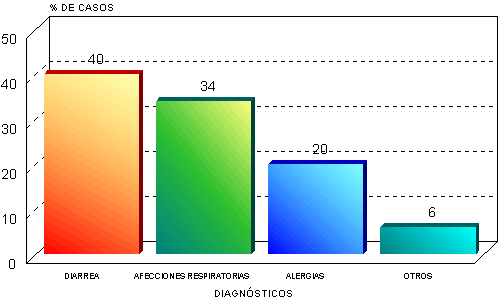
<body><![CDATA[<P ALIGN="JUSTIFY"><font face="Times New Roman">Se trata de un estudio<B> </B>prospectivo descriptivo y transversal. La muestra fue de 50 madres y sus respectivos hijos en edades comprendidas entre 2 y 5 meses. Los ni&ntilde;os fueron hospitalizaron desde Octubre de 2001 hasta Agosto de 2002 por diversas patolog&iacute;as, en UCAIEPI, del Servicio de Emergencia de Pediatr&iacute;a del SAHUM. En todos los casos, las madres acompa&ntilde;aron permanentemente a sus hijos hasta el egreso, el cual se produjo a los 8 d&iacute;as. A cada madre se le realiz&oacute; una encuesta, con registro de los datos de identificaci&oacute;n, nivel educativo, ocupaci&oacute;n, paridad y tiempo de destete. Igualmente se realiz&oacute; el examen f&iacute;sico de las mamas, para descartar patolog&iacute;a mamaria. A todas las madres se les explic&oacute;, demostr&oacute; y se puso en pr&aacute;ctica la t&eacute;cnica de la relactaci&oacute;n, sugerida por la OMS <SUP>(15) </SUP>la cual consiste en conectar el extremo inferior de una sonda nasog&aacute;strica a un vaso con alimento l&aacute;cteo, el otro extremo se coloca en la boca del ni&ntilde;o junto al pez&oacute;n, con la finalidad de proporcionar un flujo continuo de alimento mientras est&eacute; amamant&aacute;ndose, estimulando as&iacute; el pecho y el pez&oacute;n. A ninguna de las madres se les indic&oacute; medicaci&oacute;n para estimular la producci&oacute;n de leche. Igualmente se les educ&oacute; sobre las t&eacute;cnicas de buena posici&oacute;n y buen agarre, para favorecer el amamantamiento; as&iacute; como las ventajas de la lactancia exclusiva tanto para el ni&ntilde;o como para ella.</font> </P>     <P ALIGN="JUSTIFY"><font face="Times New Roman">Una vez egresado el ni&ntilde;o, se hizo el seguimiento del binomio madre-hijo, siendo evaluados mensualmente durante tres meses, en la consulta externa de Pediatr&iacute;a del SAHUM. El mismo investigador evalu&oacute; el peso y la talla del ni&ntilde;o y usando la t&eacute;cnica de observaci&oacute;n, identific&oacute; la posici&oacute;n del ni&ntilde;o y de la madre durante el amamantamiento y los signos del buen agarre. En las madres se evalu&oacute; el uso exclusivo de la lactancia materna en el hogar, a trav&eacute;s de preguntas de verificaci&oacute;n, como son las recomendadas por el Programa para la Atenci&oacute;n Integrada de las Enfermedades Prevalentes de la Infancia (AIEPI) de la OMS (16), evit&aacute;ndose aquellas inductivas, o que pudieran responderse con un si o con un no.</font></P>     <P ALIGN="JUSTIFY"><font face="Times New Roman">Los criterios de inclusi&oacute;n fueron: madres que abandonaron la lactancia materna, madres sin patolog&iacute;a mamaria ni del pez&oacute;n, lactantes menores de seis meses sin anomal&iacute;as cong&eacute;nitas de la cavidad bucal, lactantes que iniciaron la lactancia materna y luego les fue suspendida.</font></P> <I>    <P ALIGN="JUSTIFY"><font face="Times New Roman">Variables</font></I><font face="Times New Roman"><B>: </B>Maternas: edad, n&uacute;mero de hijos, estado civil, profesi&oacute;n, ocupaci&oacute;n, estrato socioecon&oacute;mico evaluado por el m&eacute;todo Graffar modificado por M&eacute;ndez Castellano <SUP>(14)</SUP>, tiempo de inicio de la producci&oacute;n de la leche. Del ni&ntilde;o: edad, peso, talla, sexo, diagn&oacute;stico nosol&oacute;gico, tiempo de destete (gap). Binomio madre-hijo: relaci&oacute;n psicoafectiva.</font></P>     <P ALIGN="JUSTIFY"><font face="Times New Roman">La relaci&oacute;n psicoafectiva se explor&oacute; mediante una serie de preguntas para identificar el bienestar de ambos, el rechazo, la indiferencia, la tristeza y el acercamiento. La observaci&oacute;n de estas variables se hizo durante el tiempo que dur&oacute; el amamantamiento en la hospitalizaci&oacute;n y en la consulta.</font></P>     <P ALIGN="JUSTIFY"><font face="Times New Roman">Los datos se expresaron en cifras absolutas y porcentajes, en promedios, ± desviaci&oacute;n est&aacute;ndar cuando fueron aplicables y se analizaron mediante las pruebas estad&iacute;sticas, an&aacute;lisis de la varianza (Anova) y prueba de Fisher, con una confiabilidad estad&iacute;stica del 95% (p&lt;0,05).</font> </P> <B>    <P ALIGN="justify"><font face="Times New Roman">Resultados</font></P> </B>    <P ALIGN="JUSTIFY"><font face="Times New Roman">La edad promedio de la poblaci&oacute;n materna estudiada fue de (27,0 ± 12,8) y el promedio de hijos de (4,0 ± 2,0).</font> </P>     <P ALIGN="JUSTIFY"><font face="Times New Roman">El 40 % de las madres produjeron leche al sexto d&iacute;a de iniciada la relactaci&oacute;n, independientemente del tiempo del destete, y de este grupo, 7 madres (14%) hab&iacute;an destetado al ni&ntilde;o hac&iacute;a un mes, 6 madres (12%) hac&iacute;a dos meses, 5 madres (10%) tres meses y 2 (4%) con m&aacute;s de tres meses de destete. El promedio de inicio de la producci&oacute;n de la leche fue de 6,6 ± 2,4 d&iacute;as. (<a href="#Cuadro 1">Cuadro 1</a>)</font></P>     <P ALIGN="JUSTIFY"><font face="Times New Roman">En cuanto al estado civil, 32% solteras, 24% divorciadas y concubinatos, 16% casadas y 4% viudas. El 38% de las madres fueron estudiantes y los 36% empleadas y obreras. Seg&uacute;n el estrato socioecon&oacute;mico, 78% de la poblaci&oacute;n se encuentra en condiciones de pobreza. Los diagn&oacute;sticos nosol&oacute;gicos m&aacute;s frecuentes que presentaron los ni&ntilde;os al ingreso fueron diarrea 40% y afecciones respiratorias 34% (<a href="#Figura 1">Figura 1</a>).</font></P>     ]]></body>
<body><![CDATA[<P ALIGN="JUSTIFY"><font face="Times New Roman">La relaci&oacute;n psicoafectiva del binomio madre-hijo desde que dej&oacute; de recibir la lactancia y previo al inicio de la relactancia, fue de rechazo en el 50%, indiferencia 38% y acercamiento 12%. (<a href="#Figura 2">Figura 2</a>)</font></P>     <P ALIGN="JUSTIFY"><font face="Times New Roman">El <a href="#Cuadro 2"> Cuadro 2</a> presenta las caracter&iacute;sticas de los lactantes estudiados. En este grupo, el promedio de edad fue de 3 ± 2 meses, el peso 4,200 ± 2,900 Kg., la talla 56,6 ± 5,7cm. El 56% fueron del sexo femenino 56% y 44% masculino.</font></P>     <P ALIGN="JUSTIFY"> <B><font face="Times New Roman"><a name="cuadro 1"></a>Cuadro 1: Relaci&oacute;n entre el tiempo de destete y la aparici&oacute;n de la leche humana</font></B> </P> <TABLE BORDER="1" CELLSPACING=1 CELLPADDING=4 WIDTH=566 ALIGN="LEFT" HSPACE=9> <TR><TD VALIGN="TOP" COLSPAN=8 width="561"> <B>     <P ALIGN="center"><font size="3" face="Times New Roman">D&iacute;as transcurridos para la aparici&oacute;n de la leche</font> </B></TD> </TR> <TR><TD WIDTH="51" VALIGN="TOP"> <B><FONT SIZE=2>    <P ALIGN="JUSTIFY"><font face="Times New Roman">Tiempo de destete (meses)</font></FONT></B></TD> <TD WIDTH="60" VALIGN="TOP"> <FONT SIZE=2>    <P ALIGN="justify"><font face="Times New Roman">&nbsp;&nbsp;&nbsp;&nbsp;&nbsp;&nbsp; 4</font></P>     <P ALIGN="justify"><font face="Times New Roman">No&nbsp;&nbsp;&nbsp;&nbsp;&nbsp;&nbsp;&nbsp;&nbsp; %</font></FONT></TD> <TD WIDTH="57" VALIGN="TOP"> <FONT SIZE=2>    <P ALIGN="center"><font face="Times New Roman">5</font></P>     <P ALIGN="justify"><font face="Times New Roman">No&nbsp;&nbsp;&nbsp;&nbsp;&nbsp; %</font></FONT></TD> <TD WIDTH="58" VALIGN="TOP"> <FONT SIZE=2>    <P ALIGN="center"><font face="Times New Roman">6</font></P>     ]]></body>
<body><![CDATA[<P ALIGN="justify"><font face="Times New Roman">No&nbsp;&nbsp;&nbsp;&nbsp;&nbsp;&nbsp;&nbsp;&nbsp; %</font></FONT></TD> <TD WIDTH="71" VALIGN="TOP"> <FONT SIZE=2>    <P ALIGN="center"><font face="Times New Roman">7</font></P>     <P ALIGN="justify"><font face="Times New Roman">No&nbsp;&nbsp;&nbsp;&nbsp;&nbsp;&nbsp;&nbsp;&nbsp;&nbsp;&nbsp; %</font></FONT></TD> <TD WIDTH="68" VALIGN="TOP"> <FONT SIZE=2>    <P ALIGN="center"><font face="Times New Roman">8</font></P>     <P ALIGN="justify"><font face="Times New Roman">No&nbsp;&nbsp;&nbsp;&nbsp;&nbsp;&nbsp;&nbsp;&nbsp;&nbsp;&nbsp; %</font></FONT></TD> <TD WIDTH="60" VALIGN="TOP"> <FONT SIZE=2>    <P ALIGN="center"><font face="Times New Roman">9</font></P>     <P ALIGN="justify"><font face="Times New Roman">No&nbsp;&nbsp;&nbsp;&nbsp;&nbsp; %</font></FONT></TD> <TD WIDTH="52" VALIGN="TOP" align="justify"> <FONT SIZE=2>    <P ALIGN="center"><font face="Times New Roman">Total</font></P>     <P ALIGN="justify"><font face="Times New Roman">No&nbsp;&nbsp;&nbsp; %</font></FONT></TD> </TR> <TR><TD WIDTH="51" VALIGN="TOP"> <FONT SIZE=2>    <P ALIGN="JUSTIFY"><font face="Times New Roman">1</font> </FONT></TD> <TD WIDTH="60" VALIGN="TOP"> <FONT SIZE=2>    ]]></body>
<body><![CDATA[<P ALIGN="justify"><font face="Times New Roman">5&nbsp;&nbsp;&nbsp;&nbsp;&nbsp;&nbsp;&nbsp;&nbsp;&nbsp;&nbsp;&nbsp; 10</font></FONT></TD> <TD WIDTH="57" VALIGN="TOP"> <FONT SIZE=2>    <P ALIGN="justify"><font face="Times New Roman">2&nbsp;&nbsp;&nbsp;&nbsp;&nbsp;&nbsp;&nbsp;&nbsp;&nbsp;&nbsp; 4</font></FONT></TD> <TD WIDTH="58" VALIGN="TOP"> <FONT SIZE=2>    <P ALIGN="justify"><font face="Times New Roman">7&nbsp;&nbsp;&nbsp;&nbsp;&nbsp;&nbsp;&nbsp;&nbsp;&nbsp;&nbsp;&nbsp; 14</font></FONT></TD> <TD WIDTH="71" VALIGN="TOP"> <FONT SIZE=2>    <P ALIGN="justify"><font face="Times New Roman">3&nbsp;&nbsp;&nbsp;&nbsp;&nbsp;&nbsp;&nbsp;&nbsp;&nbsp;&nbsp;&nbsp; 6</font></FONT></TD> <TD WIDTH="68" VALIGN="TOP"> <FONT SIZE=2>    <P ALIGN="justify"><font face="Times New Roman">1&nbsp;&nbsp;&nbsp;&nbsp;&nbsp;&nbsp;&nbsp;&nbsp;&nbsp;&nbsp;&nbsp;&nbsp;&nbsp;&nbsp; 2</font></FONT></TD> <TD WIDTH="60" VALIGN="TOP"> <FONT SIZE=2>    <P ALIGN="justify"><font face="Times New Roman">1&nbsp;&nbsp;&nbsp;&nbsp;&nbsp;&nbsp;&nbsp;&nbsp;&nbsp;&nbsp;&nbsp; 2</font></FONT></TD> <TD WIDTH="52" VALIGN="TOP" align="justify"> <FONT SIZE=2>    <P ALIGN="justify"><font face="Times New Roman">19&nbsp;&nbsp;&nbsp;&nbsp; 38</font></FONT></TD> </TR> <TR><TD WIDTH="51" VALIGN="TOP"> <FONT SIZE=2>    <P ALIGN="JUSTIFY"><font face="Times New Roman">2</font> </FONT></TD> <TD WIDTH="60" VALIGN="TOP"> <FONT SIZE=2>    <P ALIGN="justify"><font face="Times New Roman">2&nbsp;&nbsp;&nbsp;&nbsp;&nbsp;&nbsp;&nbsp;&nbsp;&nbsp;&nbsp;&nbsp;&nbsp; 4</font></FONT></TD> <TD WIDTH="57" VALIGN="TOP"> <FONT SIZE=2>    <P ALIGN="justify"><font face="Times New Roman">1&nbsp;&nbsp;&nbsp;&nbsp;&nbsp;&nbsp;&nbsp;&nbsp;&nbsp;&nbsp; 2</font></FONT></TD> <TD WIDTH="58" VALIGN="TOP"> <FONT SIZE=2>    ]]></body>
<body><![CDATA[<P ALIGN="justify"><font face="Times New Roman">6&nbsp;&nbsp;&nbsp;&nbsp;&nbsp;&nbsp;&nbsp;&nbsp;&nbsp;&nbsp;&nbsp; 12</font></FONT></TD> <TD WIDTH="71" VALIGN="TOP"> <FONT SIZE=2>    <P ALIGN="justify"><font face="Times New Roman">3&nbsp;&nbsp;&nbsp;&nbsp;&nbsp;&nbsp;&nbsp;&nbsp;&nbsp;&nbsp;&nbsp; 6</font></FONT></TD> <TD WIDTH="68" VALIGN="TOP"> <FONT SIZE=2>    <P ALIGN="justify"><font face="Times New Roman">4&nbsp;&nbsp;&nbsp;&nbsp;&nbsp;&nbsp;&nbsp;&nbsp;&nbsp;&nbsp;&nbsp;&nbsp;&nbsp;&nbsp; 8</font></FONT></TD> <TD WIDTH="60" VALIGN="TOP"> <FONT SIZE=2>    <P ALIGN="justify"><font face="Times New Roman">1&nbsp;&nbsp;&nbsp;&nbsp;&nbsp;&nbsp;&nbsp;&nbsp;&nbsp;&nbsp;&nbsp; 2</font></FONT></TD> <TD WIDTH="52" VALIGN="TOP" align="justify"> <FONT SIZE=2>    <P ALIGN="justify"><font face="Times New Roman">17&nbsp;&nbsp;&nbsp; 34</font></FONT></TD> </TR> <TR><TD WIDTH="51" VALIGN="TOP"> <FONT SIZE=2>    <P ALIGN="JUSTIFY"><font face="Times New Roman">3</font> </FONT></TD> <TD WIDTH="60" VALIGN="TOP">     <P ALIGN="justify">&nbsp;&nbsp;&nbsp;&nbsp;&nbsp;</TD> <TD WIDTH="57" VALIGN="TOP">     <P ALIGN="justify">&nbsp;&nbsp;&nbsp;&nbsp;&nbsp;&nbsp;</TD> <TD WIDTH="58" VALIGN="TOP"> <FONT SIZE=2>    <P ALIGN="justify"><font face="Times New Roman">5&nbsp;&nbsp;&nbsp;&nbsp;&nbsp;&nbsp;&nbsp;&nbsp;&nbsp;&nbsp; 10</font></FONT></TD> <TD WIDTH="71" VALIGN="TOP"> <FONT SIZE=2>    <P ALIGN="justify"><font face="Times New Roman">1&nbsp;&nbsp;&nbsp;&nbsp;&nbsp;&nbsp;&nbsp;&nbsp;&nbsp;&nbsp;&nbsp; 2</font></FONT></TD> <TD WIDTH="68" VALIGN="TOP"> <FONT SIZE=2>    ]]></body>
<body><![CDATA[<P ALIGN="justify"><font face="Times New Roman">3&nbsp;&nbsp;&nbsp;&nbsp;&nbsp;&nbsp;&nbsp;&nbsp;&nbsp;&nbsp;&nbsp;&nbsp;&nbsp;&nbsp; 6</font></FONT></TD> <TD WIDTH="60" VALIGN="TOP">     <P ALIGN="justify">&nbsp;&nbsp;&nbsp;&nbsp;&nbsp;&nbsp;&nbsp;&nbsp;&nbsp;&nbsp;&nbsp;</TD> <TD WIDTH="52" VALIGN="TOP" align="justify"> <FONT SIZE=2>    <P ALIGN="justify"><font face="Times New Roman">9&nbsp;&nbsp;&nbsp;&nbsp;&nbsp; 18</font></FONT></TD> </TR> <TR><TD WIDTH="51" VALIGN="TOP"> <FONT SIZE=2>    <P ALIGN="JUSTIFY"><font face="Times New Roman">&gt; 3</font> </FONT></TD> <TD WIDTH="60" VALIGN="TOP">     <P ALIGN="justify">&nbsp;&nbsp;&nbsp;&nbsp;&nbsp;&nbsp;&nbsp;&nbsp;</TD> <TD WIDTH="57" VALIGN="TOP">     <P ALIGN="justify">&nbsp;&nbsp;&nbsp;&nbsp;&nbsp;&nbsp;&nbsp;&nbsp;&nbsp;</TD> <TD WIDTH="58" VALIGN="TOP"> <FONT SIZE=2>    <P ALIGN="justify"><font face="Times New Roman">2&nbsp;&nbsp;&nbsp;&nbsp;&nbsp;&nbsp;&nbsp;&nbsp;&nbsp; 4&nbsp;&nbsp;&nbsp;</font></FONT></TD> <TD WIDTH="71" VALIGN="TOP"> <FONT SIZE=2>    <P ALIGN="justify"><font face="Times New Roman">2&nbsp;&nbsp;&nbsp;&nbsp;&nbsp;&nbsp;&nbsp;&nbsp;&nbsp;&nbsp;&nbsp; 4</font></FONT></TD> <TD WIDTH="68" VALIGN="TOP"> <FONT SIZE=2>    <P ALIGN="justify"><font face="Times New Roman">1&nbsp;&nbsp;&nbsp;&nbsp;&nbsp;&nbsp;&nbsp;&nbsp;&nbsp;&nbsp;&nbsp;&nbsp;&nbsp;&nbsp;&nbsp; 2</font></FONT></TD> <TD WIDTH="60" VALIGN="TOP">     <P ALIGN="justify">&nbsp;&nbsp;&nbsp;&nbsp;&nbsp;&nbsp;&nbsp;&nbsp;&nbsp;&nbsp;&nbsp;</TD> <TD WIDTH="52" VALIGN="TOP" align="justify"> <FONT SIZE=2>    ]]></body>
<body><![CDATA[<P ALIGN="justify"><font face="Times New Roman">5&nbsp;&nbsp;&nbsp;&nbsp;&nbsp; 10</font></FONT></TD> </TR> <TR><TD WIDTH="51" VALIGN="TOP"> <FONT SIZE=2>    <P ALIGN="JUSTIFY"><font face="Times New Roman">Total</font></FONT></TD> <TD WIDTH="60" VALIGN="TOP"> <FONT SIZE=2>     <P ALIGN="justify"><font face="Times New Roman">7&nbsp;&nbsp;&nbsp;&nbsp;&nbsp;&nbsp;&nbsp;&nbsp;&nbsp;&nbsp;&nbsp; 14</font></FONT></TD> <TD WIDTH="57" VALIGN="TOP"> <FONT SIZE=2>    <P ALIGN="justify"><font face="Times New Roman">3&nbsp;&nbsp;&nbsp;&nbsp;&nbsp;&nbsp;&nbsp;&nbsp;&nbsp; 6</font></FONT></TD> <TD WIDTH="58" VALIGN="TOP"> <FONT SIZE=2>    <P ALIGN="justify"><font face="Times New Roman">20&nbsp;&nbsp;&nbsp;&nbsp;&nbsp;&nbsp; 40</font></FONT></TD> <TD WIDTH="71" VALIGN="TOP"> <FONT SIZE=2>    <P ALIGN="justify"><font face="Times New Roman">9&nbsp;&nbsp;&nbsp;&nbsp;&nbsp;&nbsp;&nbsp;&nbsp;&nbsp;&nbsp;&nbsp; 18</font></FONT></TD> <TD WIDTH="68" VALIGN="TOP"> <FONT SIZE=2>    <P ALIGN="justify"><font face="Times New Roman">9&nbsp;&nbsp;&nbsp;&nbsp;&nbsp;&nbsp;&nbsp;&nbsp;&nbsp;&nbsp;&nbsp;&nbsp;&nbsp; 18</font></FONT></TD> <TD WIDTH="60" VALIGN="TOP"> <FONT SIZE=2>    <P ALIGN="justify"><font face="Times New Roman">2&nbsp;&nbsp;&nbsp;&nbsp;&nbsp;&nbsp;&nbsp;&nbsp;&nbsp; 4</font></FONT></TD> <TD WIDTH="52" VALIGN="TOP" align="justify"> <FONT SIZE=2>    <P ALIGN="justify"><font face="Times New Roman">50&nbsp;&nbsp;&nbsp;&nbsp;100</font></FONT></TD> </TR> </TABLE>      <P ALIGN="JUSTIFY">&nbsp;</P>     ]]></body>
<body><![CDATA[<P ALIGN="JUSTIFY">&nbsp;</P>     <P ALIGN="JUSTIFY">&nbsp;</P>     <P ALIGN="JUSTIFY">&nbsp;</P>     <P ALIGN="JUSTIFY">&nbsp;</P>     <P ALIGN="JUSTIFY">&nbsp;</P>     <P ALIGN="JUSTIFY">&nbsp;</P>  <FONT SIZE=2>     <P ALIGN="center"><font face="Times New Roman"><img border="0" src="/img/fbpe/AVN/v17n1/art3.h1.gif" width="106" height="48"></font></P>     
<P ALIGN="center"><B><font face="Times New Roman"><a name="Figura 1"></a>Figura 1 . Distribuci&oacute;n porcentual seg&uacute;n diagn&oacute;sticos al ingreso</font> </B> </P> </FONT>    <P ALIGN="CENTER"><font face="Times New Roman"><img border="0" src="/img/fbpe/AVN/v17n1/Image34.gif" width="498" height="299"></font></P> <B>    
<P ALIGN="CENTER">&nbsp;</P>     ]]></body>
<body><![CDATA[<P ALIGN="CENTER"><font face="Times New Roman" size="2"><a name="Figura 2"></a>Figura 2. Distribuci&oacute;n porcentual seg&uacute;n la relaci&oacute;n psicoafectiva madre-hijo previo a la relactancia </font> </P> </B>     <P ALIGN="center"><font face="Times New Roman"><img border="0" src="/img/fbpe/AVN/v17n1/Image35.gif" width="498" height="299"></font></P>     
<P ALIGN="center">&nbsp;</P>     <P ALIGN="center"><b><font face="Times New Roman" size="3"><a name="Cuadro 2"></a>Cuadro 2:Análisis de las variables peso, talla antes y después de iniciada la relactación</font></b></P>     <div align="center">       <center> <TABLE BORDER="1" CELLSPACING=1 WIDTH=481 ALIGN="LEFT" HSPACE=12 height="144"> <TR><TD WIDTH="88" VALIGN="TOP" HEIGHT=38>     <P ALIGN="center"><font face="Times New Roman">Variables</font></TD> <TD WIDTH="128" VALIGN="TOP" HEIGHT=38>     <P ALIGN="center"><font face="Times New Roman">Antes de la    <br> Relactaci&oacute;n</font></TD> <TD WIDTH="142" VALIGN="TOP" HEIGHT=38>     <P ALIGN="center"><font face="Times New Roman">Al tercer mes de    ]]></body>
<body><![CDATA[<br> la Relactaci&oacute;n</font></TD> <TD WIDTH="95" VALIGN="TOP" HEIGHT=38>     <P ALIGN="center"><font face="Times New Roman">Valor p*</font></TD> </TR> <TR><TD WIDTH="88" VALIGN="TOP" HEIGHT=19>    <P ALIGN="justify">&nbsp;&nbsp;&nbsp;&nbsp;&nbsp;&nbsp;&nbsp;&nbsp;&nbsp;&nbsp;&nbsp;</P></TD> <TD WIDTH="128" VALIGN="TOP" HEIGHT=19>     <P ALIGN="justify"><font face="Times New Roman">X ± DE</font></TD> <TD WIDTH="142" VALIGN="TOP" HEIGHT=19>     <P ALIGN="justify"><font face="Times New Roman">X ± DE</font></TD> <TD WIDTH="95" VALIGN="TOP" HEIGHT=19>    <P ALIGN="justify">&nbsp;&nbsp;&nbsp;&nbsp;&nbsp;&nbsp;&nbsp;&nbsp;&nbsp;&nbsp;&nbsp;&nbsp;&nbsp;</P></TD> </TR> <TR><TD WIDTH="88" VALIGN="TOP" HEIGHT=19>     <P ALIGN="JUSTIFY"><font face="Times New Roman">Peso (Kg)</font></TD> <TD WIDTH="128" VALIGN="TOP" HEIGHT=19>     <P ALIGN="justify"><font face="Times New Roman">4,2 ± 3,0</font></TD> <TD WIDTH="142" VALIGN="TOP" HEIGHT=19>     <P ALIGN="justify"><font face="Times New Roman">7,2 ± 1,25</font></TD> <TD WIDTH="95" VALIGN="TOP" HEIGHT=19>     <P ALIGN="justify"><font face="Times New Roman">0,0023</font></TD> </TR> <TR><TD WIDTH="88" VALIGN="TOP" HEIGHT=19>     ]]></body>
<body><![CDATA[<P ALIGN="JUSTIFY"><font face="Times New Roman">Talla (cm)</font></TD> <TD WIDTH="128" VALIGN="TOP" HEIGHT=19>     <P ALIGN="justify"><font face="Times New Roman">56,6 ± 5,7</font></TD> <TD WIDTH="142" VALIGN="TOP" HEIGHT=19>     <P ALIGN="justify"><font face="Times New Roman">76,7 ± 16,5</font></TD> <TD WIDTH="95" VALIGN="TOP" HEIGHT=19>     <P ALIGN="justify"><font face="Times New Roman">0,00095</font></TD> </TR> </TABLE>    </center> </div>  <B>     <blockquote>     <P ALIGN="center">&nbsp;</P>     <P ALIGN="center">&nbsp;</P>     <P ALIGN="center">&nbsp;</P>     <P ALIGN="center">&nbsp;</P>     <P ALIGN="left"> <font face="Times New Roman"> * p &lt; 0,005</font></P>     ]]></body>
<body><![CDATA[<P ALIGN="left">&nbsp;</P>     <P ALIGN="center"><font face="Times New Roman"><a name="Cuadro 3"></a>Cuadro 3:An&aacute;lisis de la relaci&oacute;n psico- relactaci&oacute;n afectiva (acercamiento) antes y despu&eacute;s de iniciada la relactaci&oacute;n</font></P> <TABLE BORDER="1" CELLSPACING=1 WIDTH=485 ALIGN="LEFT" HSPACE=12> <tr>   <TD WIDTH="126" VALIGN="TOP" HEIGHT=17>     <P ALIGN="center"><font face="Times New Roman">Variables</font></TD> <TD WIDTH="139" VALIGN="TOP" HEIGHT=17>     <P ALIGN="center"><font face="Times New Roman">Antes de la    <br> Relactaci&oacute;n</font></TD> <TD WIDTH="110" VALIGN="TOP" HEIGHT=17 align="center">     <P ALIGN="center"><font face="Times New Roman">Al tercer mes de la Relactaci&oacute;n</font></TD> <TD WIDTH="82" VALIGN="TOP" HEIGHT=17>     <P ALIGN="center"><font face="Times New Roman">Valor p*</font></TD> </tr> <TR><TD WIDTH="126" VALIGN="TOP" HEIGHT=17>     <P ALIGN="JUSTIFY"><font face="Times New Roman">Relaci&oacute;n</font></TD> <TD WIDTH="139" VALIGN="TOP" HEIGHT=17>     <P ALIGN="justify"><font face="Times New Roman">&nbsp;&nbsp;&nbsp; n&nbsp;&nbsp;&nbsp;&nbsp;&nbsp;&nbsp;&nbsp;&nbsp;&nbsp;&nbsp;&nbsp;&nbsp;&nbsp; %</font></TD> <TD WIDTH="110" VALIGN="TOP" HEIGHT=17>     <P ALIGN="justify"><font face="Times New Roman">&nbsp;&nbsp; n&nbsp;&nbsp;&nbsp;&nbsp;&nbsp;&nbsp;&nbsp;&nbsp;&nbsp;&nbsp;&nbsp;&nbsp; %</font></TD> <TD WIDTH="82" VALIGN="TOP" HEIGHT=17>    ]]></body>
<body><![CDATA[<P ALIGN="justify">&nbsp;&nbsp;&nbsp;&nbsp;&nbsp;&nbsp;&nbsp;&nbsp;&nbsp;&nbsp;&nbsp;&nbsp;</P></TD> </TR> <TR><TD WIDTH="126" VALIGN="TOP" HEIGHT=17>     <P ALIGN="JUSTIFY"><font face="Times New Roman">Psicoafectiva</font></TD> <TD WIDTH="139" VALIGN="TOP" HEIGHT=17>    <P ALIGN="justify">&nbsp;&nbsp;&nbsp;&nbsp;&nbsp;&nbsp;&nbsp;&nbsp;&nbsp;&nbsp;&nbsp;&nbsp;&nbsp;&nbsp;&nbsp;&nbsp;&nbsp;&nbsp;&nbsp;&nbsp;&nbsp;</P></TD> <TD WIDTH="110" VALIGN="TOP" HEIGHT=17>    <P ALIGN="justify">&nbsp;&nbsp;&nbsp;&nbsp;&nbsp;&nbsp;&nbsp;&nbsp;&nbsp;&nbsp;&nbsp;&nbsp;&nbsp;</P></TD> <TD WIDTH="82" VALIGN="TOP" HEIGHT=17>    <P ALIGN="justify">&nbsp;&nbsp;&nbsp;&nbsp;&nbsp;&nbsp;&nbsp;&nbsp;&nbsp;&nbsp;&nbsp;&nbsp;&nbsp;&nbsp;</P></TD> </TR> <TR><TD WIDTH="126" VALIGN="TOP" HEIGHT=17>    <P ALIGN="justify">&nbsp;&nbsp;&nbsp;&nbsp;&nbsp;&nbsp;&nbsp;&nbsp;&nbsp;&nbsp;&nbsp;&nbsp;&nbsp;&nbsp;&nbsp;&nbsp;&nbsp;&nbsp;&nbsp;&nbsp;&nbsp;&nbsp;&nbsp;&nbsp;&nbsp;&nbsp;&nbsp;&nbsp;&nbsp;&nbsp;&nbsp;</P></TD> <TD WIDTH="139" VALIGN="TOP" HEIGHT=17>    <P ALIGN="justify">&nbsp;&nbsp;&nbsp;&nbsp;&nbsp;&nbsp;&nbsp;&nbsp;&nbsp;&nbsp;&nbsp;&nbsp;&nbsp;&nbsp;&nbsp;&nbsp;</P></TD> <TD WIDTH="110" VALIGN="TOP" HEIGHT=17>    <P ALIGN="justify">&nbsp;&nbsp;&nbsp;&nbsp;&nbsp;&nbsp;&nbsp;&nbsp;&nbsp;&nbsp;</P></TD> <TD WIDTH="82" VALIGN="TOP" HEIGHT=17>    <P ALIGN="justify">&nbsp;&nbsp;&nbsp;&nbsp;&nbsp;&nbsp;&nbsp;&nbsp;&nbsp;&nbsp;</P></TD> </TR> <TR><TD WIDTH="126" VALIGN="TOP" HEIGHT=17>     <P ALIGN="JUSTIFY"><font face="Times New Roman">Acercamiento</font></TD> <TD WIDTH="139" VALIGN="TOP" HEIGHT=17>     ]]></body>
<body><![CDATA[<P ALIGN="justify"><font face="Times New Roman">&nbsp;&nbsp;&nbsp;&nbsp; 6&nbsp;&nbsp;&nbsp;&nbsp;&nbsp;&nbsp;&nbsp;&nbsp;&nbsp;&nbsp;&nbsp;&nbsp; 12,0</font></TD> <TD WIDTH="110" VALIGN="TOP" HEIGHT=17>     <P ALIGN="justify"><font face="Times New Roman">&nbsp;&nbsp; 25&nbsp;&nbsp;&nbsp;&nbsp;&nbsp;&nbsp;&nbsp;&nbsp;&nbsp;&nbsp; 80,6</font></TD> <TD WIDTH="82" VALIGN="TOP" HEIGHT=17>     <P ALIGN="justify"><font face="Times New Roman">&nbsp;&nbsp;&nbsp;&nbsp;&nbsp; 0,0001</font></TD> </TR> </TABLE>      <P ALIGN="left">&nbsp;</P> </blockquote>     <P ALIGN="justify">&nbsp;</P>     <P ALIGN="justify">&nbsp;</P>     <P ALIGN="justify">&nbsp;</P>     <P ALIGN="justify"><font face="Times New Roman">&nbsp;&nbsp; * p &lt; 0,005</font></P>     <P ALIGN="justify">&nbsp;</P>     <P ALIGN="justify"><font face="Times New Roman">Discusi&oacute;n</font></P>   </B>     ]]></body>
<body><![CDATA[<P ALIGN="JUSTIFY"><font face="Times New Roman">Los resultados obtenidos en esta investigaci&oacute;n permiten conocer importantes aspectos relacionados con la relactaci&oacute;n.</font></P>     <P ALIGN="JUSTIFY"><font face="Times New Roman">La edad promedio de la poblaci&oacute;n materna fue joven, resultados similares a los publicados por Auerbach y Avery<SUP> </SUP>(16)<SUB> </SUB>en 1980. En esta etapa las madres se encuentran en edad potencialmente productiva, en donde la funci&oacute;n neurohormonal es &oacute;ptima, pero es tambi&eacute;n susceptible de introducir f&oacute;rmulas debido a la inexperiencia, ansiedad y facilidad de convencimiento por las propagandas realizadas por la industria l&aacute;ctea, as&iacute; como las opiniones de m&eacute;dicos, enfermeras y parientes que en ocasiones influyen negativamente, causando una desmotivaci&oacute;n en la madre, tomando en cuenta que la motivaci&oacute;n es un factor importante en el amamantamiento (17).</font></P>     <P ALIGN="JUSTIFY"><font face="Times New Roman">El promedio de n&uacute;mero de hijos fue de 4.0 ± 2.0, aunque est&aacute; demostrado que la multiparidad es un factor que favorece la lactancia materna exclusiva, en esta casu&iacute;stica aparentemente esto no influy&oacute;<SUP> </SUP>(18).</font></P>     <P ALIGN="JUSTIFY"><font face="Times New Roman">El 74% de las madres trabajaban o estudiaban, este hallazgo se encontr&oacute; como factor determinante para el abandono de la lactancia, Bharanti et al en su estudio realizado en el 2002 hallaron un hecho similar (19).</font></P>     <P ALIGN="JUSTIFY"><font face="Times New Roman">La mayor&iacute;a de las madres se encontraban en situaci&oacute;n de pobreza, observaci&oacute;n que refleja la situaci&oacute;n actual de esta poblaci&oacute;n, condici&oacute;n que muy probablemente contribuya al abandono precoz de la lactancia ya que la madre en la mayor&iacute;a de los casos, debe salir del hogar para trabajar. Sin embargo, estos hallazgos eran de esperarse, debido a que el estudio se realiz&oacute; en un hospital p&uacute;blico, donde se atienden a pacientes de escasos recursos econ&oacute;micos.</font></P>     <P ALIGN="JUSTIFY"><font face="Times New Roman">Las diarreas y las afecciones respiratorias fueron las enfermedades m&aacute;s frecuentes, obviamente si el lactante no ha recibido una lactancia materna adecuada, carece de mecanismos inmunol&oacute;gicos competentes para defenderse de los agentes infecciosos como lo demuestran Quisber (13)<SUP> </SUP>y Chen et al<SUP> </SUP>(20)<SUP> </SUP>.</font></P>     <P ALIGN="JUSTIFY"><font face="Times New Roman">Antes de la relactaci&oacute;n s&oacute;lo el 12% de los lactantes mostraron rechazo hacia la madre, posterior a &eacute;sta se comprob&oacute;, mayor acercamiento entre ellos, resultado altamente significativo. Esta relaci&oacute;n psicoafectiva positiva beneficia al lactante en varios aspectos, entre los que destacan una adecuada nutrici&oacute;n en los primeros seis meses de vida y adem&aacute;s le garantiza un equilibrio emocional en su desarrollo y le sirve de un est&iacute;mulo importante para la esfera audiovisual y psicomotora (21).</font></P>     <P ALIGN="JUSTIFY"><font face="Times New Roman">Algunos estudios reportan que todas las mujeres producen leche, pero la edad, paridad, la experiencia de amamantamiento previo y el GAP son factores que inciden en el &eacute;xito de la relactaci&oacute;n <SUP>(22)</SUP>. Otros investigadores observan que son factores de menor importancia <SUP>(23)</SUP>. El inicio de la producci&oacute;n de leche, luego de iniciada la relactancia, ocurri&oacute; a los 6,6 ± 2,4 d&iacute;as, algunos autores han encontrado que el inicio de la producci&oacute;n de leche materna, var&iacute;a entre d&iacute;as y semanas siendo dif&iacute;cil de predecir <SUP>(19)</SUP>. Algunas mujeres nunca producen suficiente cantidad de leche para establecer o restablecer la alimentaci&oacute;n exclusiva al pecho, pero otras consiguen un suministro completo en pocos d&iacute;as (9,22).</font> </P>     <P ALIGN="JUSTIFY"><font face="Times New Roman">Otros investigadores informan que la relactaci&oacute;n ocurre precozmente en madres que han dejado de lactar recientemente o que a veces lactan, pero no siempre es &eacute;ste el caso. Mujeres que no han amamantado durante mucho tiempo a veces tardan entre 4 y 6 semanas en producir cantidades significativas <SUP>(24)</SUP>.<SUB> </SUB>Nemba encontr&oacute; que mujeres que no hab&iacute;an lactado previamente consiguieron una lactancia adecuada entre los 5 a 13 d&iacute;as despu&eacute;s de iniciar la relactaci&oacute;n (22). River&oacute;n et al<SUP> </SUP>(25)<SUP> </SUP>observaron que los primeros indicios de leche aparecieron entre el segundo y sexto d&iacute;a.</font> </P>     <P ALIGN="JUSTIFY"><font face="Times New Roman">En relaci&oacute;n a las caracter&iacute;sticas de los lactantes estudiados, la edad oscil&oacute; entre 1 y 5 meses con un promedio de 3.0 ± 2.0 algunos autores consideran que los ni&ntilde;os est&aacute;n m&aacute;s dispuestos a aceptar el pecho cuanto m&aacute;s peque&ntilde;o son <SUP>(12, 16,19)</SUP>,<SUP> </SUP>sin embargo Marquis et al <SUP>(26) </SUP>en un estudio realizado en Per&uacute; observaron que las madres relactaron a ni&ntilde;os mayores de 12 meses de edad.</font><SUP> </P> </SUP>    ]]></body>
<body><![CDATA[<P ALIGN="JUSTIFY"><font face="Times New Roman">Cuando se analizan los promedios de peso y talla, se observa que &eacute;stos se encuentran por debajo del promedio para su edad, lo cual<SUB> </SUB>confirma el estado de desnutrici&oacute;n. Es conocido el efecto nocivo que tiene el destete sobre la nutrici&oacute;n, estudios realizados por Alves et al en 1999 observaron la relaci&oacute;n existente entre el destete y la desnutrici&oacute;n en ni&ntilde;os hospitalizados (27).<SUP> </SUP>Se observ&oacute; que las madres dejan de amamantar m&aacute;s precozmente a las hembras que a los varones, este dato puede que guarde relaci&oacute;n con la tasa de nacimiento y no precisamente con la lactancia materna. El mayor porcentaje de los lactantes presentaron el gap de amamantamiento entre uno a dos meses, este hecho tiene su importancia ya que los informes de casos individuales sugieren que, en general, la relactaci&oacute;n es m&aacute;s probable que ocurra cuanto m&aacute;s corto es el gap, pero ello puede depender en parte de la edad del ni&ntilde;o (19, 23).</font></P>     <P ALIGN="JUSTIFY"><font face="Times New Roman">En cuanto al peso y talla luego de la relactaci&oacute;n se observ&oacute; un incremento estad&iacute;sticamente significativo, hecho que determina que el amamantamiento favorece la velocidad de crecimiento en esta etapa de la vida, ya que esta leche viene adaptada a las condiciones fisiol&oacute;gicas del lactante (7, 10).<SUP> </SUP>Sin embargo es de hacer notar que en este periodo, la velocidad de crecimiento del ni&ntilde;o es acelerada aun recibiendo f&oacute;rmulas l&aacute;cteas preparadas en forma adecuada.</font> </P>     <P ALIGN="JUSTIFY"><font face="Times New Roman">La relactaci&oacute;n favoreci&oacute; el estado nutricional y la relaci&oacute;n psicoafectiva madre e hijo en el grupo estudiado. Se sugiere promover a la relactancia como m&eacute;todo exitoso.</font></P> <B>     <P ALIGN="justify"><font face="Times New Roman">Referencias</font></P>  </B>    <!-- ref --><P ALIGN="JUSTIFY"><font face="Times New Roman">1. Espinoza I, Materan M, Puig M, Furzan J, D&iacute;az L, Losada O. Pautas sobre alimentaci&oacute;n infantil. Lactancia Materna. Arch Venez Puer Ped 2001; 64 suppl 3: 2-12</font> &nbsp;&nbsp;&nbsp;&nbsp;&nbsp;&nbsp;&nbsp;&nbsp;[&#160;<a href="javascript:void(0);" onclick="javascript: window.open('/scielo.php?script=sci_nlinks&ref=303852&pid=S0798-0752200400010000300001&lng=','','width=640,height=500,resizable=yes,scrollbars=1,menubar=yes,');">Links</a>&#160;]<!-- end-ref --><!-- ref --><P ALIGN="JUSTIFY"><font face="Times New Roman">2. Blanco L, Guerra M, Mujica C. Relaci&oacute;n entre el amamantamiento, el tipo del perfil, oclusi&oacute;n y h&aacute;bitos viciosos en preescolares. Arch Venez Puer Ped 1999; 62:138-143</font> &nbsp;&nbsp;&nbsp;&nbsp;&nbsp;&nbsp;&nbsp;&nbsp;[&#160;<a href="javascript:void(0);" onclick="javascript: window.open('/scielo.php?script=sci_nlinks&ref=303853&pid=S0798-0752200400010000300002&lng=','','width=640,height=500,resizable=yes,scrollbars=1,menubar=yes,');">Links</a>&#160;]<!-- end-ref --><!-- ref --><P ALIGN="JUSTIFY"><font face="Times New Roman">3. WHO. Relactation: Review of experience and recommendations for practice. WHO document WHO/CHS/CAH/98.14. Department of child and adolescent Health and Development WHO, Geneva, 1998.</font>&nbsp;&nbsp;&nbsp;&nbsp;&nbsp;&nbsp;&nbsp;&nbsp;[&#160;<a href="javascript:void(0);" onclick="javascript: window.open('/scielo.php?script=sci_nlinks&ref=303854&pid=S0798-0752200400010000300003&lng=','','width=640,height=500,resizable=yes,scrollbars=1,menubar=yes,');">Links</a>&#160;]<!-- end-ref --><P ALIGN="JUSTIFY"><font face="Times New Roman">4. P&eacute;rez ME, Orta S, Mater&aacute;n M, Betancourt S, Regalado O. Factores inmunol&oacute;gicos celulares y humorales&nbsp;</font></P>     <P ALIGN="JUSTIFY"><font face="Times New Roman"> contenidos en el calostro de madres de reci&eacute;n nacidos pret&eacute;rminos. Arch Venez Puer Ped 1999; 62: 117-123.</font></P>     <!-- ref --><P ALIGN="JUSTIFY"><font face="Times New Roman">5. Bautroni L, Salbusky J, Reina S, Quiroga D. Comportamiento de la lactancia en el primer mes de vida en la ciudad de C&oacute;rdova, Argentina. Arch Latinoam Nutr 1996; 46:16-21.</font> &nbsp;&nbsp;&nbsp;&nbsp;&nbsp;&nbsp;&nbsp;&nbsp;[&#160;<a href="javascript:void(0);" onclick="javascript: window.open('/scielo.php?script=sci_nlinks&ref=303857&pid=S0798-0752200400010000300005&lng=','','width=640,height=500,resizable=yes,scrollbars=1,menubar=yes,');">Links</a>&#160;]<!-- end-ref --><!-- ref --><P ALIGN="JUSTIFY"><font face="Times New Roman">6. Ministerio de Salud, UNICEF: Manual de Lactancia Materna para el Trabajador de Salud. Santa Fe de Bogot&aacute; 1992.</font> &nbsp;&nbsp;&nbsp;&nbsp;&nbsp;&nbsp;&nbsp;&nbsp;[&#160;<a href="javascript:void(0);" onclick="javascript: window.open('/scielo.php?script=sci_nlinks&ref=303858&pid=S0798-0752200400010000300006&lng=','','width=640,height=500,resizable=yes,scrollbars=1,menubar=yes,');">Links</a>&#160;]<!-- end-ref --><!-- ref --><P ALIGN="JUSTIFY"><font face="Times New Roman">7. UNICEF: Fondos de las Naciones Unidas para la Infancia: Estado actual de la lactancia materna. 1999.</font> &nbsp;&nbsp;&nbsp;&nbsp;&nbsp;&nbsp;&nbsp;&nbsp;[&#160;<a href="javascript:void(0);" onclick="javascript: window.open('/scielo.php?script=sci_nlinks&ref=303859&pid=S0798-0752200400010000300007&lng=','','width=640,height=500,resizable=yes,scrollbars=1,menubar=yes,');">Links</a>&#160;]<!-- end-ref --><!-- ref --><P ALIGN="JUSTIFY"><font face="Times New Roman">8. Villalobos de Rivero E, Parra de Soto H, Vera de Soto D. Comparaci&oacute;n en la Composici&oacute;n de macronutrientes en la leche de madres guajiras y no guajiras. Arch Venez Puer Ped 2001; 64: 24-36.</font>&nbsp;&nbsp;&nbsp;&nbsp;&nbsp;&nbsp;&nbsp;&nbsp;[&#160;<a href="javascript:void(0);" onclick="javascript: window.open('/scielo.php?script=sci_nlinks&ref=303860&pid=S0798-0752200400010000300008&lng=','','width=640,height=500,resizable=yes,scrollbars=1,menubar=yes,');">Links</a>&#160;]<!-- end-ref --><!-- ref --><P ALIGN="JUSTIFY"><font face="Times New Roman">9. Abejide OR, Tadese MA, Babajide DE, Torimiro SE, Davies-Adetugbo AA, Makanjuola RO. Non-puerperal induced lactation in a Nigerian community: case reports. Ann Trop Pediatrics 1997; 17:109-114</font> &nbsp;&nbsp;&nbsp;&nbsp;&nbsp;&nbsp;&nbsp;&nbsp;[&#160;<a href="javascript:void(0);" onclick="javascript: window.open('/scielo.php?script=sci_nlinks&ref=303861&pid=S0798-0752200400010000300009&lng=','','width=640,height=500,resizable=yes,scrollbars=1,menubar=yes,');">Links</a>&#160;]<!-- end-ref --><!-- ref --><P ALIGN="JUSTIFY"><font face="Times New Roman">10. &Aacute;vila-Vel&aacute;squez G. Lactancia Materna: Aspectos Pr&aacute;cticos. Arch Venez Puer Ped 1991; 54 suppl 4:62-65</font> &nbsp;&nbsp;&nbsp;&nbsp;&nbsp;&nbsp;&nbsp;&nbsp;[&#160;<a href="javascript:void(0);" onclick="javascript: window.open('/scielo.php?script=sci_nlinks&ref=303862&pid=S0798-0752200400010000300010&lng=','','width=640,height=500,resizable=yes,scrollbars=1,menubar=yes,');">Links</a>&#160;]<!-- end-ref --><!-- ref --><P ALIGN="JUSTIFY"><font face="Times New Roman">11. Lawrence R. Amamantamiento. Cl&iacute;n Perinatolog&iacute;a. 1987; 1:11-135.</font>&nbsp;&nbsp;&nbsp;&nbsp;&nbsp;&nbsp;&nbsp;&nbsp;[&#160;<a href="javascript:void(0);" onclick="javascript: window.open('/scielo.php?script=sci_nlinks&ref=303863&pid=S0798-0752200400010000300011&lng=','','width=640,height=500,resizable=yes,scrollbars=1,menubar=yes,');">Links</a>&#160;]<!-- end-ref --><!-- ref --><P ALIGN="JUSTIFY"><font face="Times New Roman">12. Auerbach K, Avery J. Relactation: A study of 336 cases. Pediatrics 1980; 65: 236-235.</font>&nbsp;&nbsp;&nbsp;&nbsp;&nbsp;&nbsp;&nbsp;&nbsp;[&#160;<a href="javascript:void(0);" onclick="javascript: window.open('/scielo.php?script=sci_nlinks&ref=303864&pid=S0798-0752200400010000300012&lng=','','width=640,height=500,resizable=yes,scrollbars=1,menubar=yes,');">Links</a>&#160;]<!-- end-ref --><!-- ref --><P ALIGN="JUSTIFY"><font face="Times New Roman">13. Quisber VL. Lactancia Inducida y Relactancia. En: Neonatolog&iacute;a. 2nd Ed. M&eacute;xico Interamericana McGraw-Hill. 1994. p.401-408.</font> &nbsp;&nbsp;&nbsp;&nbsp;&nbsp;&nbsp;&nbsp;&nbsp;[&#160;<a href="javascript:void(0);" onclick="javascript: window.open('/scielo.php?script=sci_nlinks&ref=303865&pid=S0798-0752200400010000300013&lng=','','width=640,height=500,resizable=yes,scrollbars=1,menubar=yes,');">Links</a>&#160;]<!-- end-ref --><!-- ref --><P ALIGN="JUSTIFY"><font face="Times New Roman">14. M&eacute;ndez H. Estratificaci&oacute;n Social. M&eacute;todo Graffar Modificado para Venezuela. Arch Venez Puer Ped 1986; 49: 93-104</font>&nbsp;&nbsp;&nbsp;&nbsp;&nbsp;&nbsp;&nbsp;&nbsp;[&#160;<a href="javascript:void(0);" onclick="javascript: window.open('/scielo.php?script=sci_nlinks&ref=303866&pid=S0798-0752200400010000300014&lng=','','width=640,height=500,resizable=yes,scrollbars=1,menubar=yes,');">Links</a>&#160;]<!-- end-ref --><!-- ref --><P ALIGN="JUSTIFY"><font face="Times New Roman">15. Organizaci&oacute;n Mundial de la Salud. Relactaci&oacute;n. Revisi&oacute;n de la experiencia y Recomendaciones para la Pr&aacute;ctica. Ginebra 1998.</font>&nbsp;&nbsp;&nbsp;&nbsp;&nbsp;&nbsp;&nbsp;&nbsp;[&#160;<a href="javascript:void(0);" onclick="javascript: window.open('/scielo.php?script=sci_nlinks&ref=303867&pid=S0798-0752200400010000300015&lng=','','width=640,height=500,resizable=yes,scrollbars=1,menubar=yes,');">Links</a>&#160;]<!-- end-ref --><!-- ref --><P ALIGN="JUSTIFY"><font face="Times New Roman">16. Auerbach KG, Avery JL. Induced Lactation: A study of Adoptive Nursing by 240 Women. Am J Dis Child 1981; 135:1340-343.</font>&nbsp;&nbsp;&nbsp;&nbsp;&nbsp;&nbsp;&nbsp;&nbsp;[&#160;<a href="javascript:void(0);" onclick="javascript: window.open('/scielo.php?script=sci_nlinks&ref=303868&pid=S0798-0752200400010000300016&lng=','','width=640,height=500,resizable=yes,scrollbars=1,menubar=yes,');">Links</a>&#160;]<!-- end-ref --><!-- ref --><P ALIGN="JUSTIFY"><font face="Times New Roman">17. Villacr&eacute;s L, Ramos M. T&eacute;cnicas de relactaci&oacute;n. Rev Ecuat Pediatr 2003; 4:34-42.</font>&nbsp;&nbsp;&nbsp;&nbsp;&nbsp;&nbsp;&nbsp;&nbsp;[&#160;<a href="javascript:void(0);" onclick="javascript: window.open('/scielo.php?script=sci_nlinks&ref=303869&pid=S0798-0752200400010000300017&lng=','','width=640,height=500,resizable=yes,scrollbars=1,menubar=yes,');">Links</a>&#160;]<!-- end-ref --><!-- ref --><P ALIGN="JUSTIFY"><font face="Times New Roman">18. Furz&aacute;n J, Laguna X, Rodr&iacute;guez B, Garc&iacute;a J. Introducci&oacute;n precoz de f&oacute;rmula suplementaria a la alimentaci&oacute;n al seno: Un an&aacute;lisis multivariado de los factores de riesgo. Arch Venez Puer Ped 1993; 56:71-76.</font>&nbsp;&nbsp;&nbsp;&nbsp;&nbsp;&nbsp;&nbsp;&nbsp;[&#160;<a href="javascript:void(0);" onclick="javascript: window.open('/scielo.php?script=sci_nlinks&ref=303870&pid=S0798-0752200400010000300018&lng=','','width=640,height=500,resizable=yes,scrollbars=1,menubar=yes,');">Links</a>&#160;]<!-- end-ref --><!-- ref --><P ALIGN="JUSTIFY"><font face="Times New Roman">19. Bharanti P, Misrha SK, Pappu K, Chaudhuri SN. Initiating the process of relactation: An institute based study. Indian Pediatrics 2002; 39:173-178</font>&nbsp;&nbsp;&nbsp;&nbsp;&nbsp;&nbsp;&nbsp;&nbsp;[&#160;<a href="javascript:void(0);" onclick="javascript: window.open('/scielo.php?script=sci_nlinks&ref=303871&pid=S0798-0752200400010000300019&lng=','','width=640,height=500,resizable=yes,scrollbars=1,menubar=yes,');">Links</a>&#160;]<!-- end-ref --><!-- ref --><P ALIGN="JUSTIFY"><font face="Times New Roman">20. Chen A, Rogan W. Breastfeeding and the risk of postneonatal death in the United States. Pediatrics 2004; 113:435-439.</font>&nbsp;&nbsp;&nbsp;&nbsp;&nbsp;&nbsp;&nbsp;&nbsp;[&#160;<a href="javascript:void(0);" onclick="javascript: window.open('/scielo.php?script=sci_nlinks&ref=303872&pid=S0798-0752200400010000300020&lng=','','width=640,height=500,resizable=yes,scrollbars=1,menubar=yes,');">Links</a>&#160;]<!-- end-ref --><!-- ref --><P ALIGN="JUSTIFY"><font face="Times New Roman">21. Becar VC. M&oacute;dulo para capacitaci&oacute;n sobre lactancia materna. OPS/OMS 1990.</font>&nbsp;&nbsp;&nbsp;&nbsp;&nbsp;&nbsp;&nbsp;&nbsp;[&#160;<a href="javascript:void(0);" onclick="javascript: window.open('/scielo.php?script=sci_nlinks&ref=303873&pid=S0798-0752200400010000300021&lng=','','width=640,height=500,resizable=yes,scrollbars=1,menubar=yes,');">Links</a>&#160;]<!-- end-ref --><!-- ref --><P ALIGN="JUSTIFY"><font face="Times New Roman">22. Nemba K. Induced relactation: A study the 37 non puerperal mothers. J Trop Pediatrics 1994; 40: 240-242.</font>&nbsp;&nbsp;&nbsp;&nbsp;&nbsp;&nbsp;&nbsp;&nbsp;[&#160;<a href="javascript:void(0);" onclick="javascript: window.open('/scielo.php?script=sci_nlinks&ref=303874&pid=S0798-0752200400010000300022&lng=','','width=640,height=500,resizable=yes,scrollbars=1,menubar=yes,');">Links</a>&#160;]<!-- end-ref --><!-- ref --><P ALIGN="JUSTIFY"><font face="Times New Roman">23. Thompson N. Relactation in a newborn intensive care setting. J Human Lactation 1996; 12: 233 – 235.</font>&nbsp;&nbsp;&nbsp;&nbsp;&nbsp;&nbsp;&nbsp;&nbsp;[&#160;<a href="javascript:void(0);" onclick="javascript: window.open('/scielo.php?script=sci_nlinks&ref=303875&pid=S0798-0752200400010000300023&lng=','','width=640,height=500,resizable=yes,scrollbars=1,menubar=yes,');">Links</a>&#160;]<!-- end-ref --><!-- ref --><P ALIGN="JUSTIFY"><font face="Times New Roman">24. Therley P. Relactation in mothers of children over 12 months. J Trop Pediatrics 1993; 39: 45 – 46.</font>&nbsp;&nbsp;&nbsp;&nbsp;&nbsp;&nbsp;&nbsp;&nbsp;[&#160;<a href="javascript:void(0);" onclick="javascript: window.open('/scielo.php?script=sci_nlinks&ref=303876&pid=S0798-0752200400010000300024&lng=','','width=640,height=500,resizable=yes,scrollbars=1,menubar=yes,');">Links</a>&#160;]<!-- end-ref --><!-- ref --><P ALIGN="JUSTIFY"><font face="Times New Roman">25. River&oacute;n R. Lactancia humana. Revista Hospital Pedi&aacute;trico. Centro Habana. Cuba 1995; 73: 60-63.</font>&nbsp;&nbsp;&nbsp;&nbsp;&nbsp;&nbsp;&nbsp;&nbsp;[&#160;<a href="javascript:void(0);" onclick="javascript: window.open('/scielo.php?script=sci_nlinks&ref=303877&pid=S0798-0752200400010000300025&lng=','','width=640,height=500,resizable=yes,scrollbars=1,menubar=yes,');">Links</a>&#160;]<!-- end-ref --><!-- ref --><P ALIGN="JUSTIFY"><font face="Times New Roman">26. Marquis GS, D&iacute;az J, Bartolini R. Recognizing the reversible nature of child feeding decisions: breastfeeding, weaning and relactation patterns in a study town community of Lima, Per&uacute;. Soc Sci Med 1998; 47: 645-656.</font>&nbsp;&nbsp;&nbsp;&nbsp;&nbsp;&nbsp;&nbsp;&nbsp;[&#160;<a href="javascript:void(0);" onclick="javascript: window.open('/scielo.php?script=sci_nlinks&ref=303878&pid=S0798-0752200400010000300026&lng=','','width=640,height=500,resizable=yes,scrollbars=1,menubar=yes,');">Links</a>&#160;]<!-- end-ref --><!-- ref --><P ALIGN="JUSTIFY"><font face="Times New Roman">27. Alves J, Figueira F, Nakul L. Hospital induced malnutrition in infants: Prevention by relactation. Indian Pediatr 1999; 36:484-487.</font> &nbsp;&nbsp;&nbsp;&nbsp;&nbsp;&nbsp;&nbsp;&nbsp;[&#160;<a href="javascript:void(0);" onclick="javascript: window.open('/scielo.php?script=sci_nlinks&ref=303879&pid=S0798-0752200400010000300027&lng=','','width=640,height=500,resizable=yes,scrollbars=1,menubar=yes,');">Links</a>&#160;]<!-- end-ref --> ]]></body>
<back>
<ref-list>
<ref id="B1">
<label>1</label><nlm-citation citation-type="journal">
<person-group person-group-type="author">
<name>
<surname><![CDATA[Espinoza]]></surname>
<given-names><![CDATA[I]]></given-names>
</name>
</person-group>
<article-title xml:lang="es"><![CDATA[Pautas sobre alimentación infantil. Lactancia Materna]]></article-title>
<source><![CDATA[Arch Venez Puer Ped]]></source>
<year>2001</year>
</nlm-citation>
</ref>
<ref id="B2">
<label>2</label><nlm-citation citation-type="journal">
<person-group person-group-type="author">
<name>
<surname><![CDATA[Blanco]]></surname>
<given-names><![CDATA[L]]></given-names>
</name>
</person-group>
<article-title xml:lang="es"><![CDATA[Relación entre el amamantamiento, el tipo del perfil, oclusión y hábitos viciosos en preescolares]]></article-title>
<source><![CDATA[Arch Venez Puer Ped]]></source>
<year></year>
<volume>62</volume>
<page-range>138-143</page-range></nlm-citation>
</ref>
<ref id="B3">
<label>3</label><nlm-citation citation-type="">
<source><![CDATA[WHO. Relactation: Review of experience and recommendations for practice. WHO document WHO/CHS/CAH/98.14. Department of child and adolescent Health and Development WHO, Geneva,]]></source>
<year>1998</year>
</nlm-citation>
</ref>
<ref id="B4">
<label>4</label><nlm-citation citation-type="journal">
<person-group person-group-type="author">
<name>
<surname><![CDATA[Pérez]]></surname>
<given-names><![CDATA[ME]]></given-names>
</name>
</person-group>
<article-title xml:lang="es"><![CDATA[Factores inmunológicos celulares y humorales contenidos en el calostro de madres de recién nacidos pretérminos]]></article-title>
<source><![CDATA[Arch Venez Puer Ped]]></source>
<year></year>
<page-range>117-123</page-range></nlm-citation>
</ref>
<ref id="B5">
<label>5</label><nlm-citation citation-type="journal">
<person-group person-group-type="author">
<name>
<surname><![CDATA[Bautroni]]></surname>
<given-names><![CDATA[L]]></given-names>
</name>
</person-group>
<article-title xml:lang="es"><![CDATA[Comportamiento de la lactancia en el primer mes de vida en la ciudad de Córdova, Argentina]]></article-title>
<source><![CDATA[Arch Latinoam Nutr]]></source>
<year></year>
<volume>46</volume>
<page-range>16-21</page-range></nlm-citation>
</ref>
<ref id="B6">
<label>6</label><nlm-citation citation-type="">
<source><![CDATA[Ministerio de Salud, UNICEF: Manual de Lactancia Materna para el Trabajador de Salud.]]></source>
<year>1992</year>
<publisher-loc><![CDATA[Santa Fe de Bogotá ]]></publisher-loc>
</nlm-citation>
</ref>
<ref id="B7">
<label>7</label><nlm-citation citation-type="">
<source><![CDATA[UNICEF: Fondos de las Naciones Unidas para la Infancia: Estado actual de la lactancia materna]]></source>
<year></year>
</nlm-citation>
</ref>
<ref id="B8">
<label>8</label><nlm-citation citation-type="journal">
<person-group person-group-type="author">
<name>
<surname><![CDATA[Villalobos de Rivero]]></surname>
<given-names><![CDATA[E]]></given-names>
</name>
</person-group>
<article-title xml:lang="es"><![CDATA[Comparación en la Composición de macronutrientes en la leche de madres guajiras y no guajiras]]></article-title>
<source><![CDATA[Arch Venez Puer Ped]]></source>
<year></year>
<volume>64</volume>
<page-range>24-36</page-range></nlm-citation>
</ref>
<ref id="B9">
<label>9</label><nlm-citation citation-type="journal">
<person-group person-group-type="author">
<name>
<surname><![CDATA[Abejide]]></surname>
<given-names><![CDATA[OR]]></given-names>
</name>
</person-group>
<article-title xml:lang="en"><![CDATA[Non-puerperal induced lactation in a Nigerian community: case reports]]></article-title>
<source><![CDATA[Ann Trop Pediatrics]]></source>
<year></year>
<page-range>109-114</page-range></nlm-citation>
</ref>
<ref id="B10">
<label>10</label><nlm-citation citation-type="journal">
<person-group person-group-type="author">
<name>
<surname><![CDATA[Ávila-Velásquez]]></surname>
<given-names><![CDATA[G]]></given-names>
</name>
</person-group>
<article-title xml:lang="es"><![CDATA[Lactancia Materna: Aspectos Prácticos]]></article-title>
<source><![CDATA[Arch Venez Puer Ped]]></source>
<year></year>
<page-range>62-65</page-range></nlm-citation>
</ref>
<ref id="B11">
<label>11</label><nlm-citation citation-type="">
<person-group person-group-type="author">
<name>
<surname><![CDATA[Lawrence]]></surname>
<given-names><![CDATA[R]]></given-names>
</name>
</person-group>
<source><![CDATA[Amamantamiento. Clín Perinatología]]></source>
<year></year>
<page-range>11-135</page-range></nlm-citation>
</ref>
<ref id="B12">
<label>12</label><nlm-citation citation-type="">
<person-group person-group-type="author">
<name>
<surname><![CDATA[Auerbach]]></surname>
<given-names><![CDATA[K]]></given-names>
</name>
</person-group>
<source><![CDATA[Relactation: A study of 336 cases. Pediatrics]]></source>
<year></year>
<page-range>236-235</page-range></nlm-citation>
</ref>
<ref id="B13">
<label>13</label><nlm-citation citation-type="book">
<person-group person-group-type="author">
<name>
<surname><![CDATA[Quisber]]></surname>
<given-names><![CDATA[VL]]></given-names>
</name>
</person-group>
<source><![CDATA[Lactancia Inducida y Relactancia. En: Neonatología]]></source>
<year></year>
<page-range>401-408</page-range><publisher-name><![CDATA[Interamericana McGraw-Hill.]]></publisher-name>
</nlm-citation>
</ref>
<ref id="B14">
<label>14</label><nlm-citation citation-type="journal">
<person-group person-group-type="author">
<name>
<surname><![CDATA[Méndez]]></surname>
<given-names><![CDATA[H]]></given-names>
</name>
</person-group>
<article-title xml:lang="es"><![CDATA[Estratificación Social. Método Graffar Modificado para Venezuela]]></article-title>
<source><![CDATA[Arch Venez Puer Ped]]></source>
<year></year>
<page-range>93-104</page-range></nlm-citation>
</ref>
<ref id="B15">
<label>15</label><nlm-citation citation-type="">
<source><![CDATA[Organización Mundial de la Salud. Relactación. Revisión de la experiencia y Recomendaciones para la Práctica. Ginebra]]></source>
<year></year>
</nlm-citation>
</ref>
<ref id="B16">
<label>16</label><nlm-citation citation-type="journal">
<person-group person-group-type="author">
<name>
<surname><![CDATA[Auerbach]]></surname>
<given-names><![CDATA[KG]]></given-names>
</name>
</person-group>
<article-title xml:lang="en"><![CDATA[Induced Lactation: A study of Adoptive Nursing by 240 Women]]></article-title>
<source><![CDATA[Am J Dis Child]]></source>
<year></year>
<page-range>1340-343</page-range></nlm-citation>
</ref>
<ref id="B17">
<label>17</label><nlm-citation citation-type="journal">
<person-group person-group-type="author">
<name>
<surname><![CDATA[Villacrés]]></surname>
<given-names><![CDATA[L]]></given-names>
</name>
</person-group>
<source><![CDATA[Rev Ecuat Pediatr]]></source>
<year></year>
<page-range>34-42</page-range></nlm-citation>
</ref>
<ref id="B18">
<label>18</label><nlm-citation citation-type="journal">
<person-group person-group-type="author">
<name>
<surname><![CDATA[Furzán]]></surname>
<given-names><![CDATA[J]]></given-names>
</name>
</person-group>
<article-title xml:lang="es"><![CDATA[Introducción precoz de fórmula suplementaria a la alimentación al seno: Un análisis multivariado de los factores de riesgo]]></article-title>
<source><![CDATA[Arch Venez Puer Ped]]></source>
<year></year>
<page-range>71-76</page-range></nlm-citation>
</ref>
<ref id="B19">
<label>19</label><nlm-citation citation-type="journal">
<person-group person-group-type="author">
<name>
<surname><![CDATA[Bharanti]]></surname>
<given-names><![CDATA[P]]></given-names>
</name>
</person-group>
<article-title xml:lang="en"><![CDATA[Initiating the process of relactation: An institute based study]]></article-title>
<source><![CDATA[Indian Pediatrics 2002]]></source>
<year></year>
<page-range>173-178</page-range></nlm-citation>
</ref>
<ref id="B20">
<label>20</label><nlm-citation citation-type="">
<person-group person-group-type="author">
<name>
<surname><![CDATA[Chen]]></surname>
<given-names><![CDATA[A]]></given-names>
</name>
</person-group>
<source><![CDATA[Breastfeeding and the risk of postneonatal death in the United States. Pediatrics]]></source>
<year></year>
<page-range>435-439</page-range></nlm-citation>
</ref>
<ref id="B21">
<label>21.</label><nlm-citation citation-type="book">
<person-group person-group-type="author">
<name>
<surname><![CDATA[Becar]]></surname>
<given-names><![CDATA[VC]]></given-names>
</name>
</person-group>
<source><![CDATA[Módulo para capacitación sobre lactancia materna]]></source>
<year></year>
<publisher-name><![CDATA[OPS/OMS]]></publisher-name>
</nlm-citation>
</ref>
<ref id="B22">
<label>22</label><nlm-citation citation-type="journal">
<person-group person-group-type="author">
<name>
<surname><![CDATA[Nemba]]></surname>
<given-names><![CDATA[K]]></given-names>
</name>
</person-group>
<article-title xml:lang="en"><![CDATA[Induced relactation: A study the 37 non puerperal mothers]]></article-title>
<source><![CDATA[J Trop Pediatrics]]></source>
<year></year>
<page-range>240-242.</page-range></nlm-citation>
</ref>
<ref id="B23">
<label>23</label><nlm-citation citation-type="journal">
<person-group person-group-type="author">
<name>
<surname><![CDATA[Thompson]]></surname>
<given-names><![CDATA[N]]></given-names>
</name>
</person-group>
<article-title xml:lang="en"><![CDATA[Relactation in a newborn intensive care setting]]></article-title>
<source><![CDATA[J Human Lactation]]></source>
<year></year>
<page-range>233 - 235.</page-range></nlm-citation>
</ref>
<ref id="B24">
<label>24</label><nlm-citation citation-type="journal">
<person-group person-group-type="author">
<name>
<surname><![CDATA[Therley]]></surname>
<given-names><![CDATA[P]]></given-names>
</name>
</person-group>
<article-title xml:lang="en"><![CDATA[Relactation in mothers of children over 12 months]]></article-title>
<source><![CDATA[J Trop Pediatrics]]></source>
<year></year>
<page-range>45 - 46</page-range></nlm-citation>
</ref>
<ref id="B25">
<label>25</label><nlm-citation citation-type="book">
<person-group person-group-type="author">
<name>
<surname><![CDATA[Riverón]]></surname>
<given-names><![CDATA[R]]></given-names>
</name>
</person-group>
<source><![CDATA[Lactancia humana. Revista Hospital Pediátrico.]]></source>
<year></year>
<page-range>60-63</page-range><publisher-name><![CDATA[Centro Habana. Cuba]]></publisher-name>
</nlm-citation>
</ref>
<ref id="B26">
<label>26</label><nlm-citation citation-type="">
<person-group person-group-type="author">
<name>
<surname><![CDATA[Marquis]]></surname>
<given-names><![CDATA[GS]]></given-names>
</name>
</person-group>
<source><![CDATA[]]></source>
<year></year>
</nlm-citation>
</ref>
<ref id="B27">
<label>27</label><nlm-citation citation-type="journal">
<person-group person-group-type="author">
<name>
<surname><![CDATA[Alves]]></surname>
<given-names><![CDATA[J]]></given-names>
</name>
</person-group>
<article-title xml:lang="en"><![CDATA[Hospital induced malnutrition in infants: Prevention by relactation]]></article-title>
<source><![CDATA[Indian Pediatr]]></source>
<year></year>
<page-range>484-487</page-range></nlm-citation>
</ref>
</ref-list>
</back>
</article>