



 Inglés (pdf)
 Articulo en XML
 Referencias del artículo
 Traducción automática
 Enviar articulo por email
 Citado por SciELO
  Similares en
SciELO
Similares en
SciELO 
 Permalink

Introduction
Obesity and overweight have increased in Chile in recent years, due to the greater availability of food and the lack of physical activity. In 2010, the overweight and obese population was 64 %, while in 2020 the estimate gives a figure of 74.2 % 1. Malnutrition due to excess and associated unhealthy lifestyles are the main causes of chronic diseases in Chile, representing the highest and fastest-growing health risk 2,3. Weight loss and improving body composition have formed the mainstay of the treatment of malnutrition due to excess, based on providing education about healthy lifestyles and the implementation of diets based on calorie restriction. Unfortunately, these methods do not achieve the necessary adherence, which normally falls off within 1-4 months, resulting in significant weight recovery within one year 4. In this context, a new method of calorie restriction known as intermittent fasting (IF) has emerged, this promises better adherence and quicker results.
IF is a type of calorie-restricted eating protocol that focuses on when meals can be consumed 5, a practice that has in fact existed for a long time, mostly associated with religious and cultural traditions 6. This is the case of the Ramadan Fast, a form of intermittent fasting adhered to by adult Muslims throughout the world every year, when they modify their habits to eat exclusively at night for an entire lunar month 7.
Two other variations of fasting are well known: alternate-day fasting and early timerestricted fasting. Alternate day fasting consists of 24-hour fasts followed by a 24- hour eating period, and can be practiced several times a week, while time-restricted or early time-restricted fasting are programs that include variations of fasting periods that can last 16, 18 or 20 hours, with eating limited to the remaining time 5. Partial results from short-term studies concerning IF indicate that participants lose 3% to 7% of body weight after 2 to 3 months of alternate-day fasting, and experience improvements in metabolic parameters 8. One of the most important metabolic changes that occur during fasting periods is the depletion of glucose as a fuel source and the shift to the use of fatty acids and ketone bodies for energy; the latter acquire vital importance since they regulate the expression and activity of many proteins and molecules that influence health and aging 9. Most studies of IF have focused on weight loss as the primary goal, under the conception that the primary health benefit arises from this change 8; however, while this new eating protocol has many benefits, its drawbacks are not insignificant, as it is not recommended for everyone and can be dangerous 10. Among its drawbacks, this change in eating pattern is usually accompanied in its initial stages by problems such as bad mood, fatigue or dizziness, since the body needs to adapt to the use of ketones. Moreover, this type of diet is contraindicated in people with hypoglycemia or who are undergoing hypoglycemic treatments since it can generate severe hypoglycemia, incidence of which increases with age and can even result in death 10.
This narrative review analyzes whether intermittent fasting contributes to the improvement of body and metabolic composition. The purpose of the review was to examine the available data on the contribution of intermittent fasting to the improvement of body and metabolic composition, in order to provide information and to define the parameters that condition safe achievement of its benefits.
Material and methods
A review of the available literature on the different types of existing intermittent fasting methods and their general effects on health was carried out, analyzing their metabolic benefits, effectiveness in weight loss and possible contraindications. To limit the scope of this research, data on pregnant adults, infants and growing children were omitted.
Literature Search Strategies
Databases such as PubMed and Google Scholar were used in the search, and randomized controlled trials, published reviews and meta-analyses were included. The search was restricted to publications in English, using search terms such as intermittent fasting, calorie restriction, adult obesity, time-restricted fasting, fasting calorie restriction, eating times, among others. The initial search date was March 2021 and the last update was added on October 27, 2021.
Inclusion and exclusion criteria
The included studies were review articles and randomized controlled trials with the following characteristics: (1) Population: adults aged 18 years or older; (2) Interventions and publications: daily fasting periods from 12 to 20 hours; (3) Results: data on change in at least one of the following parameters: weight, blood pressure, insulin, glucose, total cholesterol, triglycerides, LDL cholesterol, HDL cholesterol; (4) Nutritional status: Overweight or obesity; (5) Language of publication: English.
Studies with the following characteristics were excluded: (1) articles on animal studies or in vitro experiments; (2) studies with a population of pregnant and/or lactating adults; (3) subjects under 18 years of age.
Intermittent fasting and body weight loss
Intermittent Fasting (IF) is an eating pattern that involves eating during ‘windows’ separated by defined fasting periods (greater than 12 to 48 hours or more) 11. Many people consider this a less restrictive method than traditional calorie restriction (CR) methods, as it involves alternating normal daily calorie intake with brief periods of strict calorie restriction (10). There are several methods of IF, in which the day or week is divided into eating periods and fasting periods 12. A frequent pattern within this classification is 5:2 intermittent fasting, which consists in choosing 2 days of the week (which may be consecutive or not) with a strictly restricted calorie diet, or complete fasting for 24 hours/day, leaving the remaining 5 days to eat at will 12.
Another recently developed IF regimen focused on weight loss is Time-Restricted Eating (TRE), which is characterized by specified periods of fasting and eating within a 24-hour cycle 13. One of the characteristics of this pattern is that it establishes that all meals are to be consumed during a defined period of time, followed by a fasting period that can range from 16 to 24 hours, prolonging the physiological night-time fast. Because the eating window is short, total calorie intake is less than normal 14.
The mechanism of action of IF that induces a metabolic shift with the potential to positively alter body composition typically occurs in the third phase of fasting, when the first time exceeds 12 to 16 hours 14. The key mechanism responsible for these effects seems to be the "metabolic switch change", which is the change of glucose utilization from glycogenolysis to depletion. This change is represented by the activation of lipolysis, a process that triggers the mobilization of lipids from adipose tissues. The lipids are metabolized, producing an increase in blood plasma levels of free fatty acids (FFA), which are then transported to the hepatocytes, where they are metabolized to produce B-HB ketones and acetoacetate. The ketones are transported to cells
with high metabolic activity where they are further metabolized to generate ATP. These physiological processes allow ketones to serve as an energy source to maintain muscle and brain cell functions during fasting and prolonged periods of physical exertion 15,16. By involving these processes, which are independent of the energy balance, intermittent fasting may constitute an effective strategy for weight loss and act as a regulator of metabolic disorders associated with excess adiposity 17.
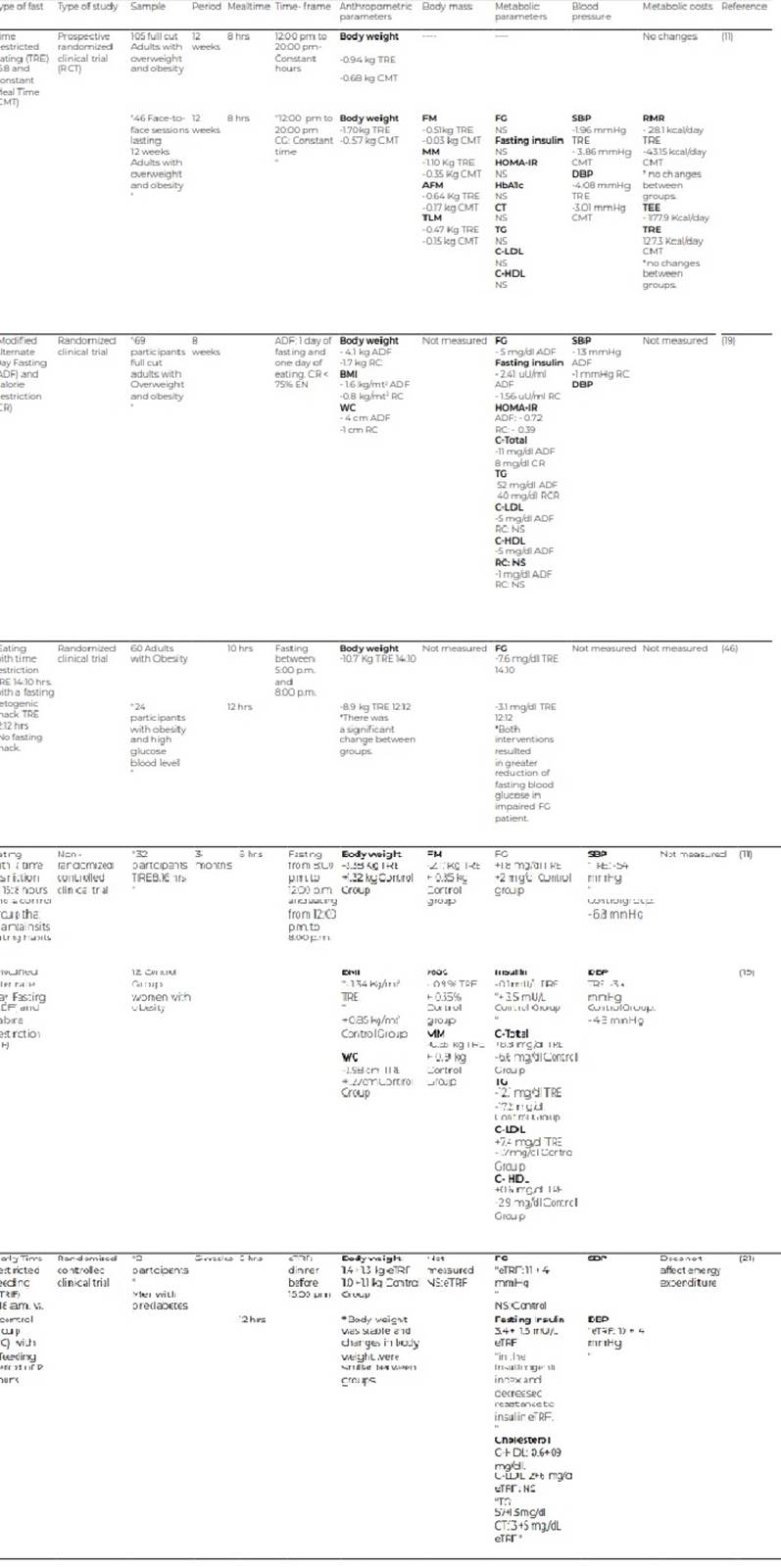
IF studies vary considerably depending on the fasting regimen employed and its duration; however, most of the independent studies reviewed report a reduction in body weight 11,18,19,20,21. In the studies analyzed, changes in body weight are evidenced after a period of 8 weeks or more with an eating time of 10 hours/ day. Changes are also observed in studies that contemplate 8 hours of free eating and alternate day fasting (ADF), suggesting that the IF feeding protocol has an inversely proportional relationship, given that when the hours of fasting increase, weight-related variables tend to decrease as a consequence of the reduction in energy intake (Table 1).
Specifically, TRE studies reported effects of weight reduction while maintaining muscle mass, which is of special interest among physically active people because it helps to achieve a desired body mass for a specific sport category, thus confirming that this new method can produce changes in body composition 10.
Benefits of intermittent fasting
Benefits of the different IF methods have been established. One study reported improvements in insulin levels and sensitivity; increased β-cell responsiveness; and positive effects on diabetes mellitus, obesity, sleep quality, stress levels and oxidative stress in men with prediabetes 6. Another work found that extending the metabolic fast to 12 to 14 h each day may produce greater reductions in body weight and fasting blood glucose levels 19.
Table 1 Effects of intermittent fasting interventions in selected trials
|
FM: fat mass; FFM: lean mass or fat-free mass; AFM: appendicular fat mass; TLM: trunk lean mass; FG: fasting glucose; NS: Not significant. RMR: Resting Metabolic Rate. TEE: Total Energy Expenditure; EN: Energy needs. WC: Waist circumference. MM: Muscle mass; SBP: Systolic blood pressure; DBP: Diastolic blood pressure; TG: Triglycerides
A 5-week early time-restricted feeding (eTRF) protocol is reported to improve insulin sensitivity, β-cell responsiveness, blood pressure, oxidative stress and appetite compared to the 12-hour feeding control group (CG) 22. A similar protocol was reported to improve glucose metabolism and increase tissue sensitivity to insulin by increasing pancreatic islet β cells 10.
A study of orthodox religious fasting highlights the finding that eating time restrictions could be associated with a better metabolic and glycemic profile 23.
Long-term benefits have also been shown. The cell mechanisms by which IF improves health and counteracts pathological processes are due to the activation of adaptive cellular stress-response signaling pathways, improving mitochondrial health, DNA repair and autophagy 10.
Moreover, there is a general consensus that IF improves cardiovascular health in humans as a result of improvements in the profile of inflammatory markers and plasma lipids 24. At a physiological level, the IF eating pattern has effects on the inflammatory state, in particular by decreasing the levels of CRP (C-reactive protein, which is released into the bloodstream in response to inflammation); however, no changes are observed in TNF-a and IL-6 levels 25. There is also evidence that IF inhibits the development of atherosclerotic plaque by reducing the concentration of inflammatory markers such as IL-6, homocysteine and CRP. It also causes an increase in brain-derived neurotrophic factor (BDNF), resulting in a drop in systolic and diastolic blood pressure by activating the parasympathetic system. BDNF causes the vagus nerve to release acetylcholine, which reduces the frequency of heart contractions, lowering the likelihood of developing cardiac hypertrophy. This positive effect of IF has also been documented in people with obesity and diabetes 10.
Alternate-day fasting (ADF), TRE and intermittent energy restriction (IER) are all reported to have beneficial regulatory effects on gut microbial compositions in various animal models and human trials 26. The gut microbiome is remodeled during intermittent fasting, contributing to the cyclical nature of the gut microbiome, as reflected by improved fluctuations in bacterial abundance and function 21. This new composition of the microbiome may result in increased production or conversion of metabolites, including tryptophan and its derivatives, short-chain fatty acids and bile acids, along with decreased expression of lipopolysaccharides in the outer membrane of gram-negative bacteria 27.
Intermittent fasting and its role in oxidative stress
The generation of molecular oxygen in the form of reactive oxygen species (ROS) is a natural part of aerobic life. Basal levels of ROS are essential for the manifestation of various cell functions, such as signal transduction pathways, defense against microorganisms, gene expression and promotion of cell growth or death 28.
An imbalance in the production of these reactive oxygen species, and the body's inability to detoxify these reactive products, is defined as oxidative stress 22. When ROS production is not controlled and circulating levels of these markers accumulate, this can lead to the development of metabolic syndromes and the progression of atherosclerotic disease 29.
Short-term trial data suggest that TRE may produce consistent reductions in markers of oxidative stress. For example, 8-isoprostane (a marker of lipid oxidative stress) was reduced by 14% in the 6-hour TRE study in obese men with prediabetes 22. Similarly, there was a change in the plasma levels of 8-isoprostane at week 8 in groups that adhered to TRE for 4 hours and TRE for 6 hours, obtaining reductions of 37% in the first group and 43% in the second, versus controls without mealtime restrictions. In contrast, none of the interventions had any impact on levels of inflammatory markers such as tumor necrosis factor alpha (TNF-alpha) and plasma interleukin-6 (IL-6) 9. It has also been shown that TRE plays a protective role against oxidative stress, since it is aligned with circadian time, regulating the production of various signaling molecules, maintaining mitochondrial homeostasis and reducing oxidative stress 30.
Intermittent fasting elicits adaptive cell responses that are preserved by the body through evolution and are integrated within the organs in a way that results in improved glucose regulation, increased resistance to stress and suppressed inflammation, through the activation in cells of pathways that enhance intrinsic defenses against oxidative and metabolic stress, and pathways that eliminate and repair damaged molecules 9. These promising preliminary findings show that TRE may offer some benefit in helping to regulate ROS production in humans.
Disadvantages of intermittent fasting
Intermittent fasting can be dangerous and is not recommended for people with hormonal imbalances, pregnant or lactating women, people with diabetes or eating disorders such as anorexia or bulimia, or who have a BMI of less than 18.5 kg/m² (underweight) 10, as it could lead to serious vitamin deficiencies as well as loss of fat-free mass 31. Current evidence suggests that IF may represent a counterproductive strategy for optimizing muscle mass, as protein turnover may remodel old/damaged proteins 32. A significant reduction in lean mass in the TRE group is reported in one study, where the average weight loss in the group was 1.70 kg, of which 1.10 kg was lean mass and 0.51 kg fat mass; however, the lean mass loss in this study far exceeds the normal range 11. TRE has been shown to lead to a reduction in calorie intake and may also reduce protein intake; these data highlight the importance of adequate protein intake while adhering to a TRE diet 11.
On the other hand, it was observed that diabetics who consume hypoglycemia-inducing medication, and who are classified as high-risk patients, should not follow an IF diet due to the likelihood of hypoglycemia, hyperglycemia, and ketoacidosis. In the case of diabetic patients who decide to adhere to IF, monitoring of the blood glucose level at least twice a day during fasting is essential, requiring interruption of the diet if dangerously low glycemic levels occur 31.
Other minor physical symptoms have been reported, such as hunger, lack of energy, headache, dizziness, constipation, bad breath and feeling cold, along with minor adverse cognitive effects, including poor concentration, for 1 to 6 months as a result of daily IF or CR 28. Temporary sleep disturbances have also been reported during the first month of intervention in groups adhering to IF 33.
Moreover, it is reported that daily fasting periods lasting 14 hours or more may be associated with increased gallstone formation, and weight loss benefits from TRE may be similar to those achieved by following a consistent eating schedule 12. Another aspect that has been highlighted is that TRE has the potential to reduce systemic inflammation and autoimmune-related diseases, but at the same time it can weaken the immune system and increase susceptibility to infections and cancer 12,34.
In the follow-up of patients who participated in a study with 5:2 fasting and CR, it was reported that both groups recovered the lost weight (22% in the 5:2 group and 42.6% in the CR group) within 12 to 24 months. Furthermore, the subjects in the 5:2 group lost more lean mass during this follow-up period, losing 2.2 kg as compared to 0.8 kg in the CR group 35.
Finally, it should be mentioned that excessive calorie restriction has been reported to cause dysregulation of hormonal management, which can lead to menstrual cycle disorders in women and decreased testosterone in men 10.
Intermittent fasting and its effect on reducing cardiovascular disease risk factors
Lifestyle choices, including diet and physical exercise, have a major impact on CVD (cardiovascular disease) risk. Among the most common risk factors are diabetes and obesity 12, and one of the ways to reduce the risk of vascular diseases is through weight loss 29.
The evidence suggests that IF could be a safe dietary intervention with broad cardiometabolic health benefits against aging, obesity, diabetes mellitus and cardiovascular diseases, since it has been described that calorie restriction brings a decrease in circulating lipids, such as triglycerides, low- and very-low-density lipoproteins (LDL and VLDL cholesterol, respectively), but no change in plasma levels of high-density lipoproteins (HDL) 36. Timerestricted fasting has also been reported to effectively improve the cardiometabolic risk profile, in addition to inducing weight loss in prediabetic subjects 37.
In a study of 60 overweight and obese adults who underwent a 75% calorie restriction period every other day, the subjects experienced a reduction in LDL cholesterol and triglyceride levels after 12 weeks. However, these changes could also be explained by the weight loss observed 5.
Furthermore, epidemiological evidence suggests that IF may help lower blood pressure. These findings are consistent with a study in which an improvement in systolic and diastolic blood pressure values was observed in the population after fasting, IER and CR 38. Similarly, reductions in systolic and diastolic blood pressure have been reported during TRE, with blood pressure decreases noted more frequently in studies in which participants lost at least 3% of baseline body weight 29.
Thus IF has the ability to reduce blood pressure, due to a decrease in sympathetic tone and an increase in parasympathetic tone, which could improve CVD mortality 5.
Intermittent fasting and its role in circadian rhythms
Organisms have adapted to the changing light-dark cycle that makes up a day, distributing their performance of functions such as eating and sleeping, which are crucial to survival, over time. There are several physiological pathways that display the same behavior, known as circadian rhythms (39). Molecular circadian clocks regulate daily behavioral and metabolic rhythms with the external day-night cycle. Alterations in these rhythms are usually accompanied by metabolic alterations, ranging from overweight and type II diabetes mellitus to the development of metabolic syndrome 40.
The general dietary trend today has changed from the classic consumption of 3 meals a day to consuming 45% of daily energy levels in the evening meal and night-time snacks. This eating pattern contributes to the misalignment of circadian rhythms and the disruption of metabolic processes, resulting in excessive energy consumption and impaired metabolic health 41.
When the period of food intake is aligned with the central circadian clock, it can cause changes in the metabolism of lipids, proteins and carbohydrates 42. Consequently, intermittent fasting regimens may be a promising intervention strategy through which disordered circadian rhythms can be realigned and obesity and its associated metabolic diseases can be treated or even prevented 27. Time-restricted eating (TRE), where food is specified to be consumed within a constant interval of 8 to 12 hours, appears to be the IF variable that maintains optimal nutrient utilization and promotes health, as it is in synchrony with the circadian rhythm 43.
Another important factor is the production of melatonin, since it has effects on glucose homeostasis through the attenuation of glucosestimulated insulin release, producing a reduced insulin response to late-night meals. This would justify the notion that it is best to avoid ingesting food 2 to 3 hours before bedtime and for one hour after waking up. It should also be noted that the release of insulin from the pancreas decreases near the resting phase, thus late-night meals lead to an increase in prolonged serum glucose levels that are likely to be stored as triglycerides (TG) in adipose tissue 42.
In a study of overweight and obese women following a TRE protocol with a shorter feeding period of less than 11 hours for eating, and beginning their fast 2 hours before bedtime, the results reported lower energy intake, glycemic load and eating frequency 41.
As reported in Table 2, early time-restricted feeding (eTRF) is thought to improve mean glucose levels over a 24-hour period, to alter lipid metabolism and oxidation and the gene expression of the circadian clock, to stimulate autophagy and to have antiaging effects 6. In a study in 119 prediabetic adults, a longer feeding window of 12 hours or more was associated with a higher percentage of body fat 44. In another study in overweight and obese women that compared an interval of 12 hours or less with one of more than 12 hours, a significant decrease in calories was found in the group with the shorter eating window, which is consistent with the TRE pattern 41.
These findings support the notion that limiting all calorie intake to a defined time interval, separated by a few hours from the daily sleep interval, has multiple health benefits 43,45,46.
Table 2 Metabolic, hormonal and genetic results associated with different times of feeding
| Eating time | Study description | Metabolic Results | Gene and hormone expression | Reference |
|---|---|---|---|---|
| eTRF 6: 18 hrs | Full cut 11 Adults | eTRF Glucose 24h: 4 +1mg/dl. | Cortisol (am): 1.5 + 0.9 ug/dl | (57) |
| BMI: > 25 kg/m2 | Fasting Glucose: 2 +1mg/dl. | Cortisol (pm) :1.4 +0.6 ug/dl | ||
| CG: 12: 12 hrs | Age: > 32 years | Fasting Insulin: 2.9+0.4 mU/l | BDNF: 2.46 + 1.34 ng/ml | |
| Duration 4 days | C-LDL: 9 + 4 mg/dl | BMAL1: 8+3% | ||
| C-HDL: 3+1 mg/dl. | CRY1: 14+ 2% | |||
| TG: NS | CRY2: 8+4% | |||
| C-Total: 10+4 mg/dl | REV-ERBA:12+6% RORA:13+4% | |||
| CLOCK and PER2: NS | ||||
| SIRT1: 10+3% | ||||
| LC3A: 22+5% | ||||
| MTOR:9+3% | ||||
| Eating window | 119 adults full cut | Late eating was associated with % body fat. | (44) | |
| < 10 h/d | BMI:>25 kg/m2 | |||
| >12 h/d | Age: >30 a<70 years | Daily eating window and |
GL: glycemic load; DEI: daily eating interval; eTRF: early time-restricted feeding; TRE: time-restricted eating; NS: not significant; NA: no association.
Discussion
Intermittent fasting (IF) is a popular alternative, in which fasting is alternated with periods of unrestricted eating. This appears to be an approach equivalent to calorie restriction (CR) for inducing weight loss, although there is limited evidence so far regarding long term results. The purpose of this study was to review the available data on intermittent fasting and its contribution to the improvement of body and metabolic composition, and to define the parameters that condition the safety of its benefits.
IF has been found to be as effective as CER for losing weight and fat mass, suggesting that this type of fasting could be considered a valid alternative to calorie restriction 47,48. Although TRE does not place emphasis on calorie restriction, controlled eating times do in fact reduce calorie intake. This pattern appears to generate greater adherence than CER, making TRE a safe and well-tolerated intervention in the short term. Recent studies of TRE with a daily feeding window of 8 to 10 h reported dropout rates of les than 10%; however, these tended to increase to 20% with a shorter feeding window, suggesting that TRE may be an effective strategy to promote weight loss in users who have difficulty adhering to diets that alter the entire nutritional pattern of the individual's daily food intake. This is the case of alternate day fasting (ADF), for example, which the data show to be associated with a higher dropout rate (40%), suggesting that it may not be a feasible weight loss alternative for many people 49.
The metabolic switch involved in prolonged fasting of more than 12 hours consists of a marked reduction in liver glycogen, leading to the mobilization of fatty acids from adipose tissue and their metabolism by the liver. Increased β-oxidation of fatty acids leads to excess formation of β-hydroxybutyrate and acetoacetate 50. These are transported to cells where they are further metabolized to generate ATP, which maintains muscle and brain cell function during fasting. With these processes involved, it can be an effective strategy for weight loss and can also act as a regulator of metabolic disorders associated with excess adiposity.
When contrasting IF with calorie restriction, IF exhibits superior benefits because it produces a series of changes that contribute to the improvement of parameters affecting heart health. Along the same lines, studies conclude that TRE improves blood glucose levels and insulin sensitivity, in addition to having an effect on the composition of the intestinal microbiota 51.
Oxidative stress is understood to be the result of imbalance in the production of reactive oxygen species (ROS) and the inability of the body to detoxify them. IF causes an improvement in ROS regulation through adaptive cell responses, increasing resistance to stress. There are data indicating that TRE decreases lipid oxidative stress markers in individuals with obesity and prediabetes.
It is widely proven that dietary restriction prolongs the lifespan of many species, including mammals; among other beneficial effects on cells, it lowers ROS production and thus decreases oxidative stress and oxidative damage to biomolecules 52. These findings show that TRE may offer benefits in regulating ROS production in humans.
Turning to the disadvantages of IF, it should be noted that most of the studies analyzed were conducted with small sample sizes and short-term interventions. It was shown that although IF can be beneficial to people with diabetes mellitus II, it effectively increases hypoglycemia and can lead to decompensation. Dietary plans that involve intermittent fasting have also reported side effects such as cramps, headache, cardiac arrhythmias, menstrual irregularities, gout, etc., although these effects have been associated mainly with people suffering from chronic diseases, and it is estimated that they could be controlled with the assistance of a nutrition expert. In addition, this method has been noted to produce muscle wasting reflected in the loss of lean mass, making it advisable to ensure adequate replacement of proteins 48.
It has been pointed out that IF could be a safe dietary intervention with broad cardiometabolic benefits, given the observed decrease in circulating lipids. Humans adhering to IF exhibit lower circulating levels of TG, while ADF helps to further improve predictive markers of cardiometabolic health, including a reduction in cholesterol and inflammation 53. It is also noted that IF may help lower blood pressure: a recent series of clinical studies of overweight and obese adults adhering to TRE, with an eating range of 6, 8 or 10 hours for a period equal to or greater than 12 weeks, reflected a decrease in blood pressure 53,54, indicating that IF can modify cardiovascular risk factors.
Alterations in circadian rhythms go hand in hand with metabolic alterations such as overweight, type II diabetes mellitus and the development of metabolic syndrome, where the current diet contributes to the misalignment of these rhythms. IF regimens may help to restore their alignment, treating and preventing obesity and associated diseases as a collateral effect.
It is noted that TRE where food is consumed over a constant interval of 8 to 12 hours maintains optimal nutrient utilization and is in synchrony with the circadian rhythm. Both prolonging daily fasting and shifting food intake to earlier in the day contribute to metabolic improvements after early time-restricted feeding (eTRF). Daytime metabolic responses to nutrients are influenced by the circadian system and glucose tolerance is higher earlier in the day; thus shifting nutrient intake to earlier hours of the day may have beneficial effects on the metabolism 55. An example of this is that insulin release from the pancreas decreases during the resting phase, so late night ingestion of food leads to increased serum glucose, which is likely to be stored as triglycerides in adipose tissue.
Early time-restricted feeding (eTRF) has been shown to improve 24-hour glucose levels, to alter lipid metabolism and oxidation and the gene expression of the circadian clock, to stimulate autophagy and to have anti-aging effects. It is also important to note that recurrent eating patterns with IF confer a health benefit by delaying many age-related diseases and helping to improve metabolic markers, which are independent of weight loss 53.
Thus aligning food intake with circadian rhythms can be a powerful strategy for reducing appetite and losing weight; the subset of meal-timing interventions involving intermittent fasting, such as TRE, may confer additional benefits by improving metabolic flexibility and increasing 24-hour fat oxidation 56. The notion of limiting all calorie intake to a defined time interval, separated by a few hours from the daily sleep interval, is thus supported. In sum, intermittent fasting provides multiple health benefits to individuals; however, longterm studies are needed to assess the continuity of these benefits over time 31.
TRE is a simple and well-tolerated diet, implemented also as Ramadan in Islamic culture 36 that generates many beneficial health effects based on chrononutrition principles which may protect cardiovascular health by improving the lipid profile and raising the sub-optimal HDL and may provide a significant metabolic benefit by improving glycemic control, insulin resistance, and adipokine concentration with a reduction of BMI in adults 6,25,39,45,47,51. Even if time-restricted eating, in the absence of other interventions, is not more effective in weight loss than eating throughout the day 11. In participants with obesity who completed 8 weeks of the 14:10 TRE schedule combined with a commercial weight loss program, there was statistically significant and clinically meaningful weight loss and improvements in fasting blood glucose 46, showing an effect also in waist circumference, systolic blood pressure 19.
In patients with multiple sclerosis, the data available are too scarce to draw any firm conclusions, but it does appear that intermittent fasting may be a safe and feasible intervention 31. Neither dietary model affected the concentrations of tumor necrosis factor-α or interleukin-6 32.
Conclusions
The growing prevalence of malnutrition due to excess throughout the world demands nutritional treatment methods that are adapted to current lifestyles and that ensure their effectiveness in reducing both body weight and the incidence of disorders associated with obesity. IF interventions are currently emerging as a tool for weight loss and to combat the development of many age-related diseases derived from metabolic dysfunctions.
Despite the multiple benefits indicated, there is some controversy regarding the safety and viability of this new food protocol, because IF encompasses different regimens that are not yet regulated; in addition, long-term adherence represents a challenge. TRE is a simple and well-tolerated diet, implemented also as Ramadan in Islamic culture (MIRMIRAN P, BARDORAN) that generates many beneficial health effects based on chrononutrition principles which may protect cardiovascular health by improving the lipid profile and raising the sub-optimal HDL and may provide a significant metabolic benefit by improving glycemic control, insulin resistance, and adipokine concentration with a reduction of BMI in adults . Finally, it should be noted that the discrepancy between the available studies may be due to heterogeneity in the design of the IF protocols, suggesting that more research is required in this regard.

